Cusco and the Sacred Valley, Peru
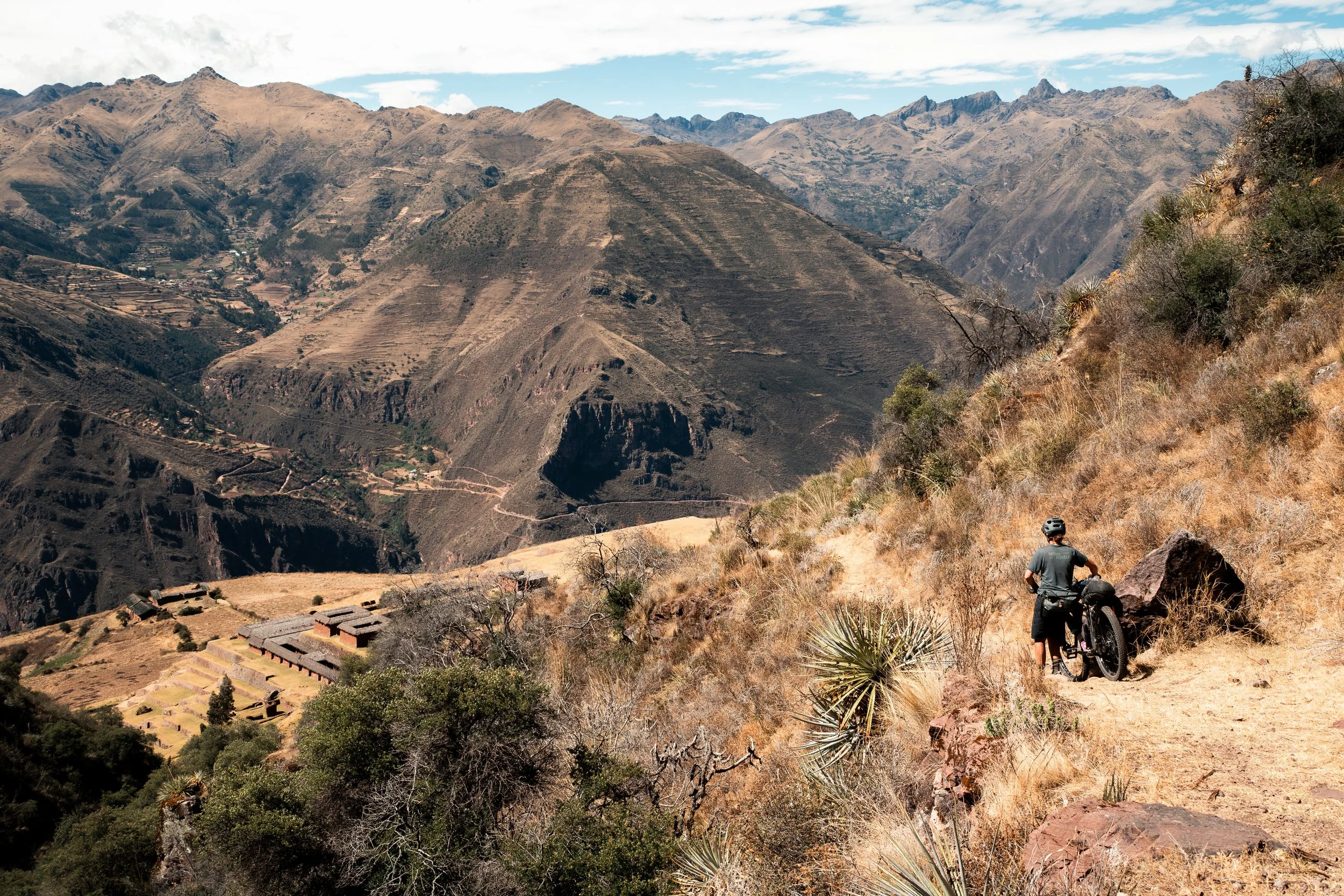
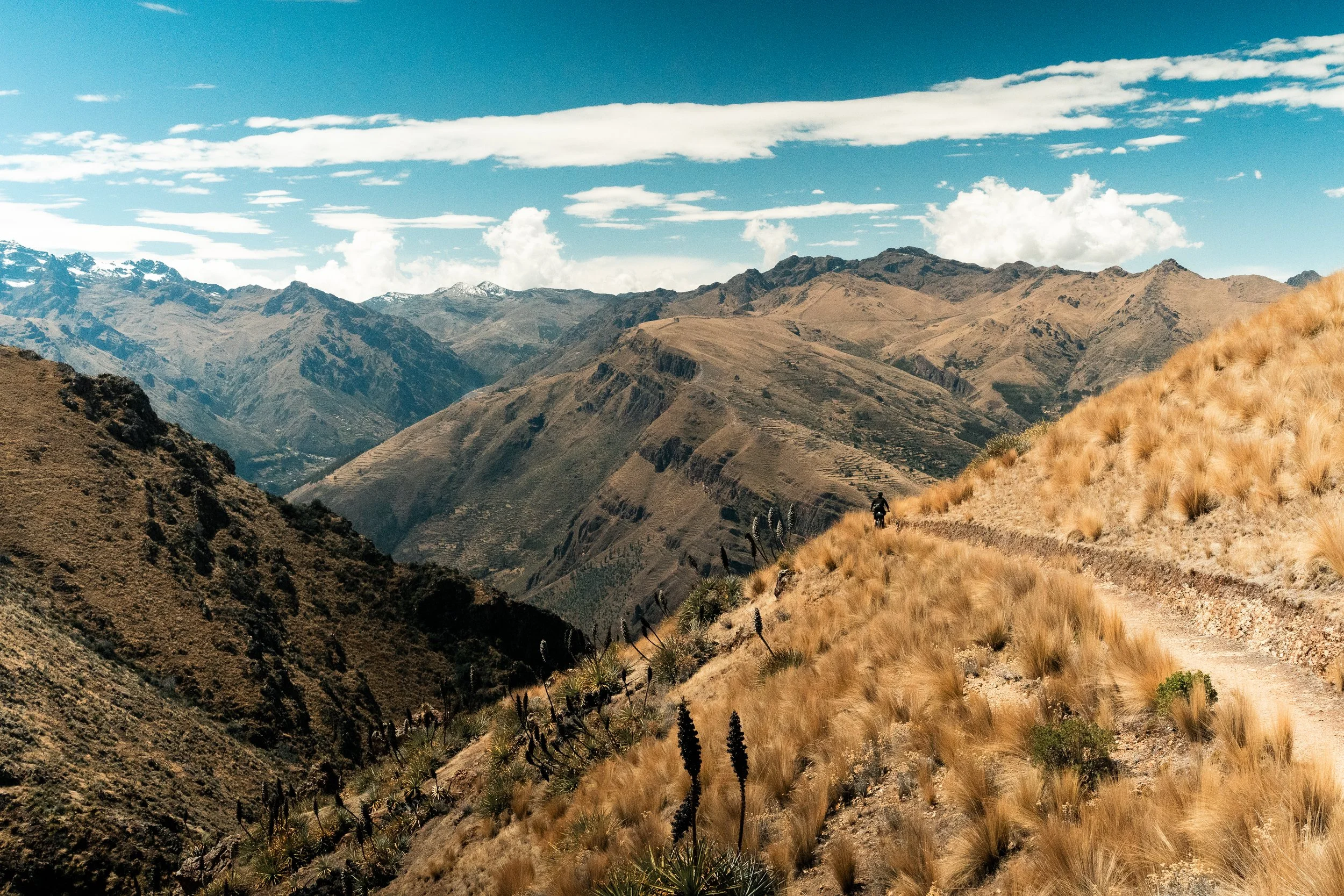
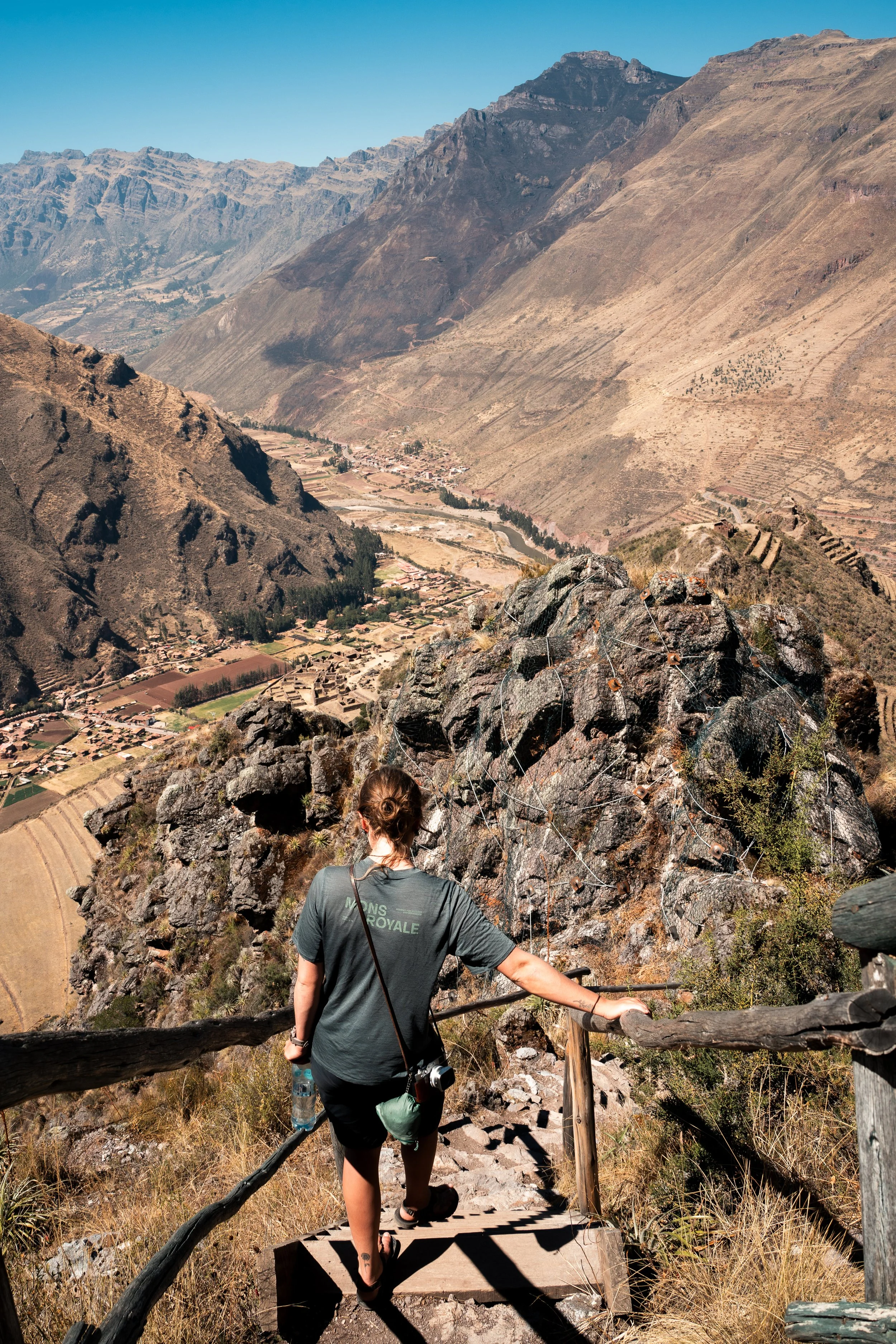
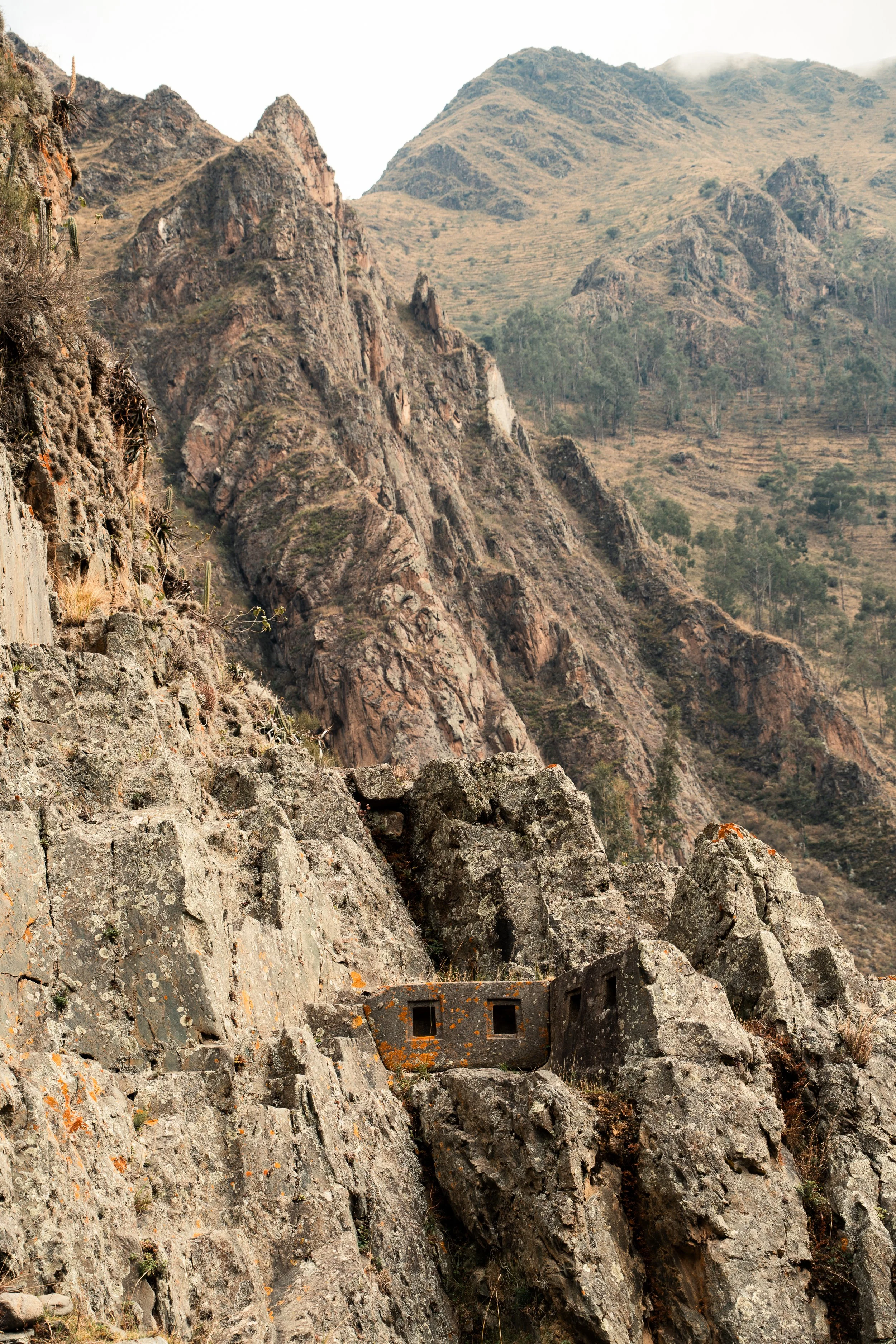
Descending to Huchuy Qosqo.
Originally intended to take about three weeks, by the time we had dealt with the landslides, illness, and weather delays on Tres Cordilleras it had taken us over a month to finish. It was a welcome relief to get to Cusco, finally.
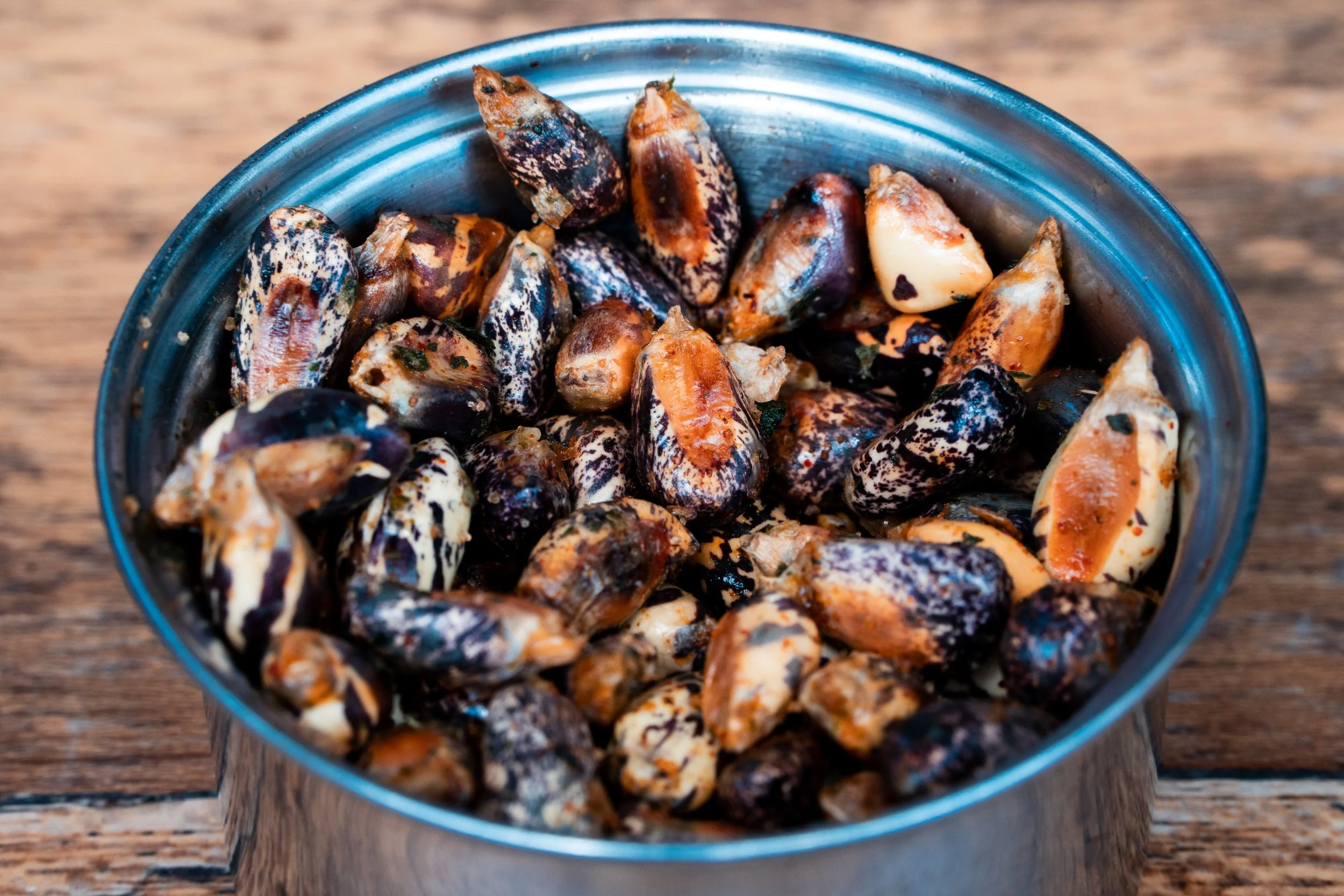
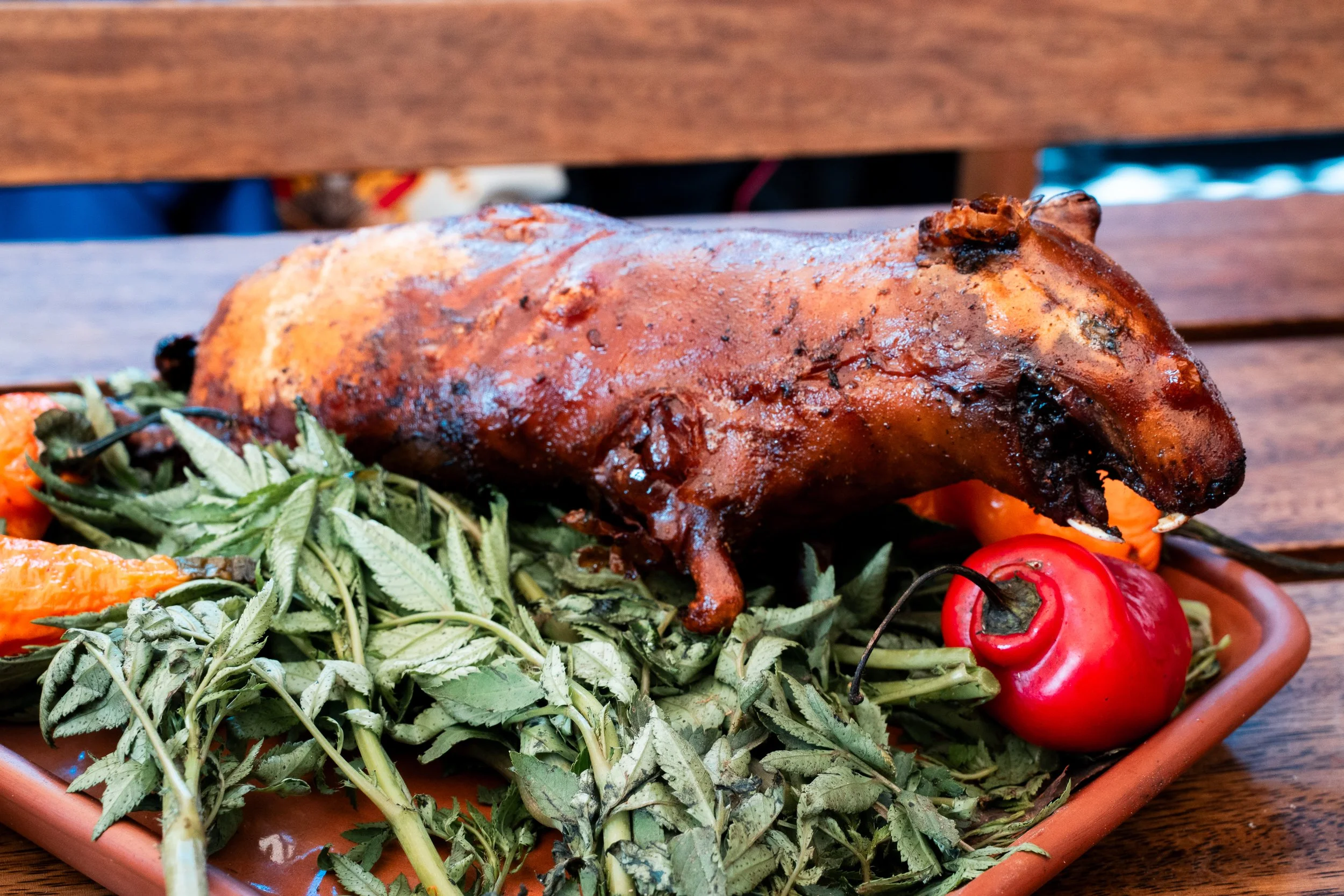
We had been discussing the food in Cusco for over 3 months before our arrival. Whilst the food was generally alright for the trip, chicken, rice, potato, and corn for every meal (that wasn’t instant noodles) was getting a bit boring. There will be a full list at the bottom of this post, but in 9 days we managed to eat at over 20 different establishments, sometimes twice. These varied from a simple kebab or pizza at a craft brewery to Nikkei omakase that cost more for one meal than our entire previous month of travel. The moment we sat down at a restaurant for a meal, we would be scoping out the next meal, before we had even eaten. We were in heaven.
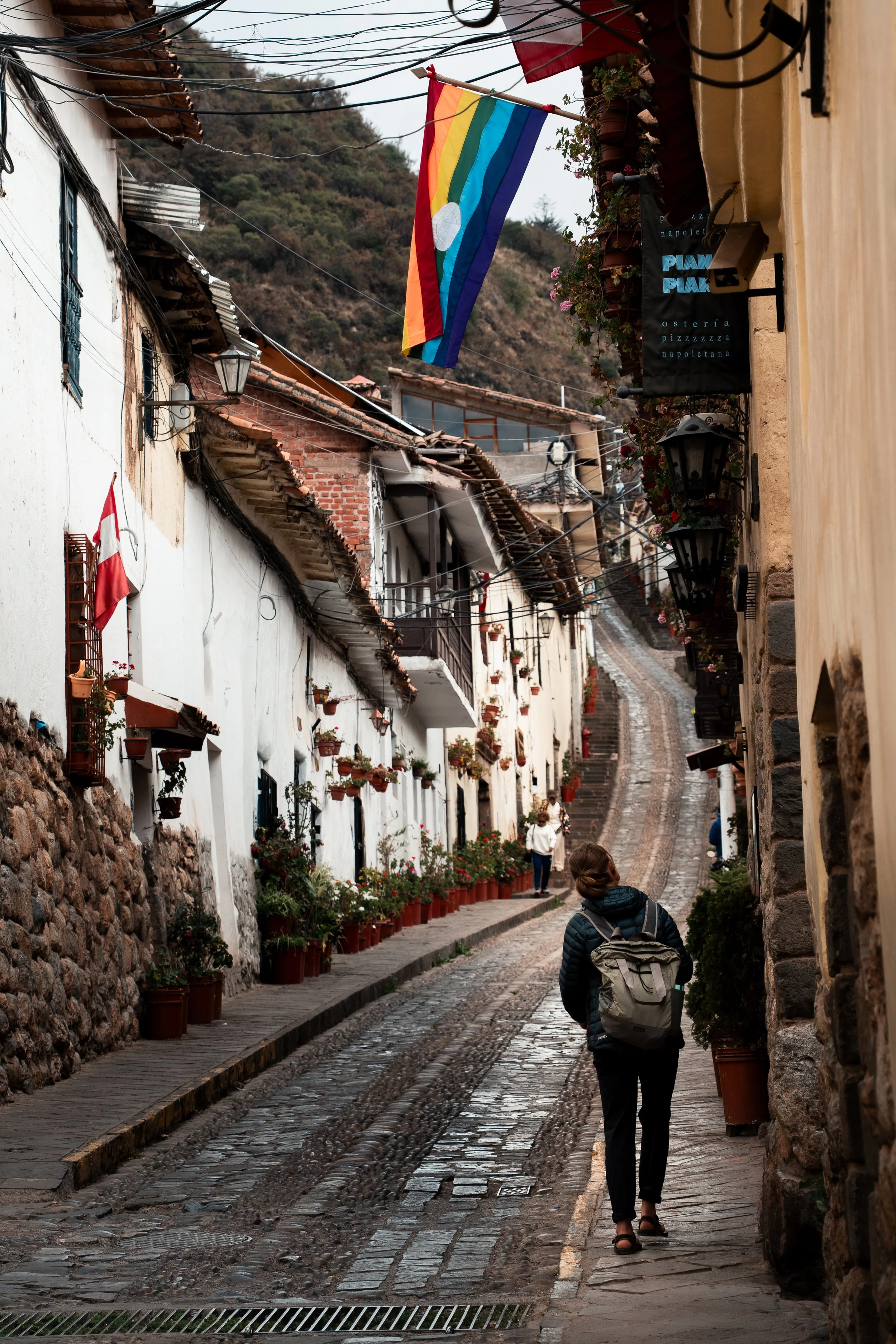
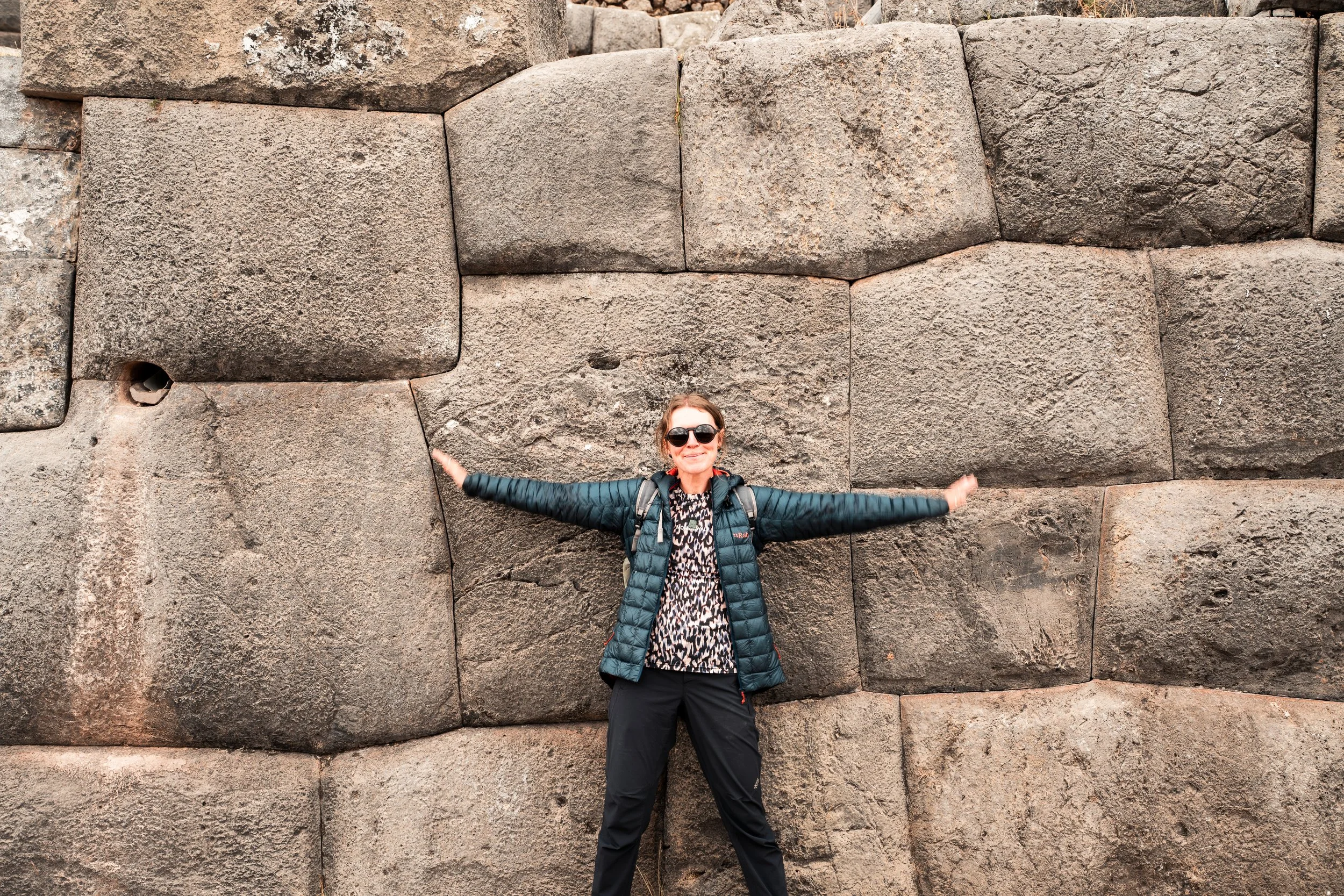
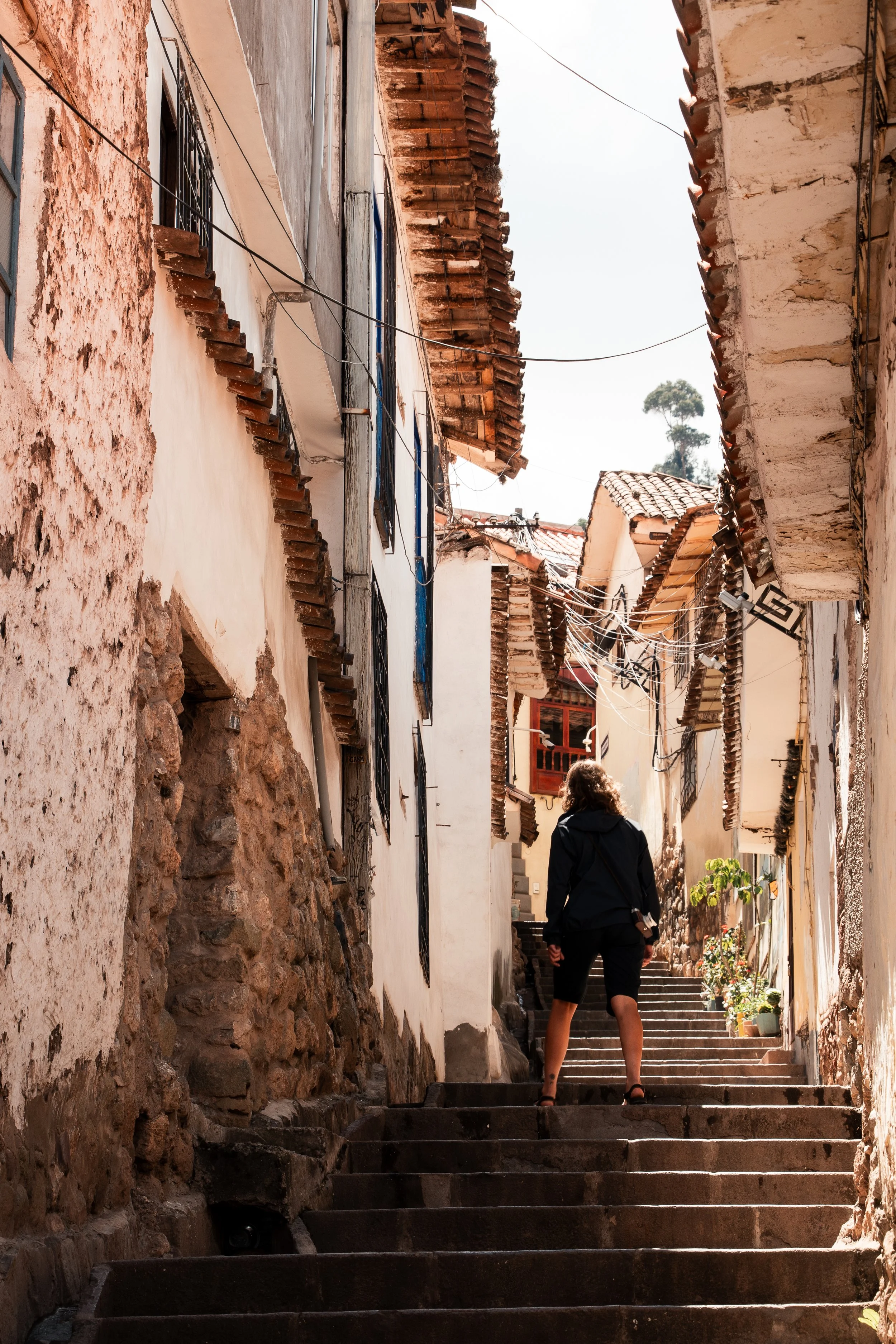
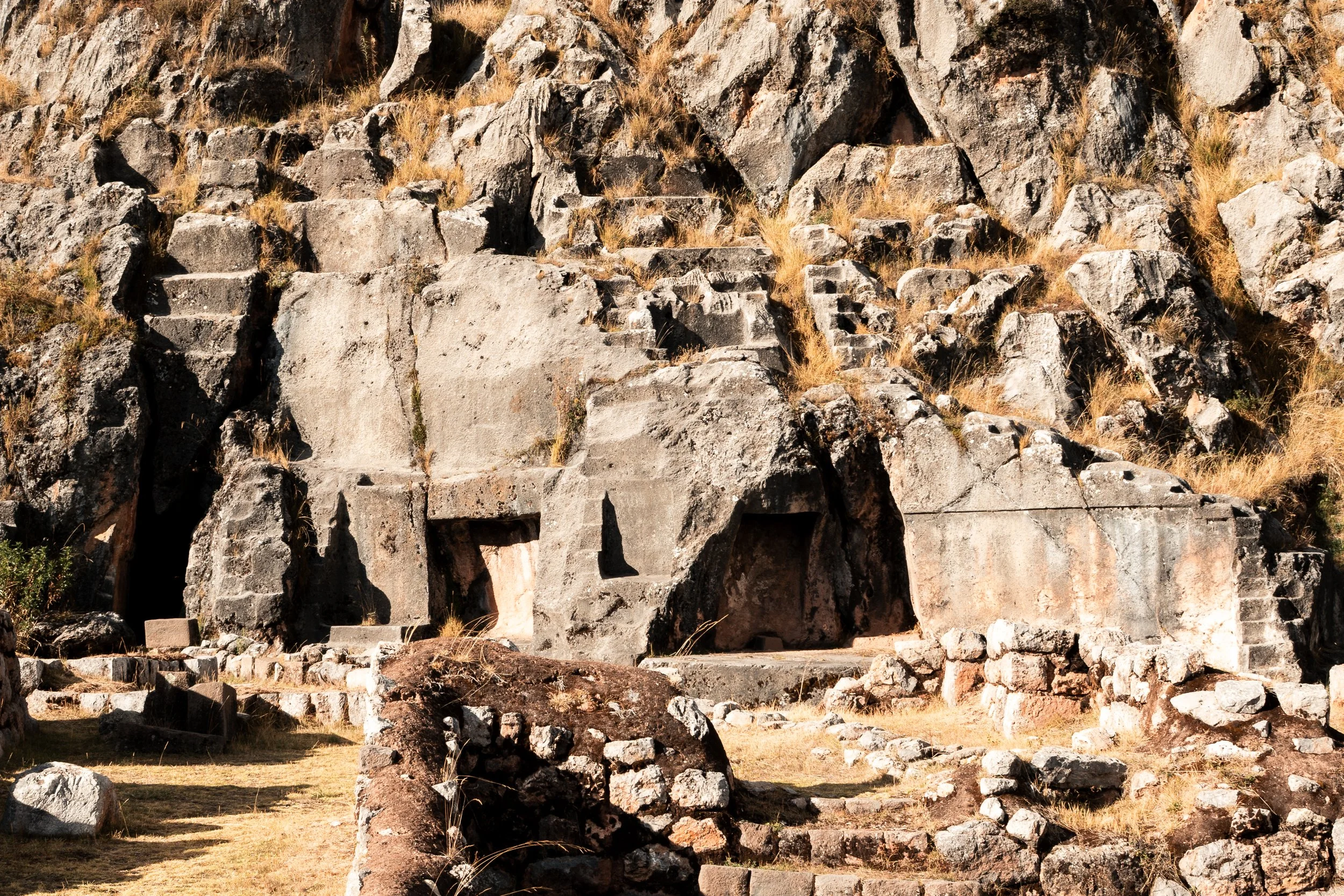
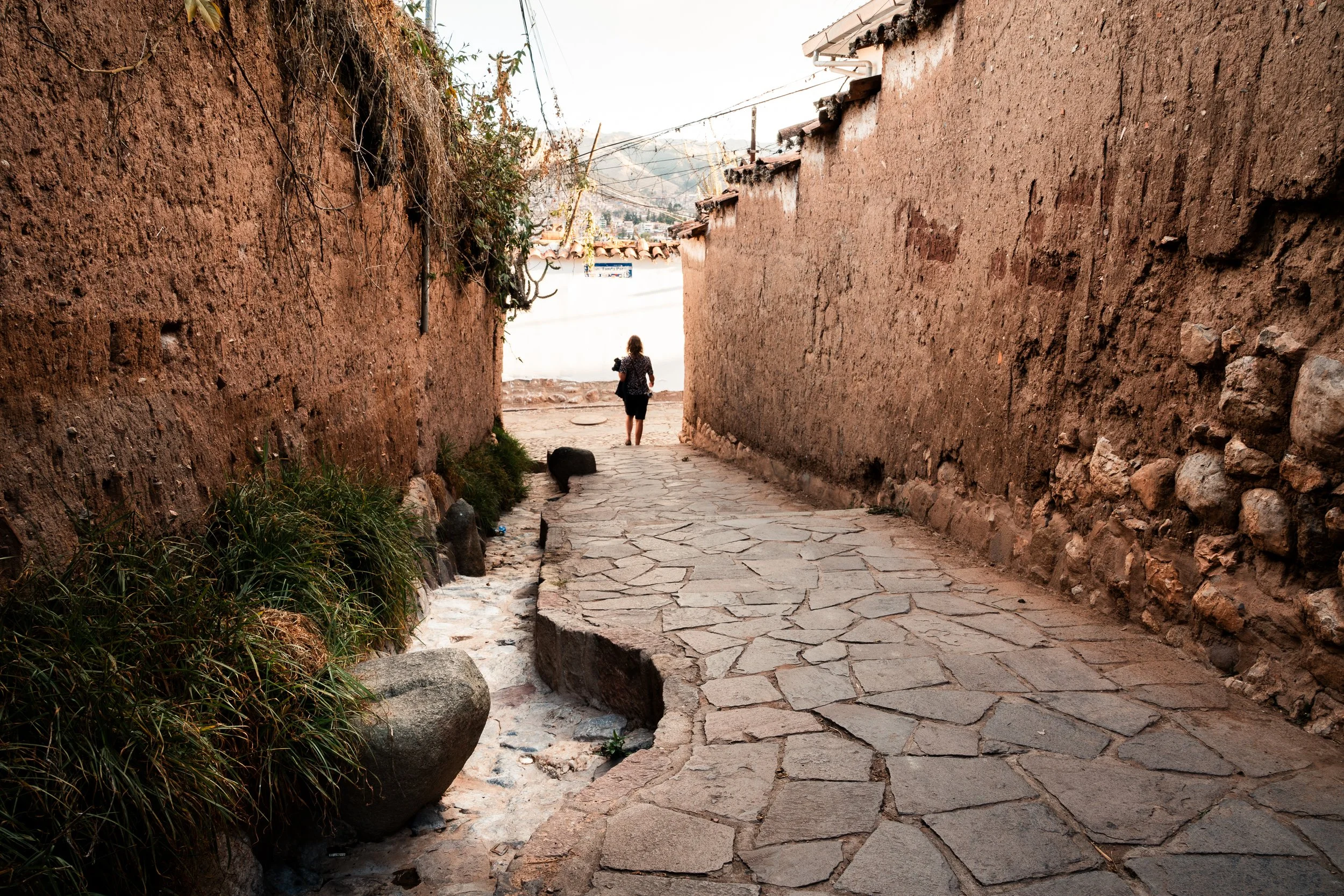
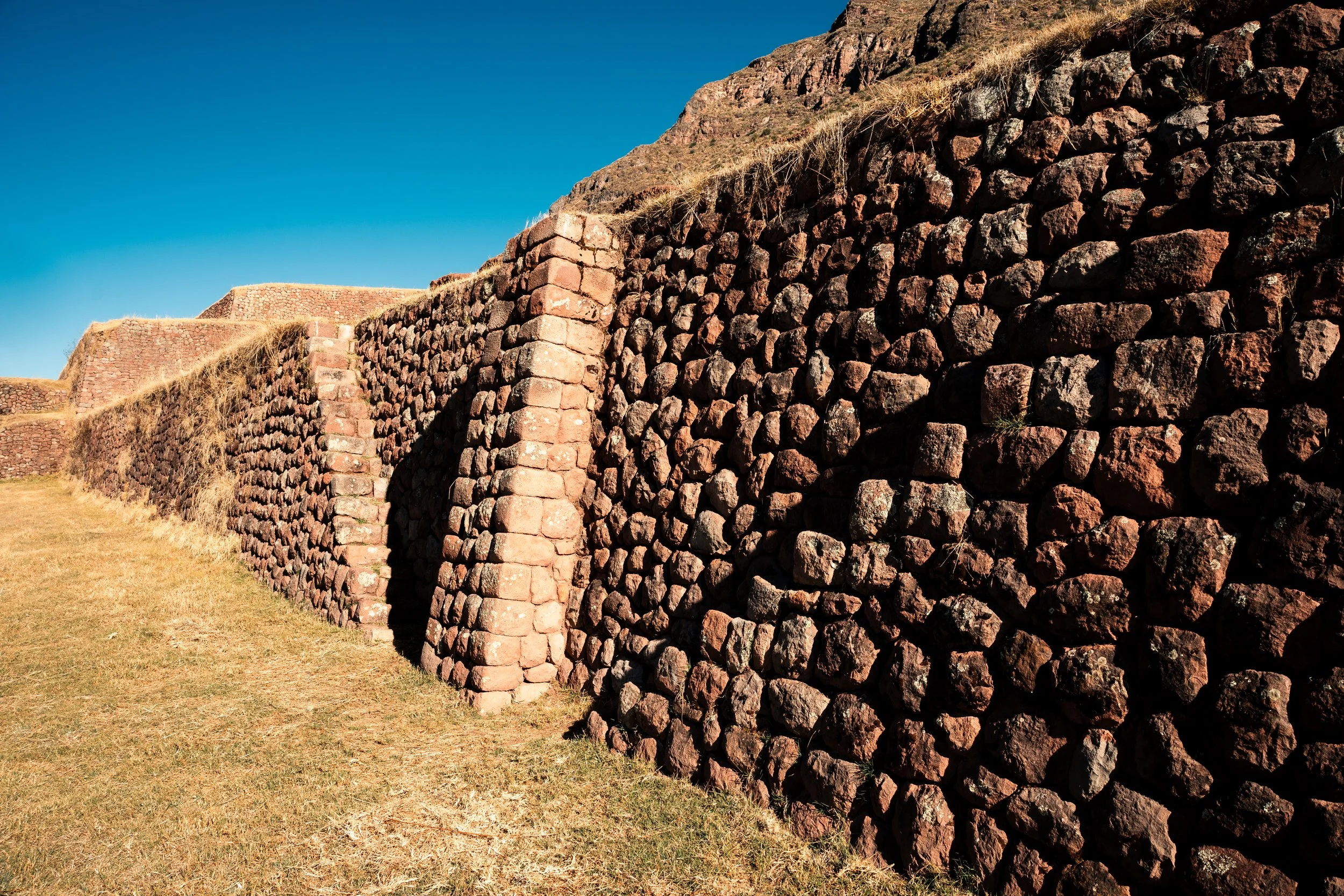
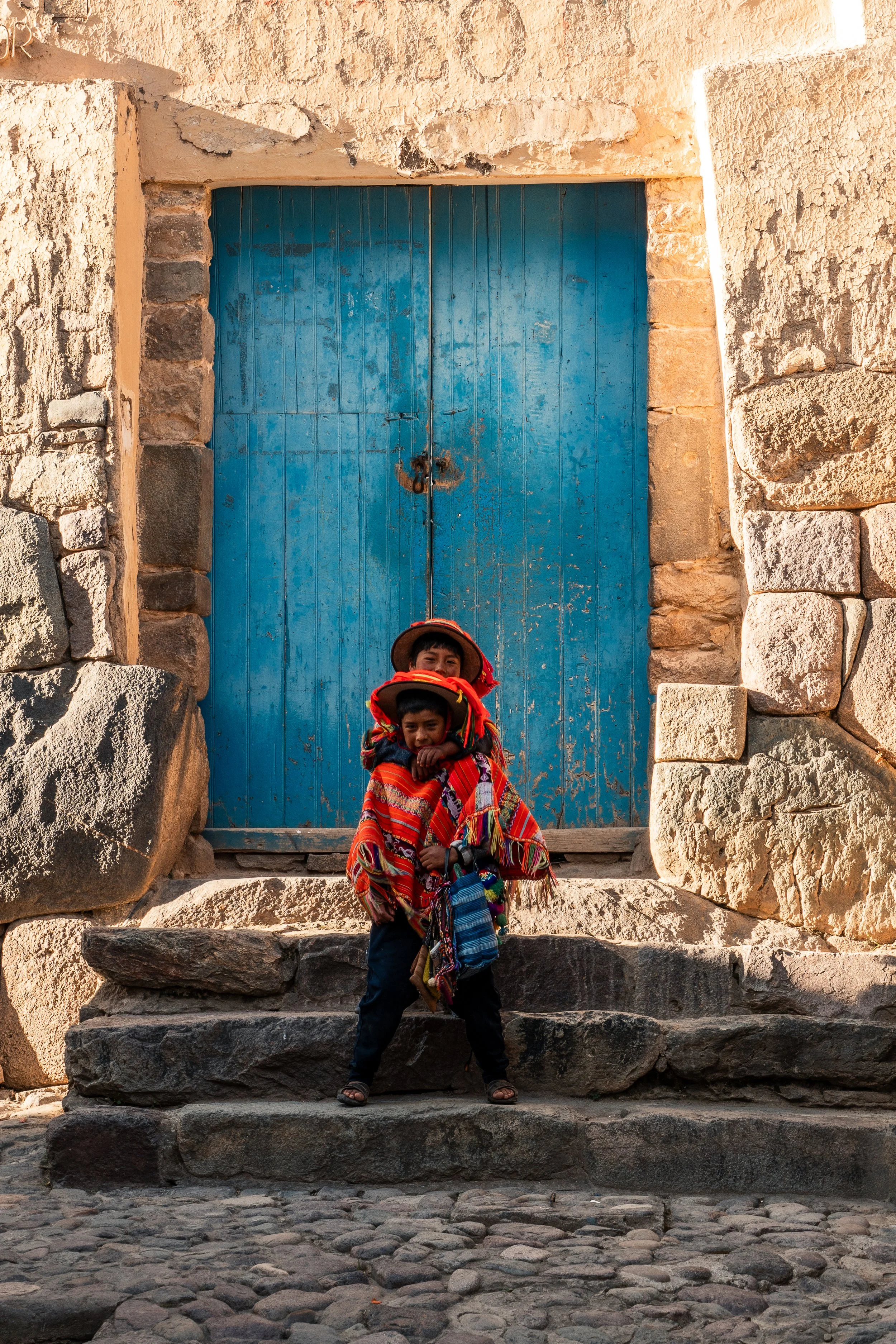
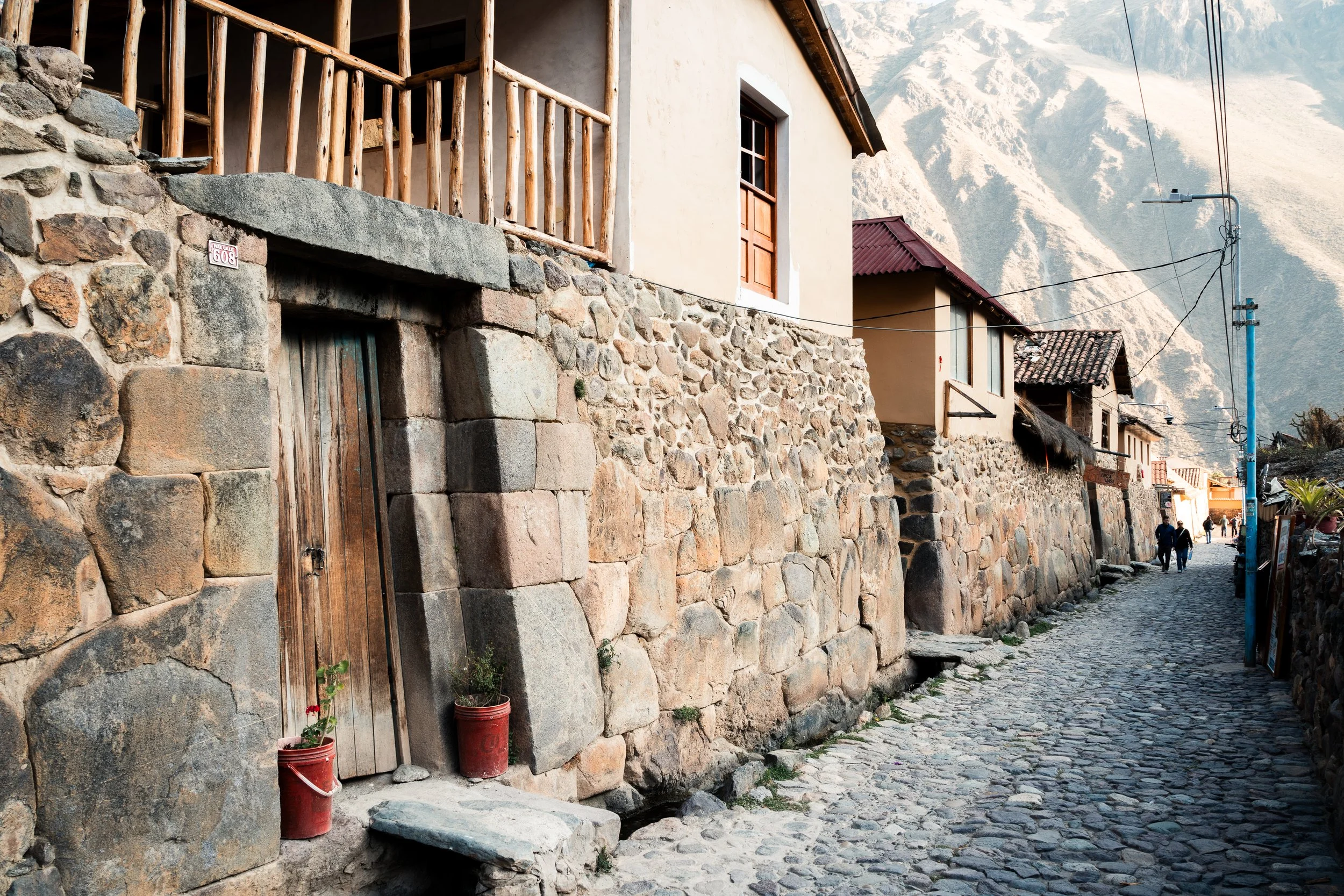
What I wasn’t prepared for was the amount of history in the city. Cusco was the capital of the Incan empire, the centre of their entire concept of the universe. I had read that it had been completely torn down and replaced with a colonial city built on top, much like Mexico City being built over the Aztec capital of Tenochtitlan. On arrival, we found this was only partly true. The Inca were such good stone builders that apparently the Spanish colonists had just decided to re-use the stone bases and foundations of the existing city. This gives the awesome scene of the bottom 1-2m of many street walls and doorways being Incan stone, and colonial adobe on the top halves. Around the plaza, many street layouts are based around the Incan palaces, and in the suburbs of San Blas many doorways are the original trapezoidal Incan doorways. Ironically, when earthquakes hit the city in its early days, the colonial aspects would fall down whilst the Incan bases remained strong and standing. Given the rise of tourism, there is now the unusual situation where you can enter a Starbucks or Patagonia store that is built inside an Incan palace, through the original doorways.
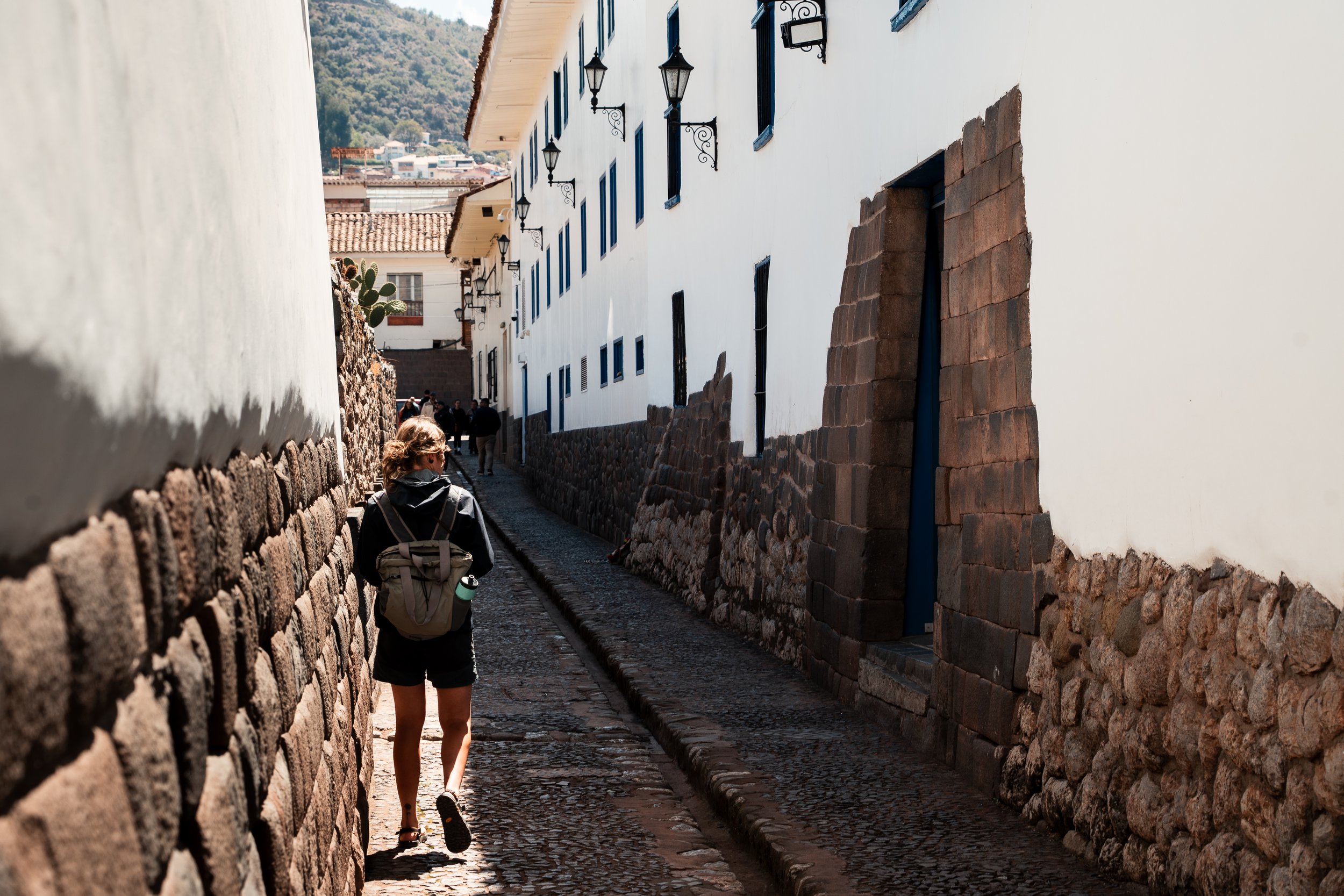
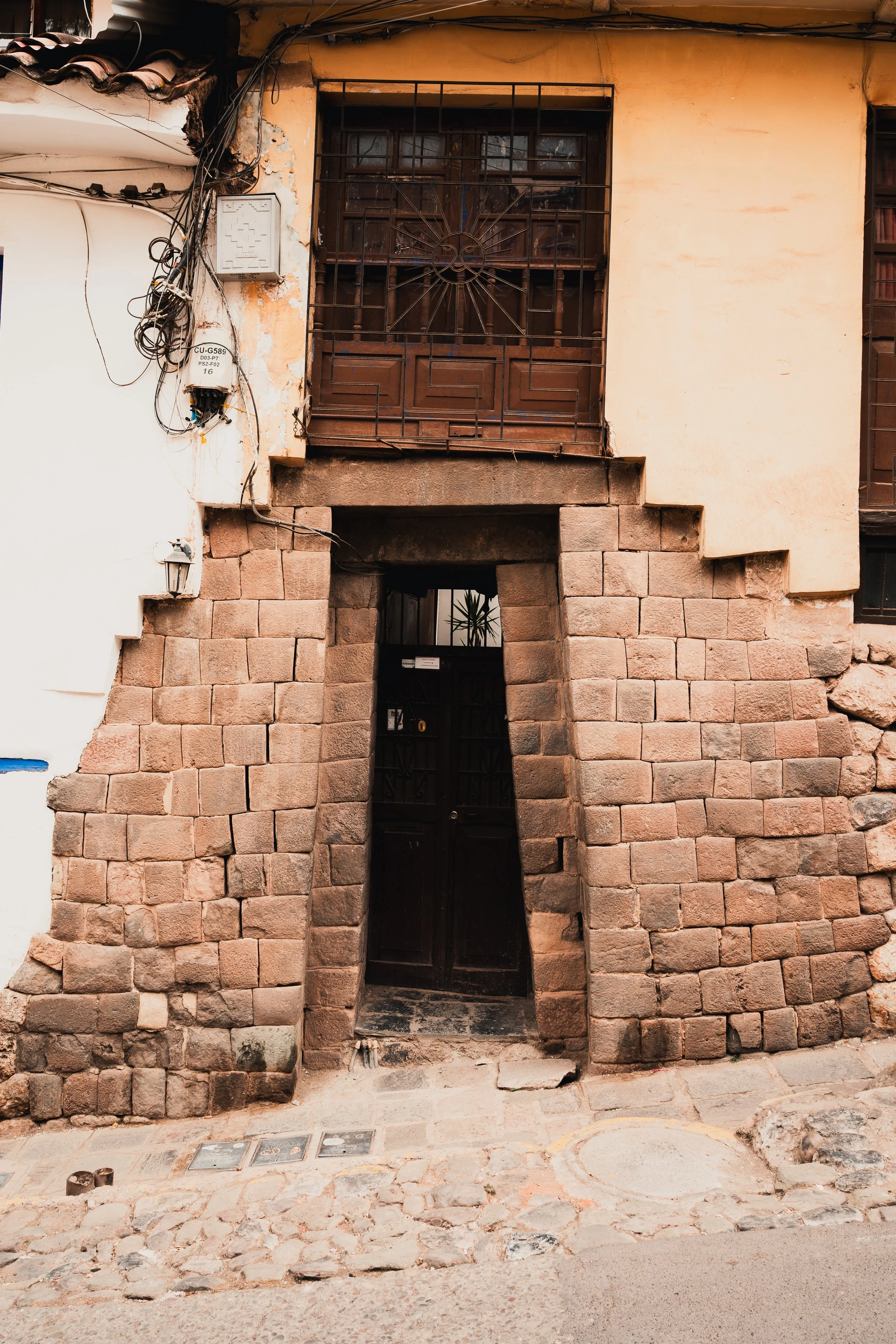
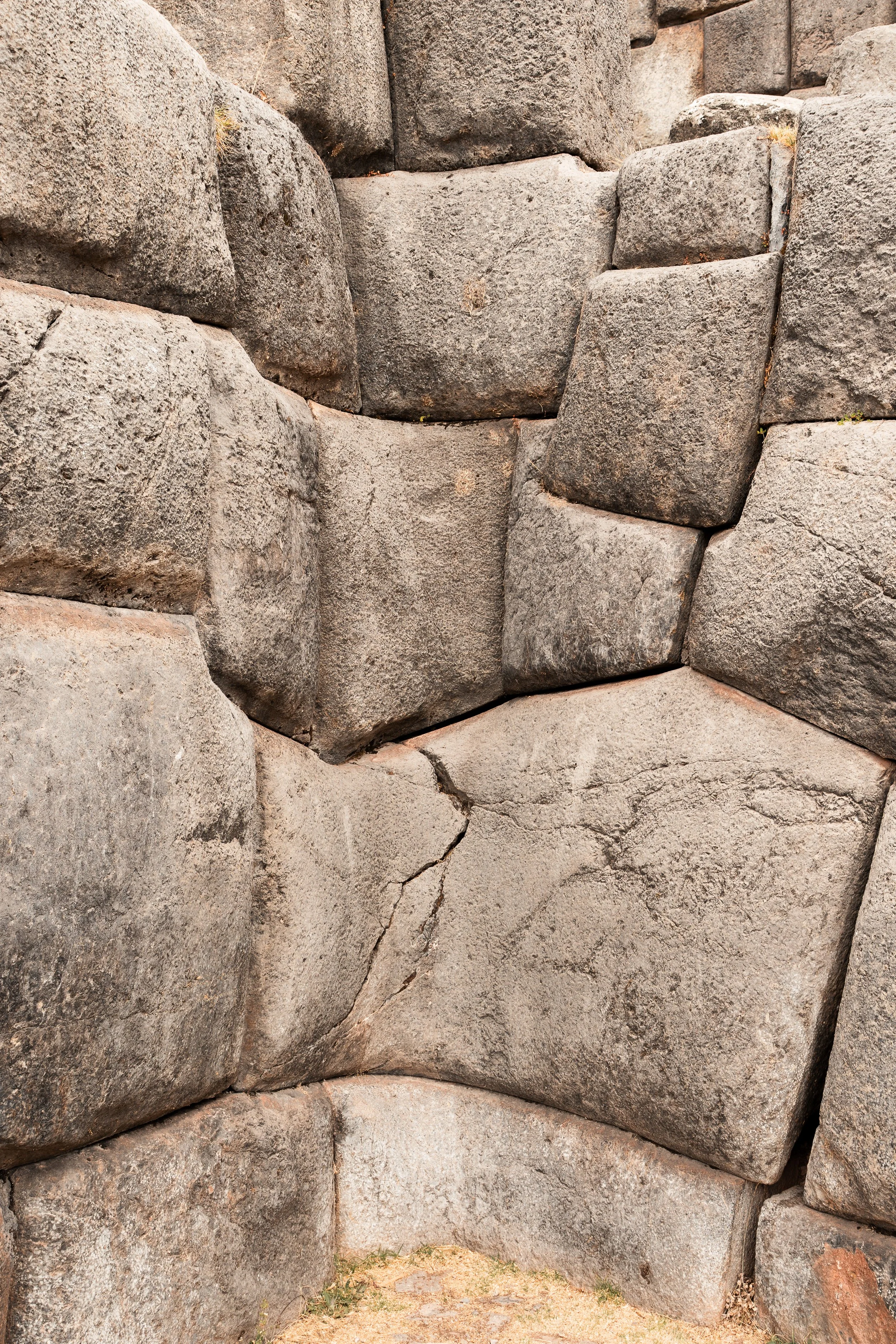
Just look at that stone working, shaping and curving to fit perfectly. Amazing.
After a few days of delay due to concerns about thunderstorms (which never eventuated), we left Cusco for the Sacred Valley, following the GPX track from Mark Watson/Highlux Photography, over the top of the mountains on single track. After passing a few archeological sites on the way out of town, we were very quickly into the farming hinterland of the city. We climbed upwards, watching the sprawl disappear behind us.
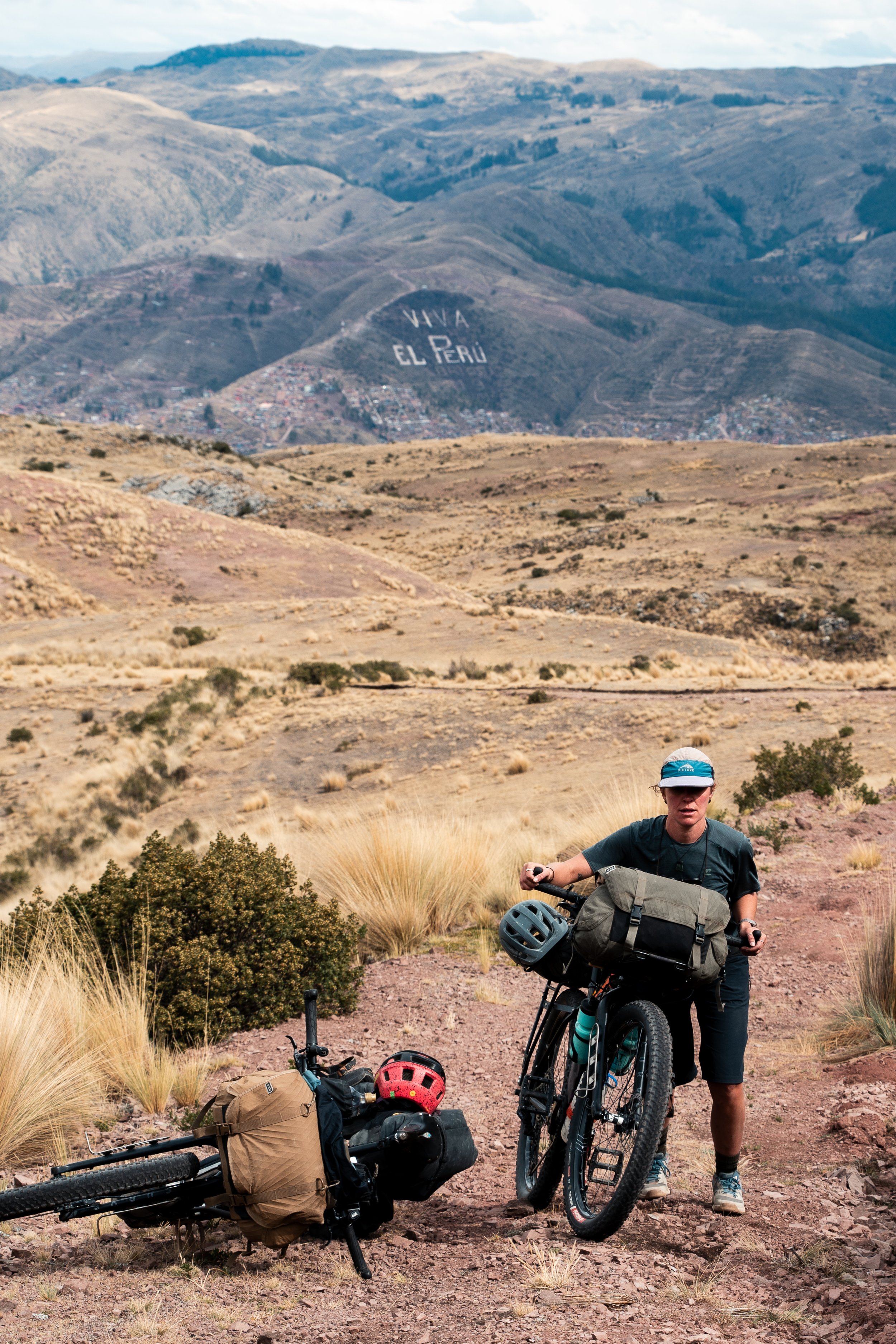
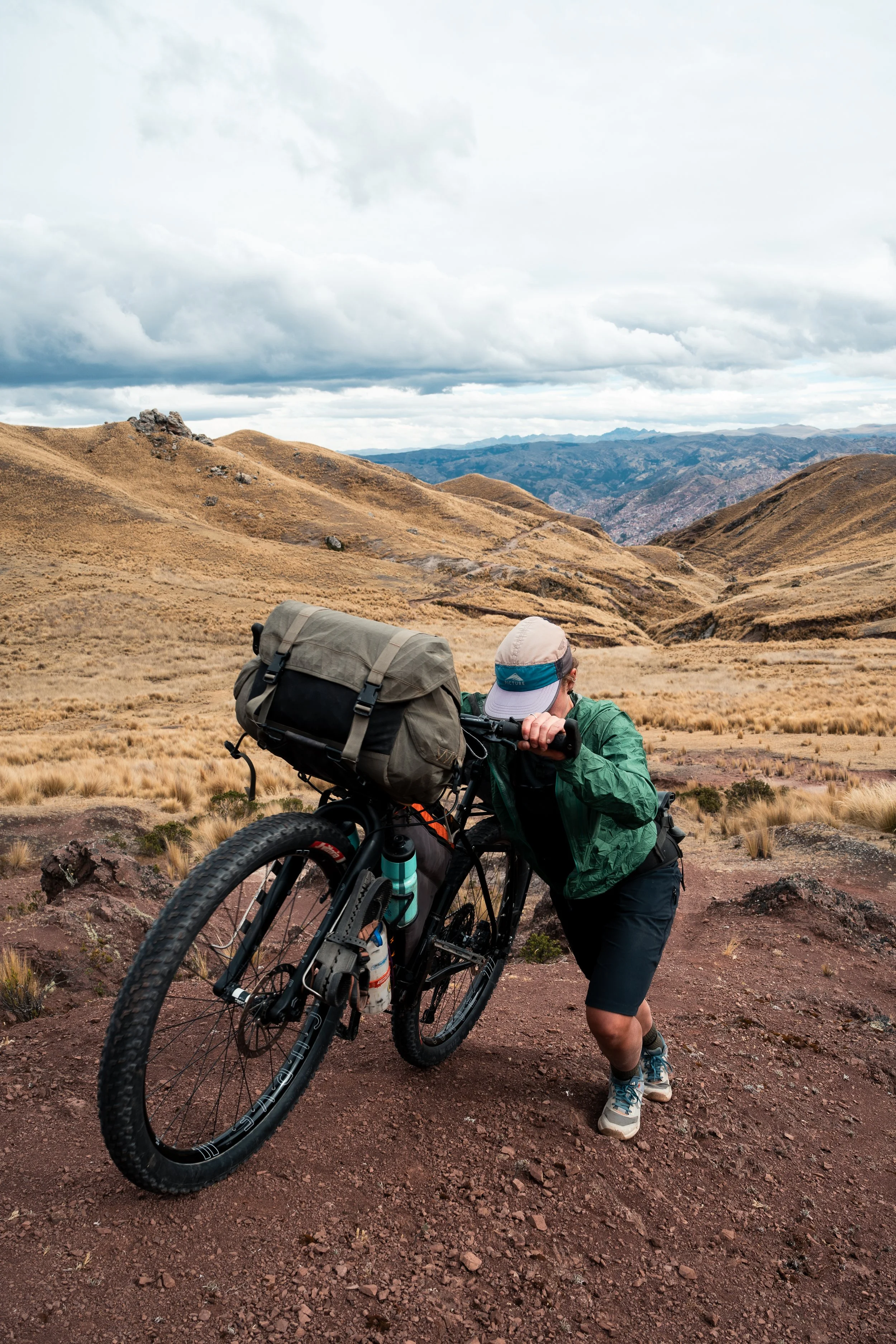
After a couple of navigation…freestyles…on the farm tracks, we were over the first pass, the city gone. Up here there were no farms, no animals, no buildings. We had not expected to find this isolation so easily, but had also hoped there would be a few reminders of the Incan empire so close to their city up here. The closer to the top we got, the steeper the pushing, and we were thankful to reach it without any rain, as dark clouds were menacing us. We had a slightly late start as I had to retrieve my credit card from a bank after it was eaten by an ATM, so it was already quite late as we got to the pass. Without any path to follow, we descended through tussock and rocks to a ridgeline, with a chill wind blowing. The sun was about to disappear, and the next move was a very steep descent down a rocky gully, so we found a small nearly flat spot and put the tent up. We had just enough water to make our dinner - given the rain over the previous few days we expected some streams or lakes, but the only water supply we found had human faeces and toilet paper in the nearly dry stream, so we avoided it.
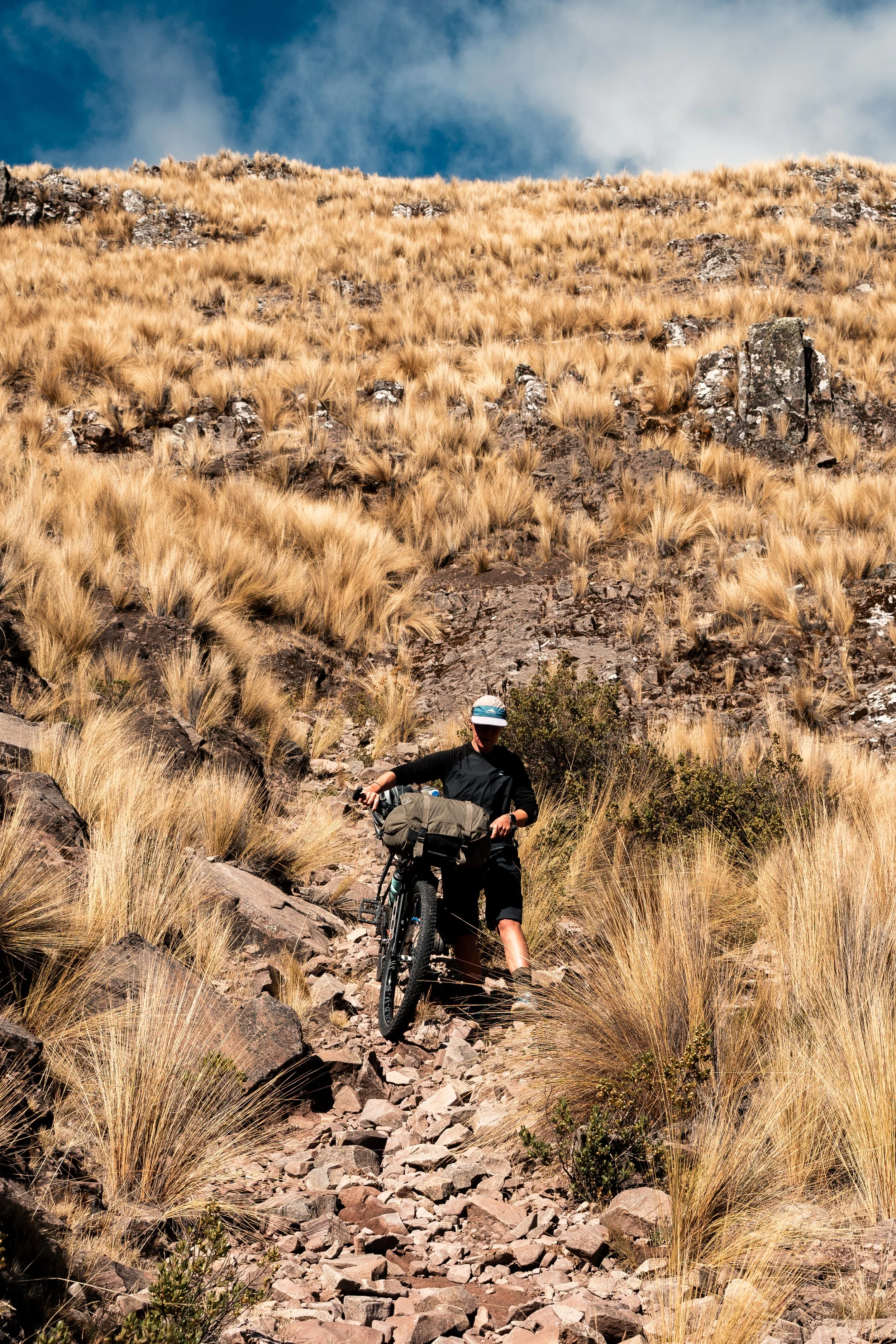
The mornings descent.
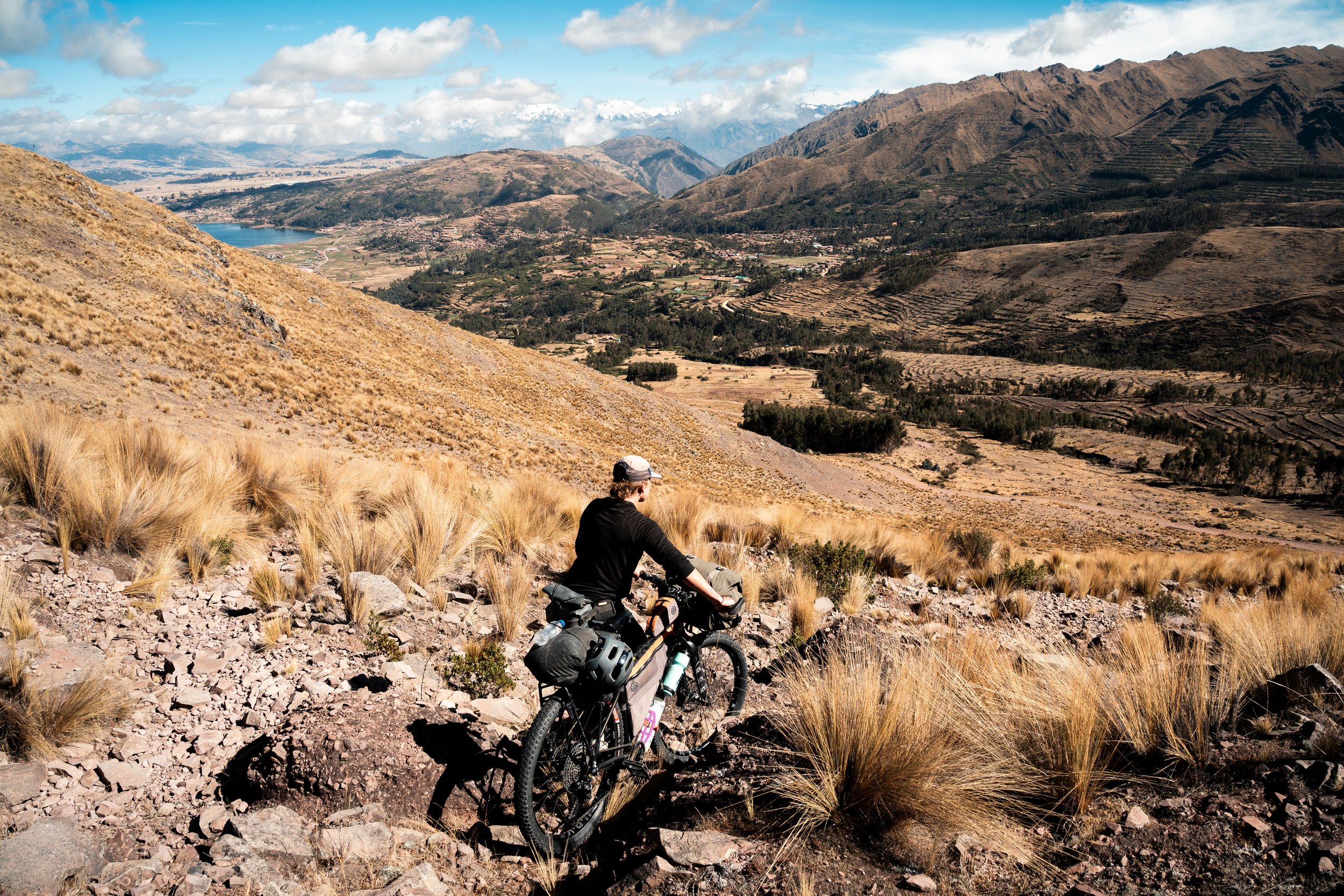
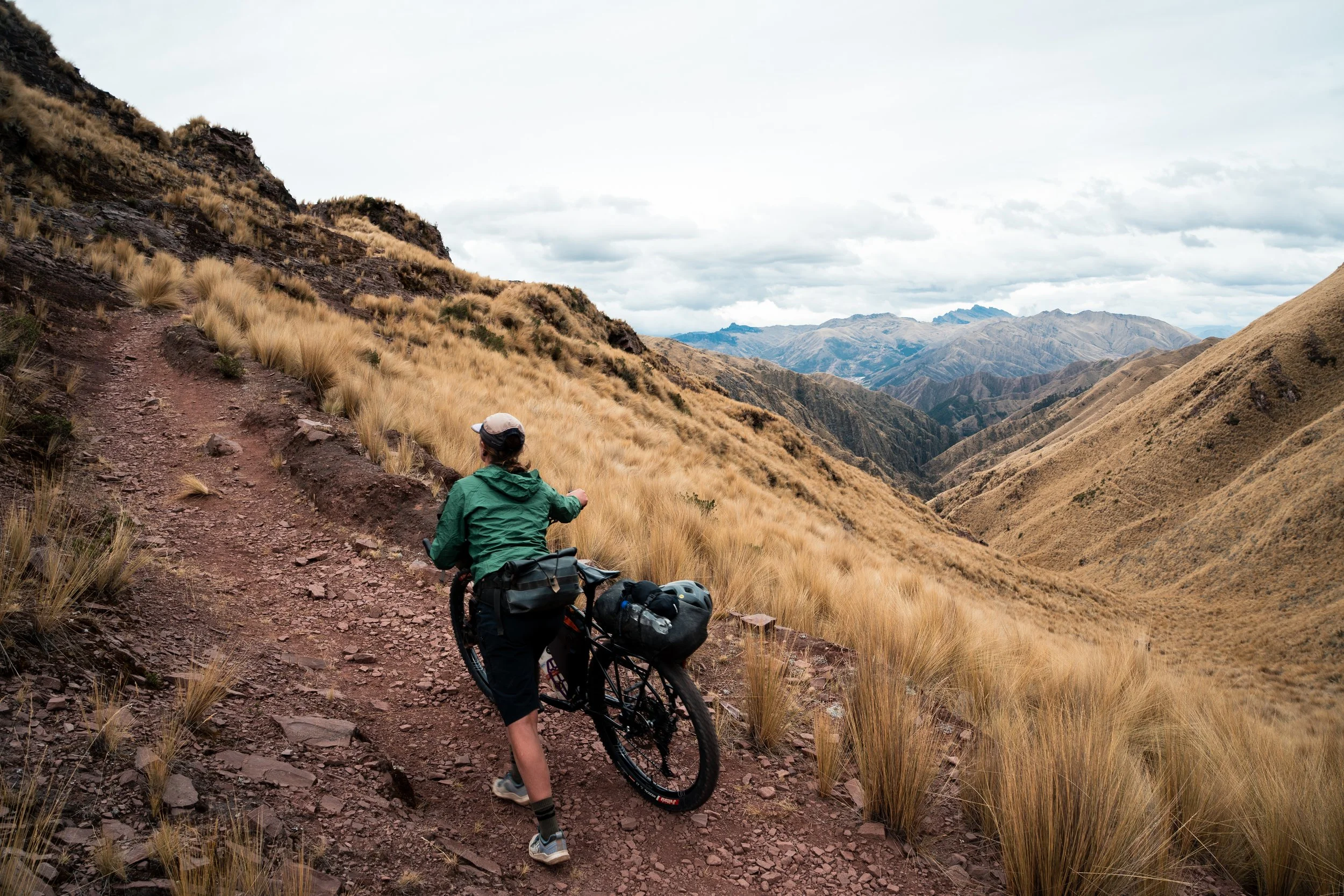
The next morning began with the steep descent down the gully, as we carefully lowered our bikes down, trying not to trip or slip. We had a quick breakfast at a tienda in a small village (having no water to make some at the campsite). As we pulled up, a group of porters were taking off, each carrying huge backpacks of gear that must have been at least 100L each; we didn’t see any tourists though. This stretch of trail was apparently an Incan road, but we struggled to tell it apart from a jeep track for the most part. Near the head of the valley we thought we saw some terraces, but on closer inspection they were just stone walls arranged to look like some, with no retaining occurring. We were unsure if these were modern or old.
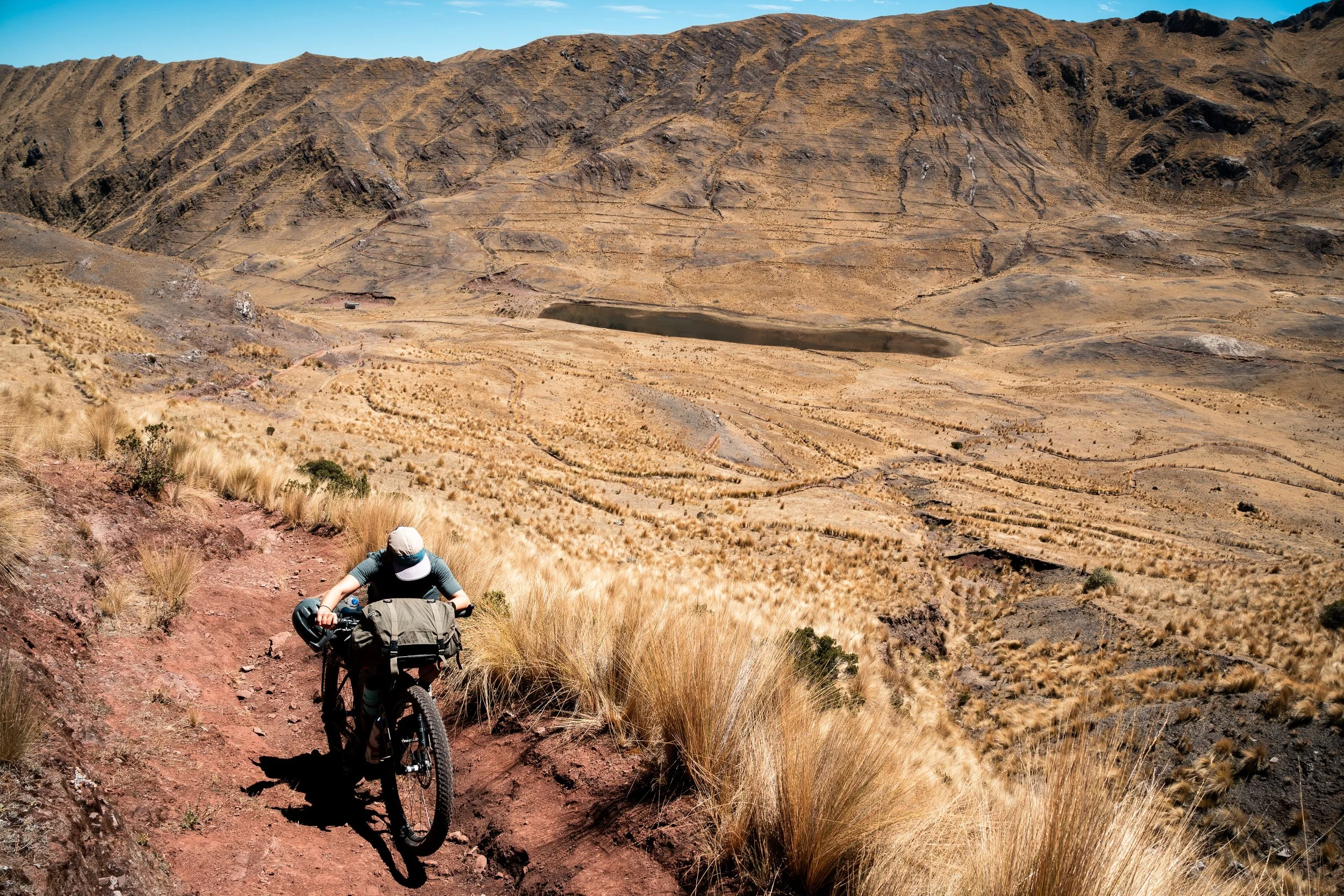
We stopped to make a coffee overlooking the lake at the head of the valley, where we ran into a couple of other tourists. They were supposed to hike to Machu Picchu, but severe rain in the preceding few days had caused widespread flooding and the closure of the trails, so were doing this as an alternate.
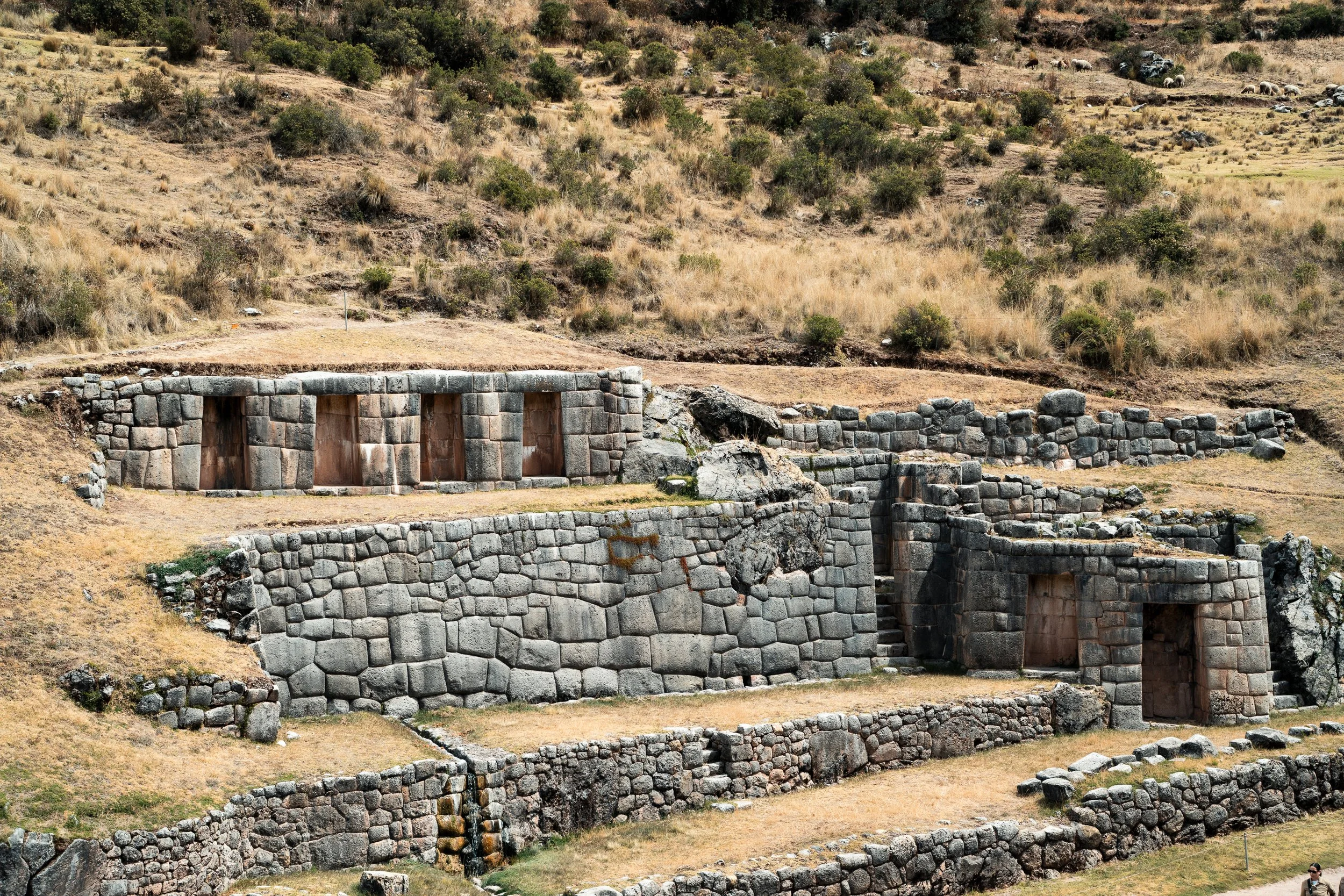
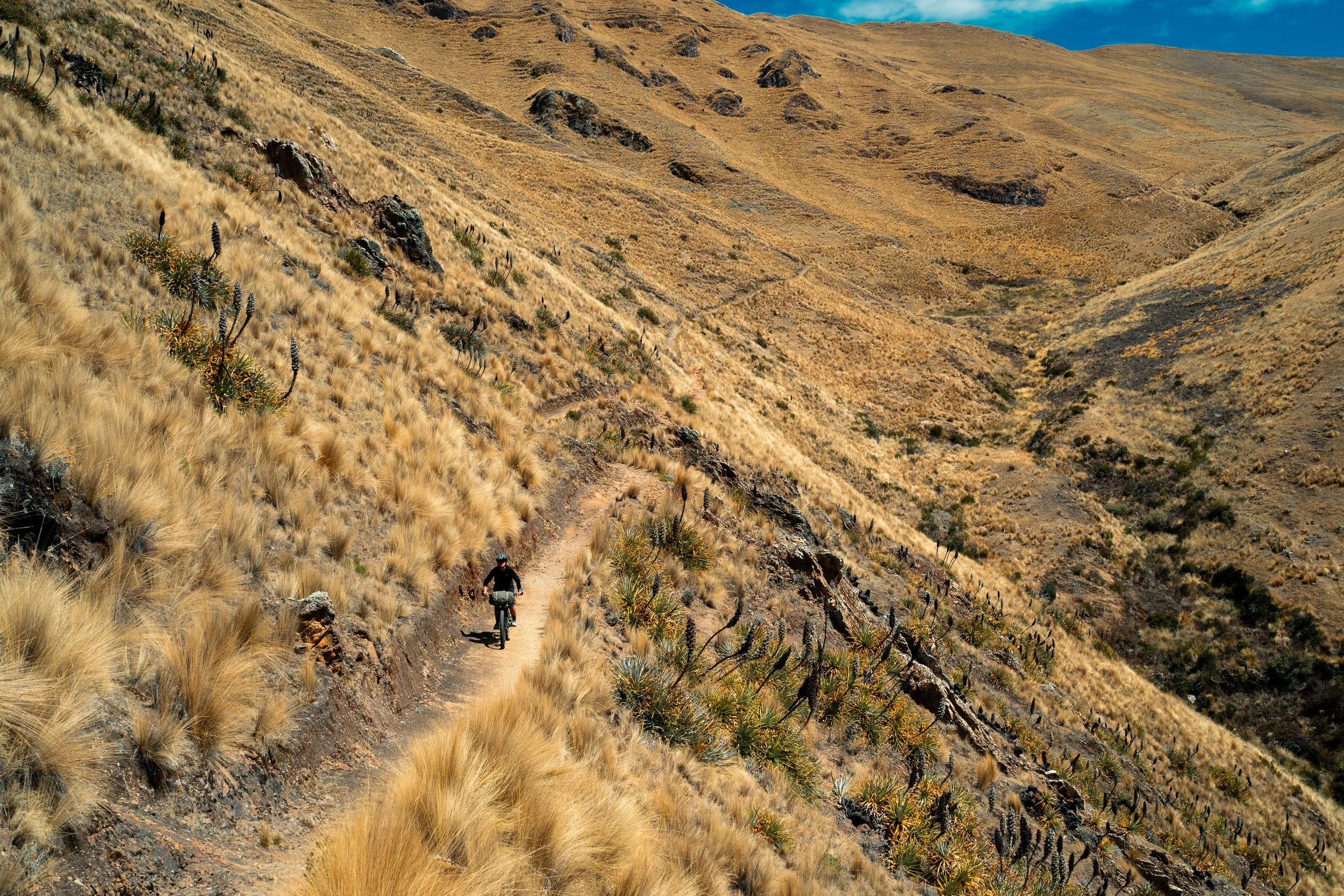
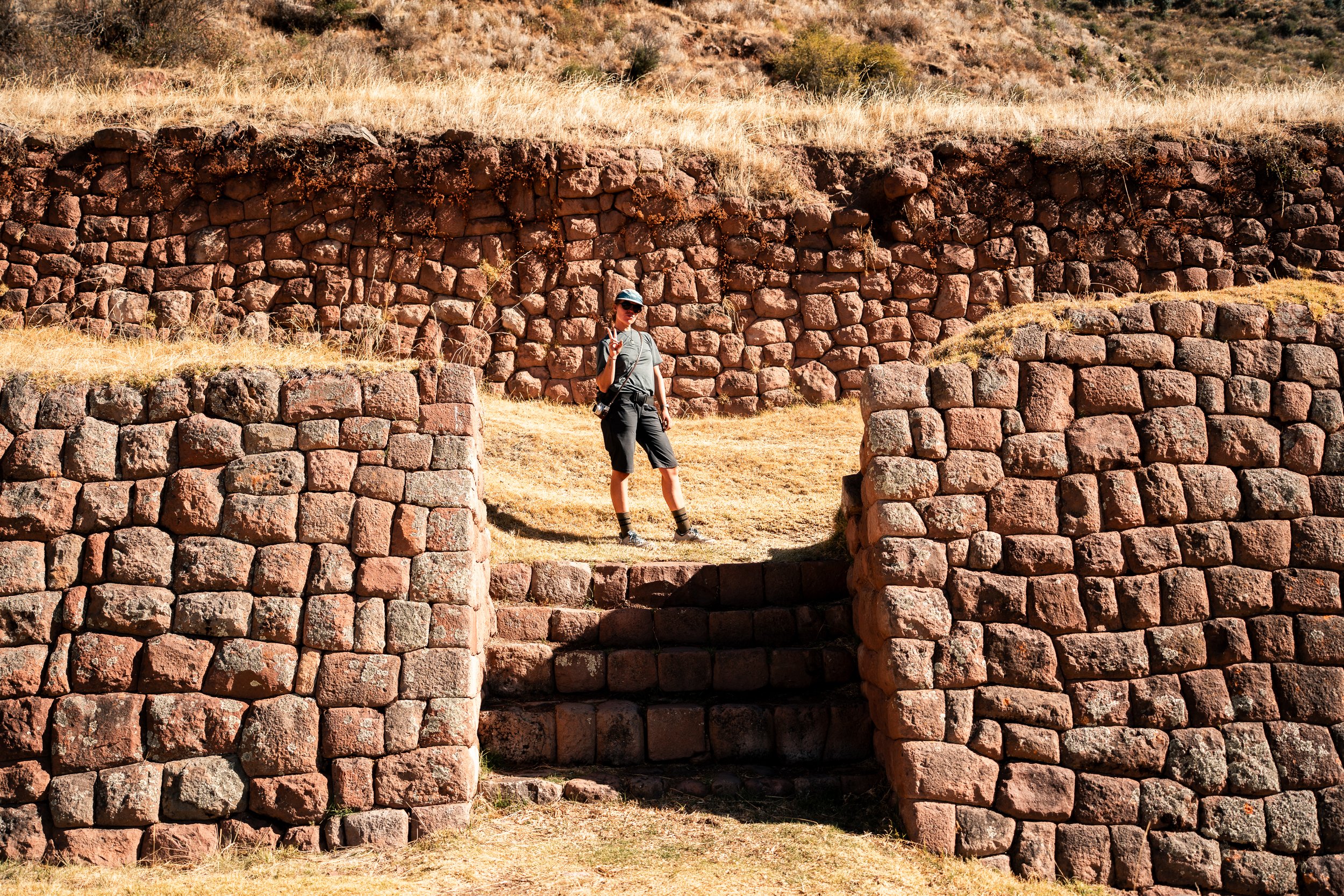
We carried the bikes up a few Incan steps to the pass. Looking down the other side, all we saw was a wide, smooth trail, perfect for biking. Halfway down, we entered a narrow gully with frequent steps - another piece of Incan road. The scale of their stonework always impressed me. Even here, on this small trail, there were stone retaining walls up to 2m high, held together with no mortar. Terraces of these were placed wherever physically possible. The amount of time and effort it would have taken to do any single section of their construction was incredible. Then you ride down a valley with over 400 terraces from top to bottom, on both sides, for kilometres, and are just blown away again. It’s insane, and this isn’t even considering the monumental architecture of their temples and palaces, just their agricultural and roading systems.
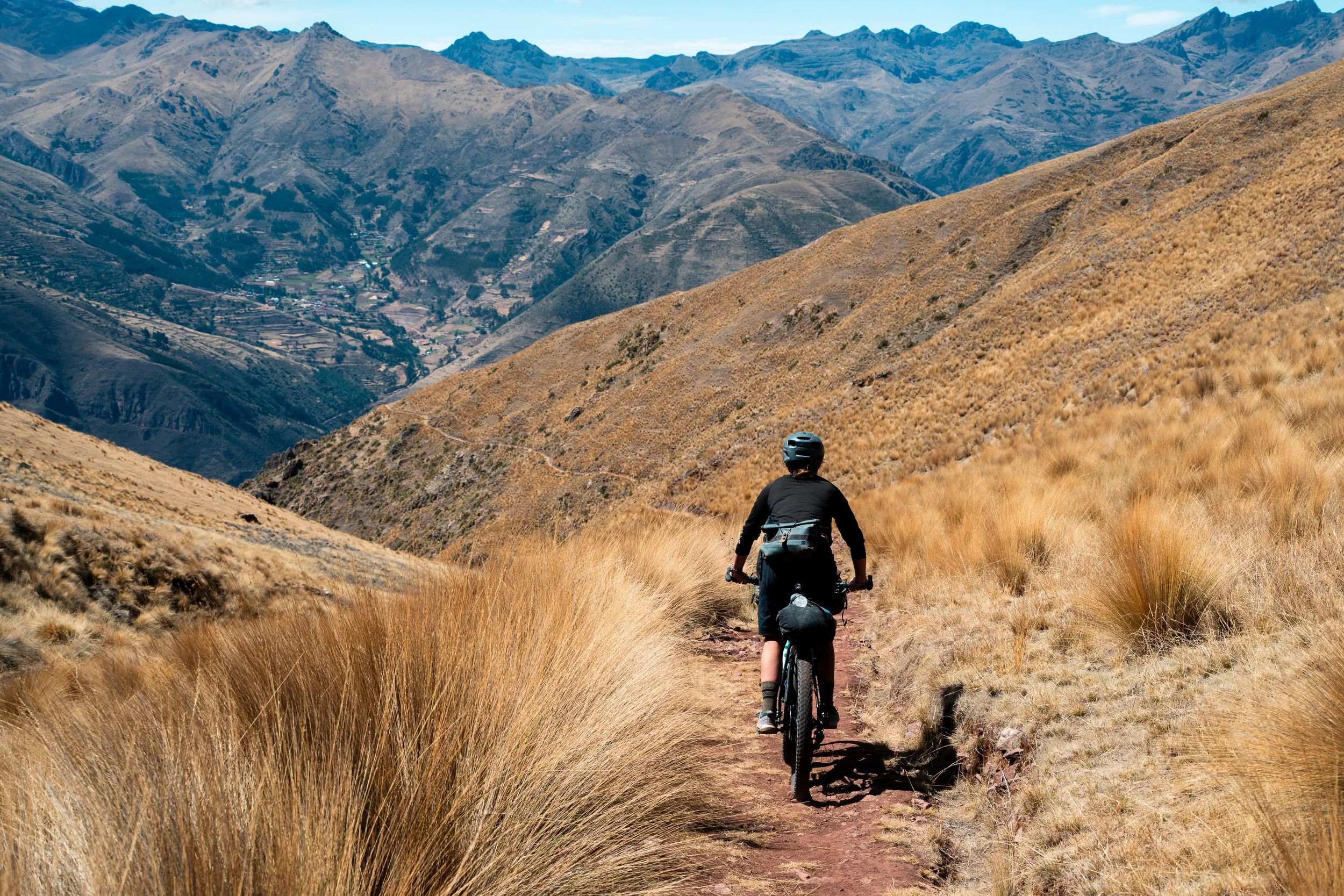
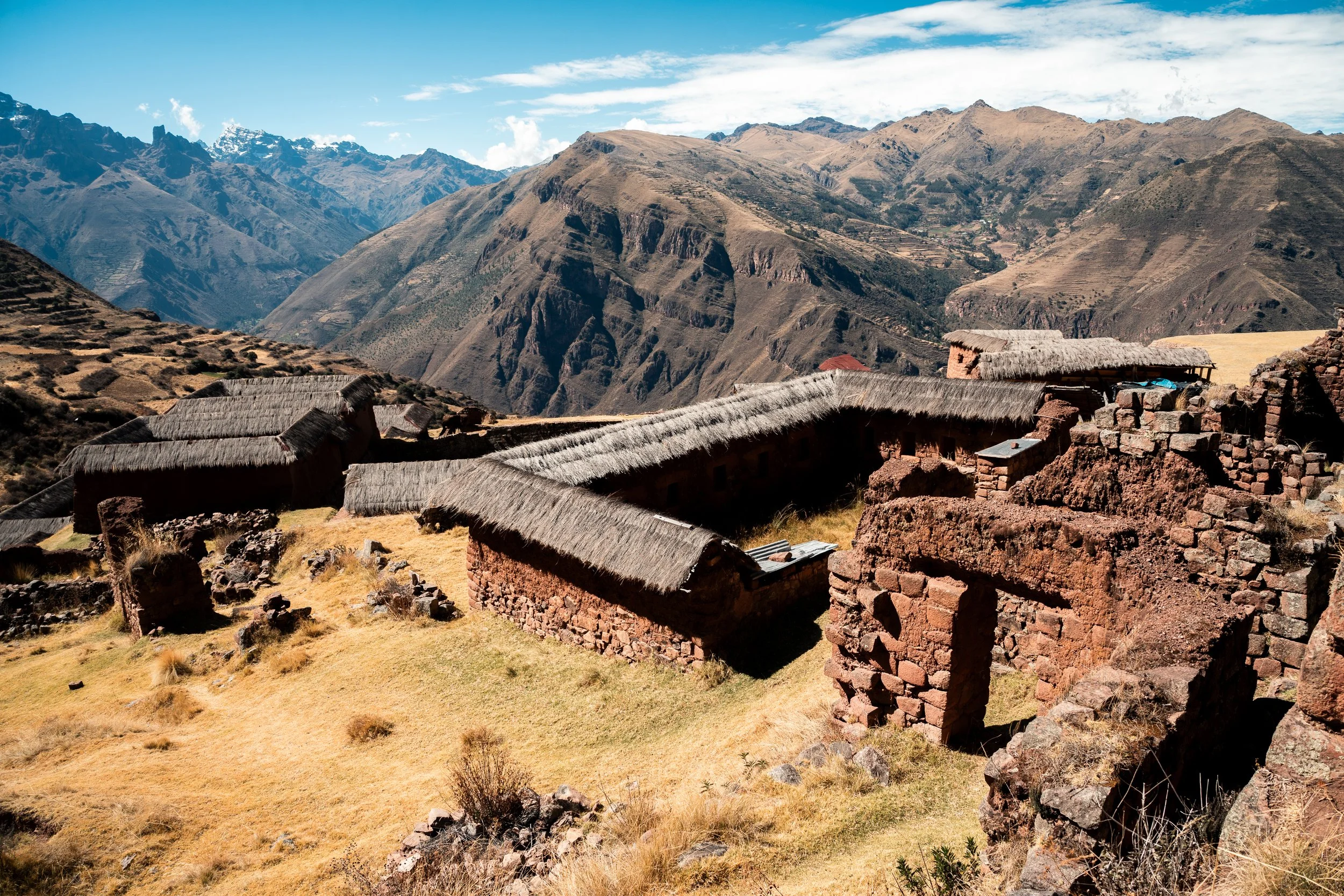
Eventually the trail dropped us to Huchuy Qosqo, a summer residence or royal escape for one of the Incan emperors, or more technically, one of the ‘Inca’, as this was the term they used for their emperors (eg Manco Inca), not their empire. Perched on a ridge overlooking the valley, there was a large plaza, some remaining adobe walls (not all Incan building was in stone), and a road heading out of town, through what we presumed was a guard post and around the mountain side to other settlements. There were also lots of terraces. There were only two other groups there when we arrived, and they quickly left, leaving us alone to explore the ruins.
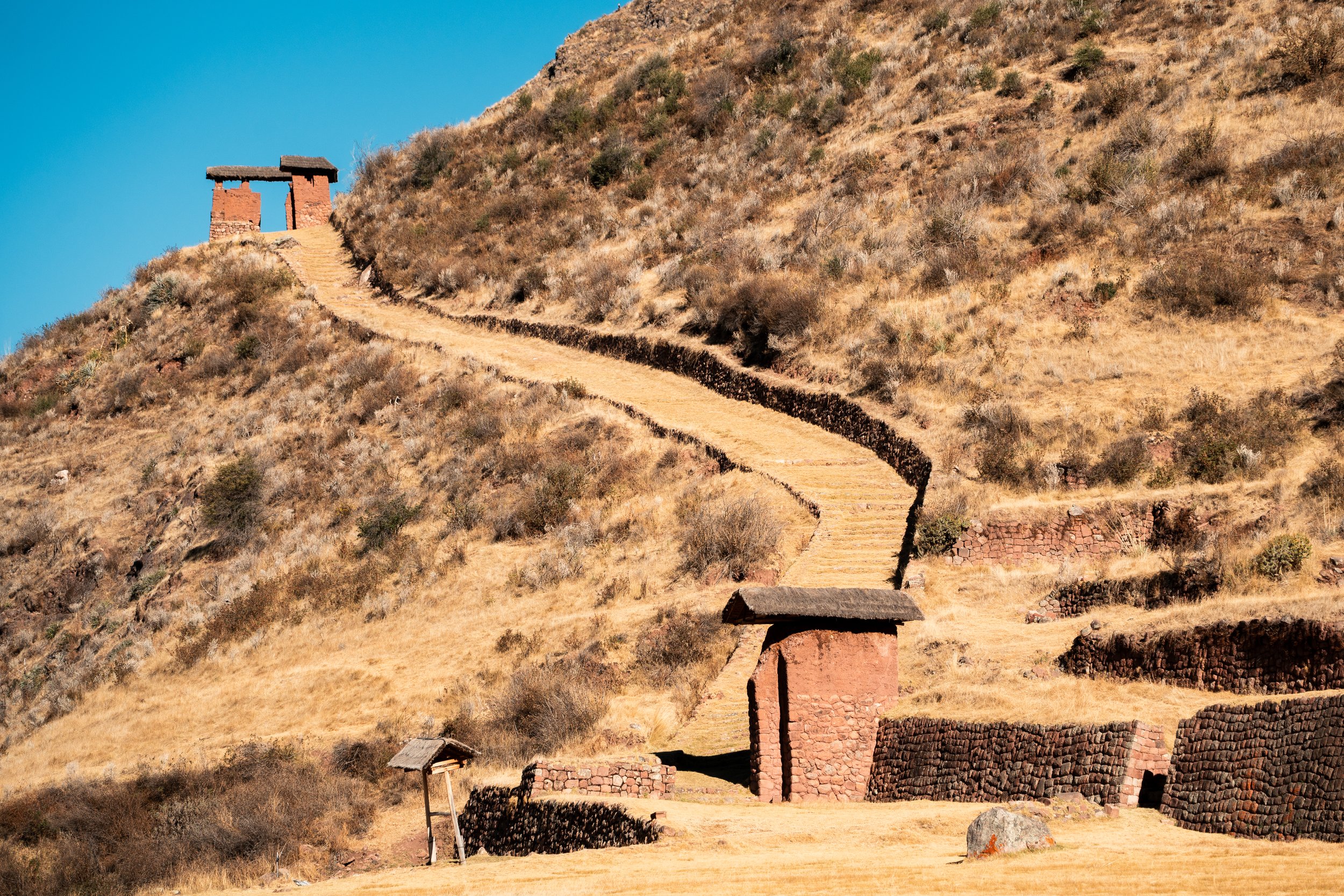
The road and guardhouse leading out of the village.
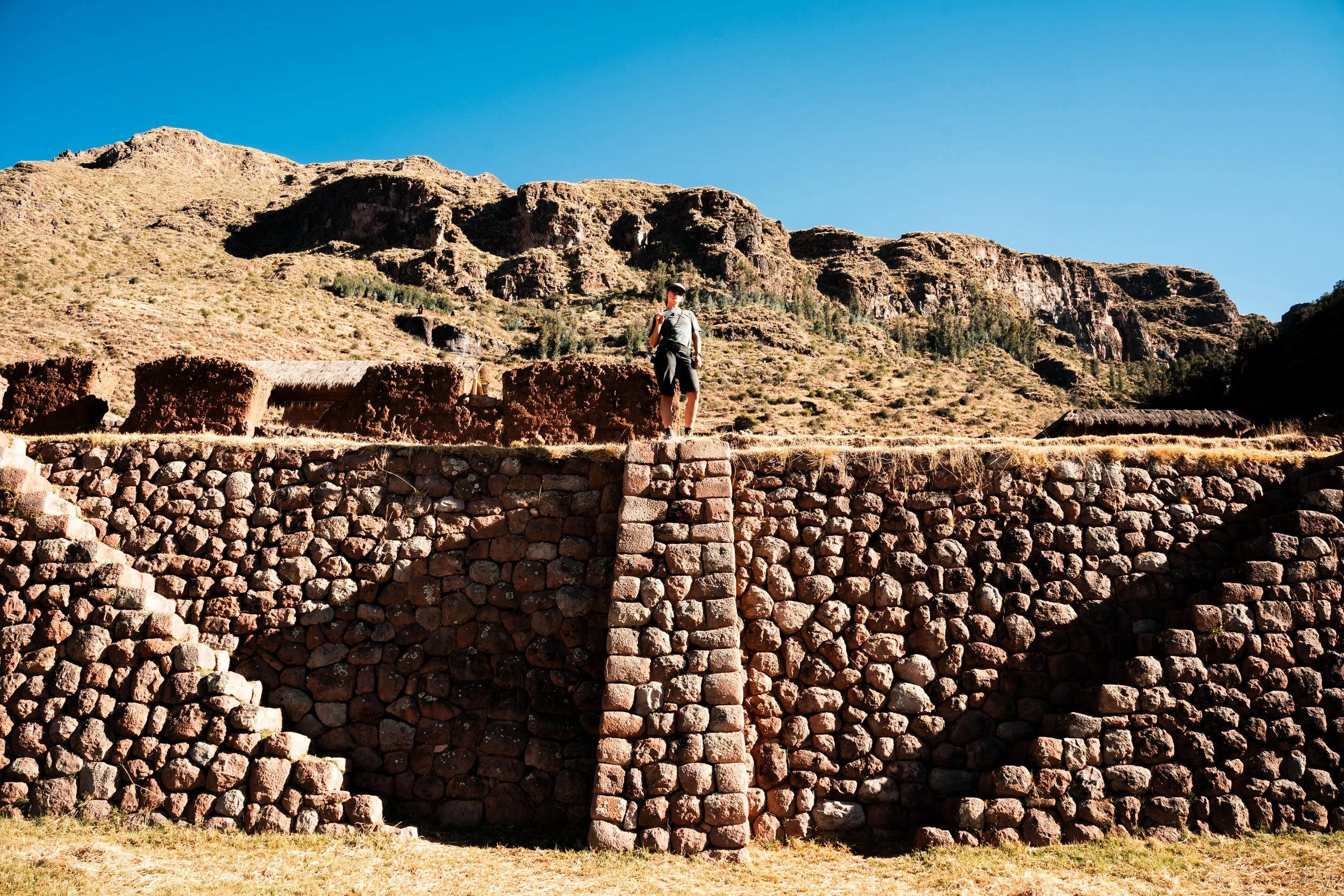
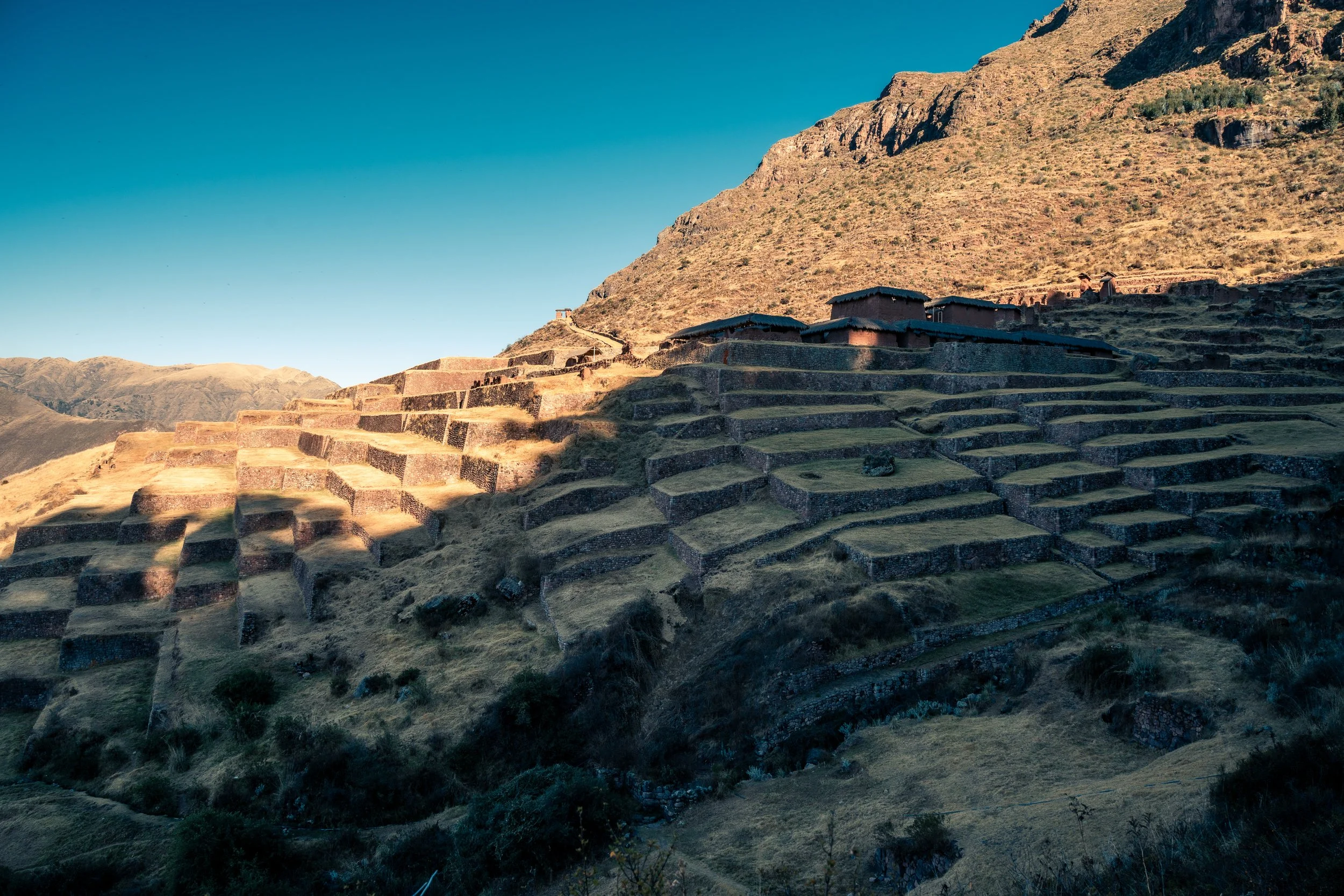
It was a steep winding descent to Calca in the Sacred Valley, the nearest town to us, and Lauren had found a kebab shop that looked promising here. We found a hostel, and on checking in noticed another bike in the lobby. On closer inspection it appeared familiar - a blue Tumbleweed Prospector. We looked at the names on the checkin sheet and it confirmed our suspicions - this was Ryan Wilson’s bike. For those unaware, Ryan has been cycling the world for just over 10 years continuously, and is one of the most popular/famous cyclists in the bikepacking world. He returned not long after, and after chatting for a bit, we realised he had also stopped in town for the kebabs, but brought news the shop was closed, and didn’t reopen until about 1pm the next day. We had dinner together, and swapped stories of travelling - he had a good one about the Taliban saving him from ISIS in Afghanistan the year prior.
After a lazy long breakfast with Ryan the next morning, we set out for Pisac further up the valley to check out the ruins. I had heard good things about the town, but on arrival realised the vibe wasn’t for me. New-age spirituality has taken over the town, and it is now full of hippies (or burnouts depending on your take) peddling hallucinogenic trips with a mish-mash of Andean and Amazonian symbolism, with a sprinkling of yoga, breath work, and whatever other ‘spiritual’ things they want to throw in. It reminded me of an Andean Bali, full of people who think they have ‘found enlightenment’ but who are really just selling bullshit to escape reality and get high. Just my opinion though. Even worse, the town appeared to be mostly modern, but built to resemble (badly) Incan architecture and building motifs. I was glad to escape the poncho-clad masses when we left.
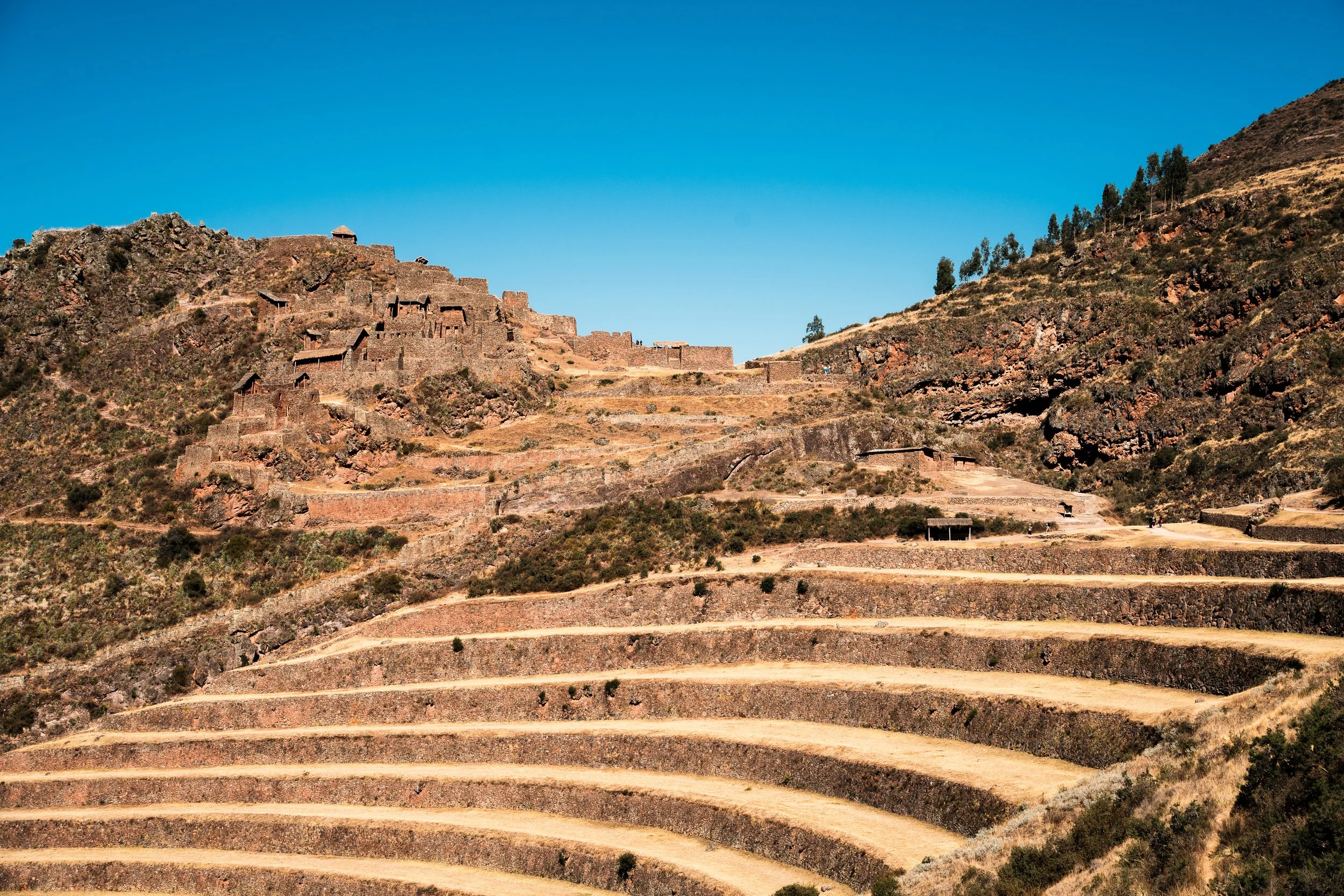
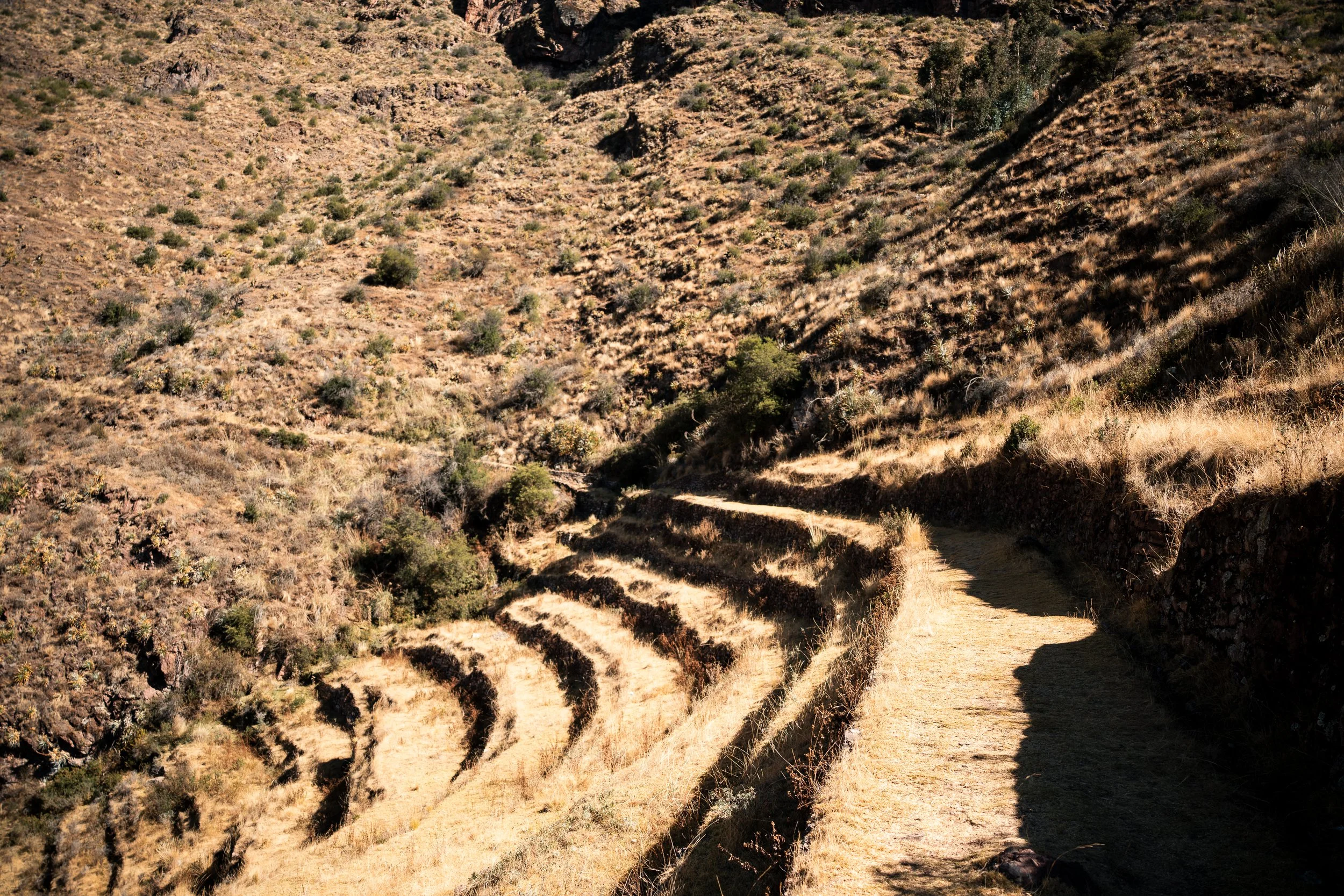
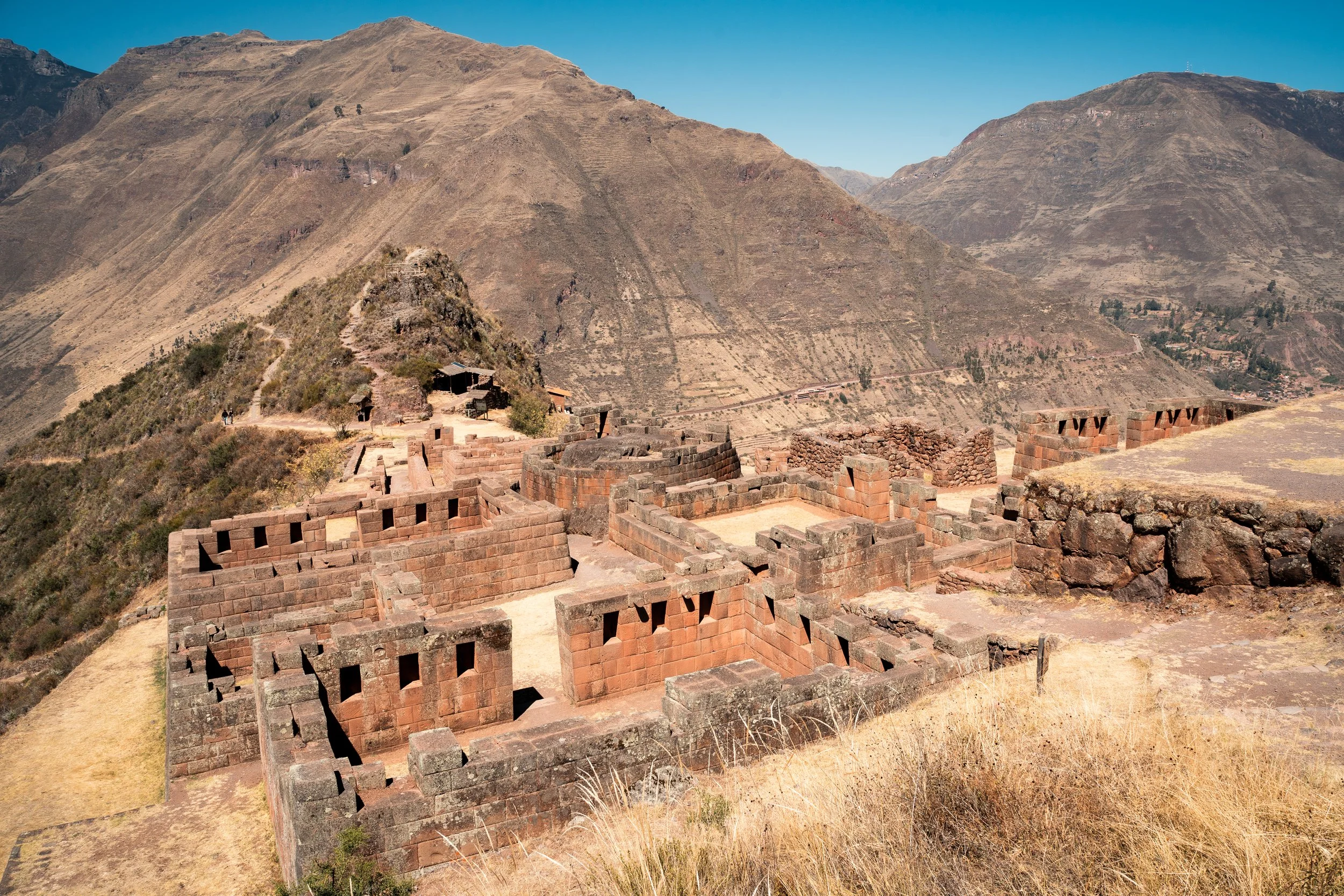
Pisac terraces with military complex in the background. There was another 4 hours of ruins to explore after these.
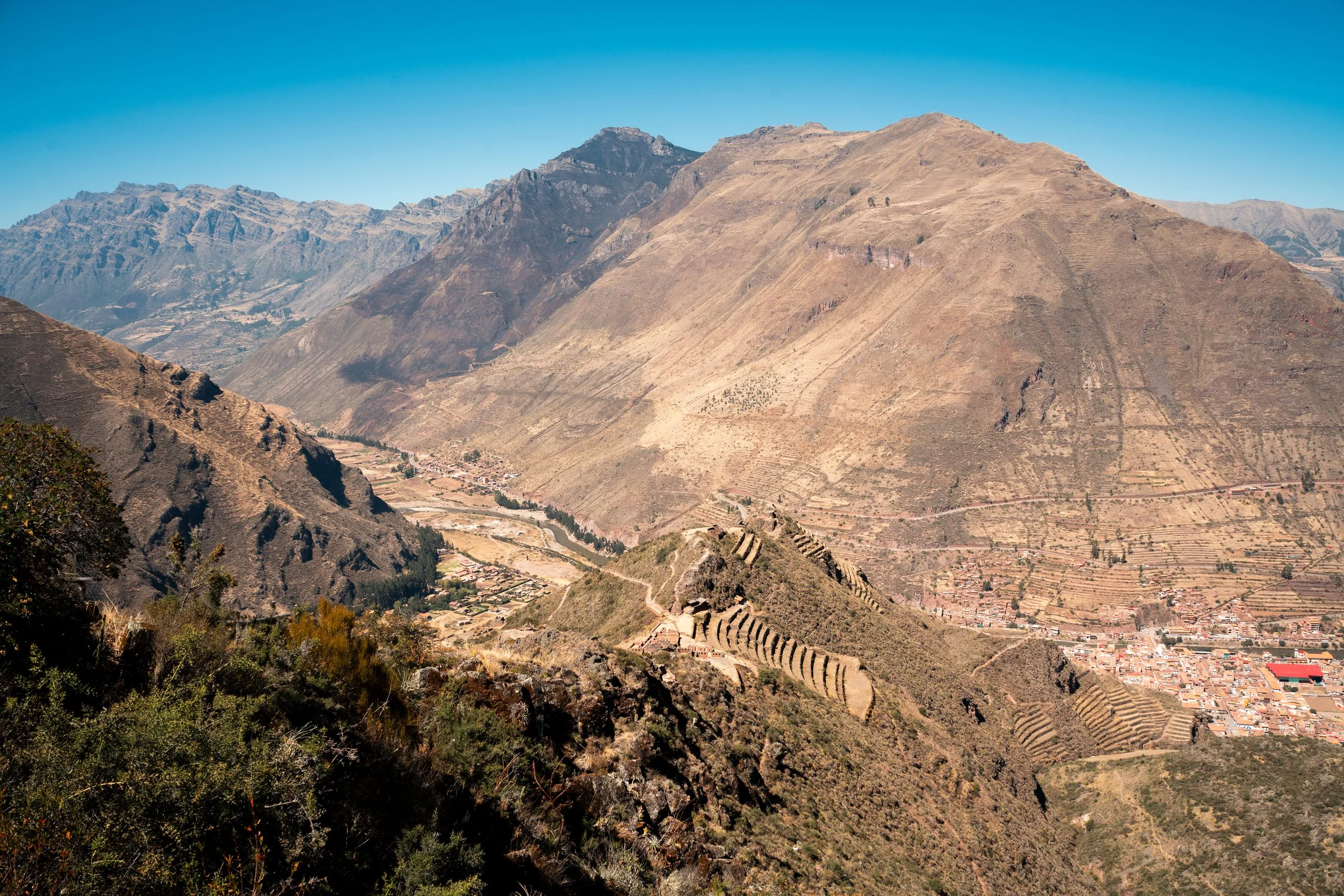
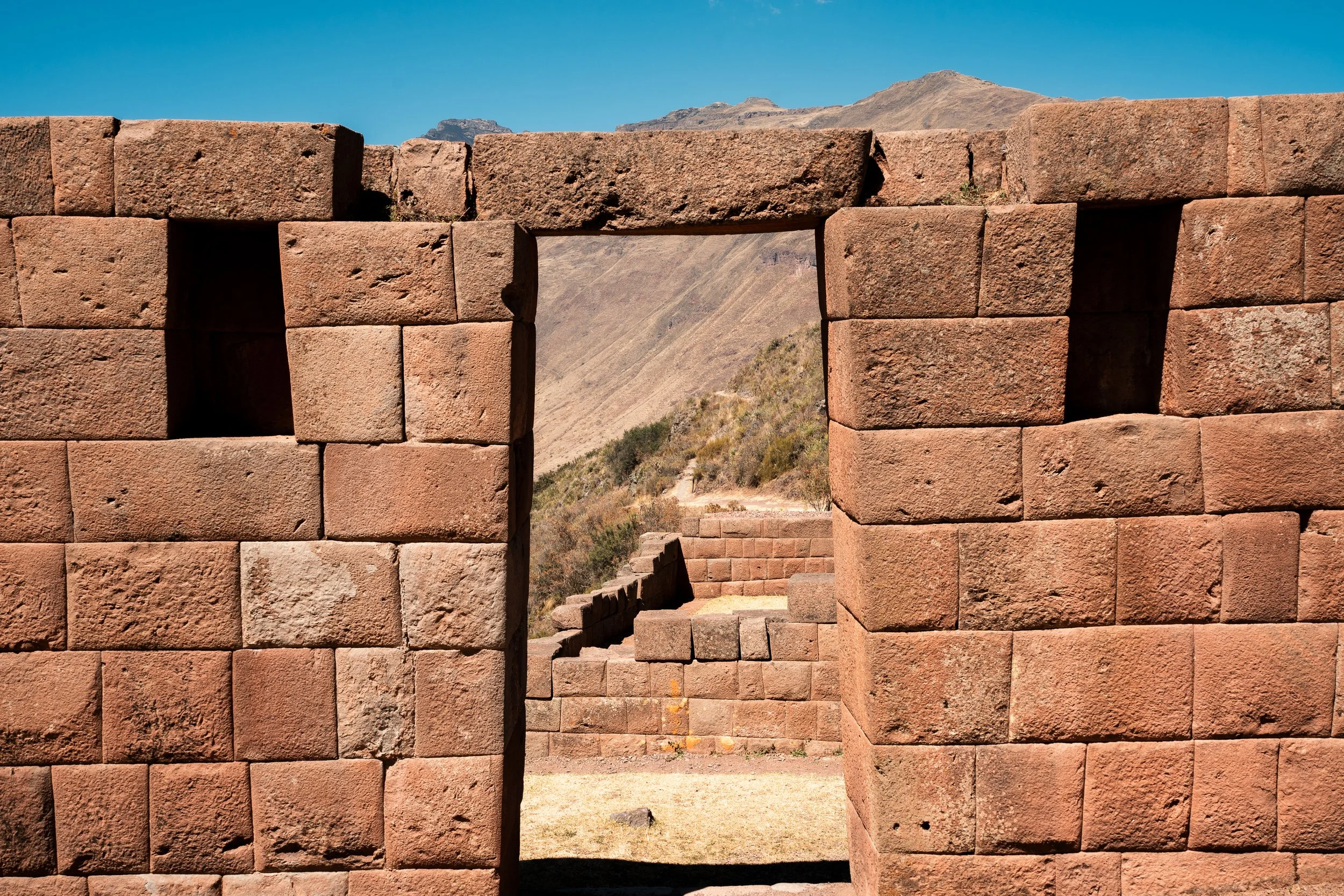
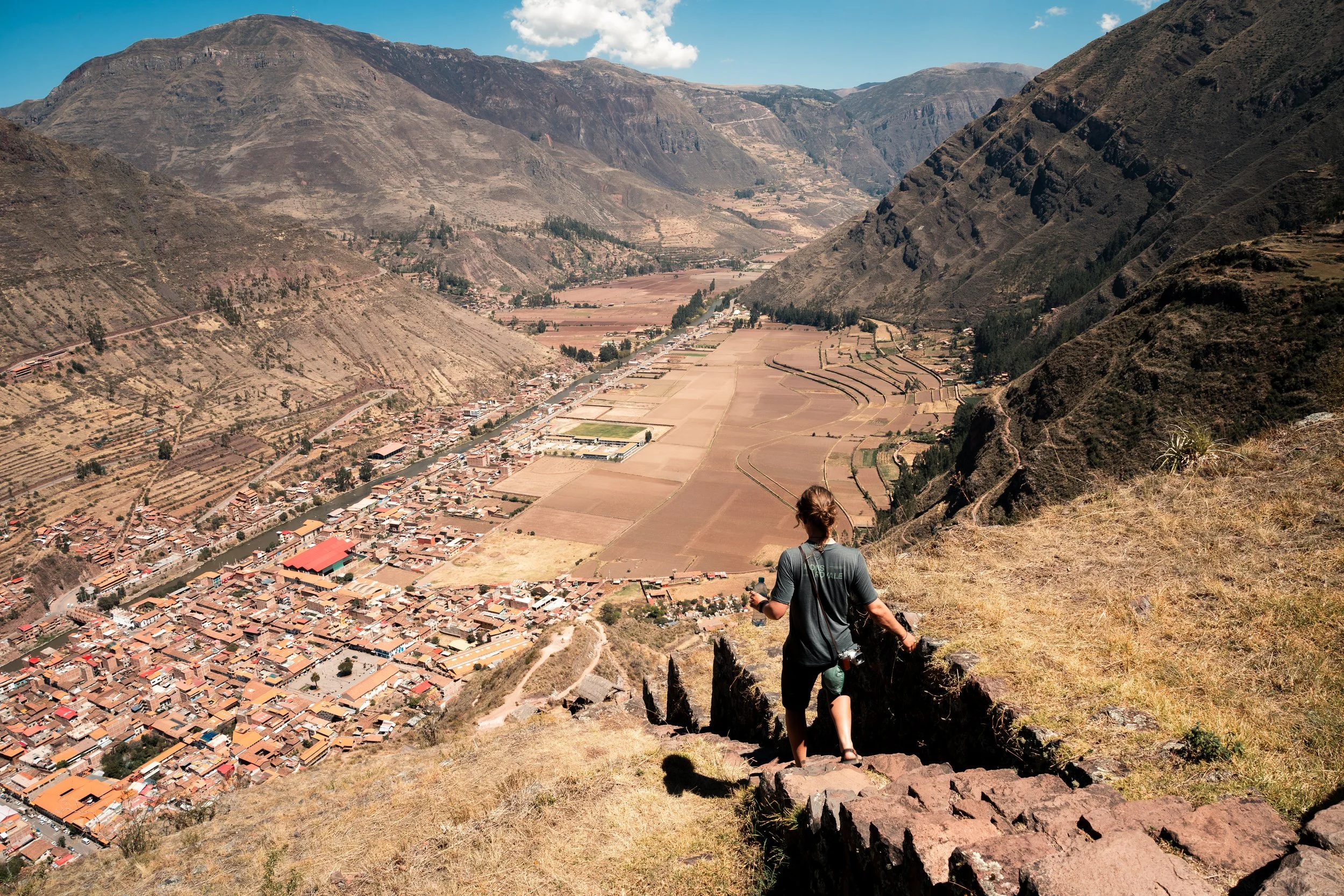
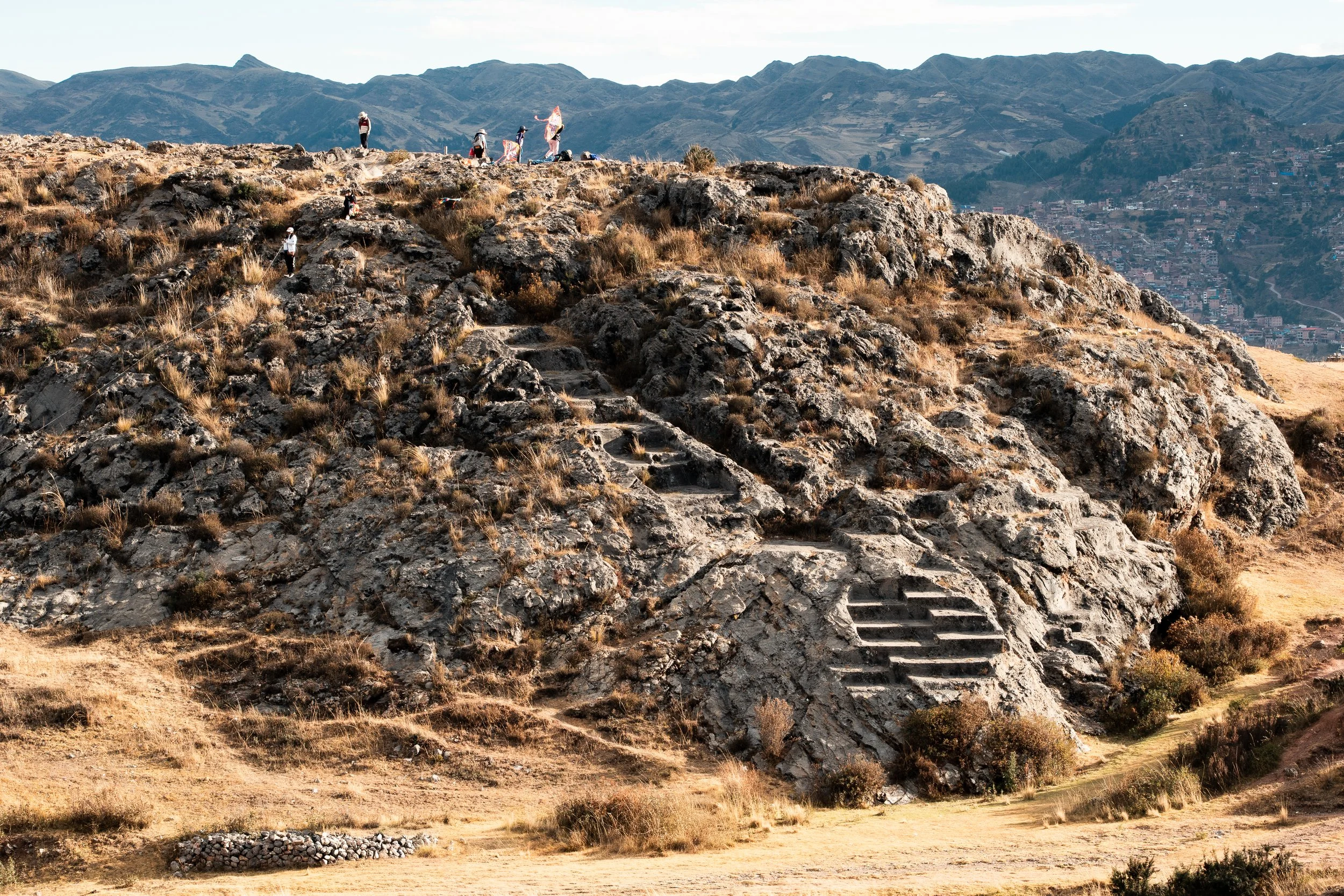
We explored the ruins in the morning, getting a taxi to the top and spending 4 hours walking down back to the city. There had been a whole community up here, with farming terraces, military complexes, and religious temples, all connected by pathways precariously winding around rocky mountains, and even tunnels with steps carved straight through the rock. Looking around, small walls were built in even the smallest, steepest gully or break in the rock. Presumably this was to help in case of invasion, but up here on this ridge it seemed unlikely that a 10m scramble up a near vertical rock face would be the achilles heel of the community.
We then cycled to Ollantaytambo, another village about 60km down the Sacred Valley. On the way we stopped in for a kebab in Calca, having missed out the day prior. The owners, Alpa and Flora, are from Turkey, and make everything from scratch. This means it takes a little while (the bread has to be rolled and fried for each roll), but it just gave time to chat with them. Alpa aptly remarked that in Pisac ‘no ones feet touch the ground’, as they all consider themselves so enlightened. He nailed it.
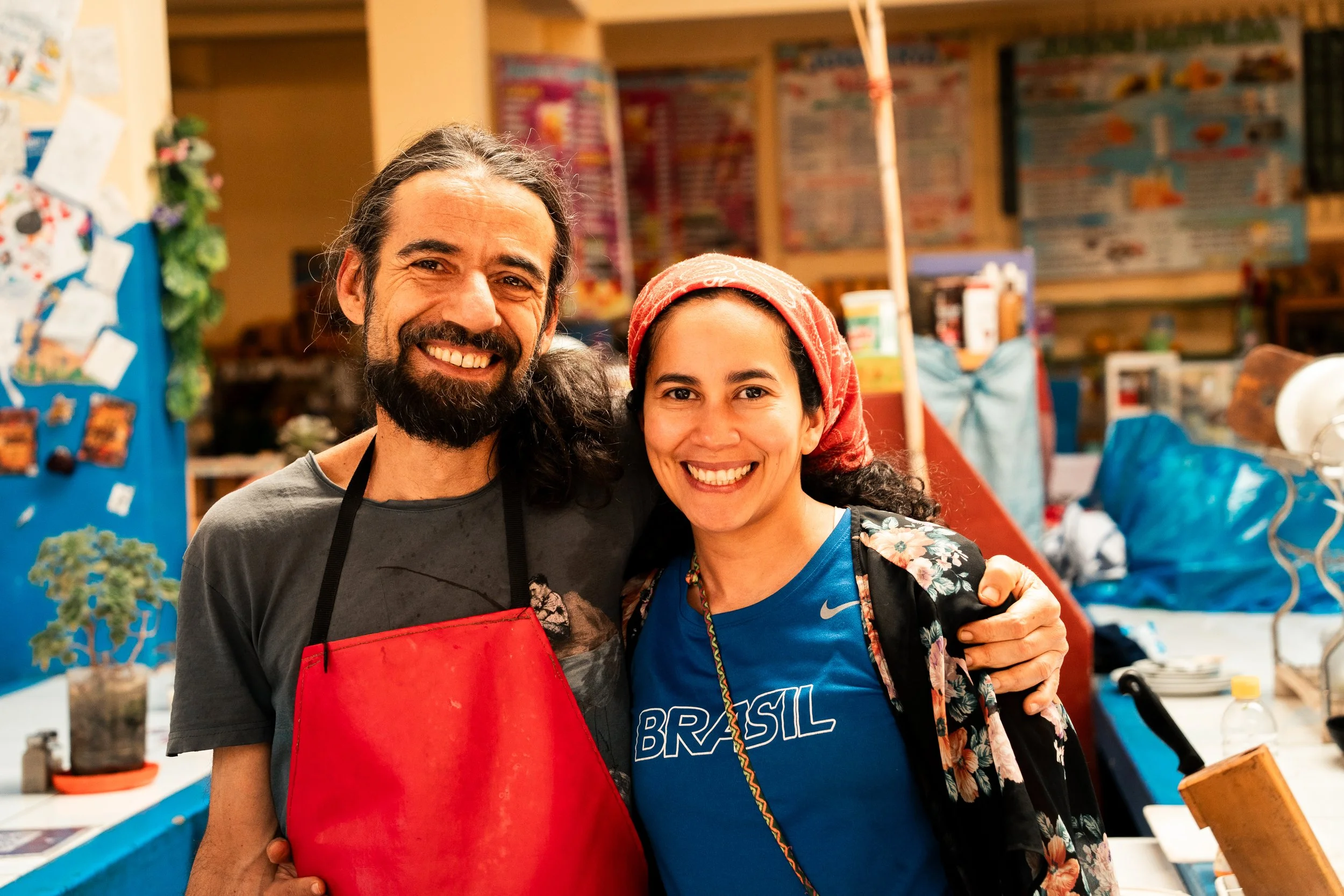
Alpa and Flora
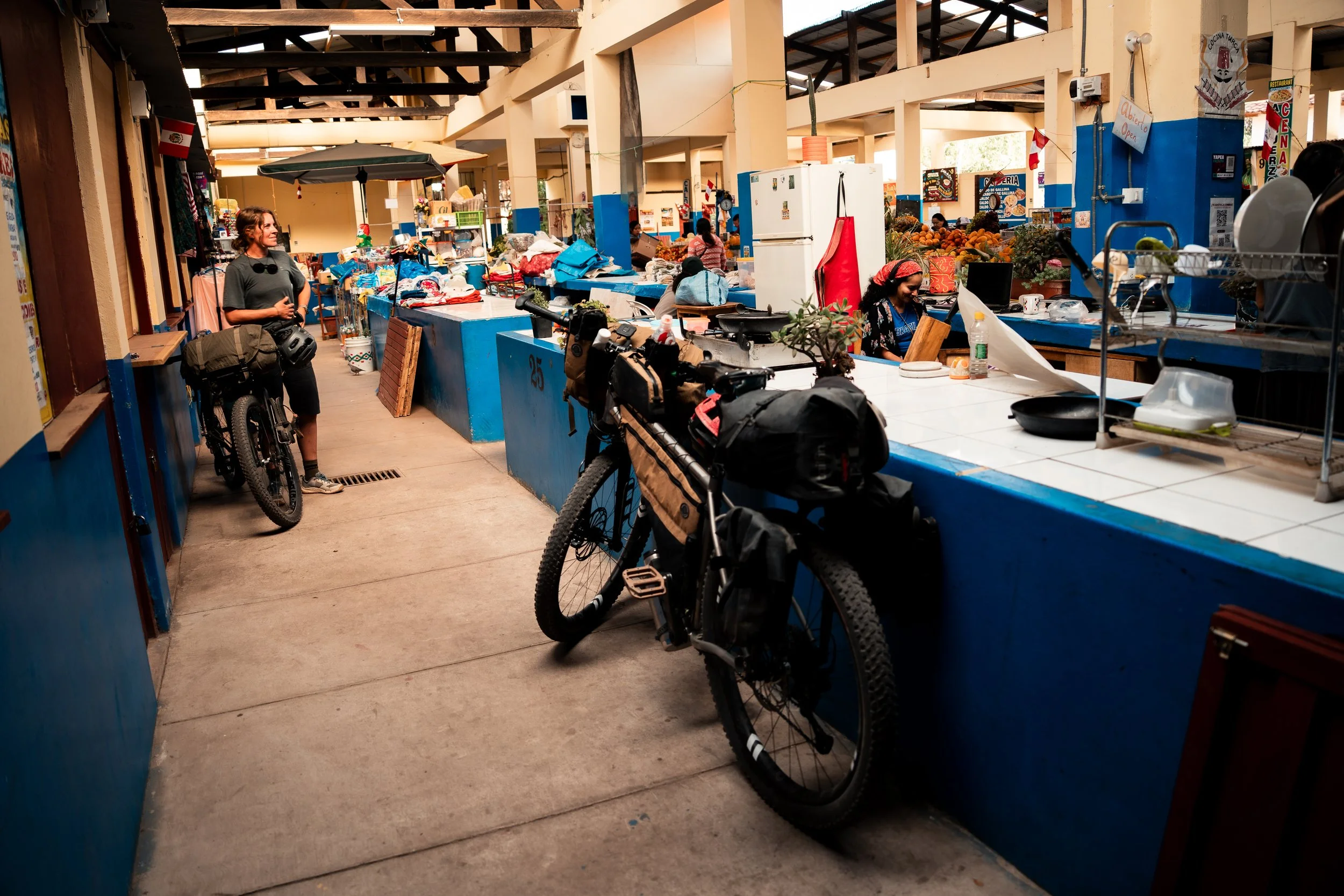
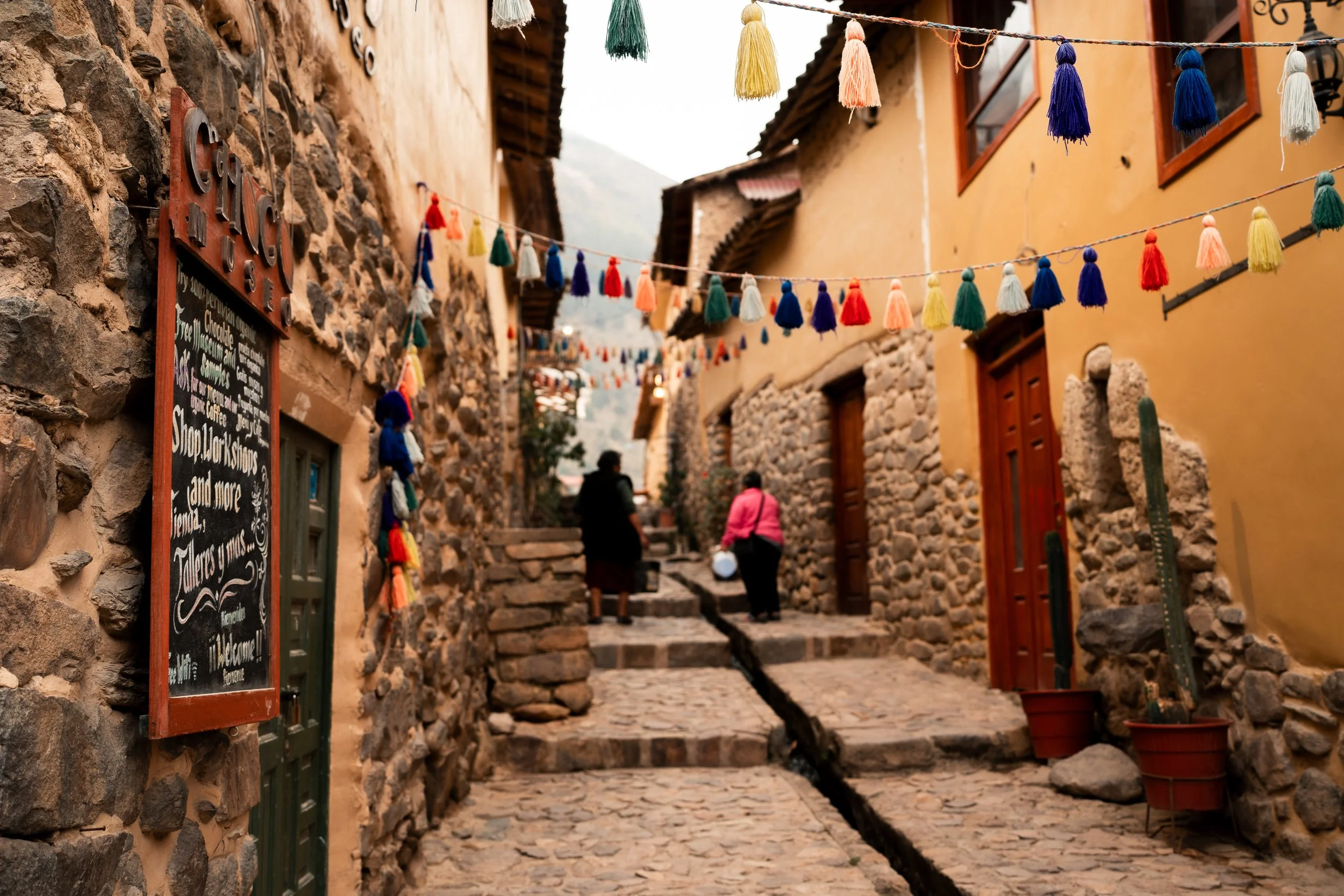
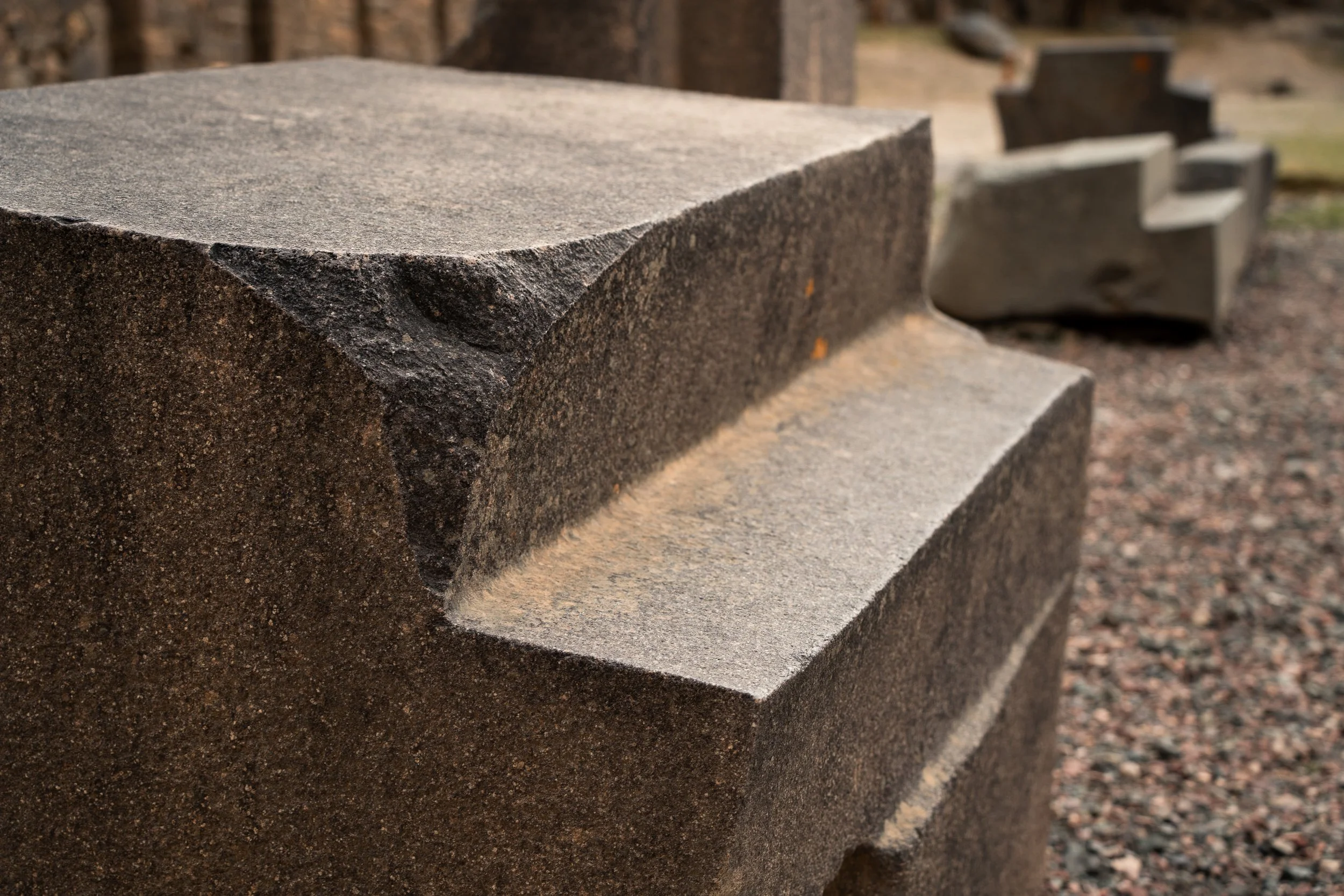
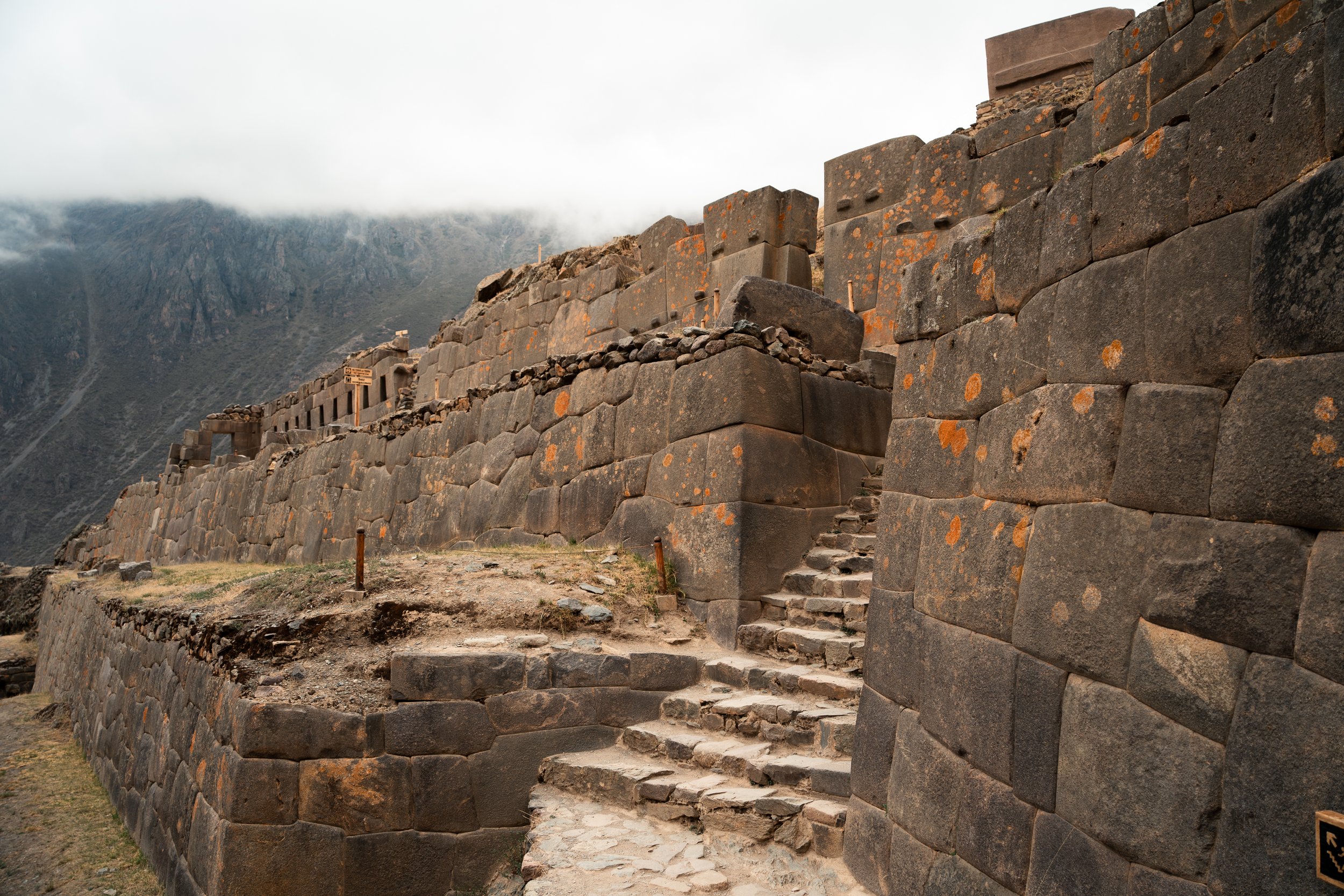
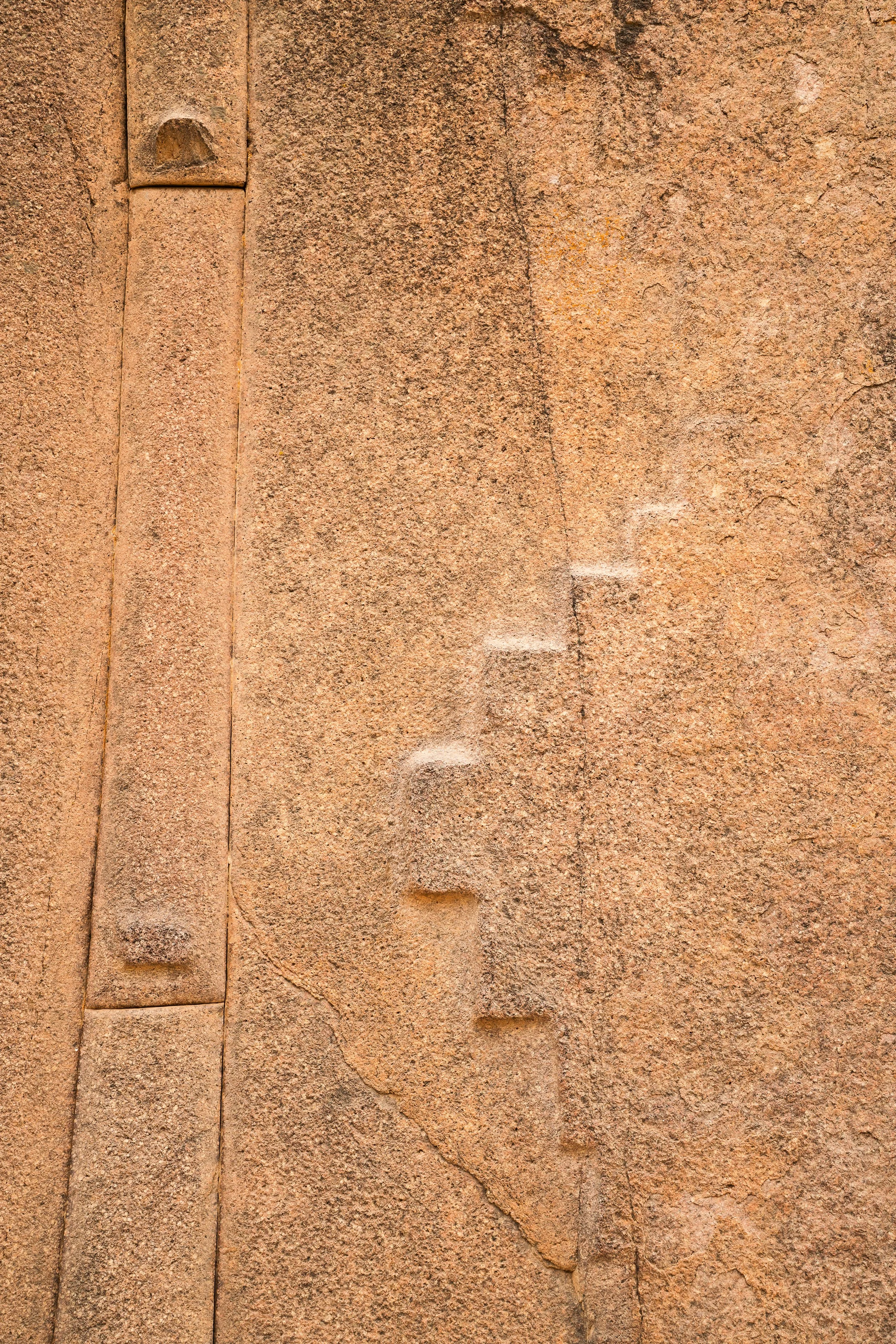
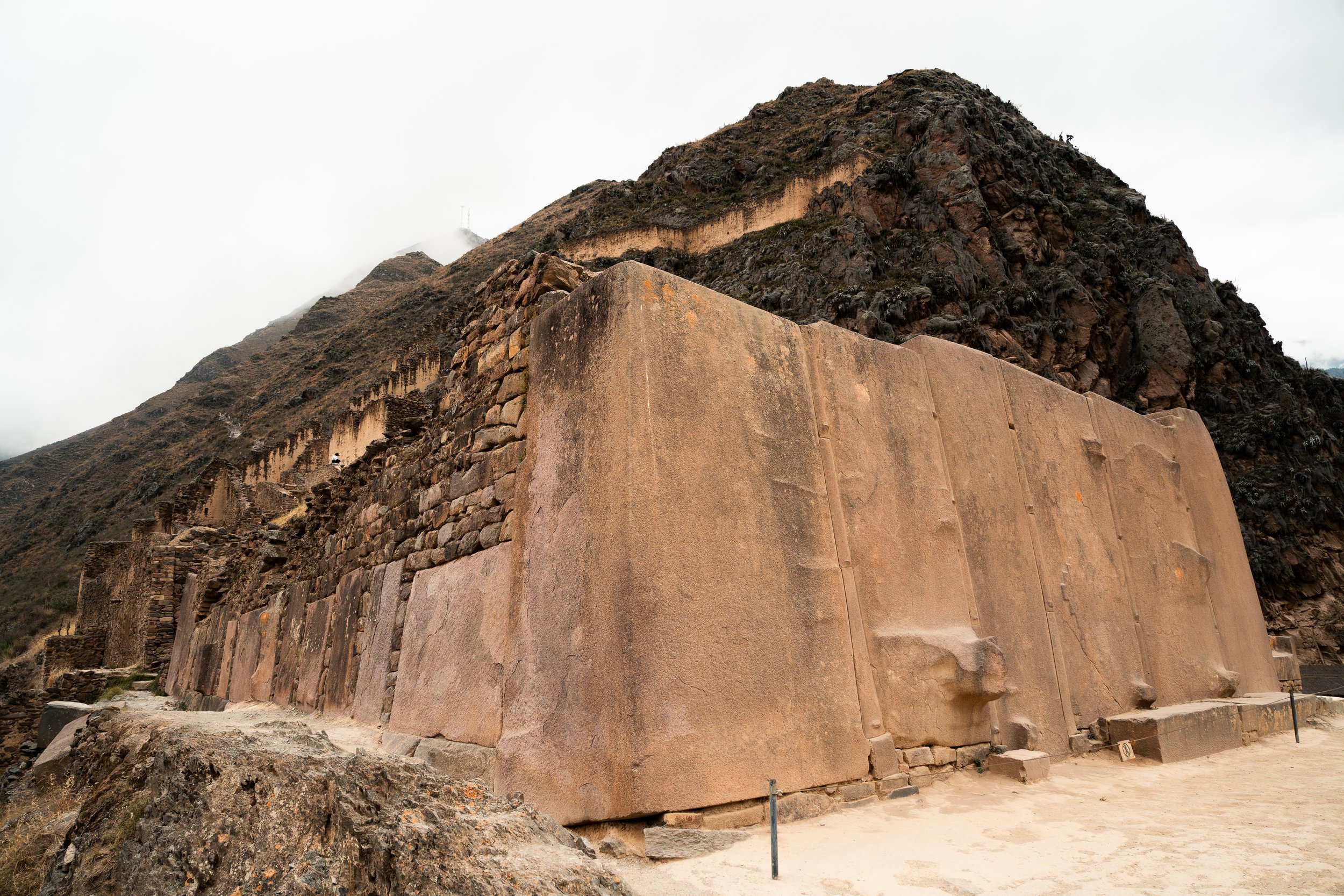
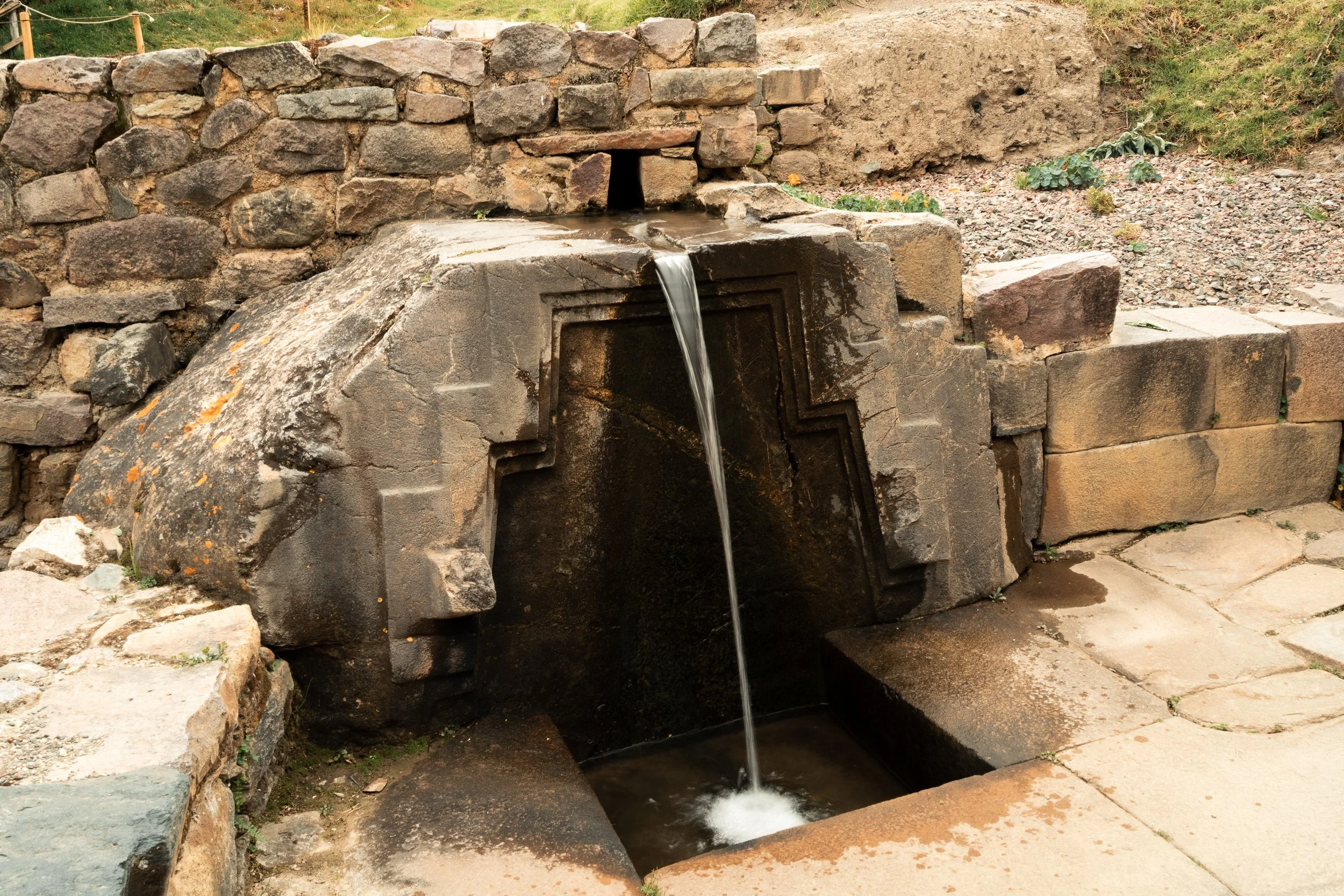
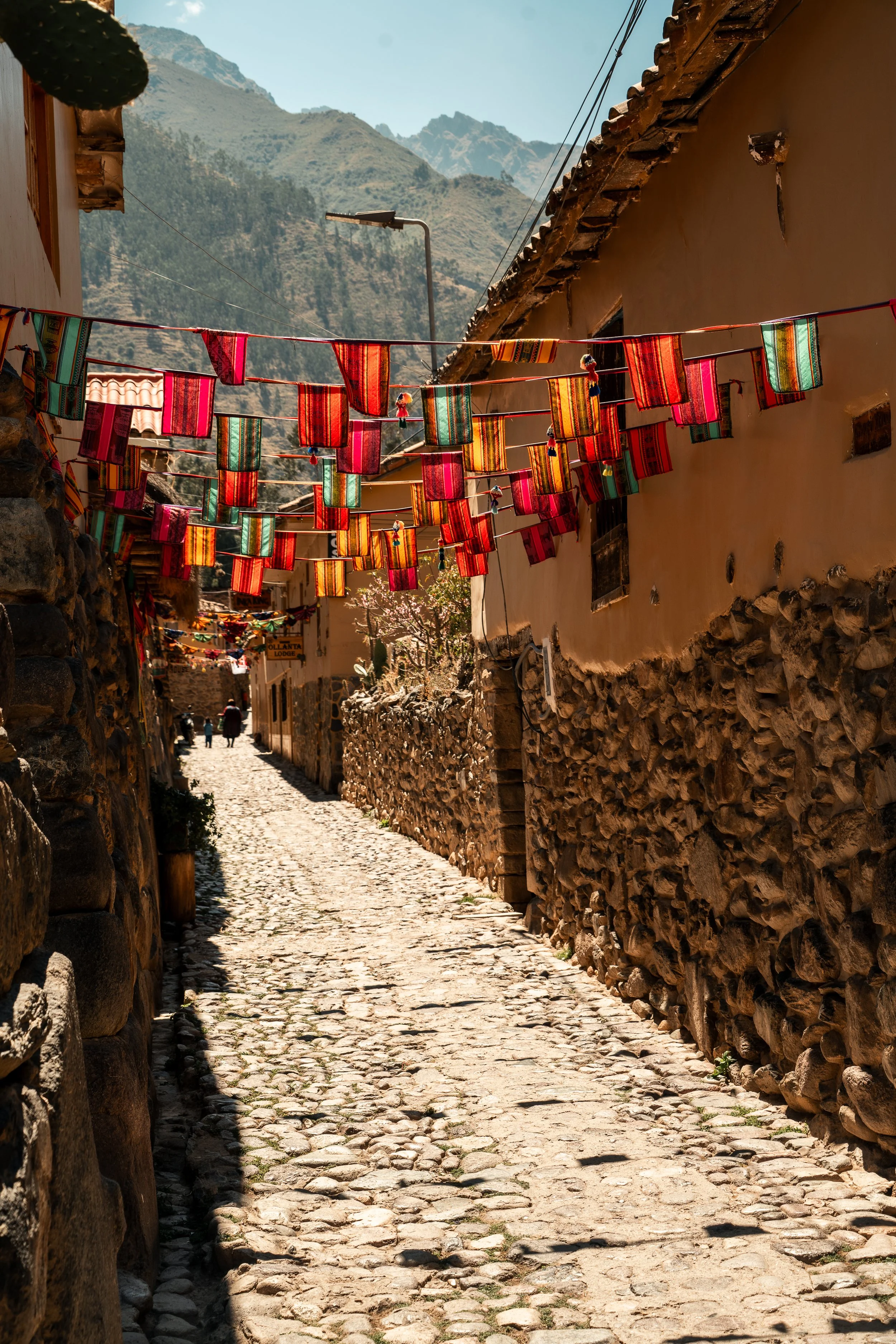
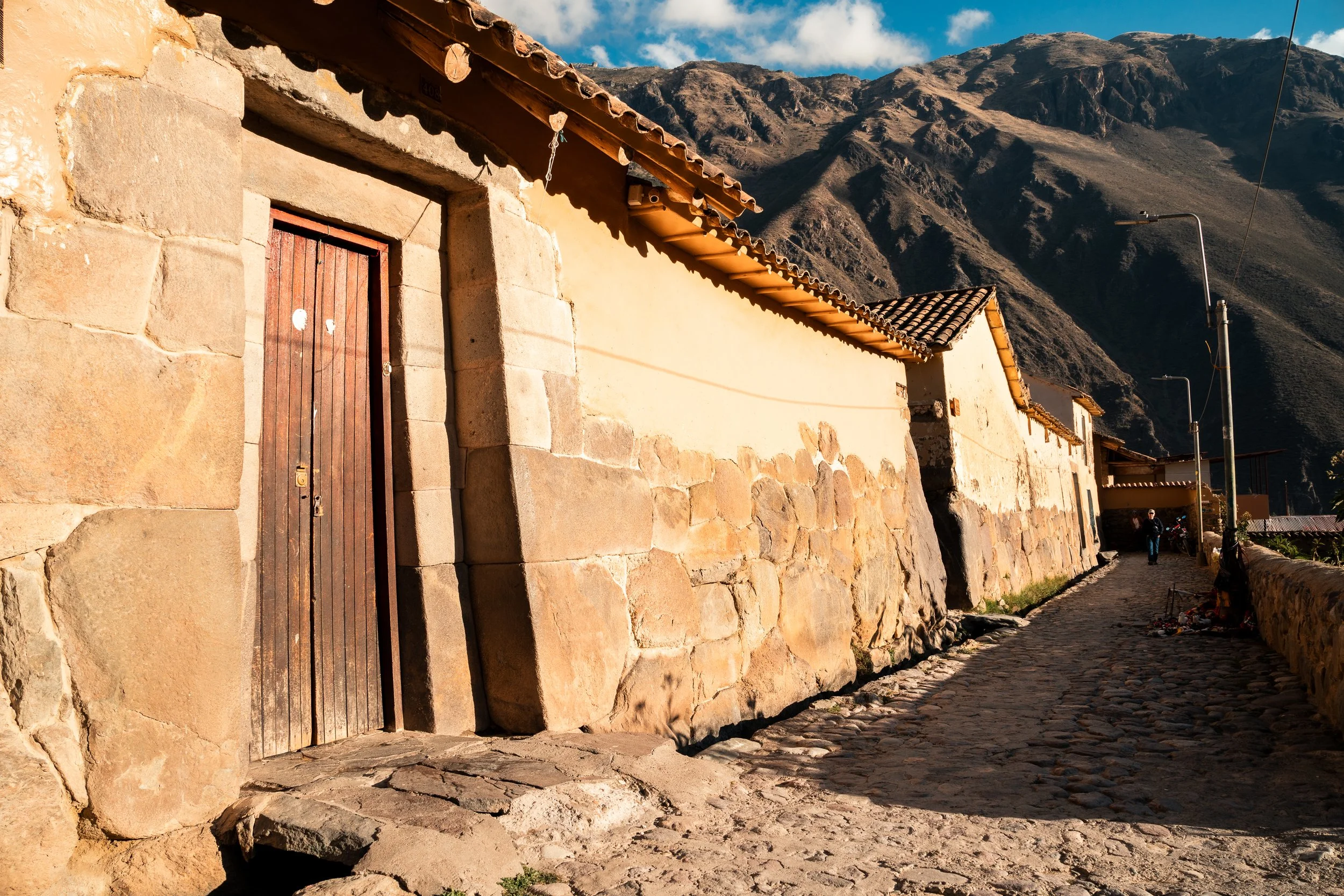
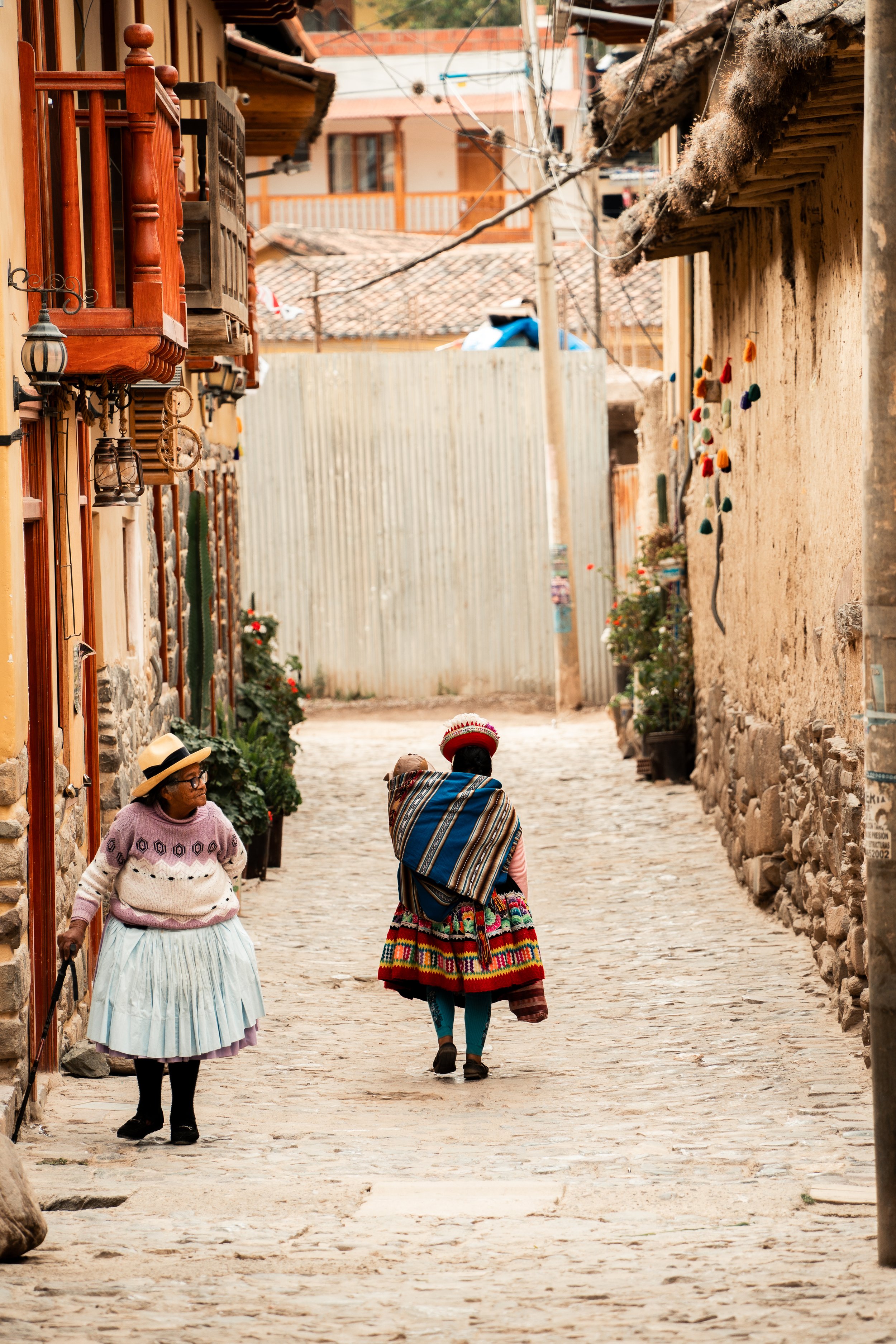
It was dark when we arrived at Ollantaytambo, a proper old Incan village (unlike Pisac), with a colonial town built on top of the foundations (like Cusco); many of the streets share the old layout, walls, and doors from the Incan, with a colonial facade on top. We entered the town up an old Incan path (to avoid a long detour due to roadworks), past more retaining walls, and ‘tired stones’. This is the name given to large partially-worked stones taken from a quarry nearby and intended for the complex on the ridge above town, but which never quite made it. There are quite a few scattered around the town, if you know what to look for. We spent a few days here relaxing and visiting the ruins around - the old Incan village in town, the granaries to store food on one hillside, and a ceremonial complex with farming terraces on the other.
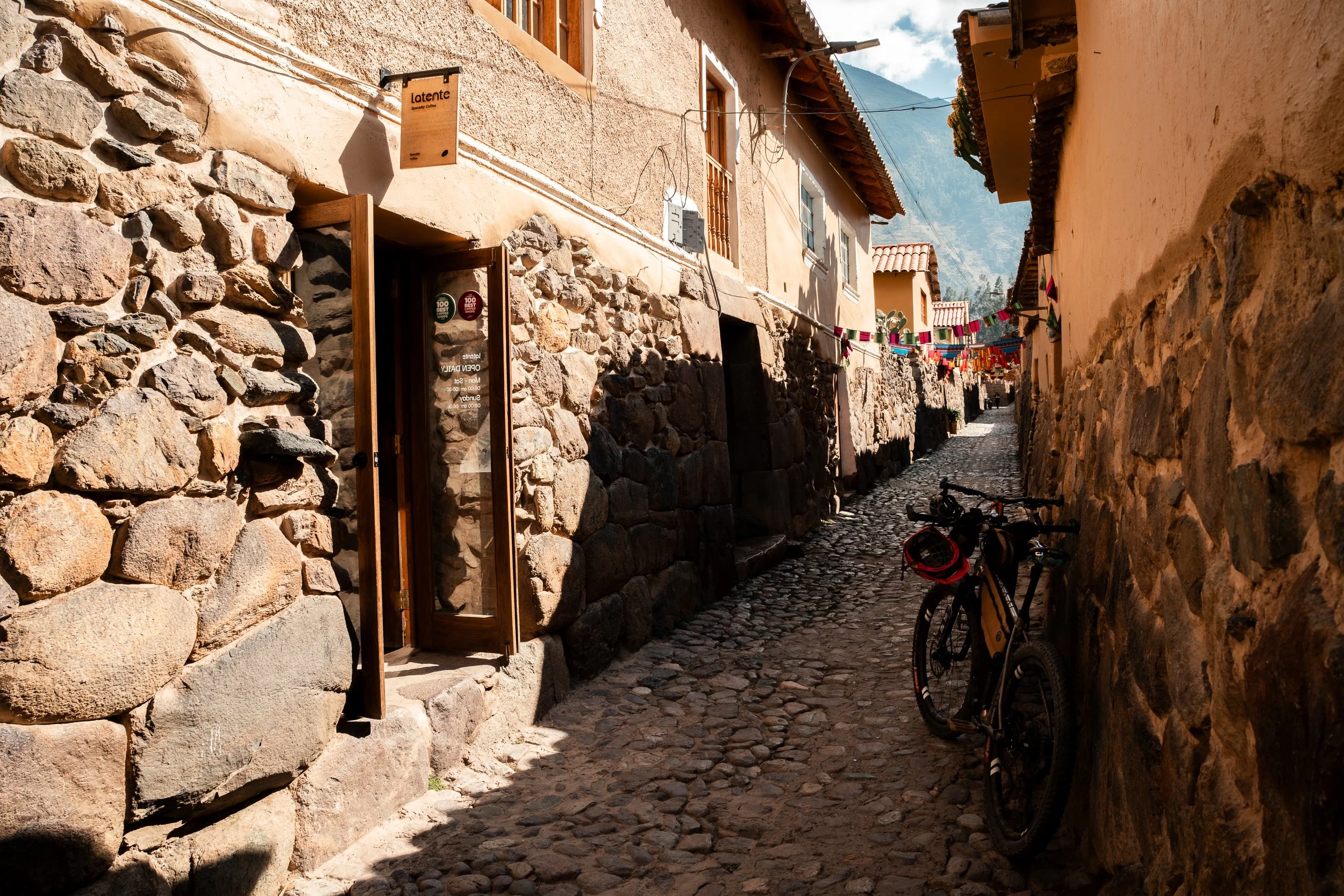
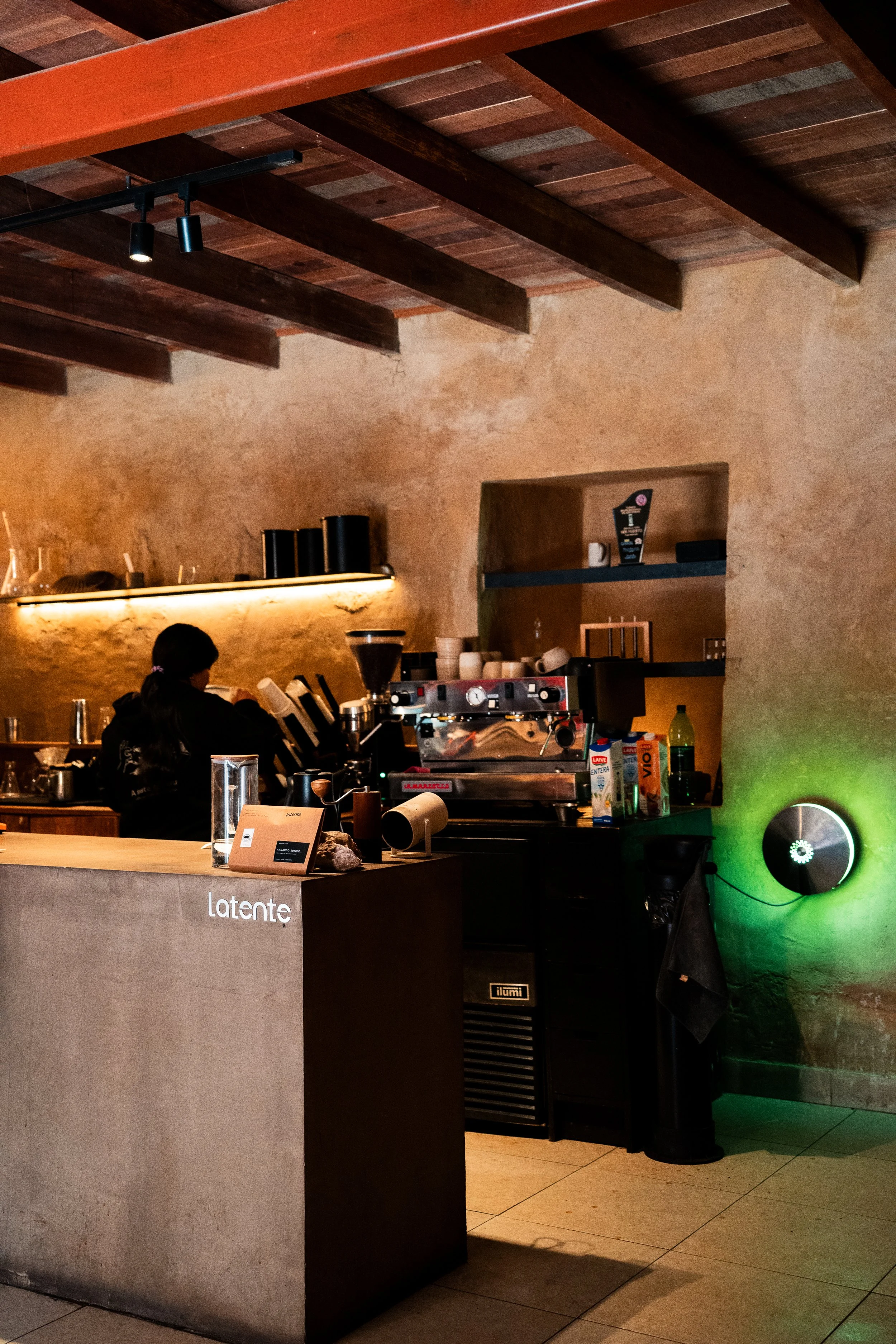
Excellent flat whites. You can see the trapezoidal doorway typical of the Incas next door to the cafe.
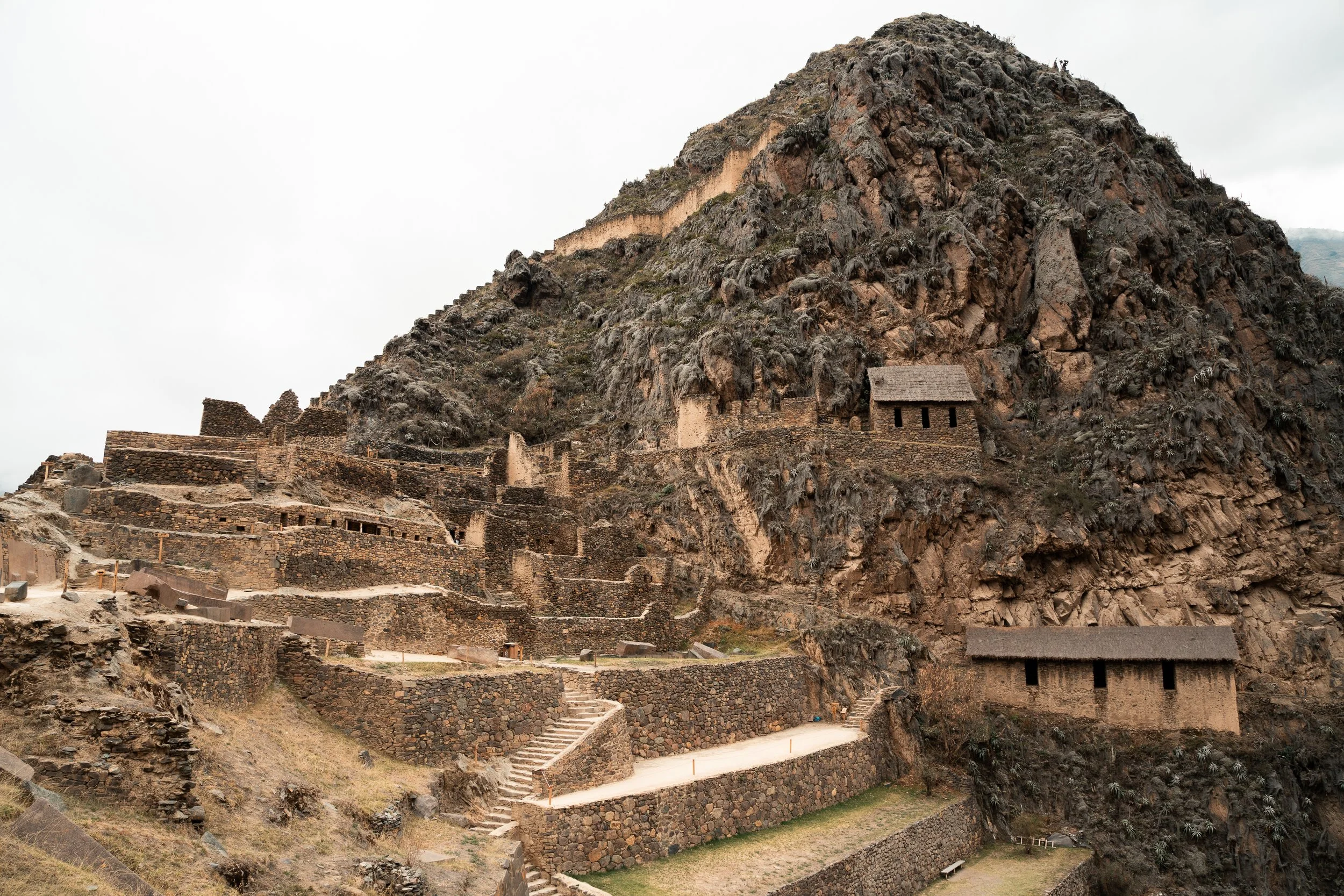
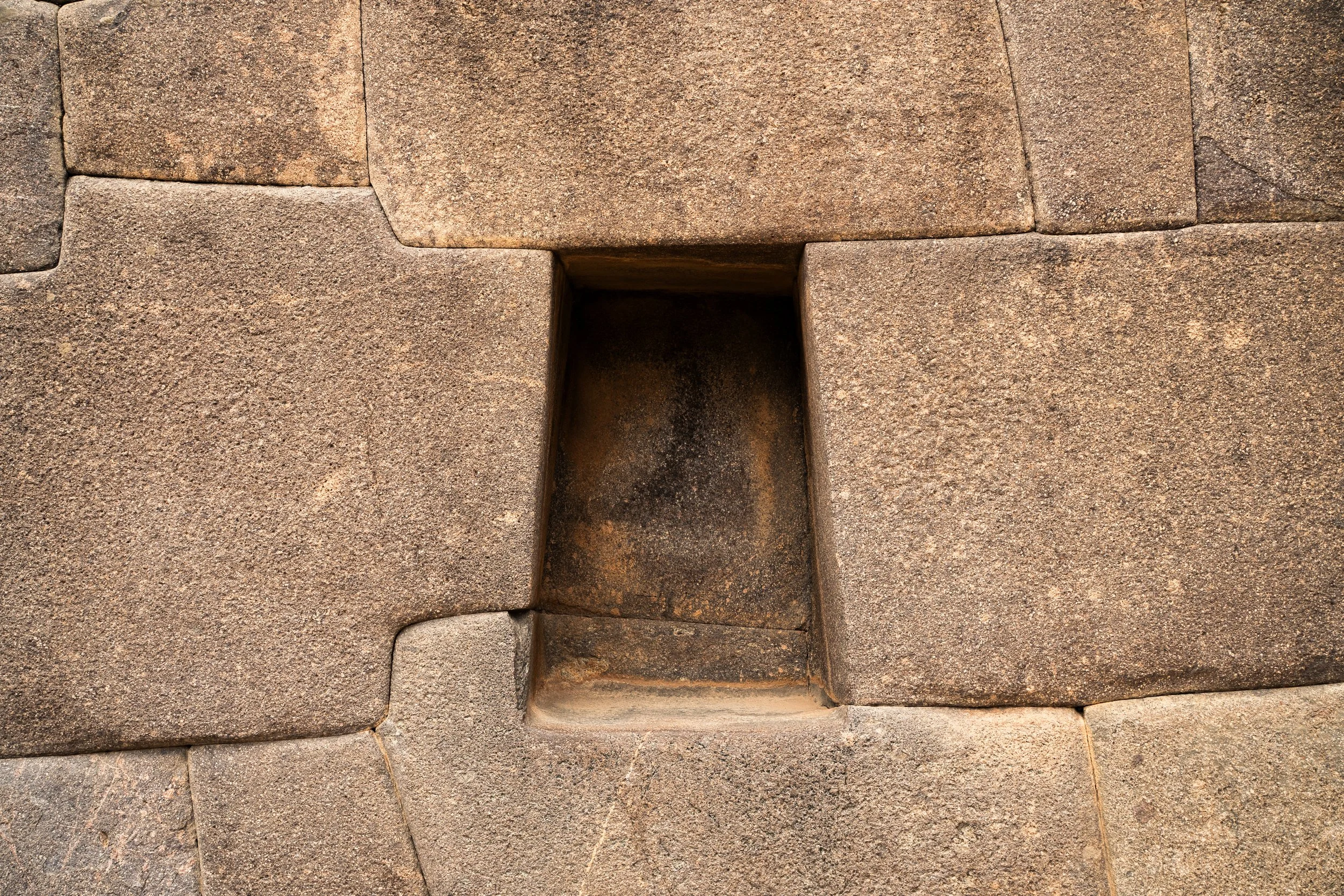
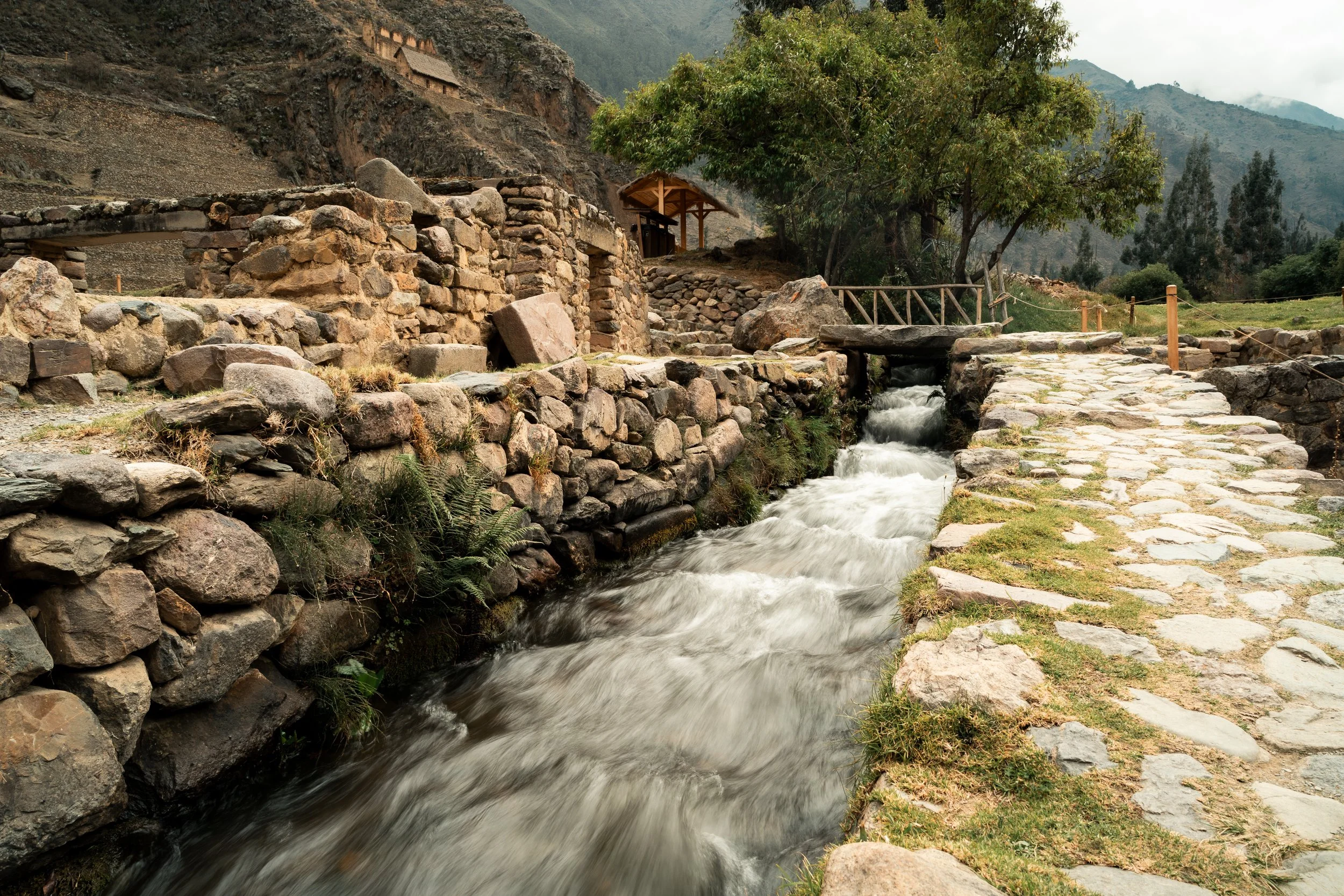
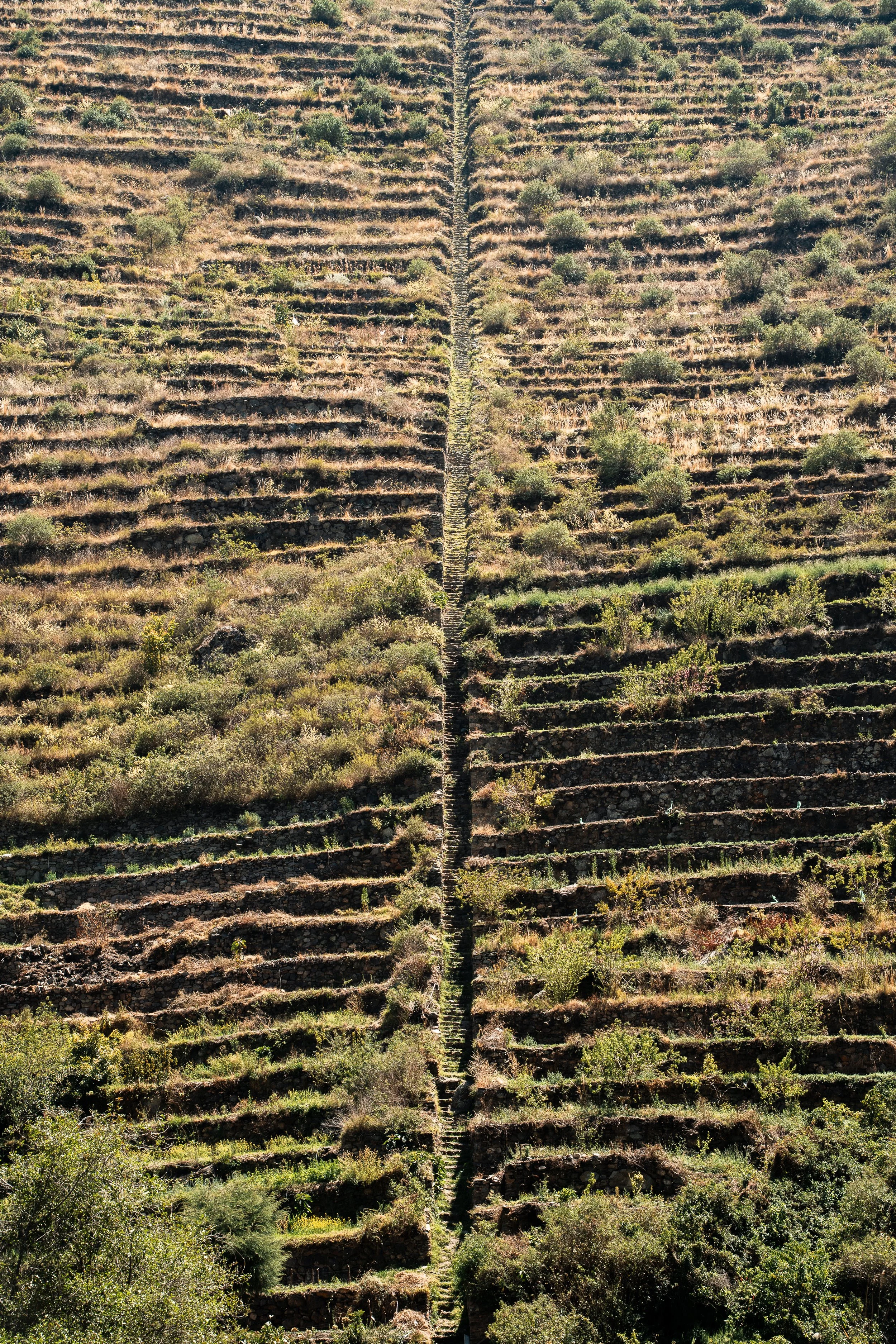
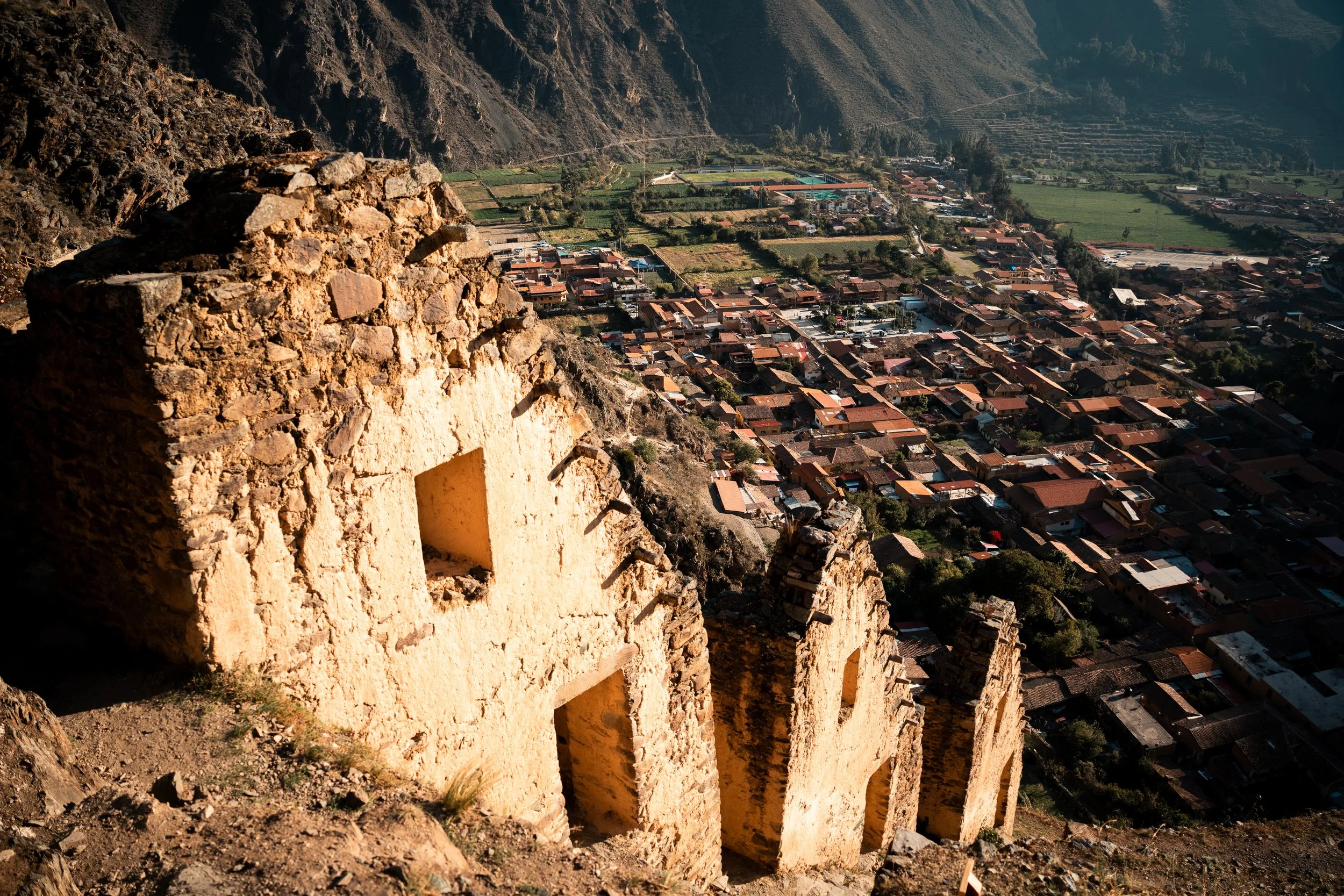
Some bloody steep steps. This is only a fraction of the total number of terraces, they keep going up.
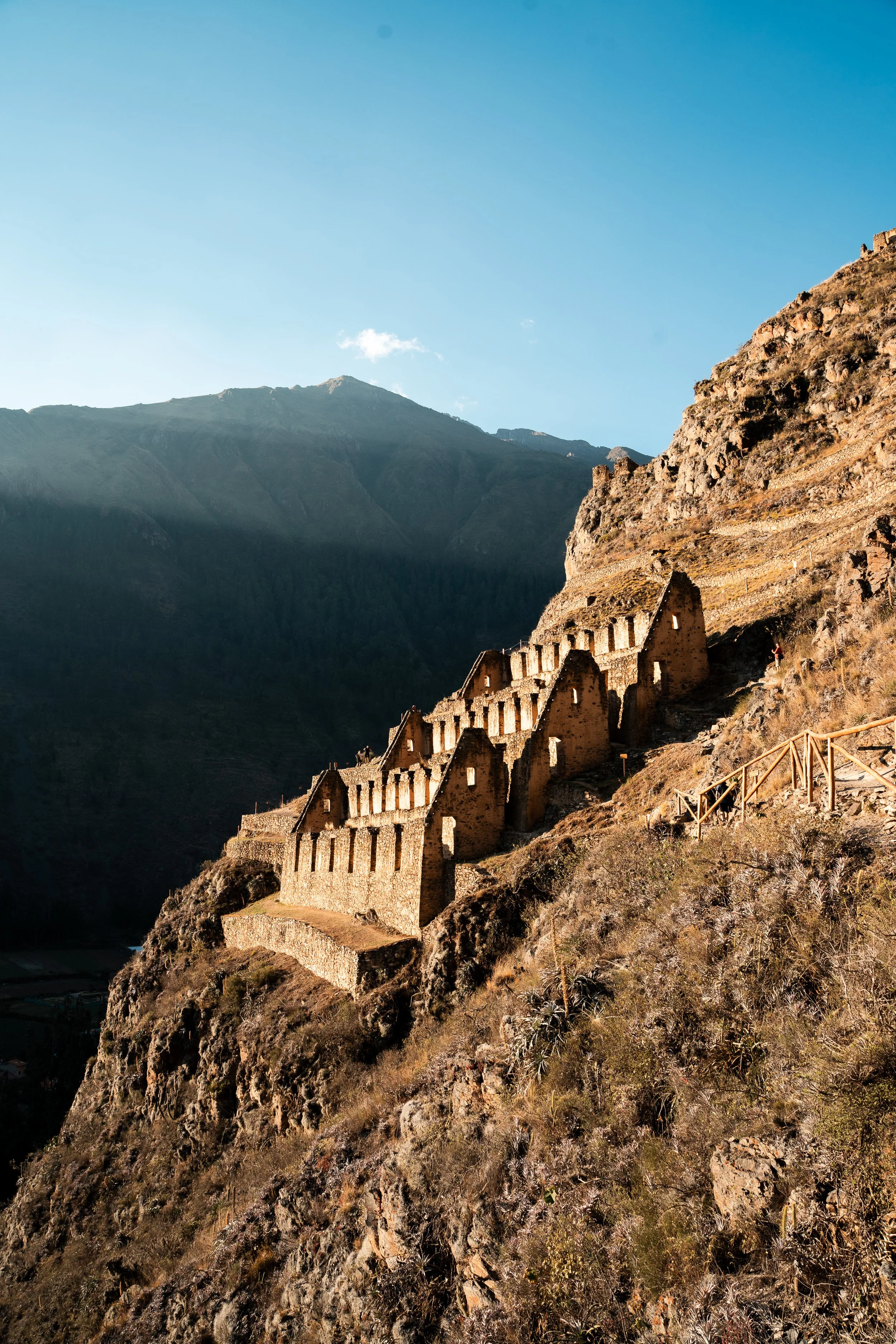
Granaries.
This town was the location of one of the Inca’s last great stands against the Spanish. Manco Inca, the puppet emperor put in place by the Spanish after their conquest, grew tired of being treated poorly by them and began a revolt. He lost an unlucky battle in the hills above Cusco, and retreated to Ollantaytambo. When the Spanish attacked, the Inca flooded the fields to neutralise the horses and rained projectiles down from the terraces. The Spanish withdrew, a rare Inca victory, but knowing they would be back in greater numbers, Manco Inca retreated further and further down the valley before establishing the Neo-Incan empire at Esparitu Pampa.
Finally we decided we had spent enough time eating good food and relaxing with easy riding, and needed to get back on the road. We had two more flat whites and caught a taxi back to Cusco, from where we would spend 22 hours on the bus to get to Huancavillica and start the Peru Great Divide, the last section of our trip.