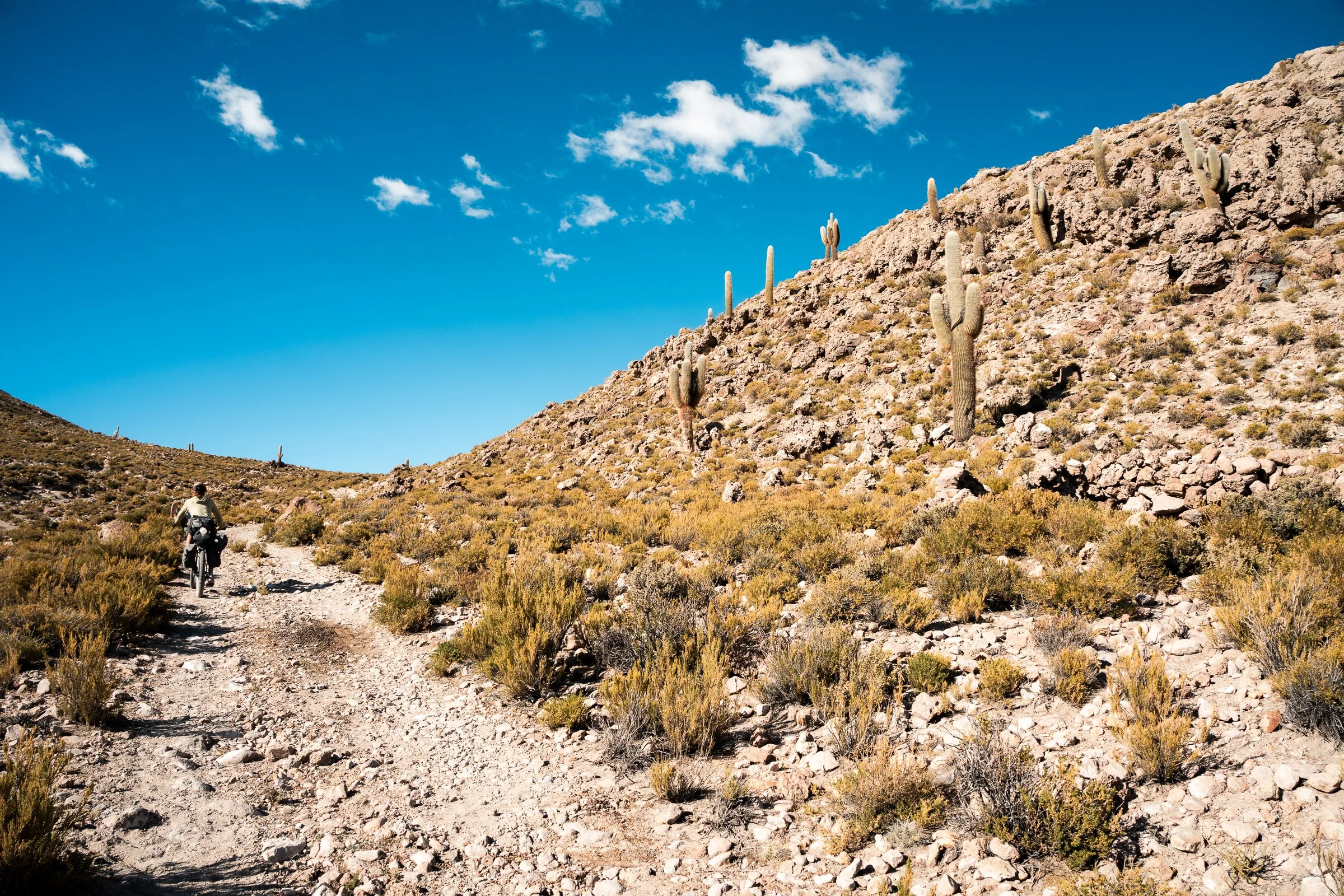
The Bolivian Salares
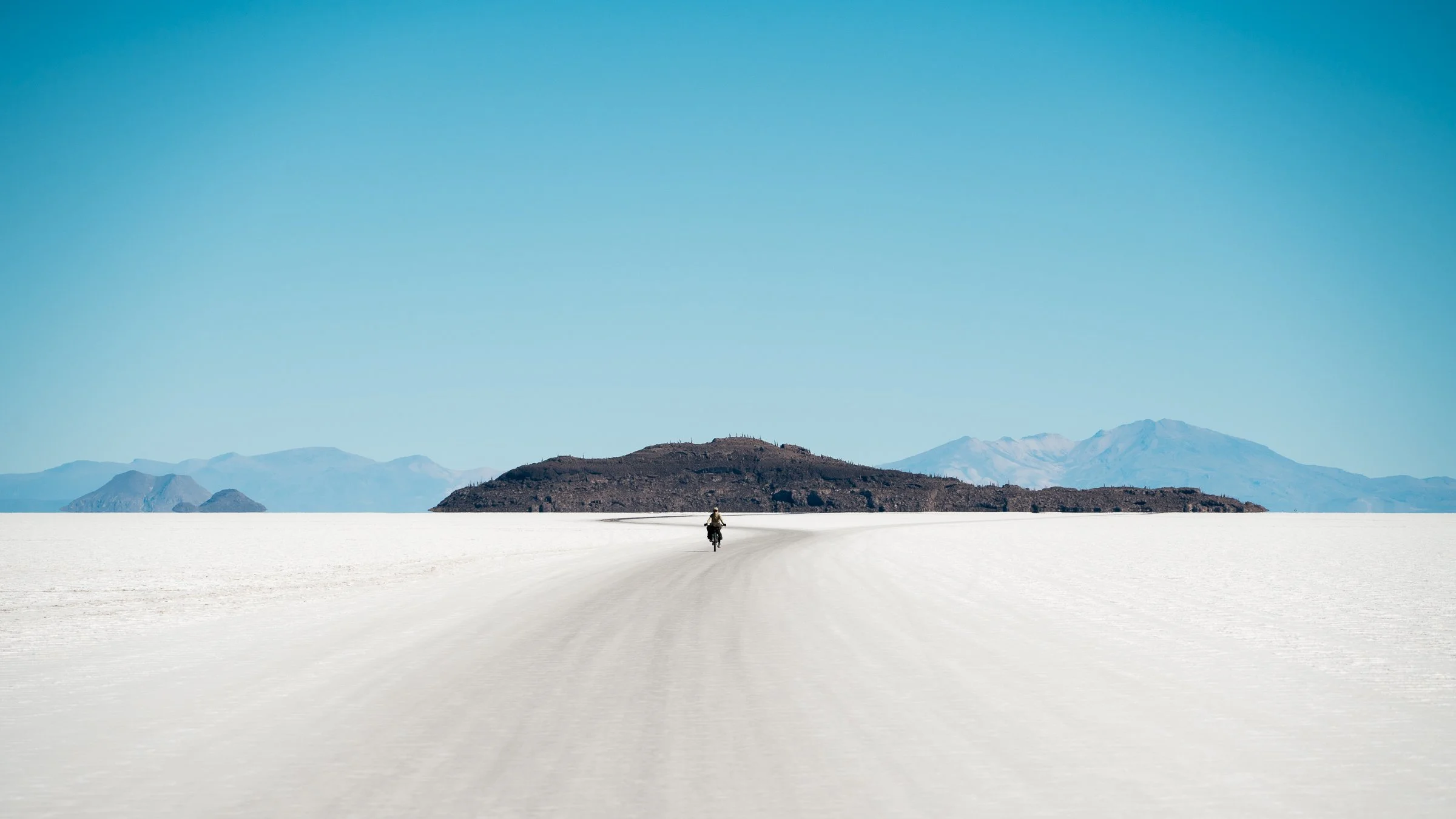
Leaving Isla Incahuasi
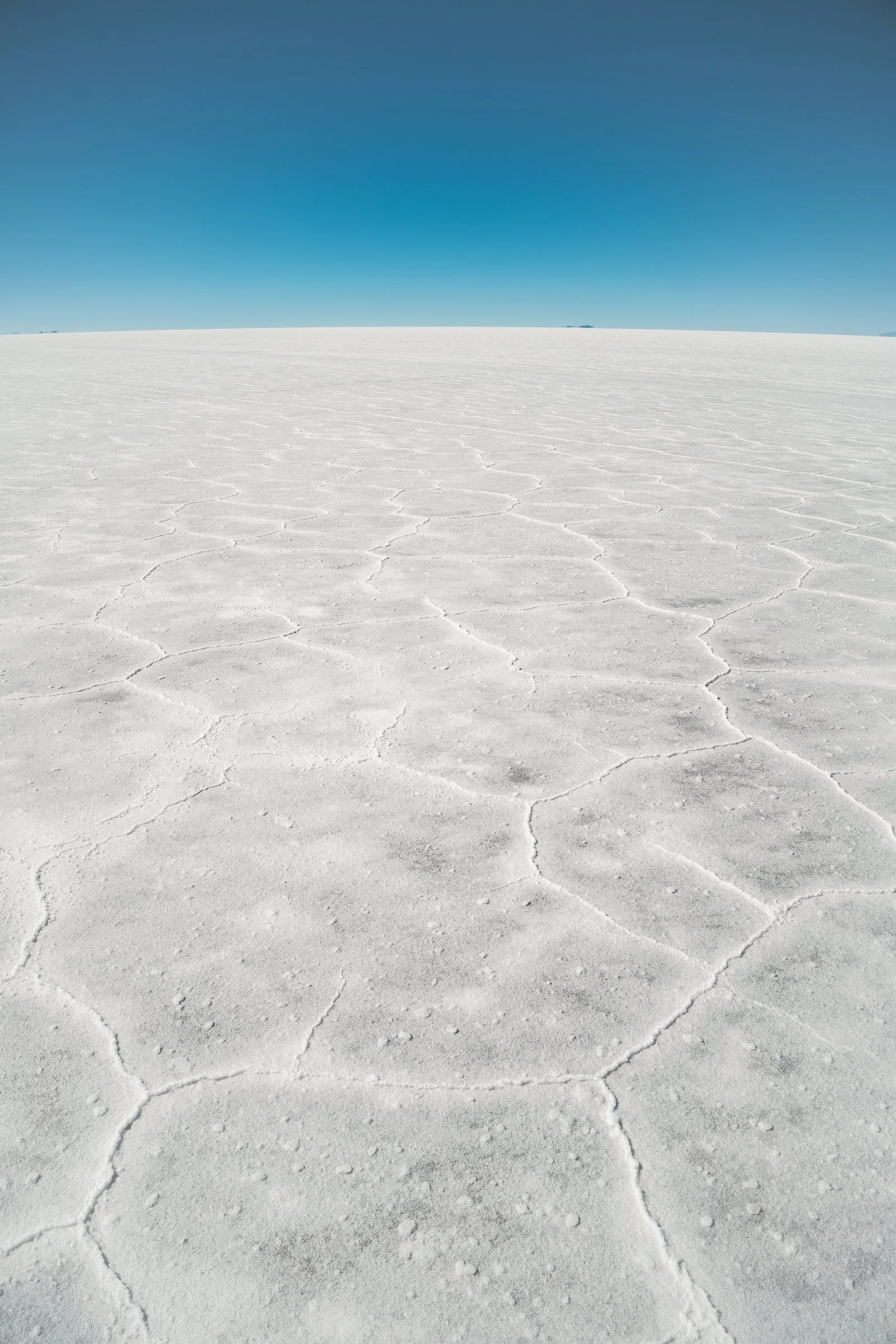
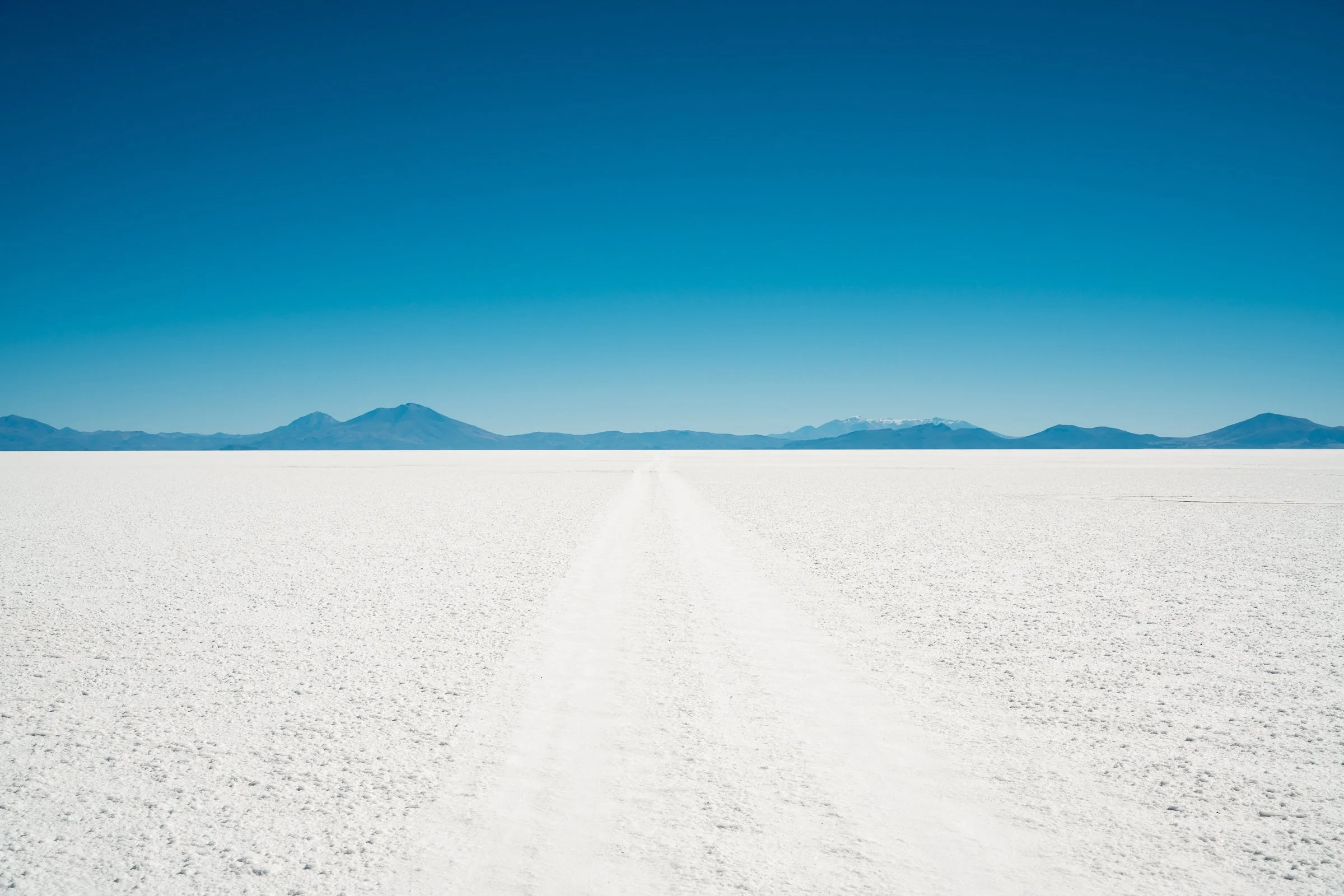
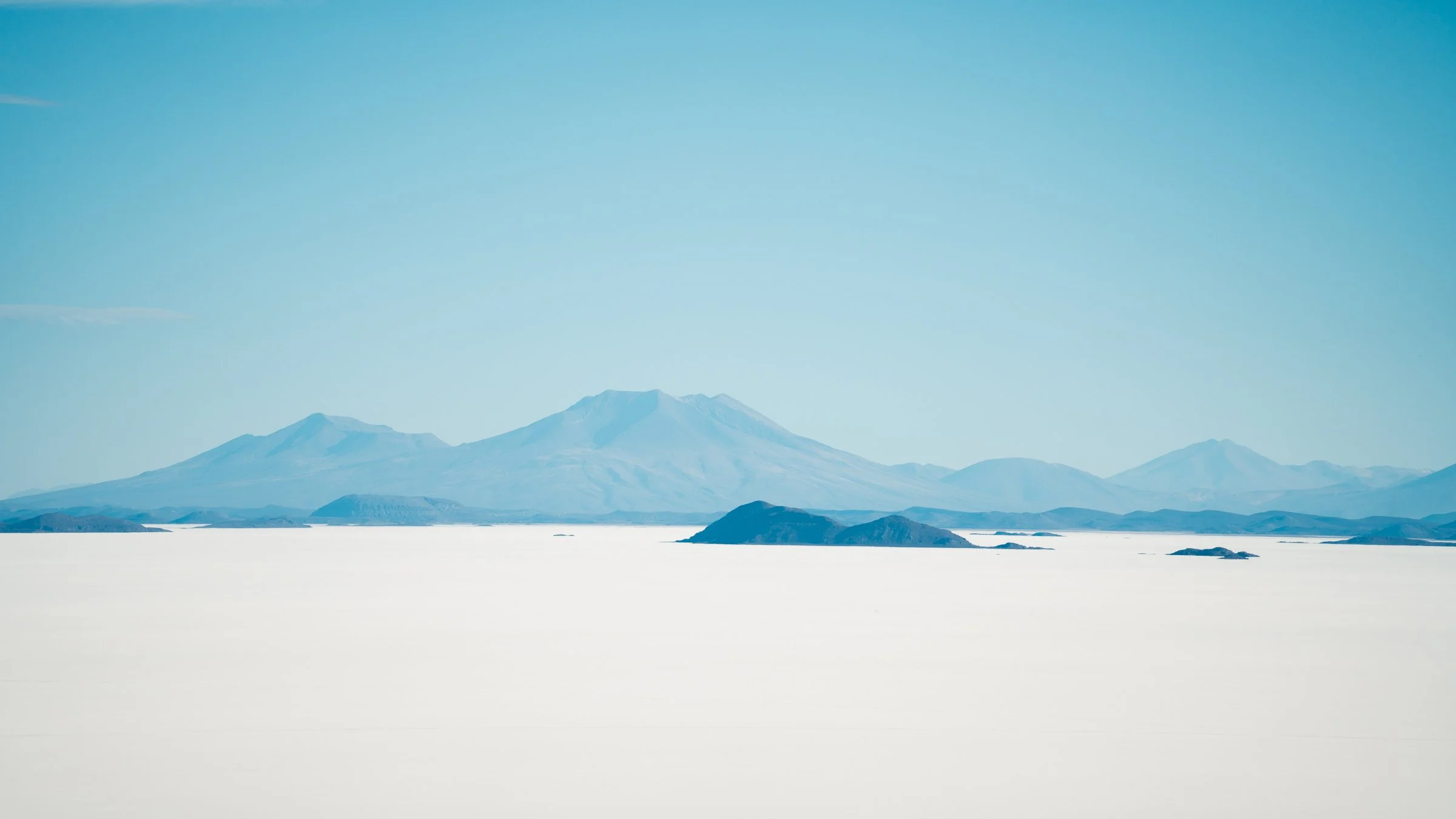
From Pisigar, the next section of our journey was going to take us over the infamous Uyuni salt flats. The largest, flattest place in the world, it is over 10,000km2 in area but varies by less than 1m in elevation overall. It is so flat, it is used to calibrate the altitude of satellites.
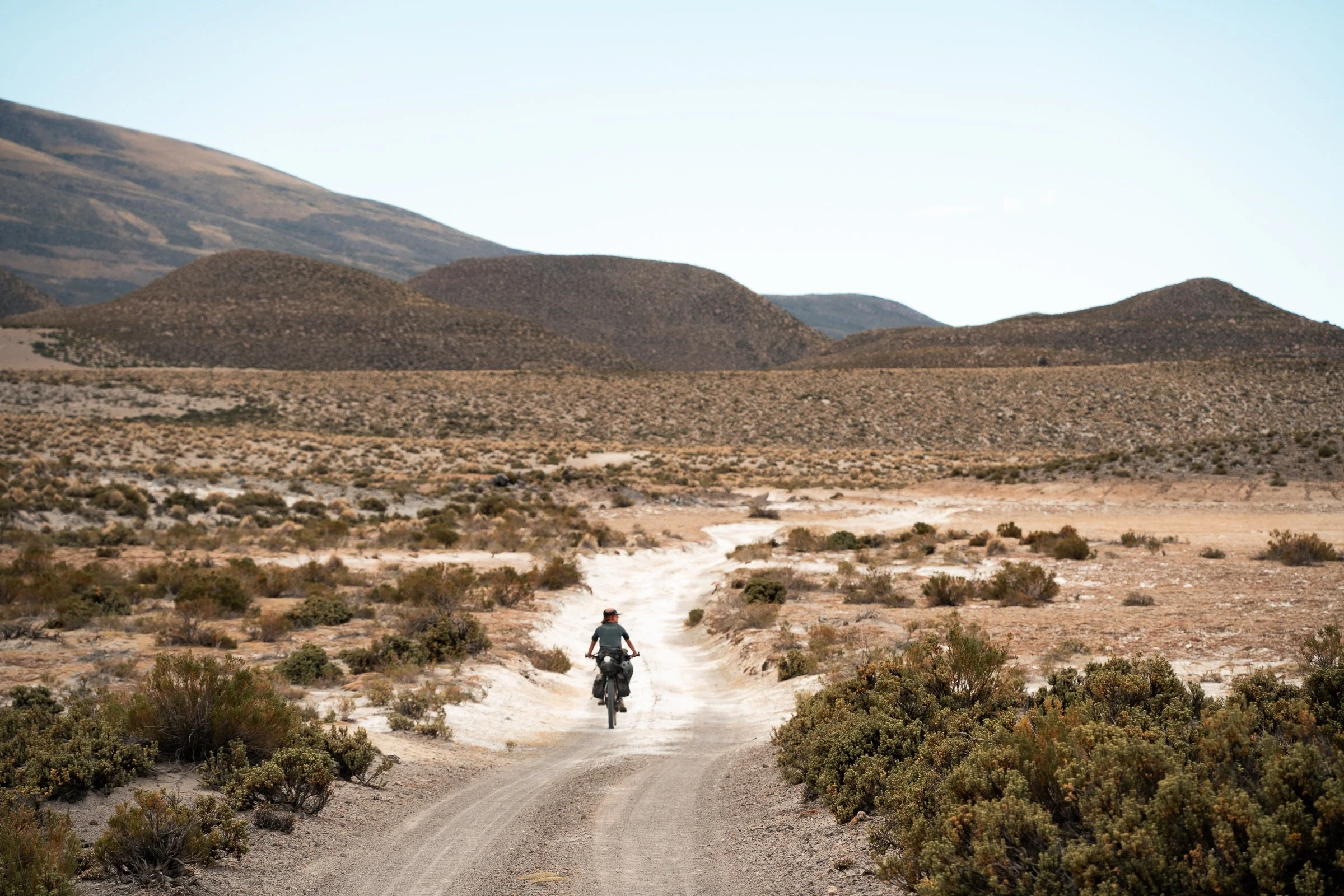
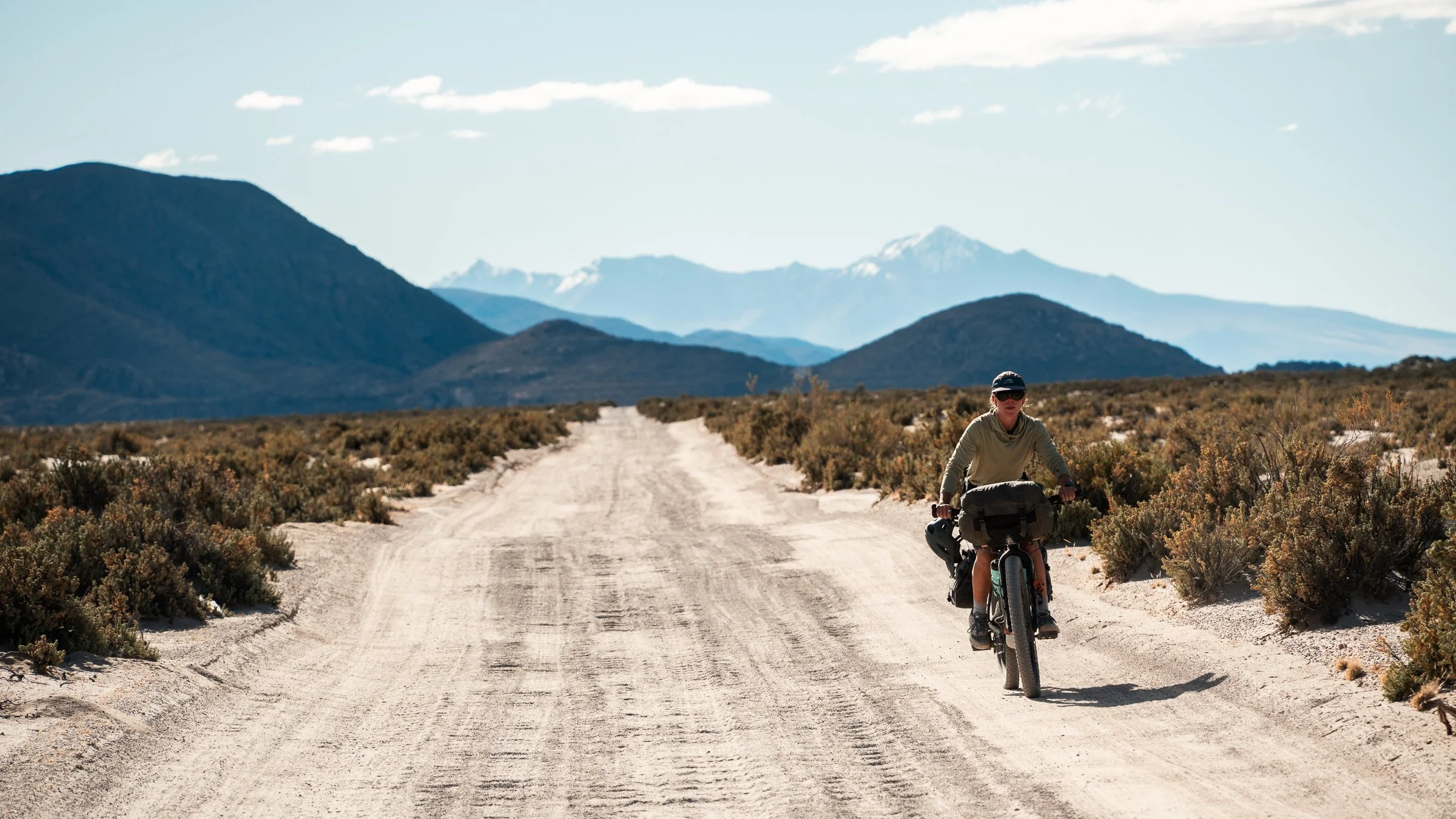
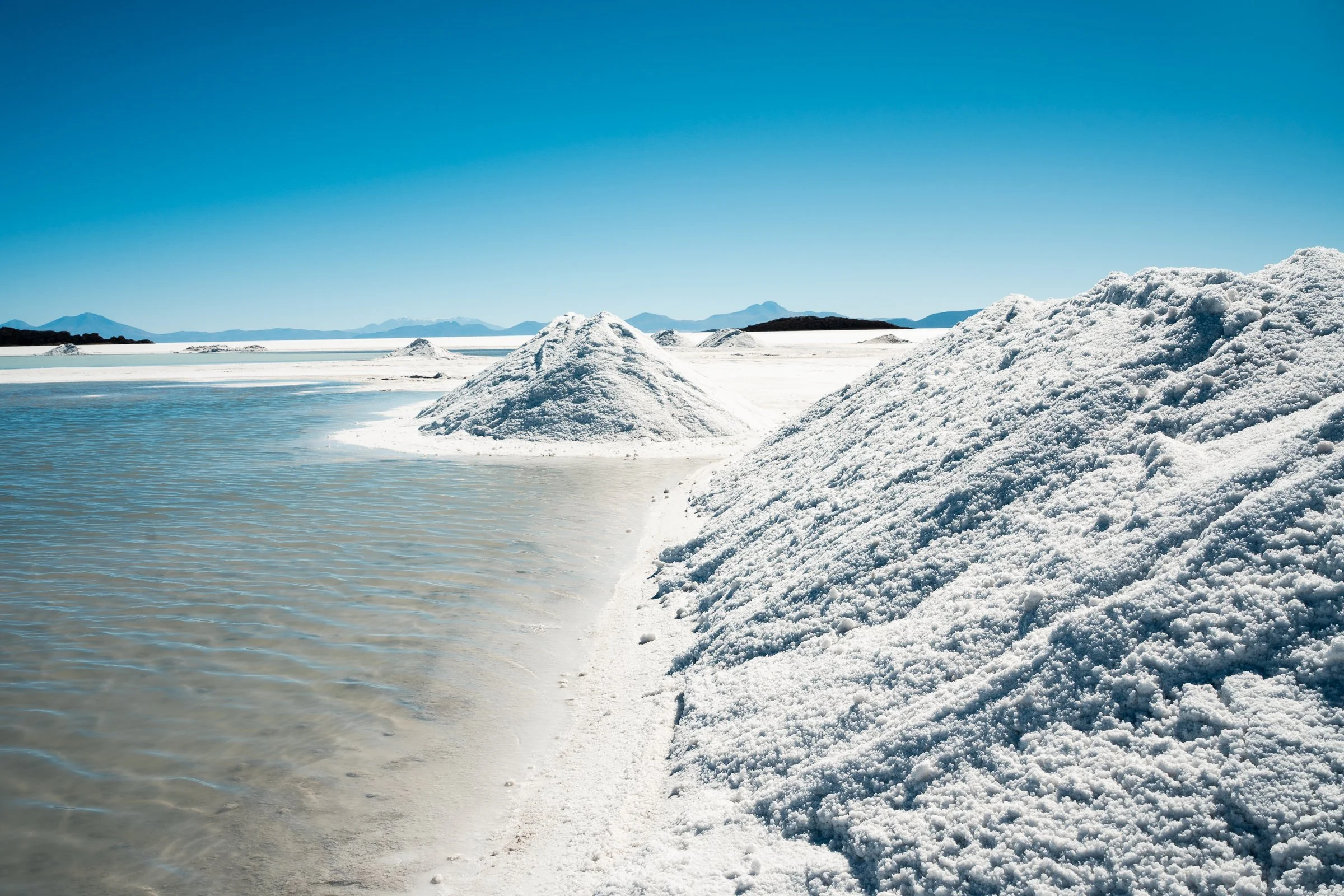
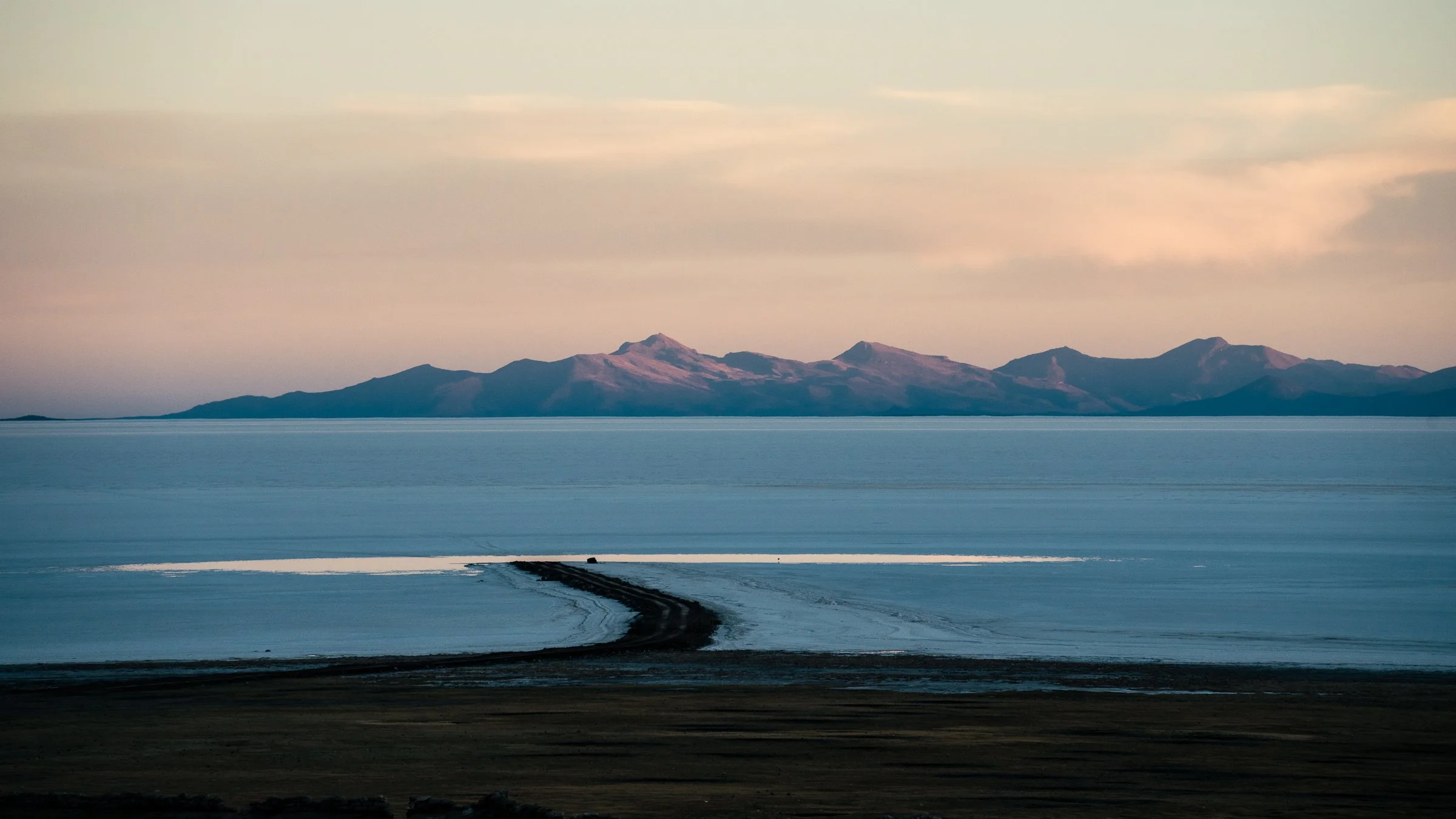
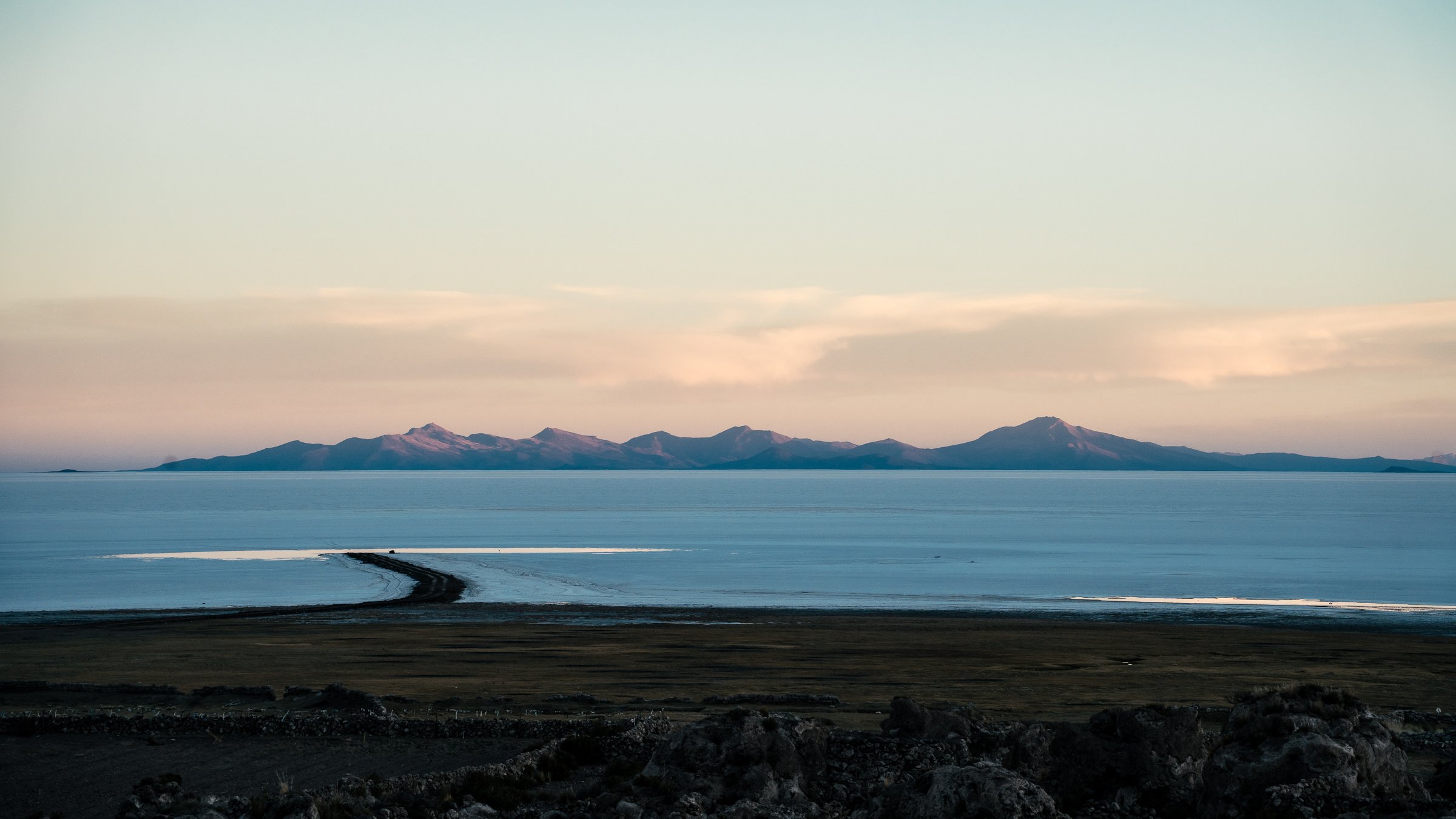
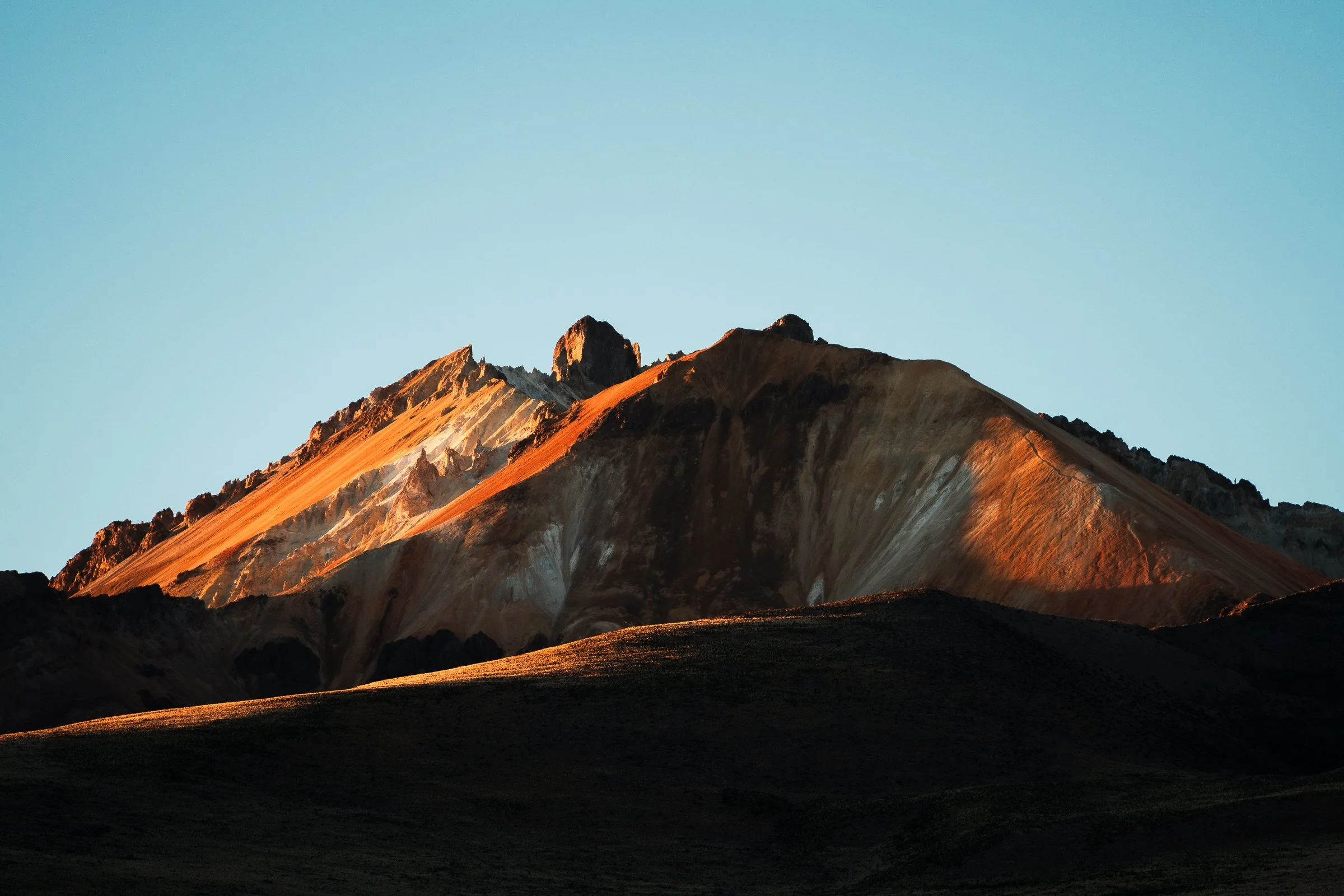
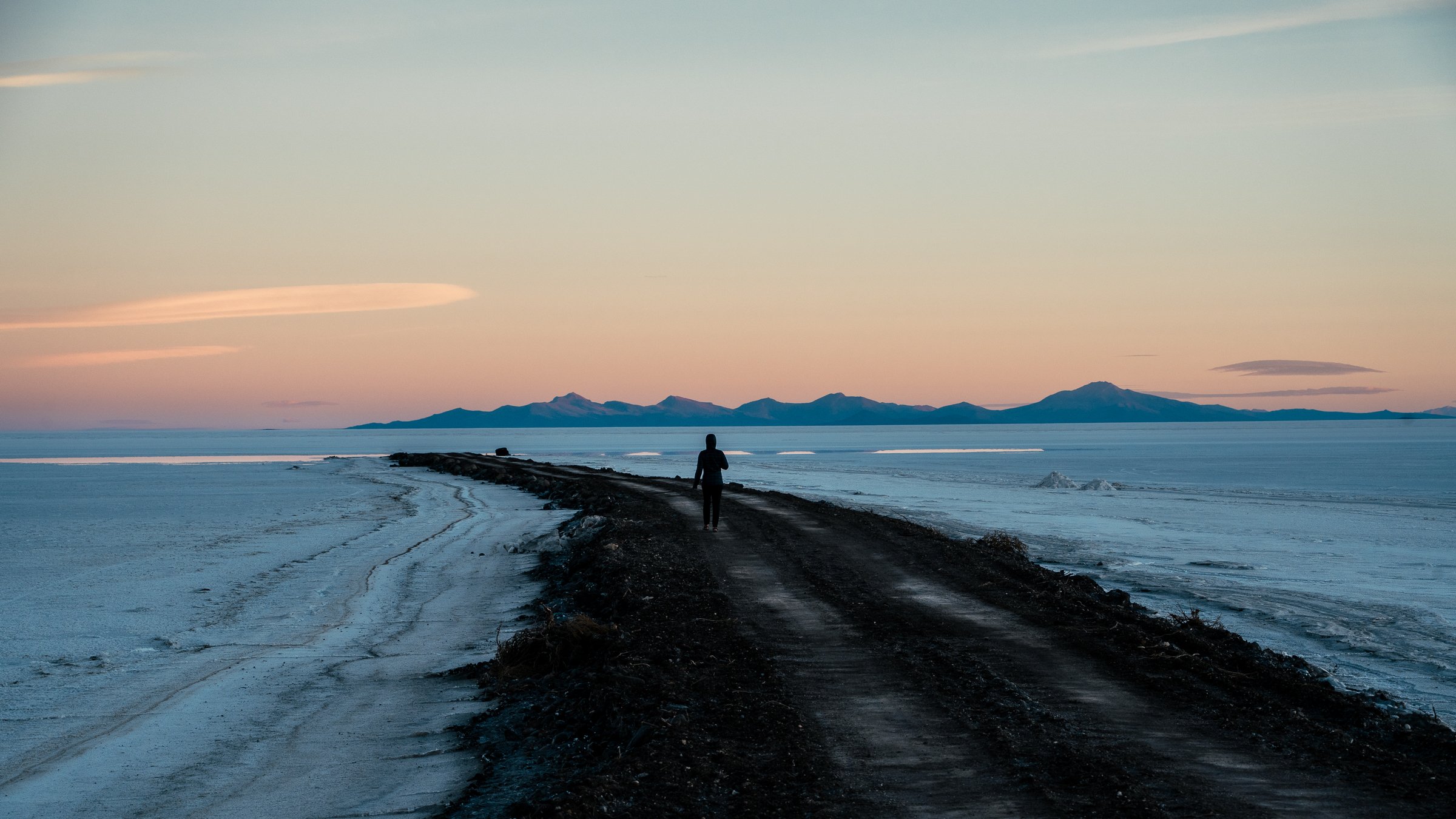
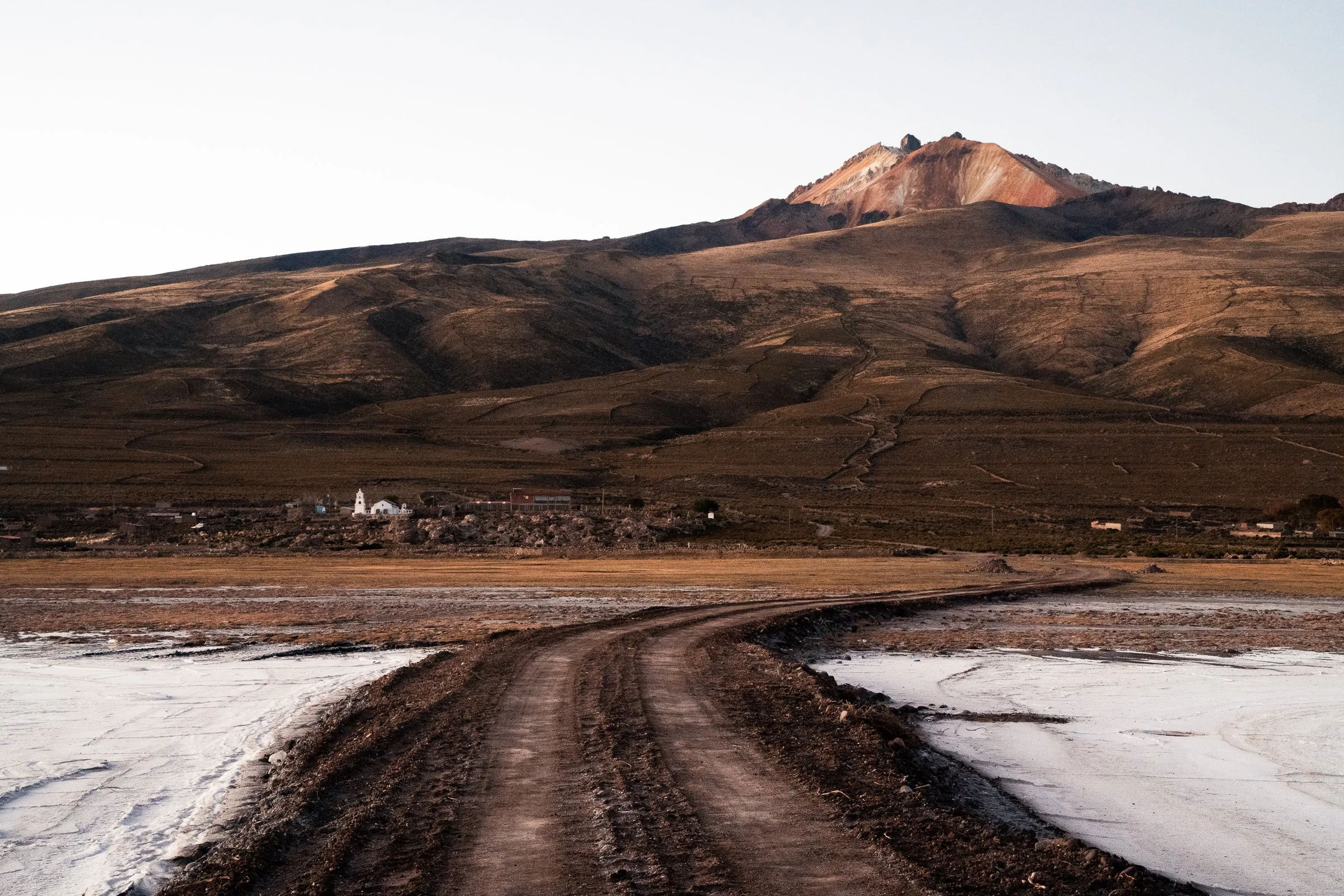
We set out late from Pisigar, hoping we would have a nice 50km tarmac ride to Coipasa, on the edge of its namesake smaller salt flat where we hoped to camp. We should have known there was no such thing as a tarmac stretch more than 10km though, and we quickly found ourselves on a sandy double track heading through scrub bush. Despite this, it was rather quick going. Despite a few deep spots of sand that tested Laurens ability to get going on her bike, we soon found ourselves in Concepcion Uno, and looking across a salt flat to our destination. Coipasa is a town on the edge of a salt flat, nestled on the ‘shore’ at the base of an old volcano. Despite most of the water long having evaporated, the coastline wouldn’t be out of place next to a sea; there are even causeways and jetties to help cast vehicles off. The particular causeway we were following was in poor shape, but we followed it to the island Coipasa is on, and then the coastal road around the shore. This was again sandy, corrugated, and slow going; we did see our first rhea though, a small relative of the ostrich, as it ran over the road and out into the salt flat, for who knows what purpose as there is nothing out there. This led to Lauren winning a longstanding bet about who would see one first, the loser having to eat a plate of salchipapa.
Coipasa
We had hoped to camp about 10km beyond Coipasa after stocking up on some supplies, but the sun was setting by the time we arrived in town. It could have been any quaint sea-side village, the piles of salt in the salt flat beyond perfectly mimicking the look of waves breaking in the distance. There were children in the streets, but no signs of shops or accomodation. Just as we were about to head out of town to find a camp, a man called out from the edge of the plaza and asked if we wanted accomodation. Sure, we replied, he led us around the corner to a courtyard and a small room with three single beds, piled with detritus. Only after paying did we ask about the toilet; it was an open-air situation, covered on two sides by a short brick wall. We minimised our pre-bed fluid intake to avoid needing to trek out in the freezing cold overnight. He had mentioned that food was just around the corner on the street - we saw a half open door and poked our heads in. A diminutive, elderly lady with a very large smile waved us inside to a table. She introduced herself as Petronila. The building was low mud brick, the single room divided into kitchen and dining rooms by threadbare curtains. She was energetic and talkative, even after we explained we didn’t speak Spanish. There were a lot of questions we didn’t understand about dinner, to which we uniformly answered ‘si’, hoping that would put an end to them. We did understand ‘quinoa’, and after some good quinoa recently, hoped that’s what we would get. Unfortunately ‘si’ was met with more questions, until eventually she disappeared behind the curtain to start cooking. In reality we didn’t much care what we got, we just wanted things to be as easy for all involved as possible.
It wasn’t long before she returned with two plates of salchipapa. We hadn’t eaten this before, but knew all about it. Laurens joy at winning our bet about this was short lived as she realised we were both in it now. It consists of fried potatoes, with chopped cocktail sausage, slathered in mayonnaise and tomato sauce; usually it’s served as greasy fast food in the cities and towns. It wasn’t as bad as expected, even for someone like myself who despises mayonnaise. They were very large plates though, and it took some time for me to get through it, using the toothpick we were given as a utensil. Just before I had finished, she came back and asked what I thought was ‘how was it?’. ‘Si, bien’ I replied with a thumbs up. Lauren started laughing, realising quickly she had actually asked if I wanted more. I didn’t want to believe her, until I heard the distinct sound of items being placed in frying oil. She returned with another plateful of sausage, and added it to the remaining food I was struggling to get through on my plate. Lauren was crying with laughter at this point, to the extent even Petronila was laughing behind her curtain. This stopped when Petronila came to clear our plates, and demanded they were both spotless, making Lauren finish the meagre few pieces of potato left.
We returned to Petronila for breakfast in the morning, and were given generous plates of quinoa, with tomatoes and eggs. Again, I was unsuccessful in avoiding unwanted second helpings. Likewise, Lauren also ran into trouble for leaving a few grains of quinoa on the plate, and got a lecture about god (and not wasting food that was his gift, we think). She sheepishly scraped the grains into her mouth as Petronila walked outside, still talking about god.
Just about to cast off from Coipasa
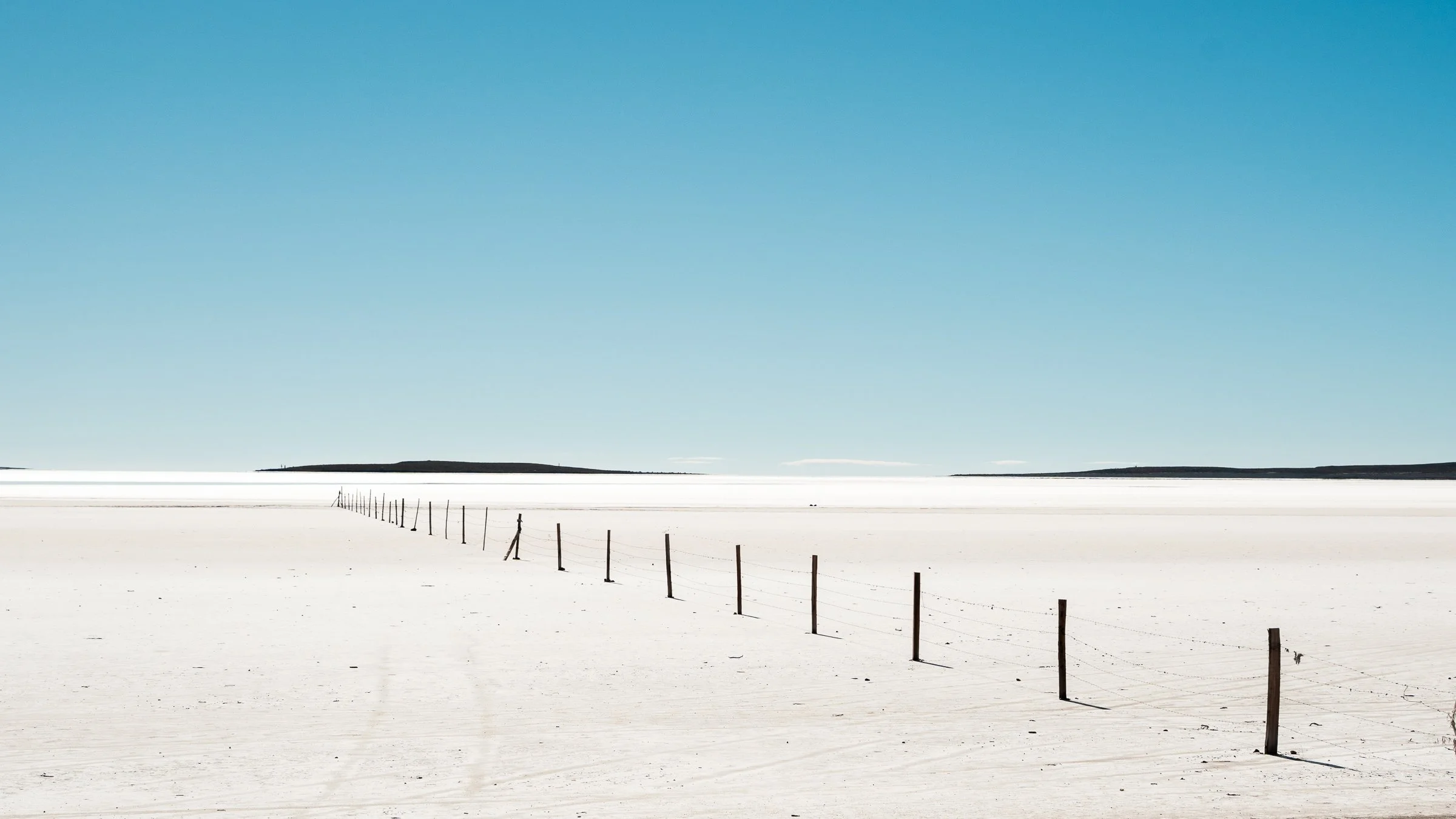
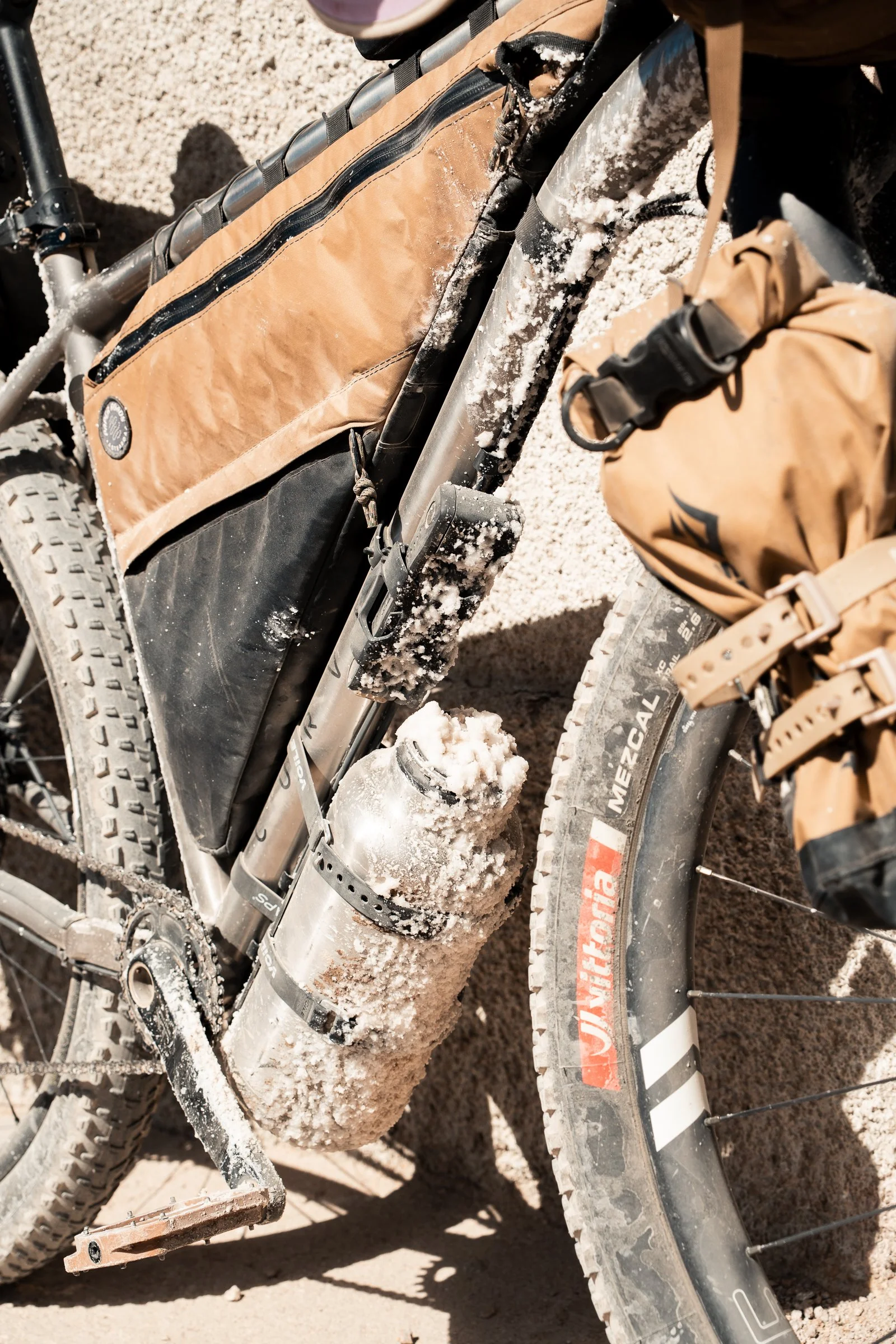
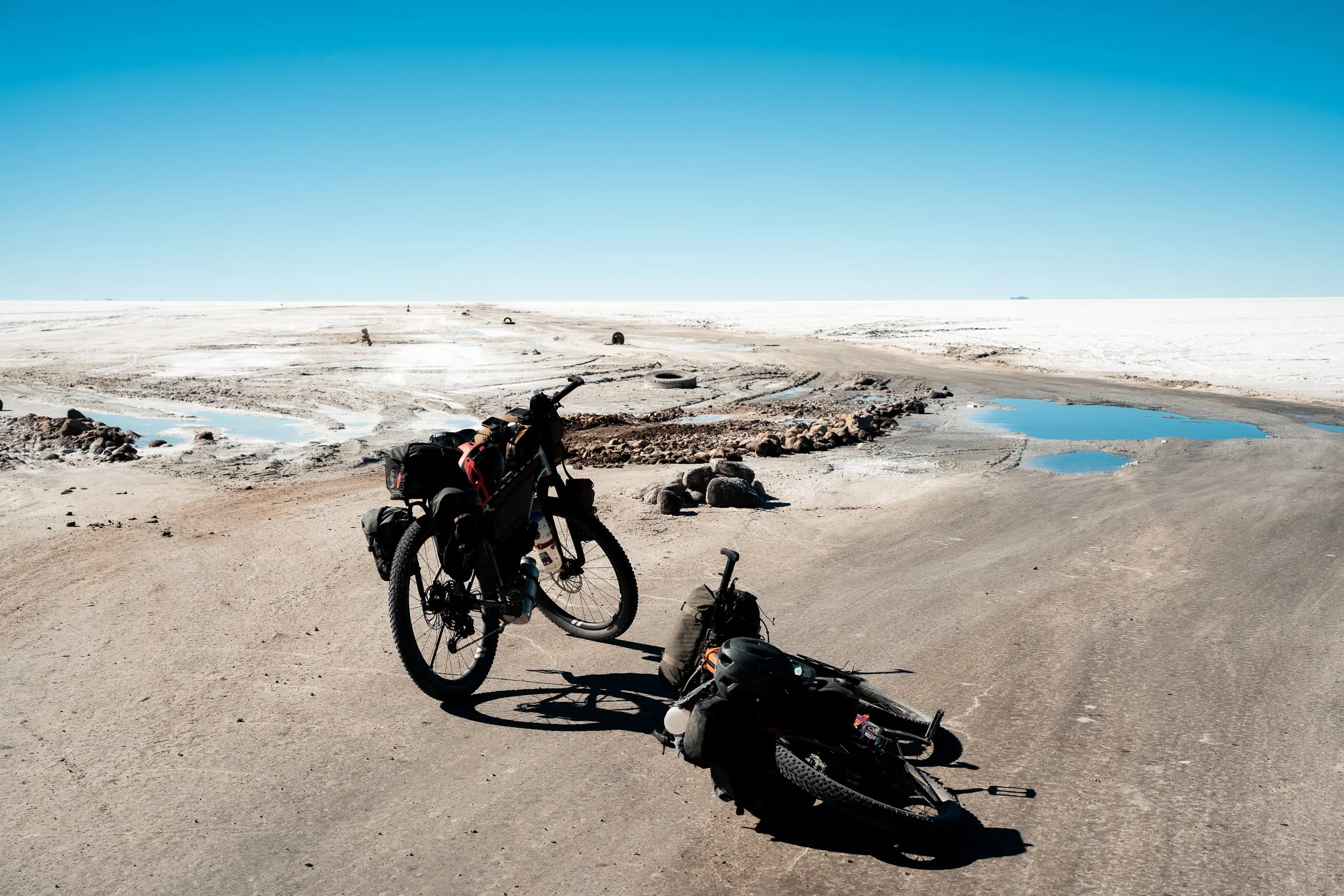
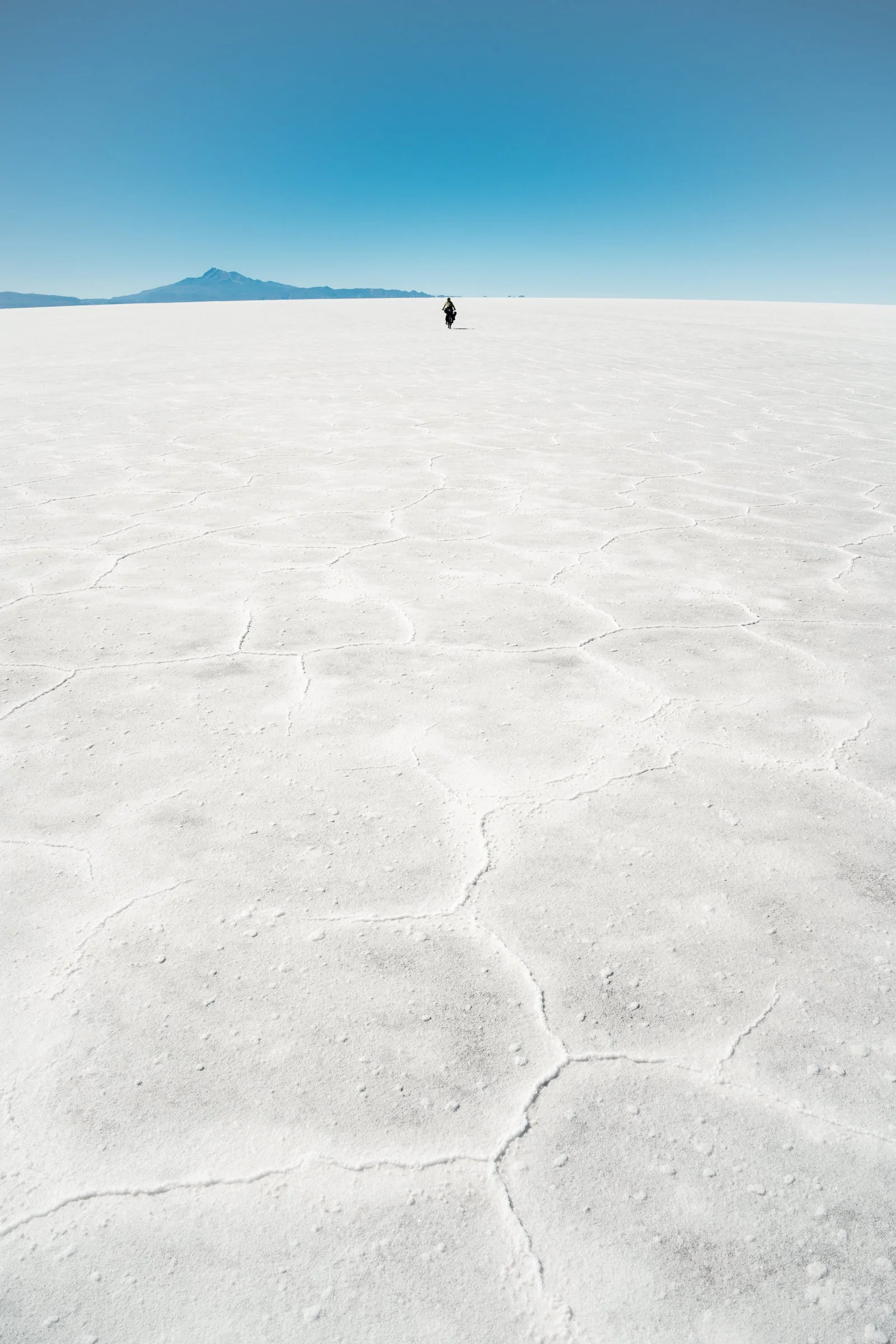
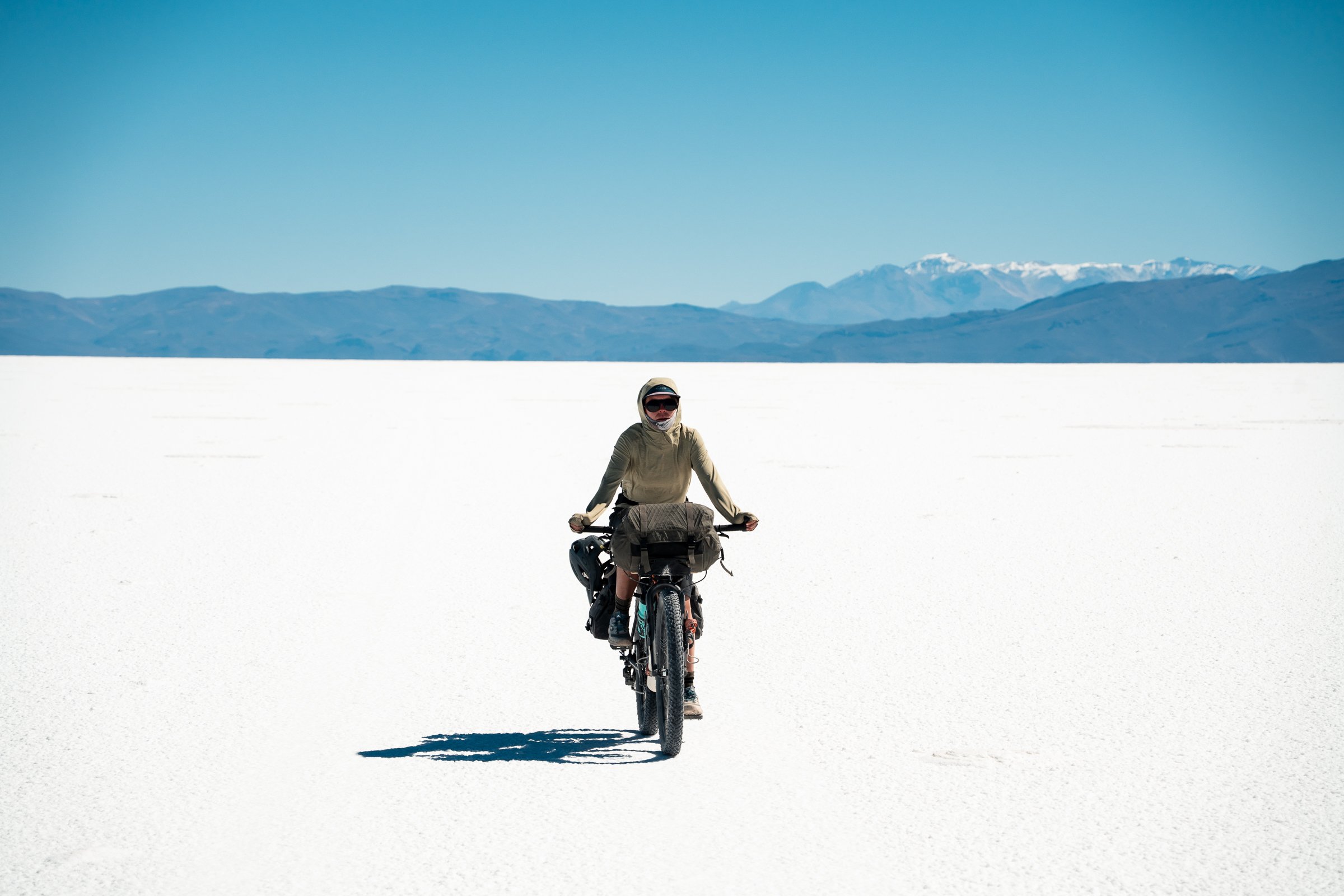
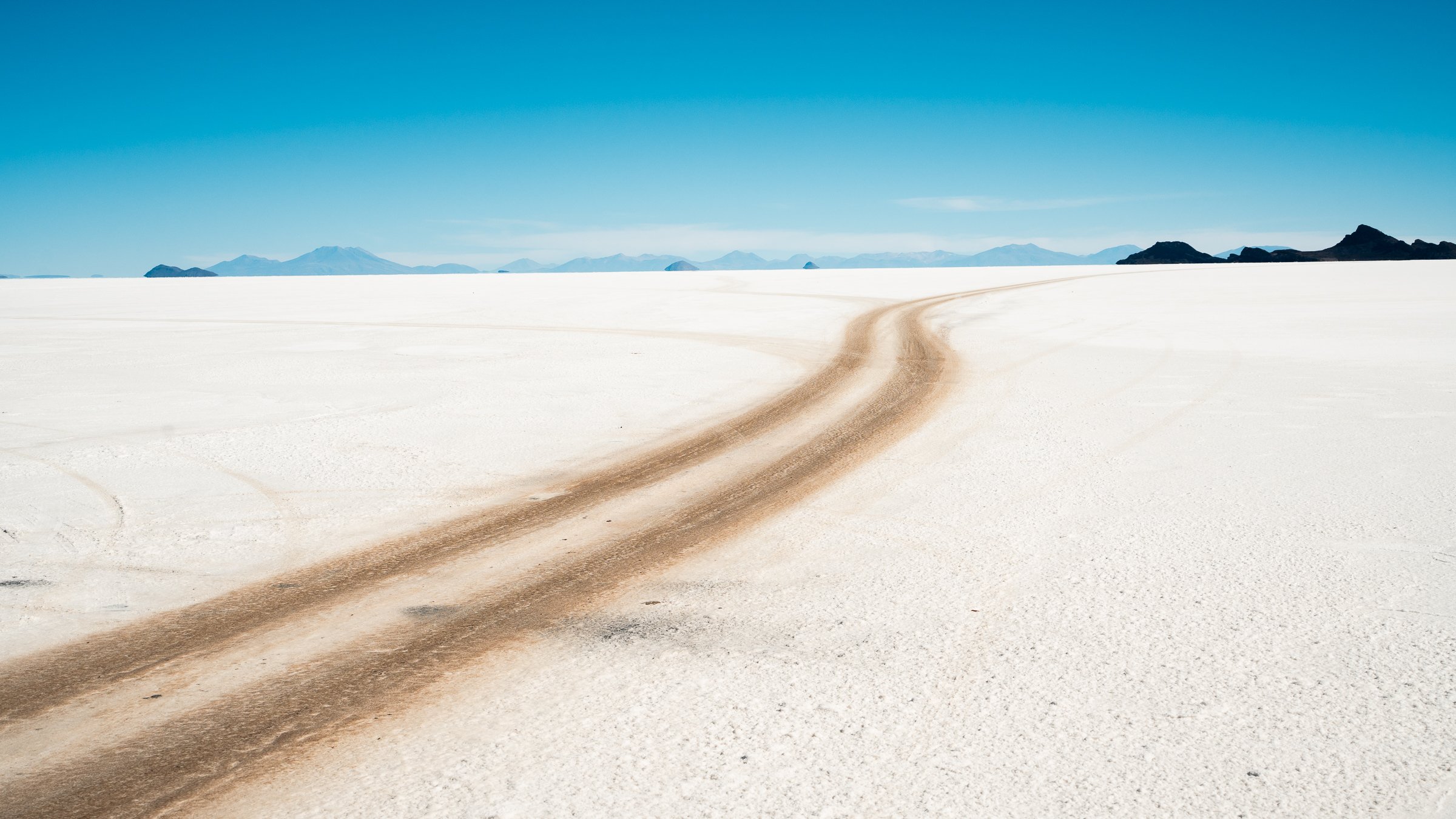
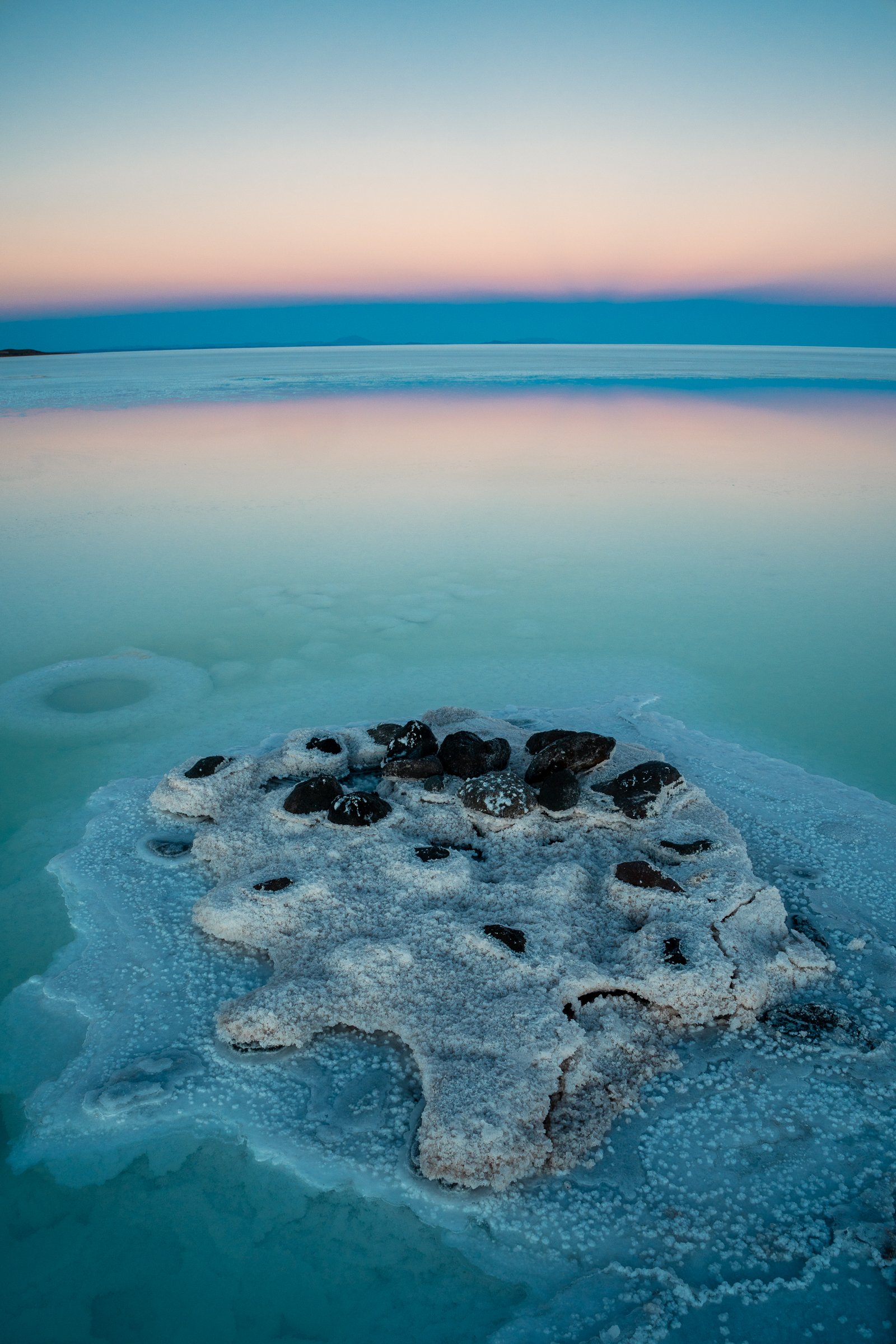
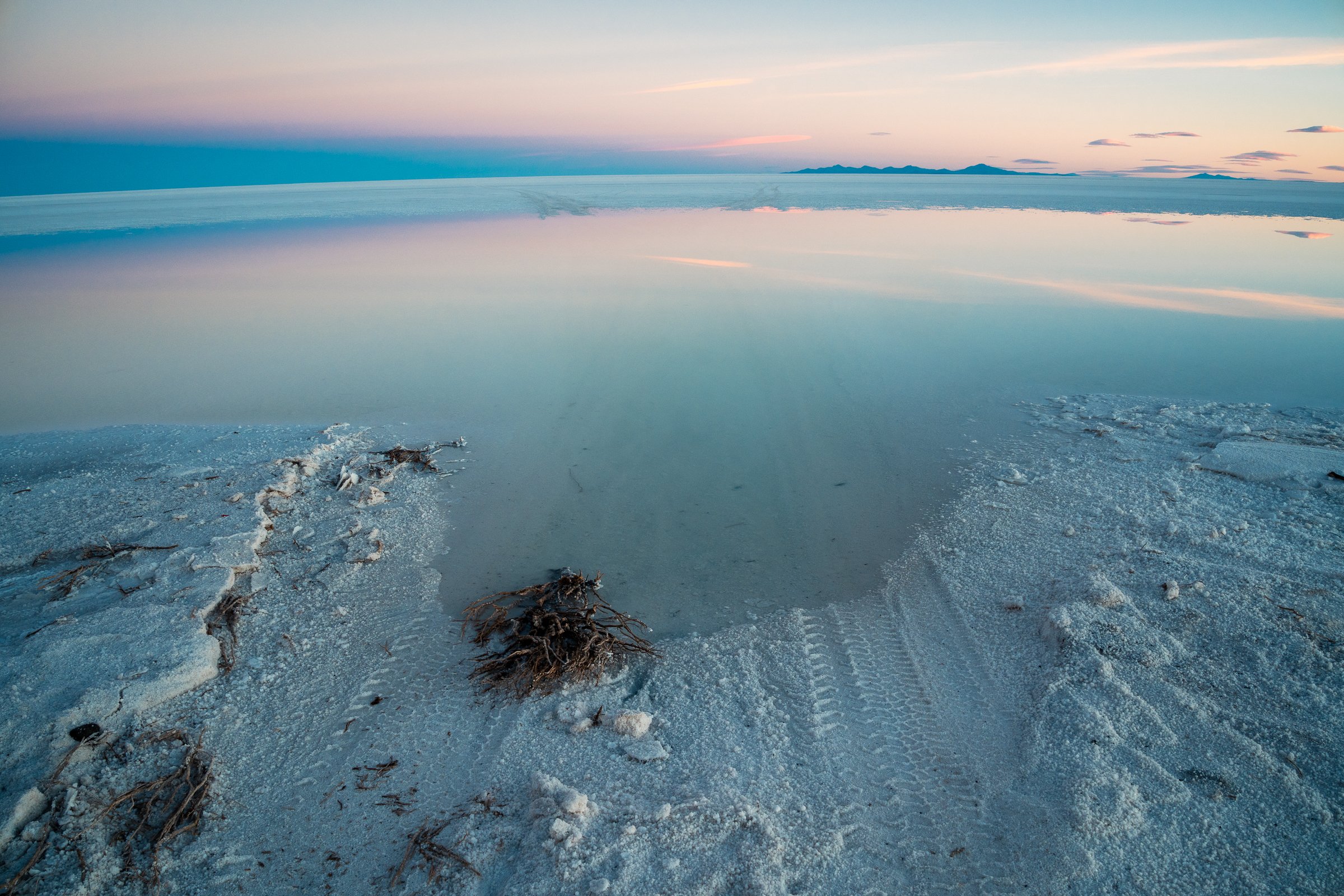
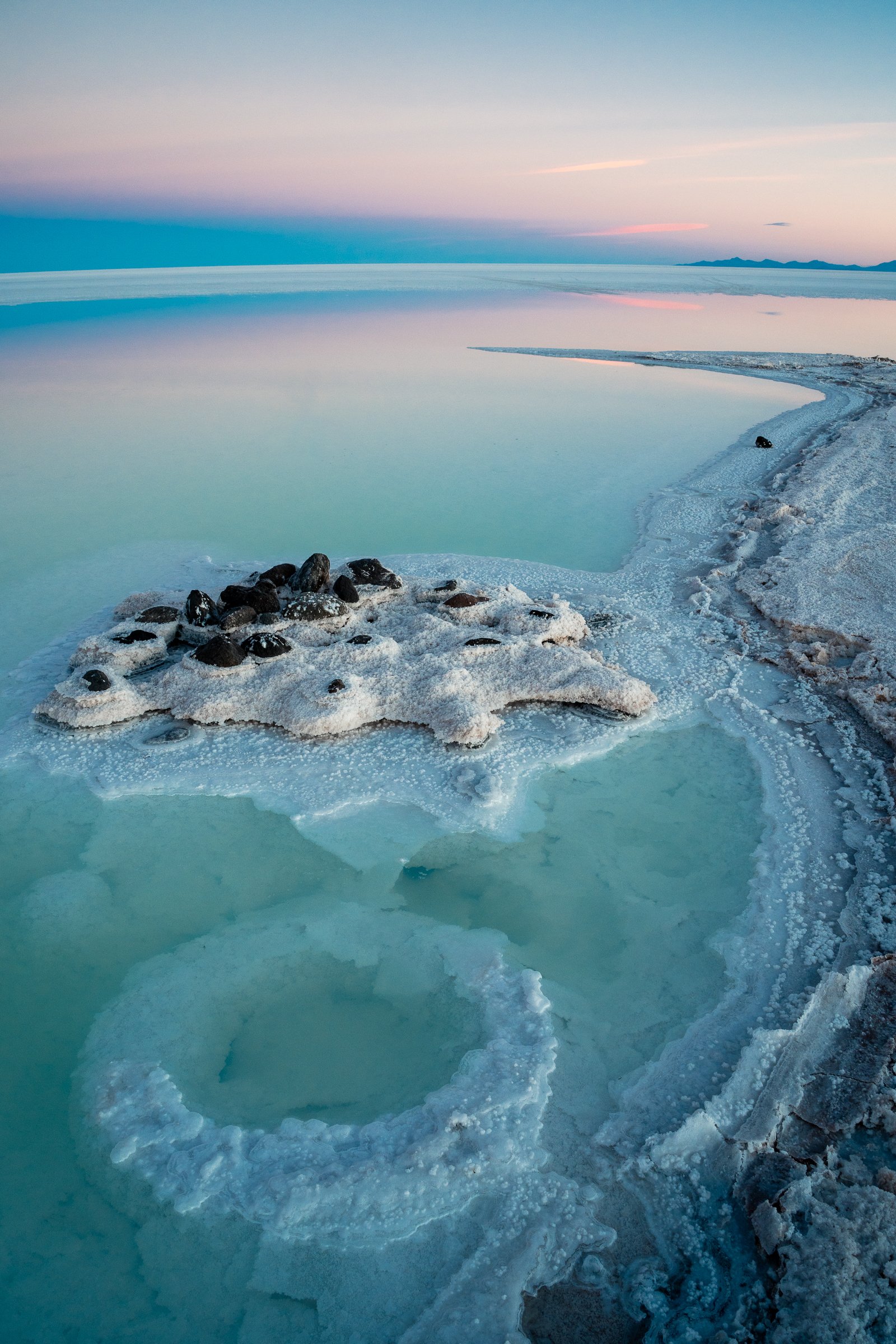
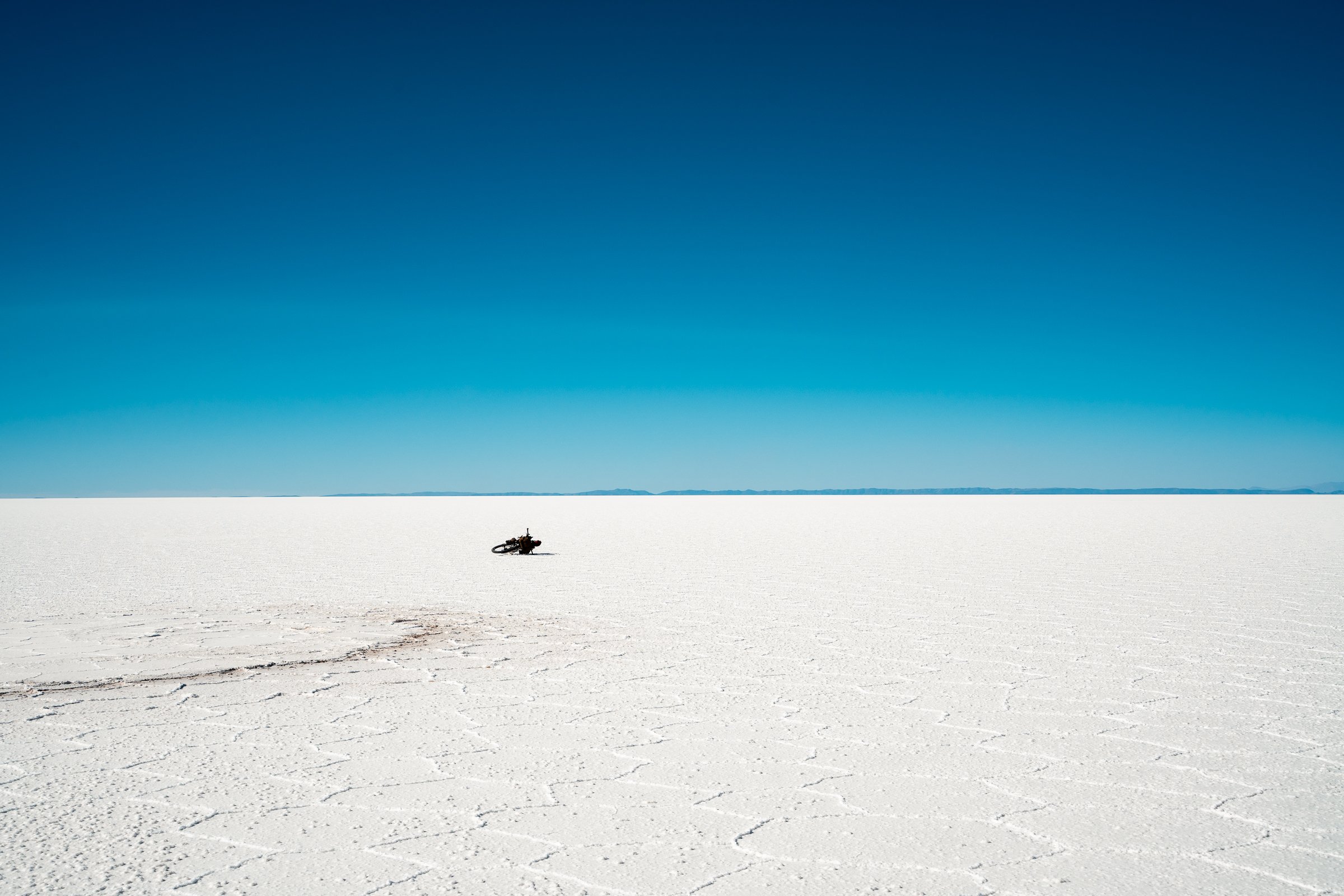
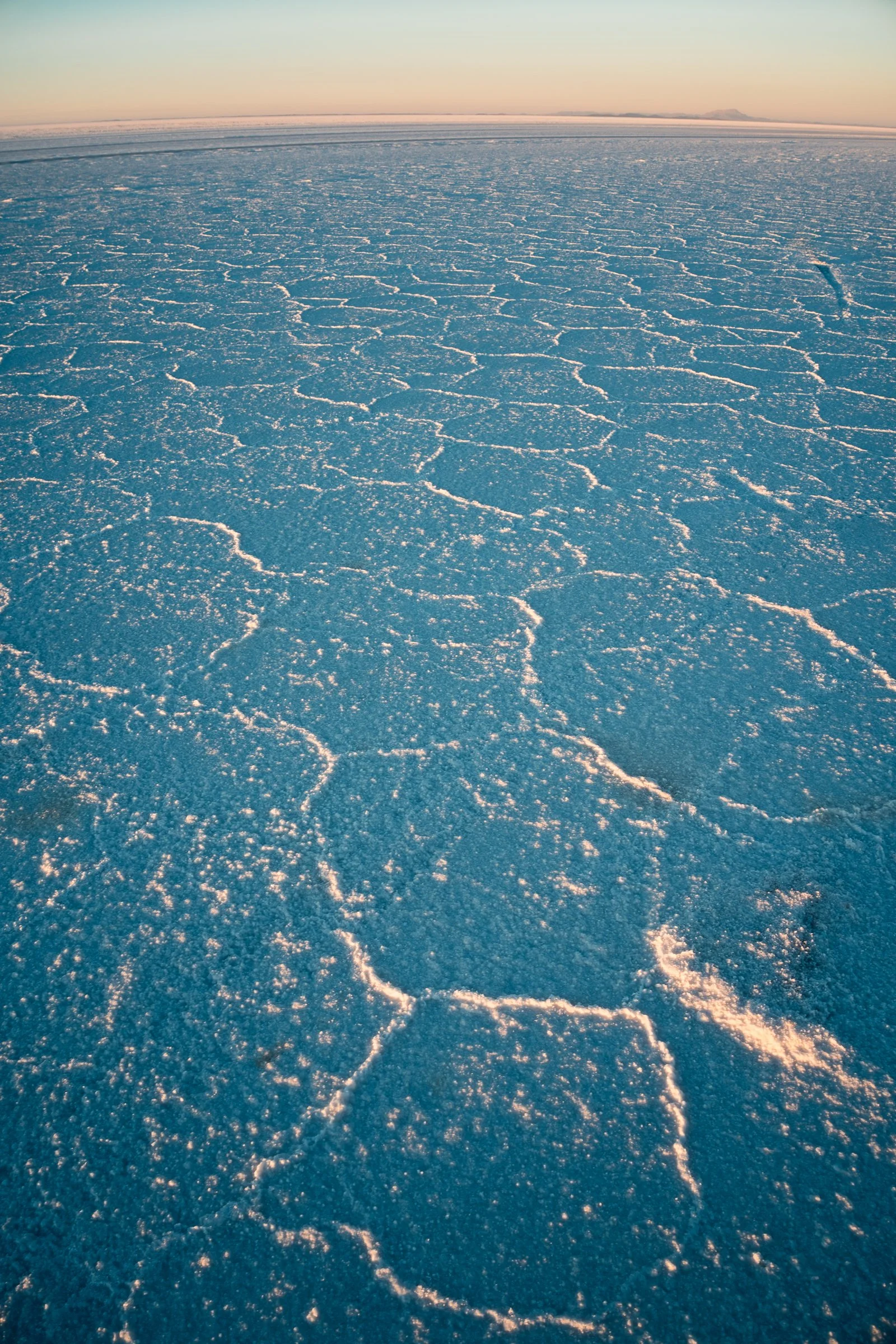
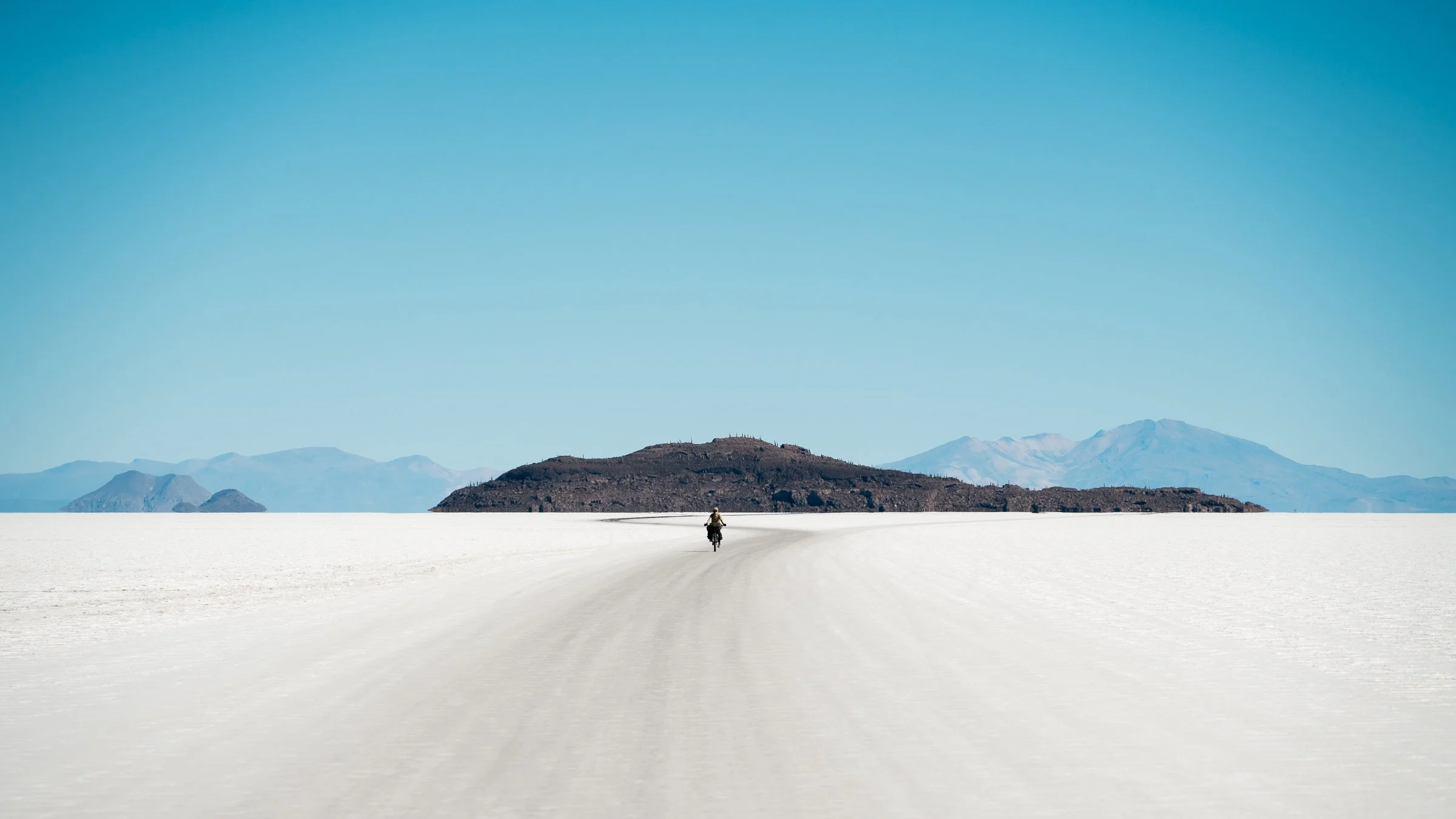
The morning was spent on easy tracks around the ‘coast’ of Coipasa, past some very wet looking areas of the salt flat. We followed our GPS trace, and set off at the designated spot, but not before getting caught in deep mud and salt. Reassuringly the salt flat was more solid further from the coast, and our initial concerns about breaking through into the brine below like thin ice quickly evaporated. Initially it felt surreal, as we rode onto the pristine white surface, our destination just barely visible on the horizon ahead of us. The surface changed frequently, from small mounds, to crisp geometric patterns; from moist to dry. Constant flecks of salt were flying off our tires, covering our bikes, our luggage, and our clothing in it.
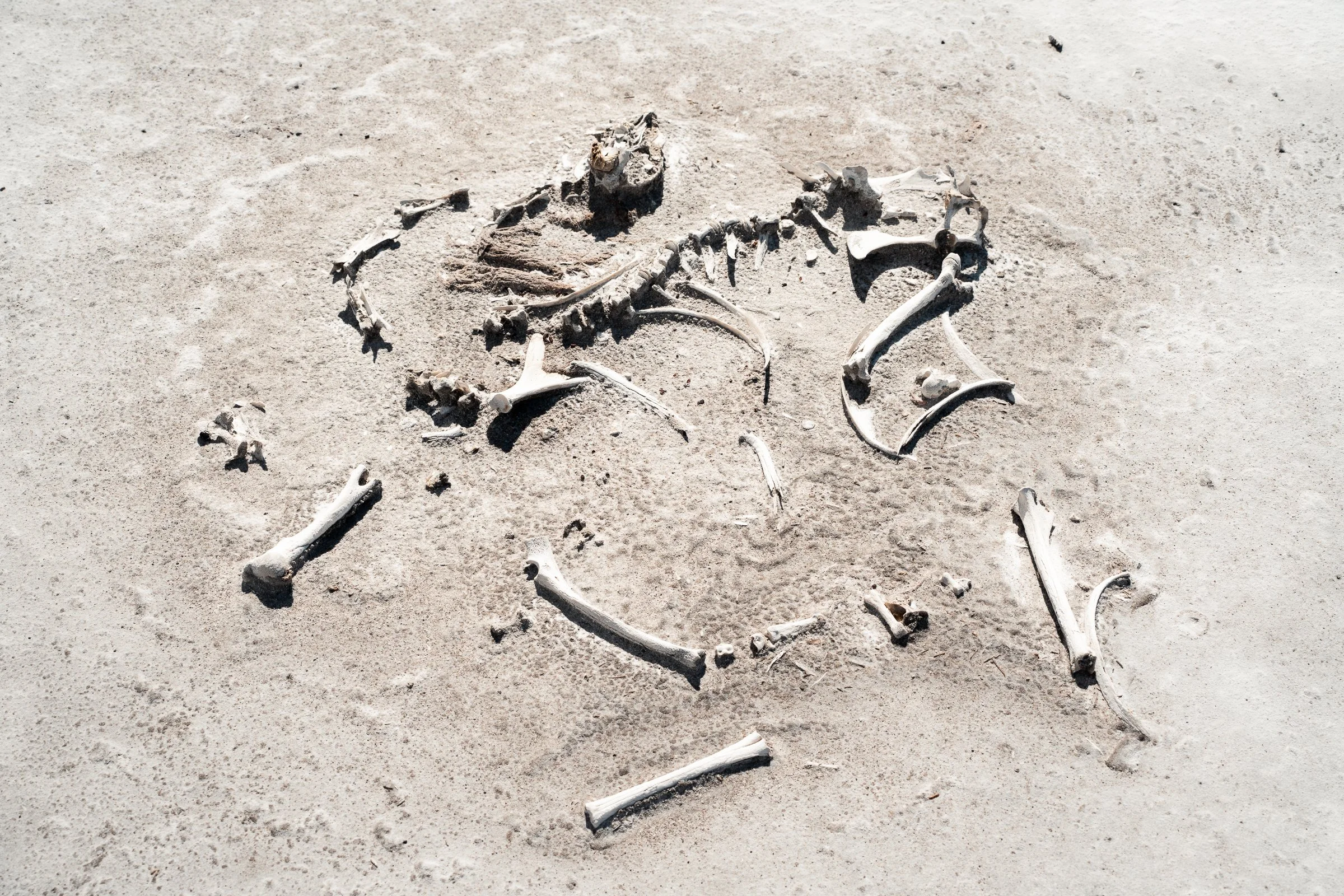
More than one animal seems to have unfortunately strayed out into the salt flats
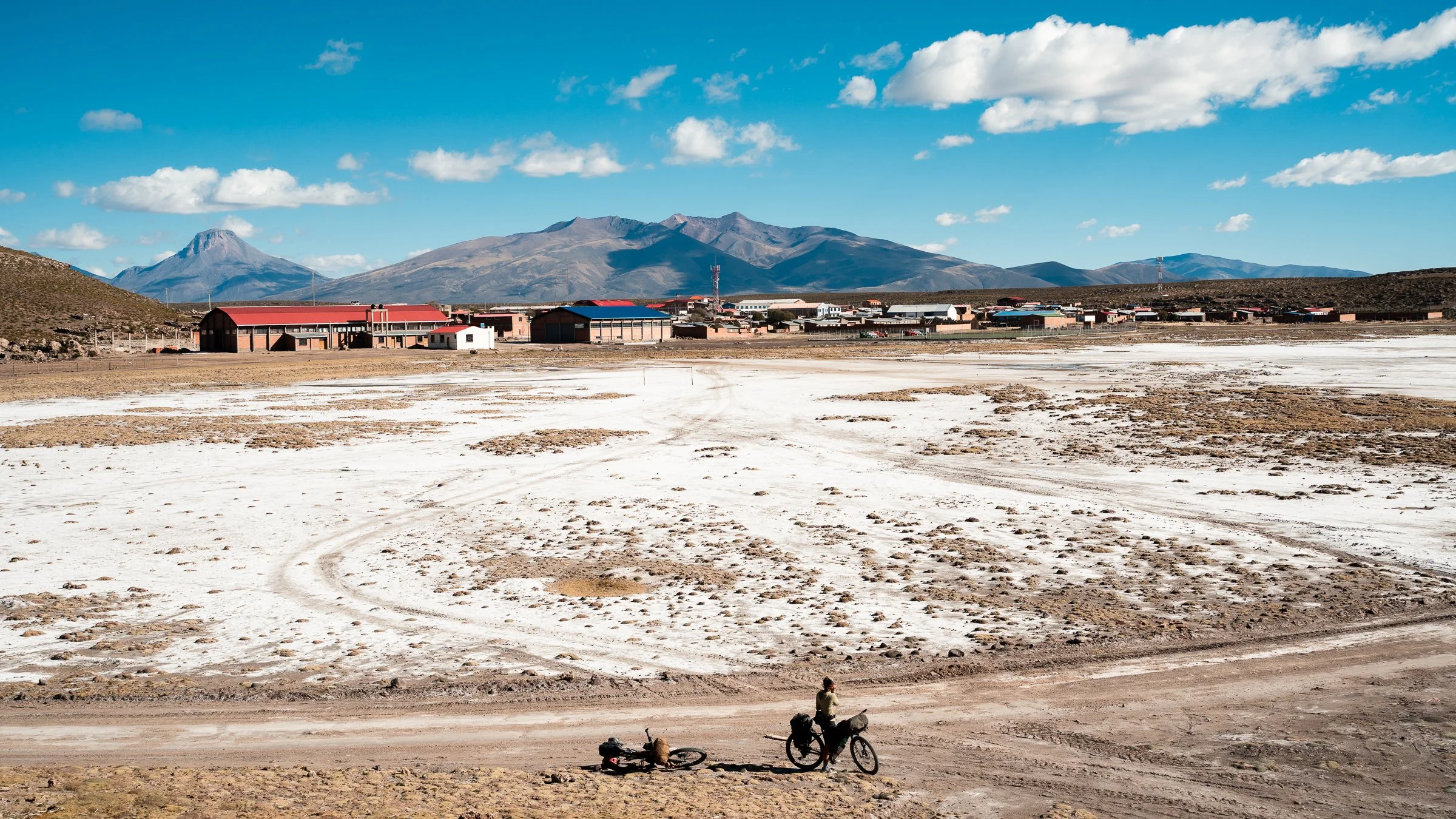
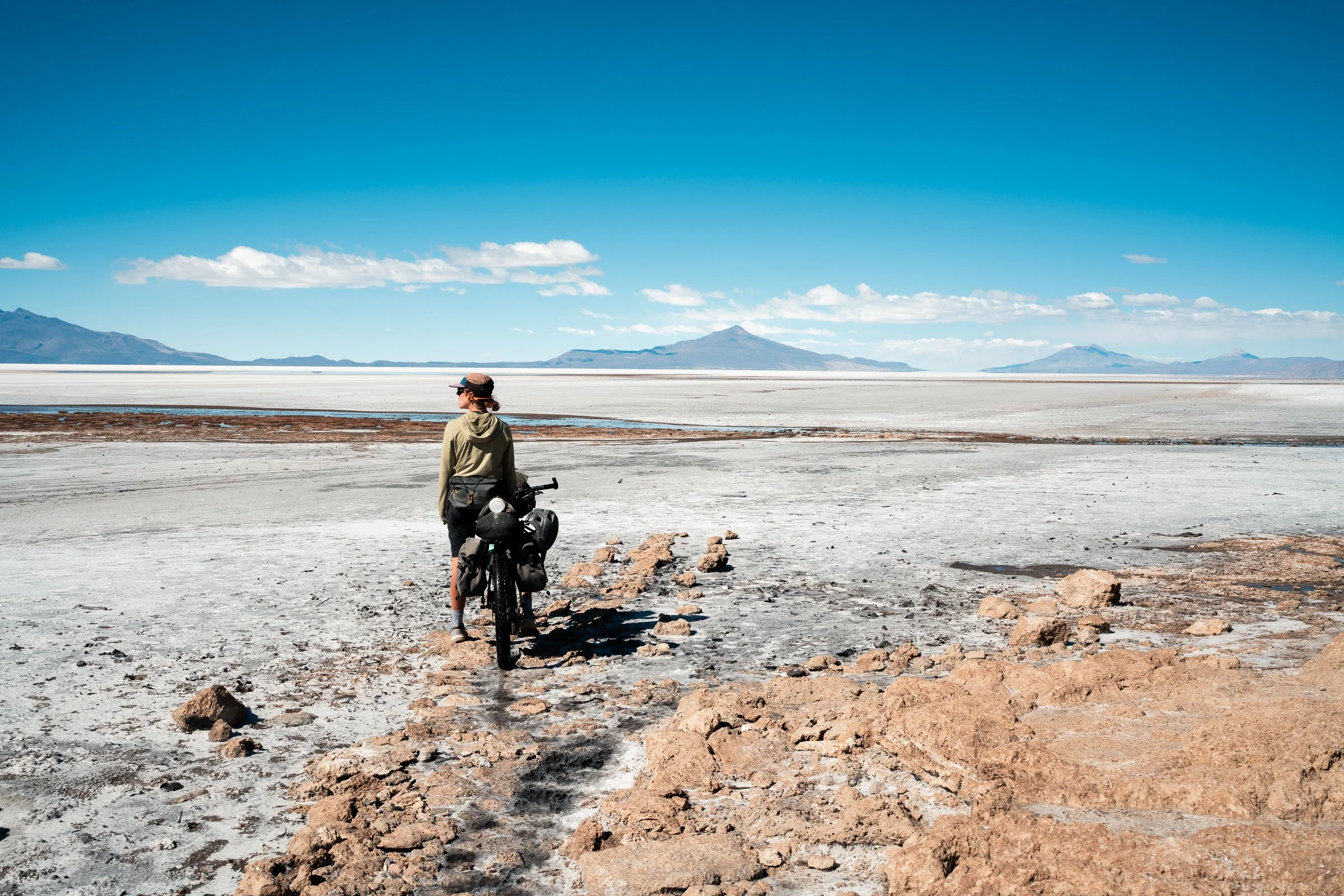
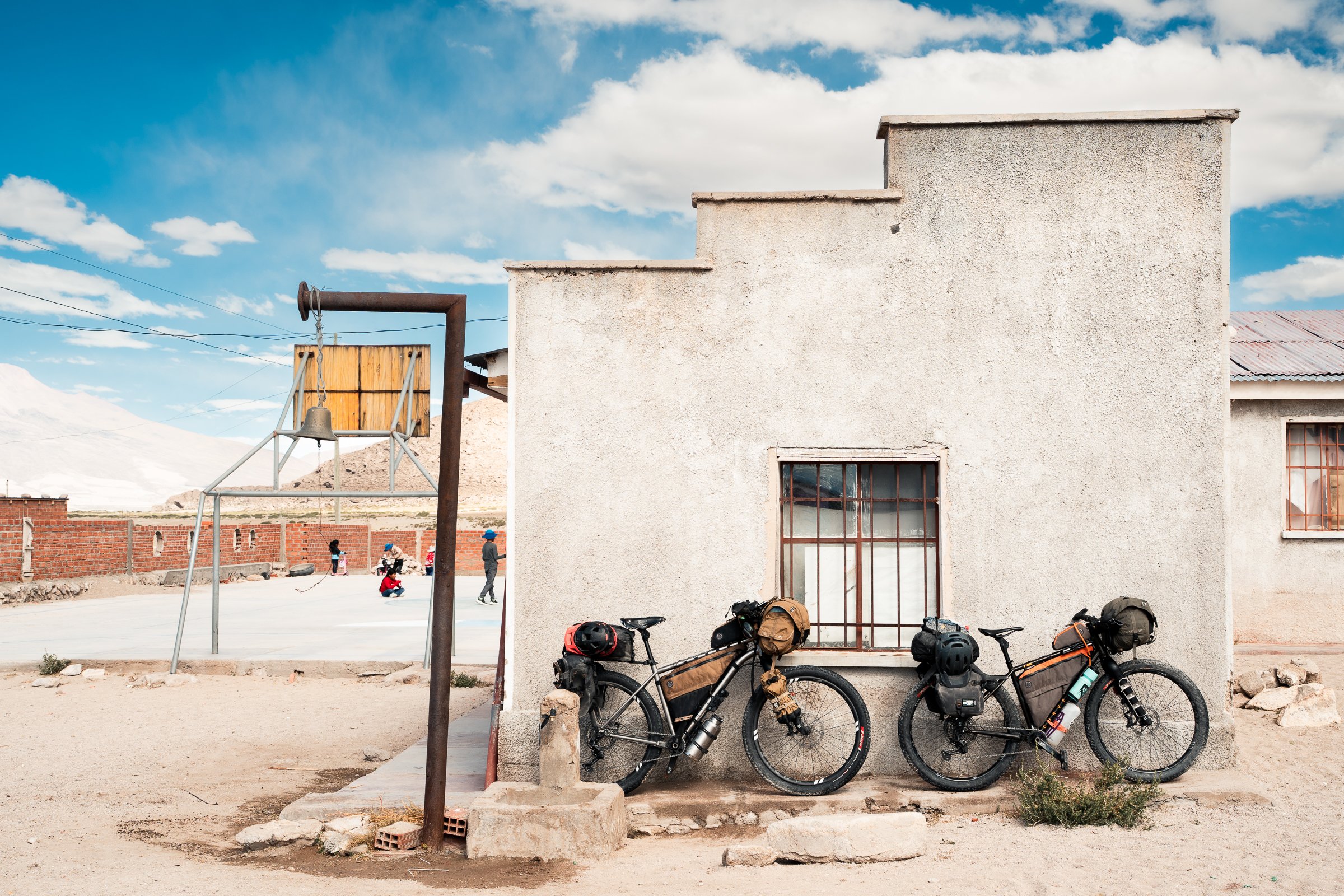
Near the far shore, the salt became much softer, as we approached what looked like a salt lake ahead of us (it had flamingoes, but often mountains etc in the distance appeared to be floating, so we were 100% it wasn’t just an illusion). Turning to ride around this, our pace slowed dramatically. Suddenly it wasn’t fast crisp salt, but we were pushing through wet sand, every pedal push an effort. Trying to push the bike didn’t help, as my feet just sank into the ground. After half an hour of this, we had found some car tracks traversing the drier parts, and were back on firm ground. Firm being relative, as it was still sand. We passed through empty farm fields towards the town of Hizo. Here we found a tap, and spent a good 90minutes cleaning the salt from our bikes whilst local children watched.
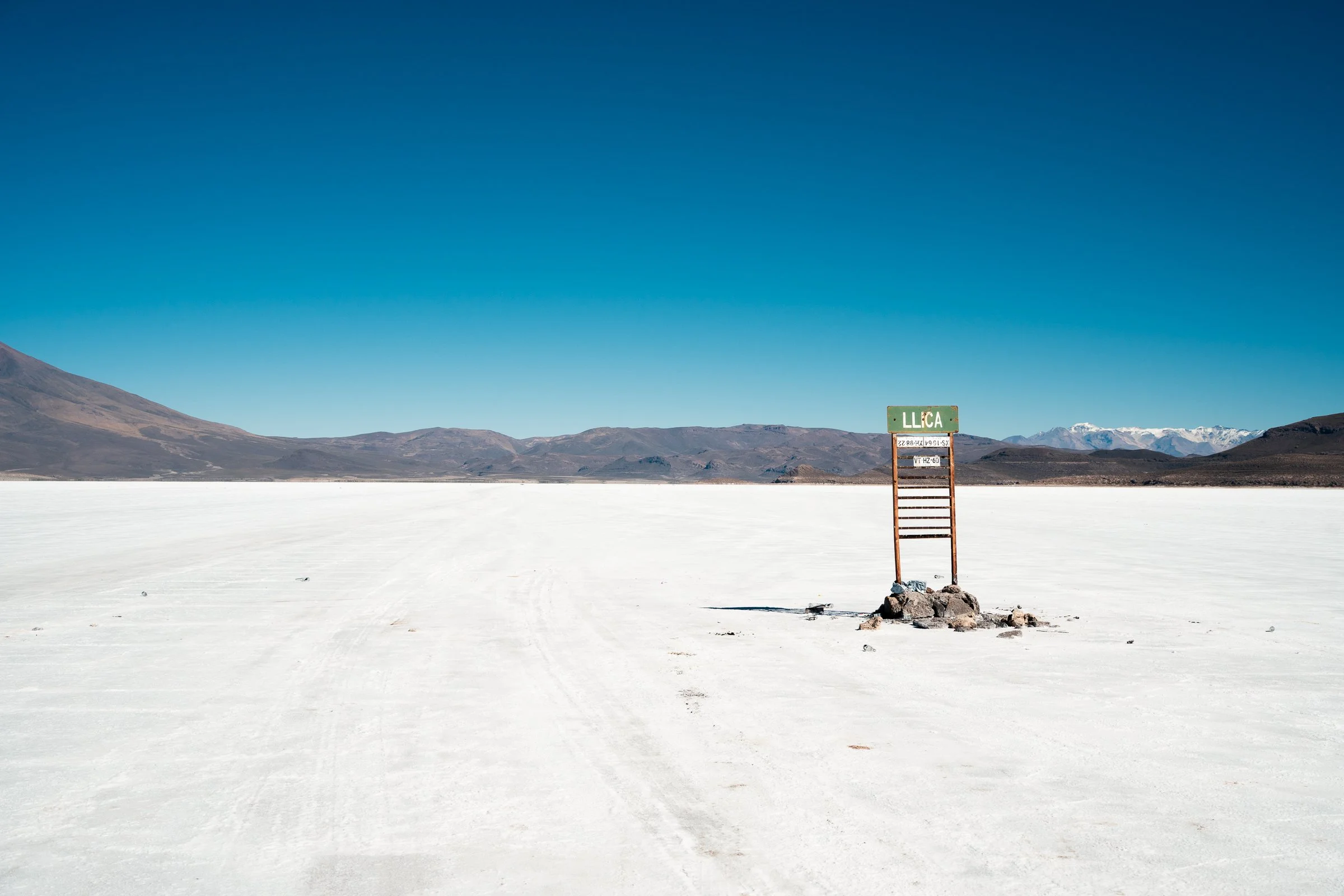
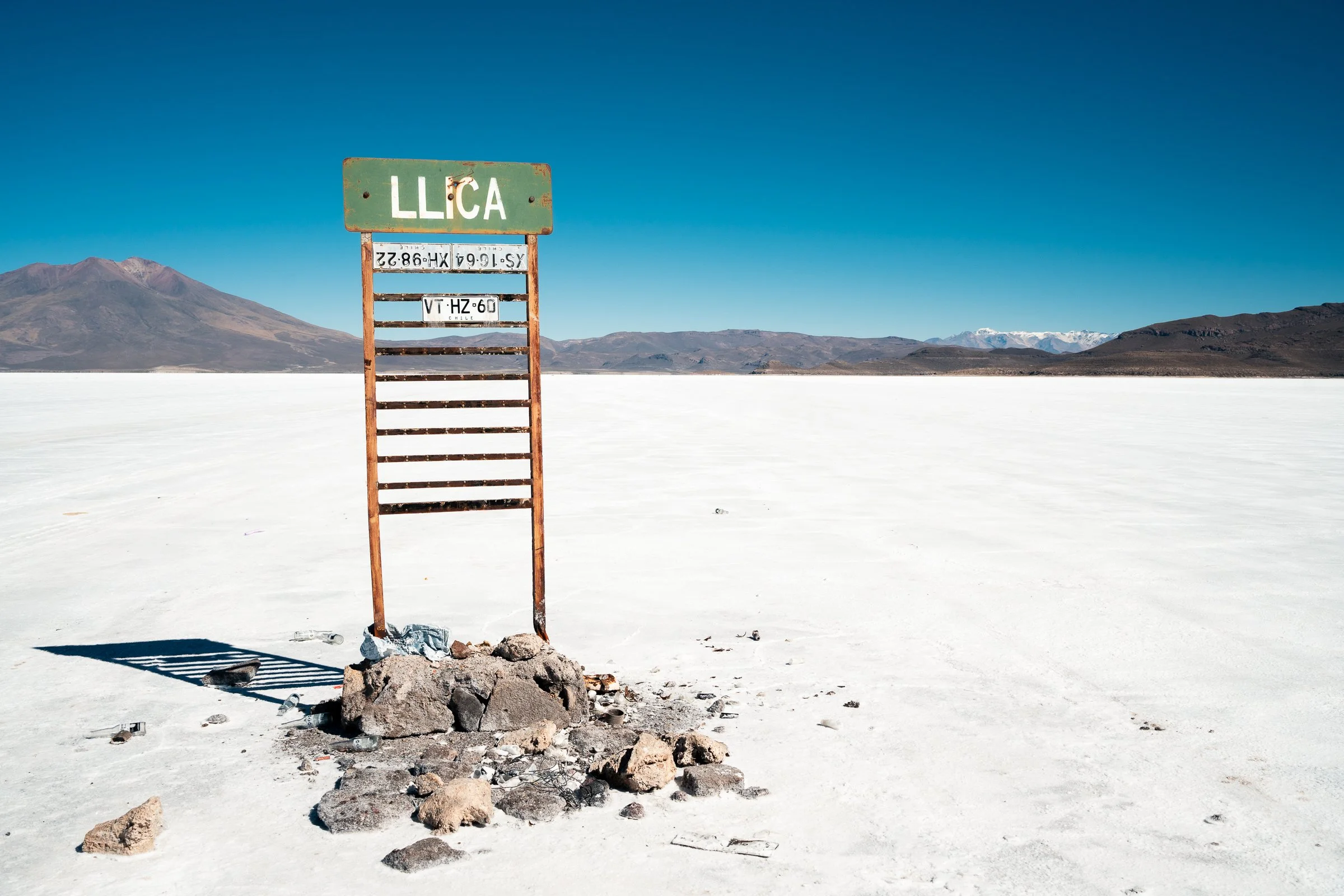
The rest of the day was spent on sandy roads, some good, some not. Llica was the town we were roughly aiming for, but hoped we would find somewhere to camp beforehand. It was bare, sandy hills in a narrow low pass though, and quite a lot of traffic - nowhere to put the tent up in seclusion, or without getting covered in dust. Another night in a small town wouldn’t hurt us though. On arriving to Llica, we quickly realised this was the biggest town since we left La Paz nearly two weeks prior. Fresh produce in the tiendas, people in the streets, multiple restaurants; we were glad we hadn’t missed this. We got a room in the Residencial Sillajhuay, where we had to pay an extra 10bob each for a warm shower. Unfortunately this wasn’t working, but we were given a refund without much fuss. We also saw the first cycle tourists we had seen since arriving in Bolivia nearly a month prior, causing me to win the bet we would see some before Uyuni (Lauren had to do the laundry as payment). As we were deciding on where to eat we saw a chargrill blowing of a delicious smoke, obviously that’s where we ate. It was the most succulent piece of chicken we had eaten in Bolivia, savouring every mouthful, Lauren even went to town on it’s tiny little ribs getting every piece of meat she could, by the time we left there was a queue outside waiting for a table, rightfully so as the food was excellent (if you want to find it, it is on Calle Comercio, between Calles Murio and Daniel Campos).
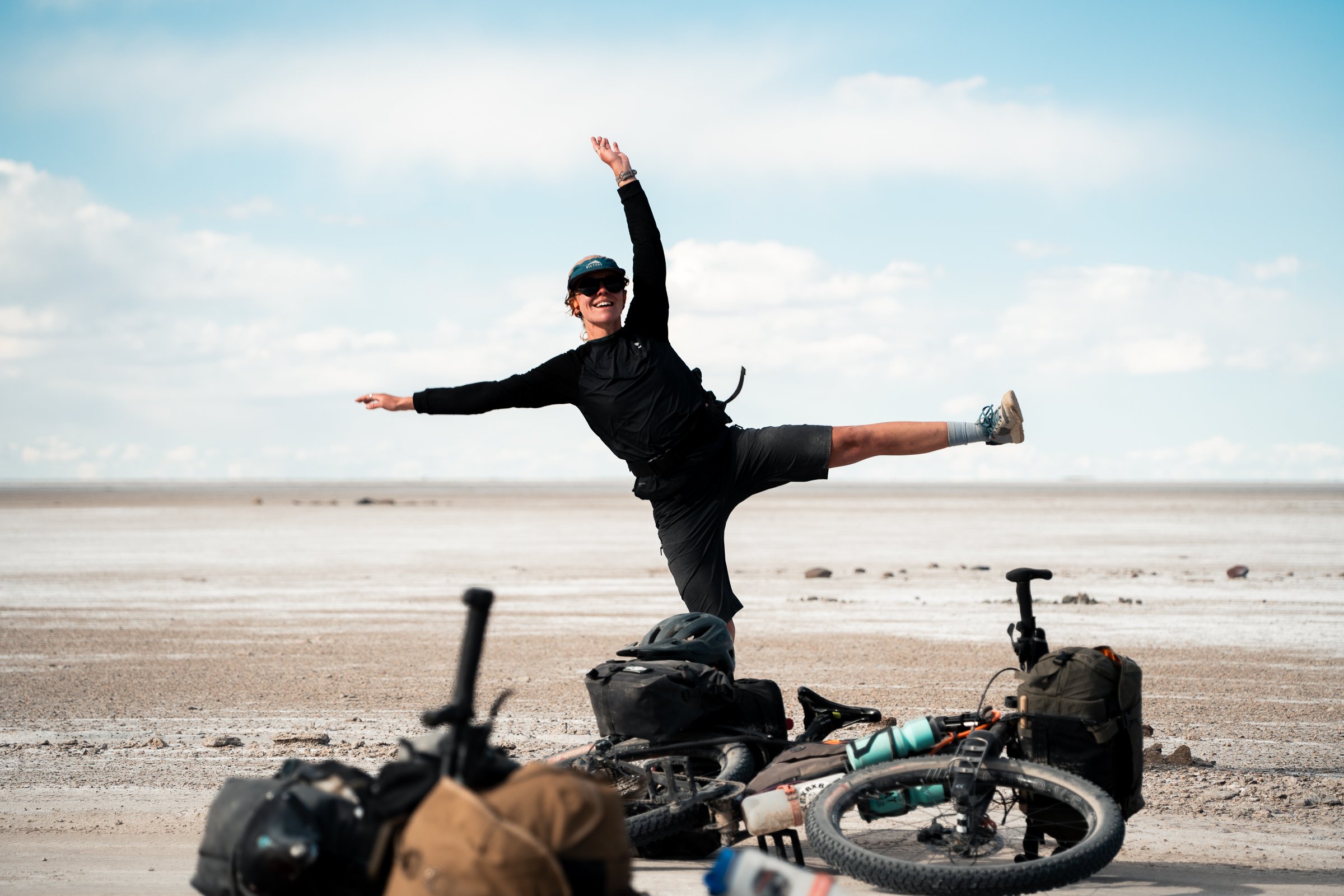
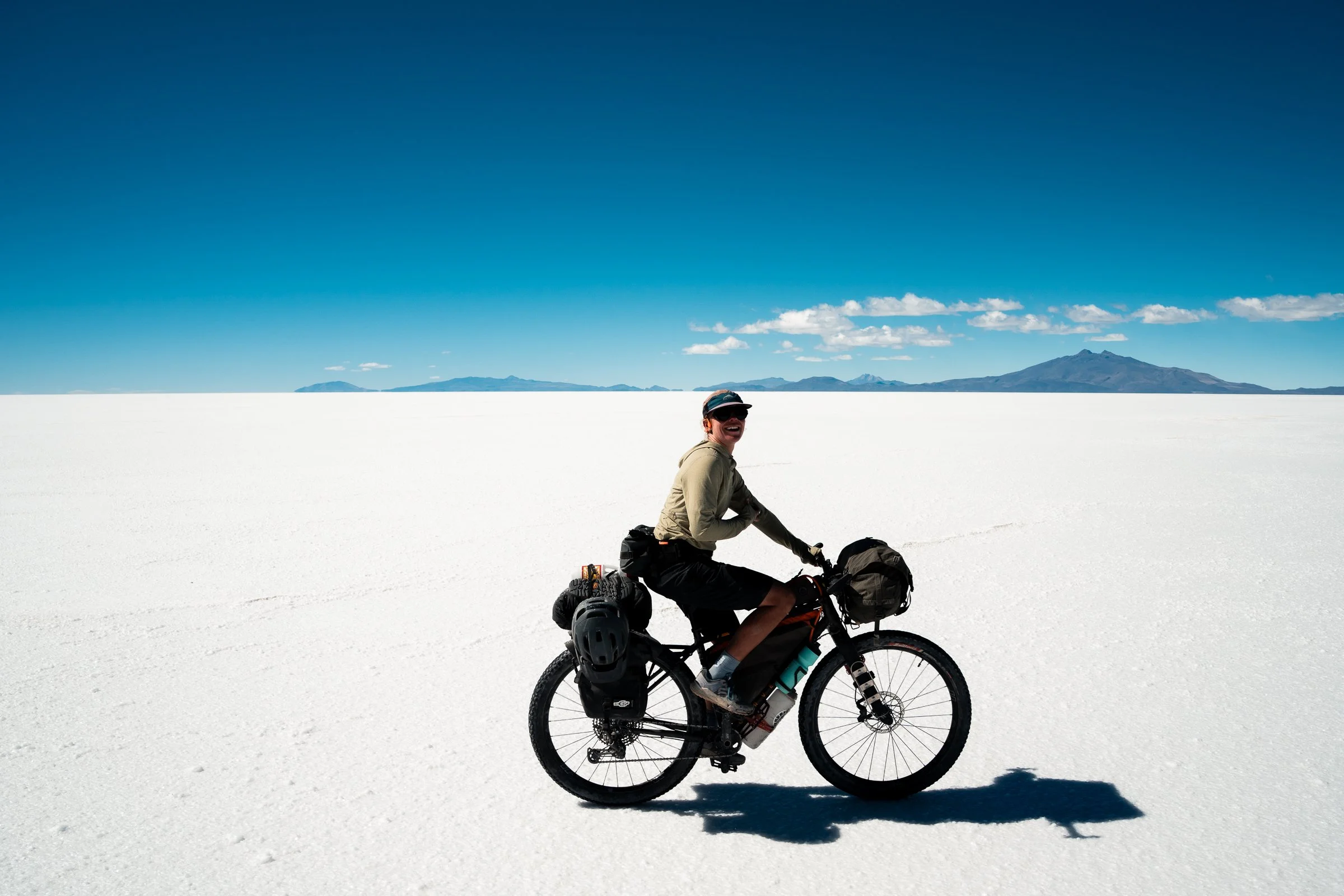
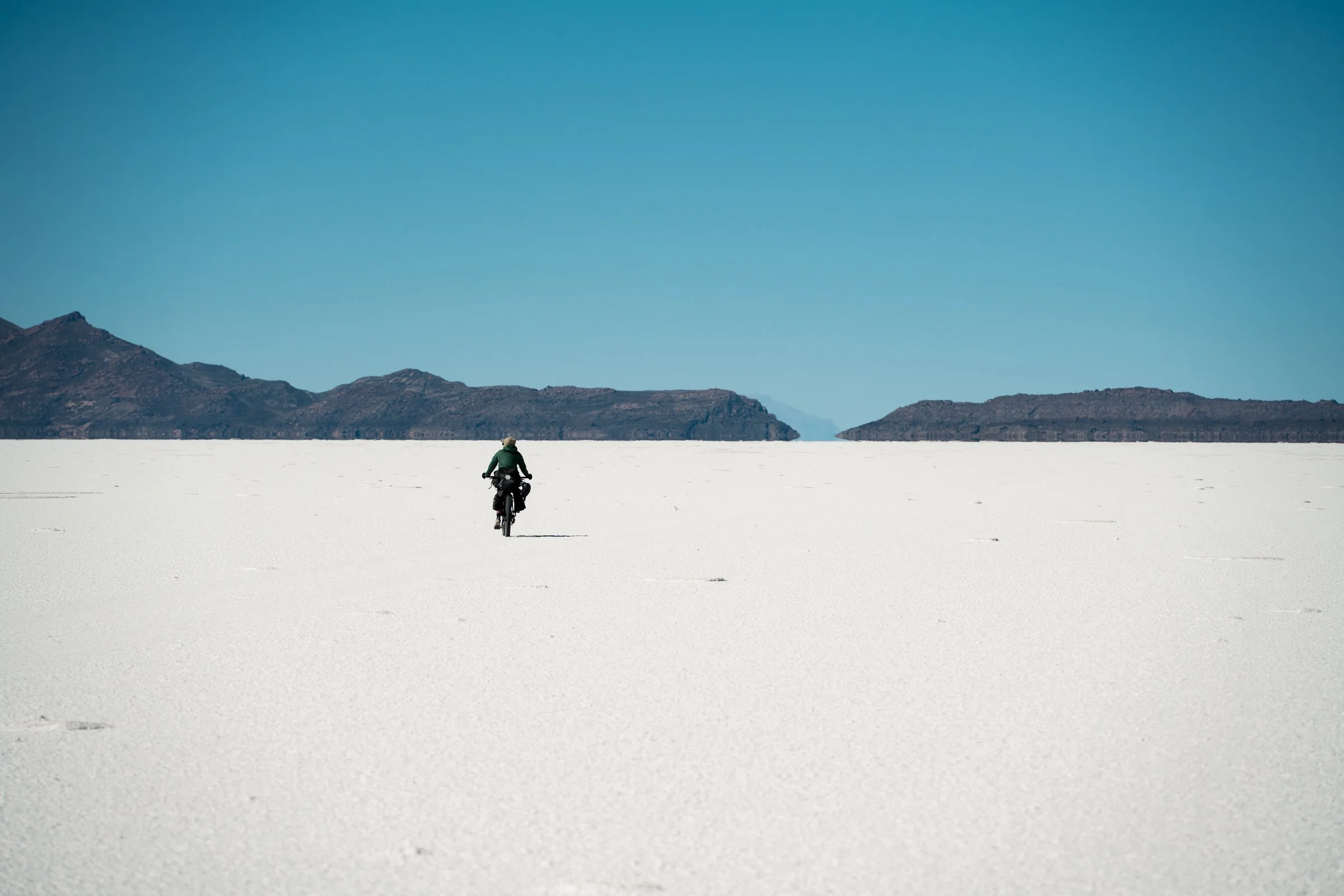
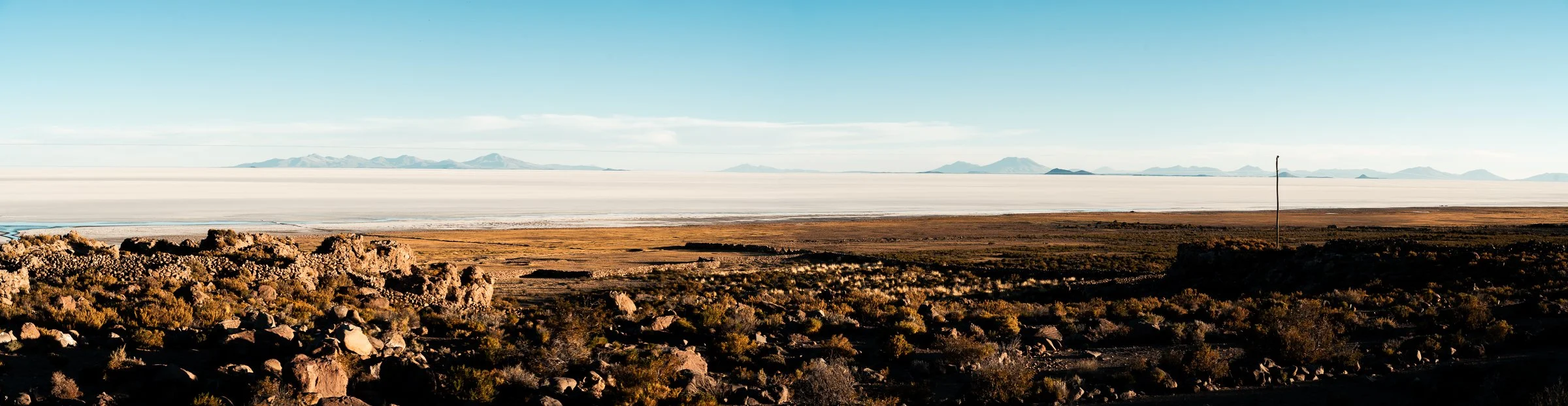
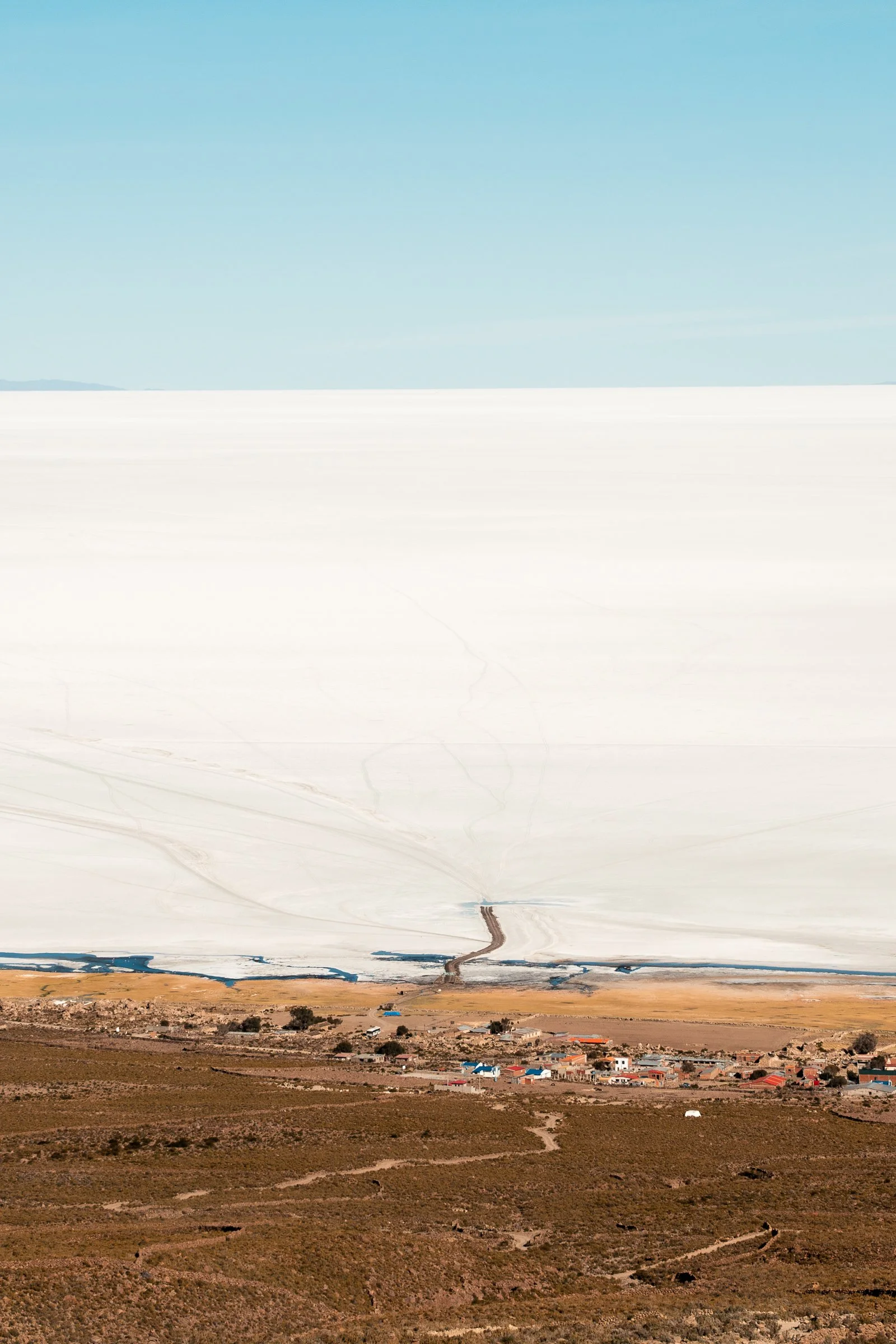
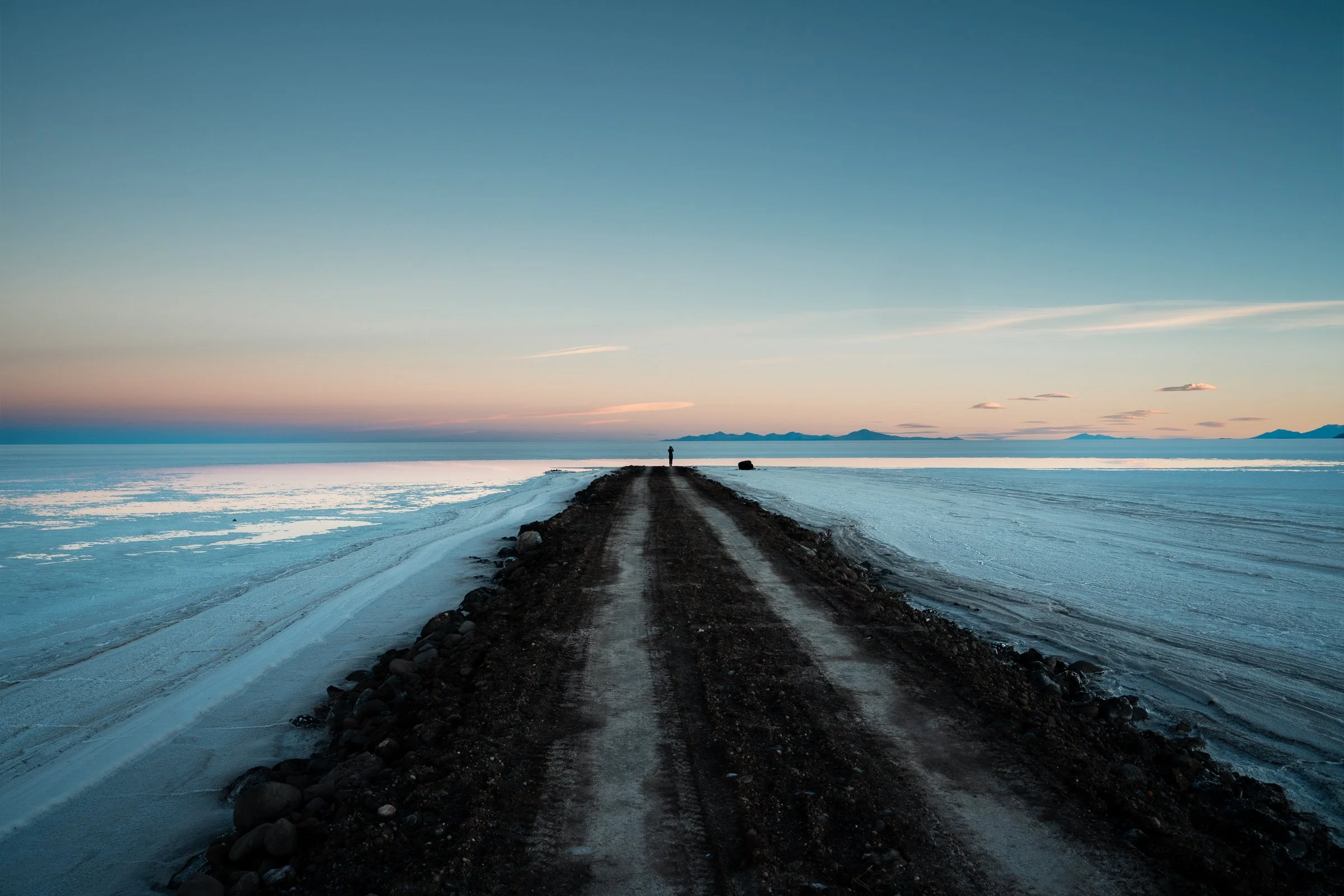
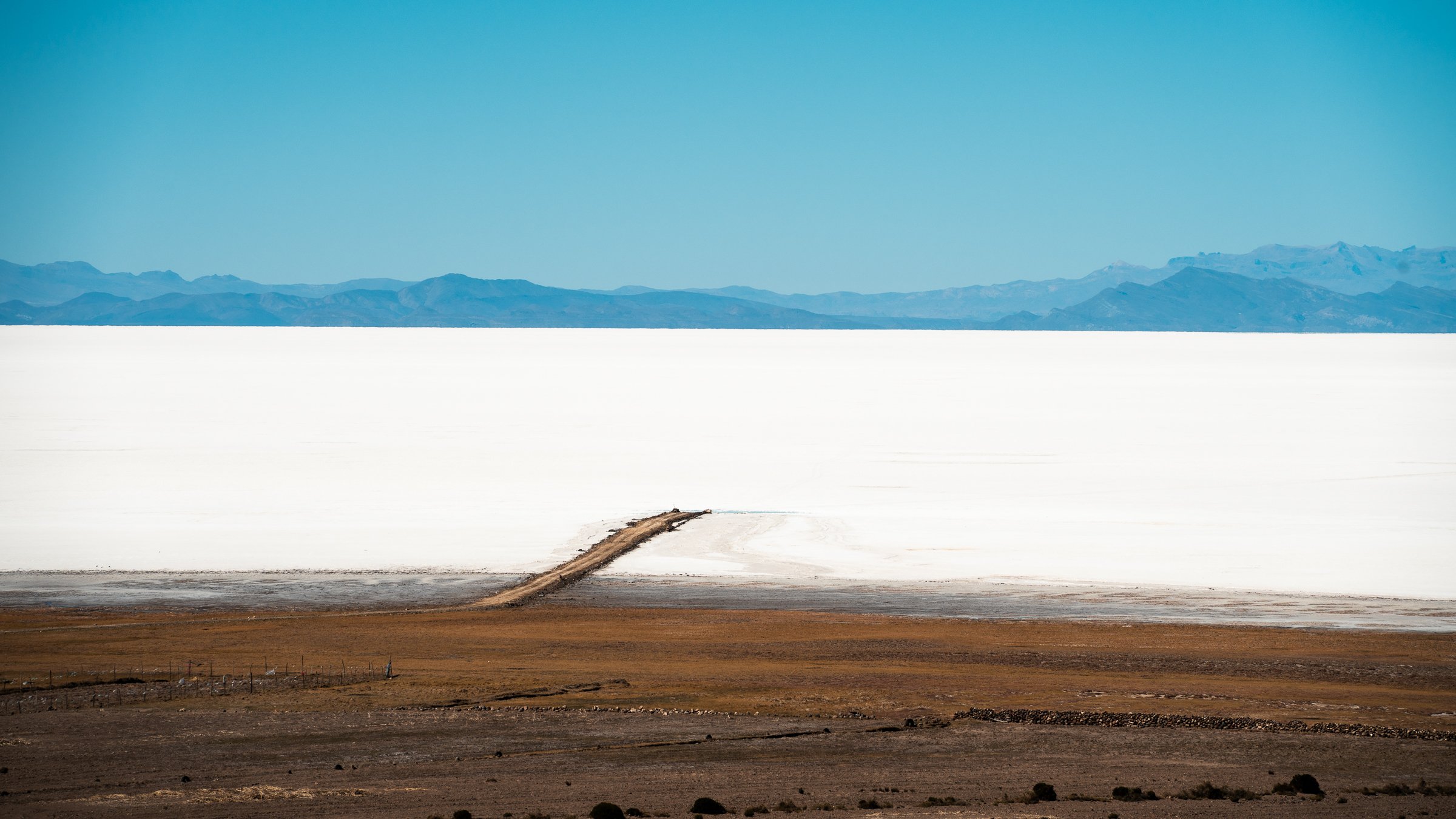
It was probably below freezing as we packed our bikes in the morning, even in the sun. It was more salt riding today, as we would hit the big one: Salar de Uyuni. We launched on an other long gravel jetty. It was 55km today, essentially crossing a large bay on the north shore of the salar. We hadn’t managed to find any coffee with breakfast. I don’t know if that was the problem, but less than halfway across I was flagging. I had no energy, I was uncomfortable on my bike, and couldn’t sit in one position for more than a couple minutes (both our bikes were set-up for a comfortable climbing position, as that was the majority of our riding in New Zealand; we both avoided flat roads as much as we could). We stopped and had snacks and a coffee in the middle of the salar. I don’t want to say it was just caffeine withdrawal, but after the thirty minute break I was much better on the bike. Still, the gap in the rocks were aiming for got closer painfully slowly; distance is meaningless on the salar, as things 30km away can look close. Arriving at Tahua, we passed through fields of red crops, we would later learn was quinoa. Heading east around the coast, we stayed at Hotel Kamana, a salt hotel run by a young family. We took a rest day here, as mentally we were not ready for another two big days of flat featureless riding. We had three course meals every meal, warm showers, and amazing views of the salar direct from our room.
Road signs on the salar
The view from our hotel window at sunset
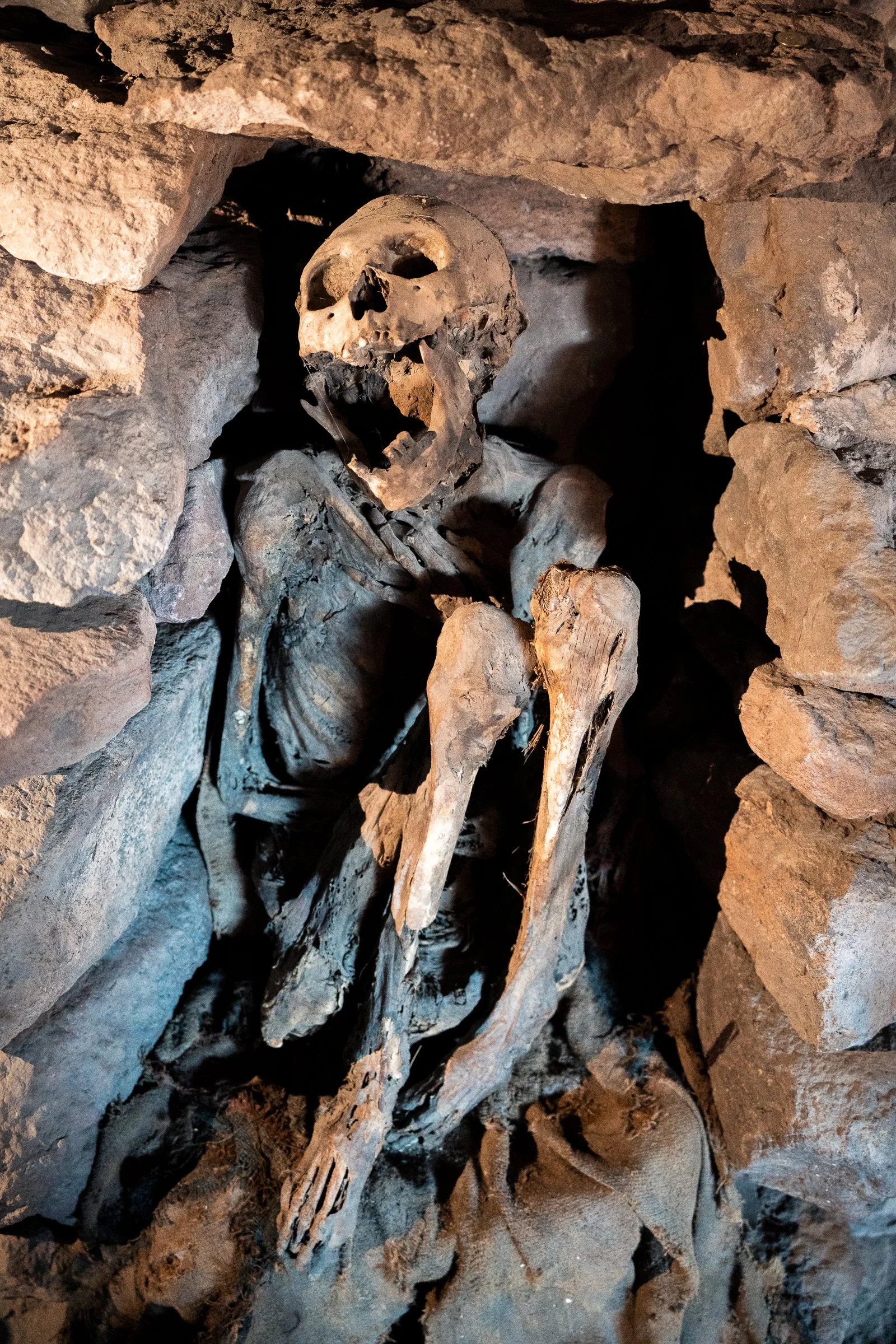
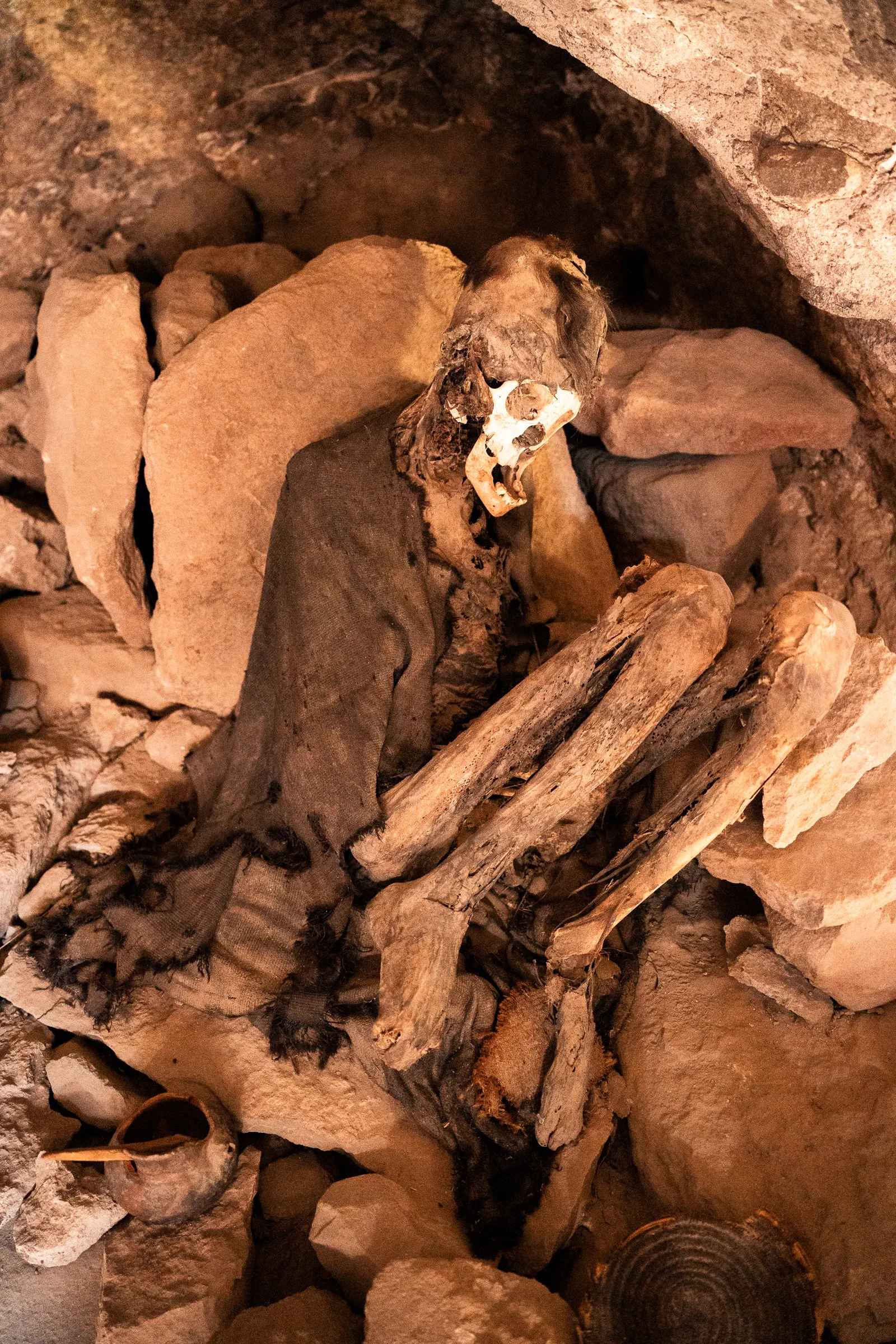
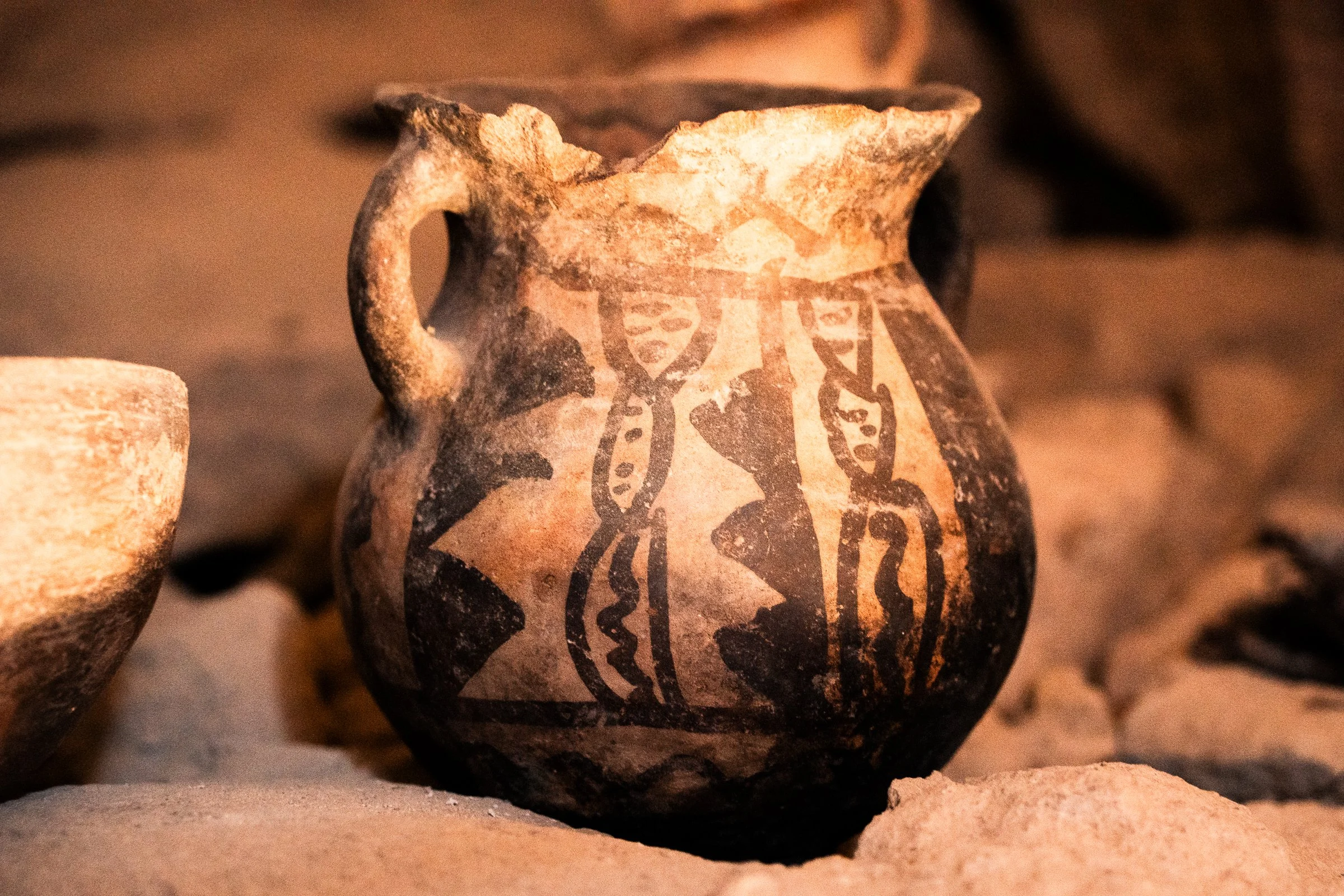
Our off day was spent reading, with a short afternoon excursion to the nearby Cueva de las Momias, to see some naturally preserved mummies from around 1200AD, before heading down to the salar to take some photos at sunset.
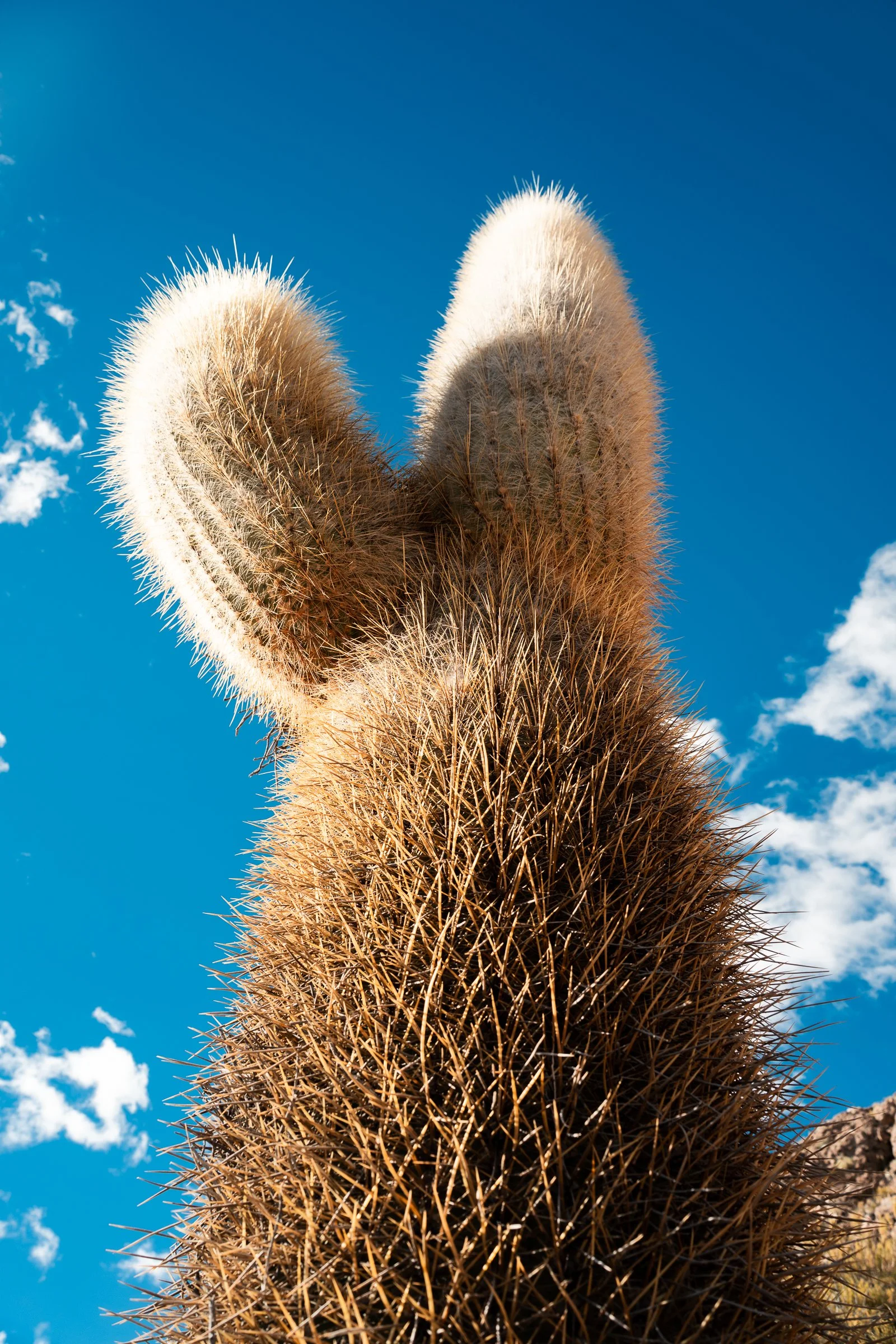
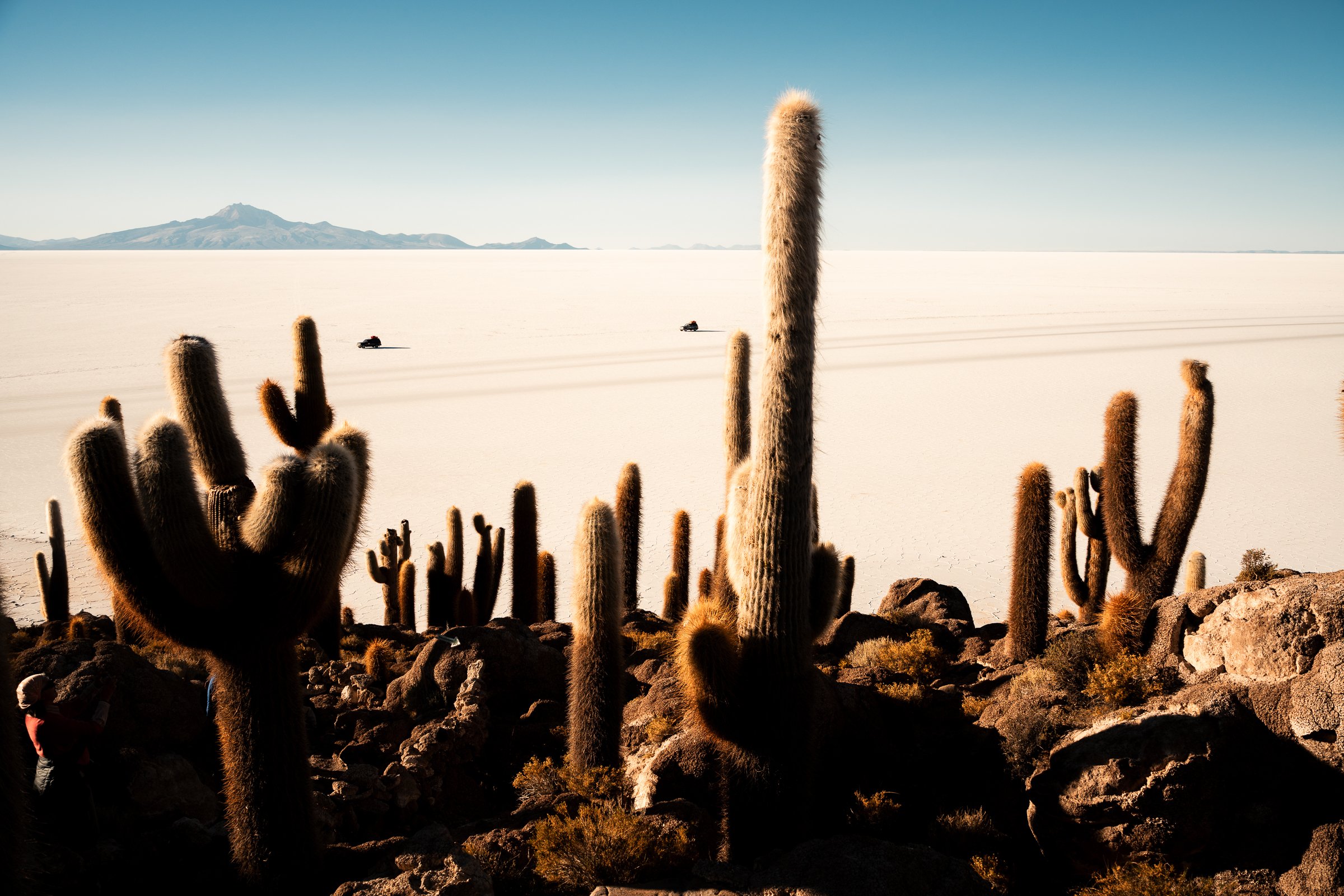
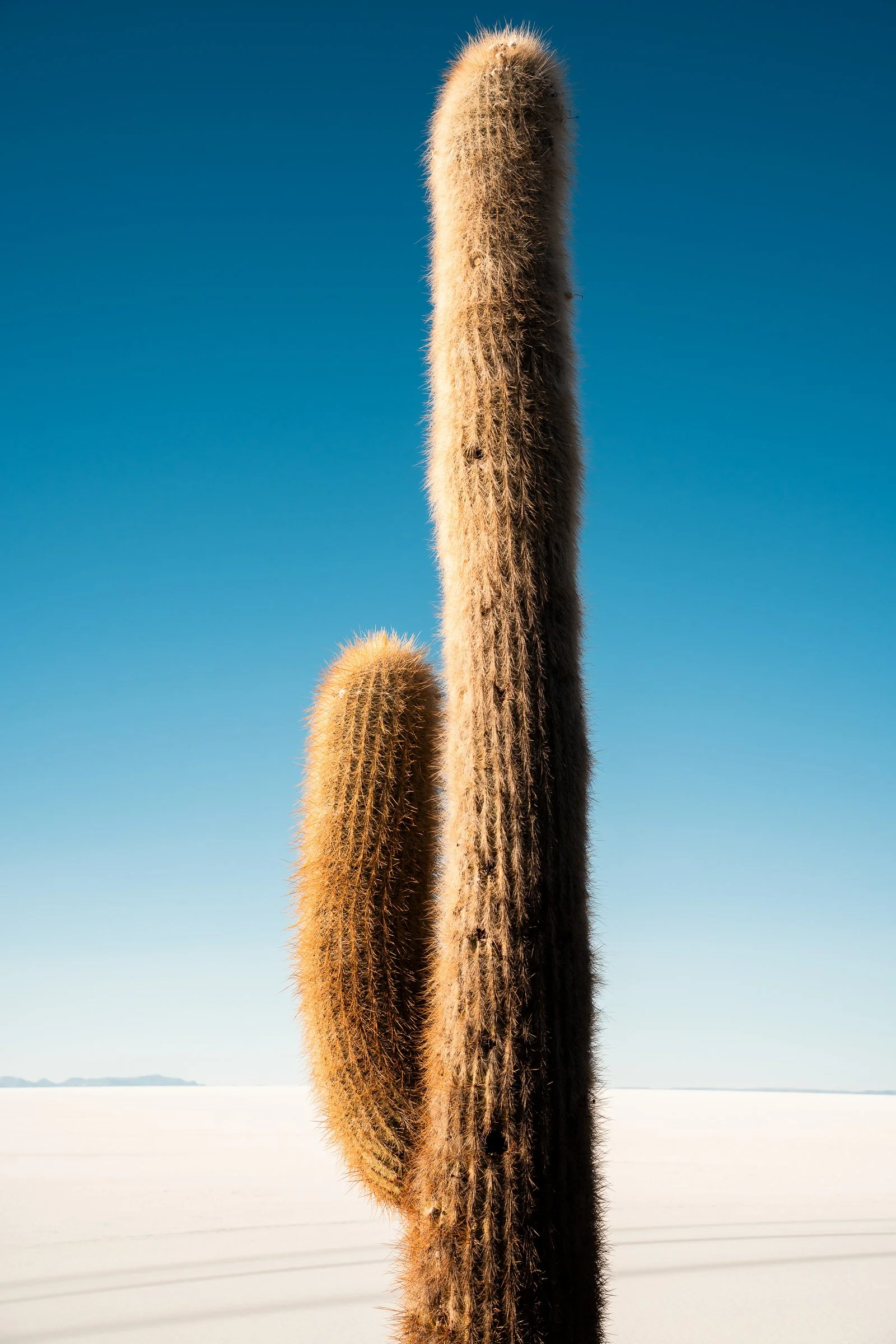
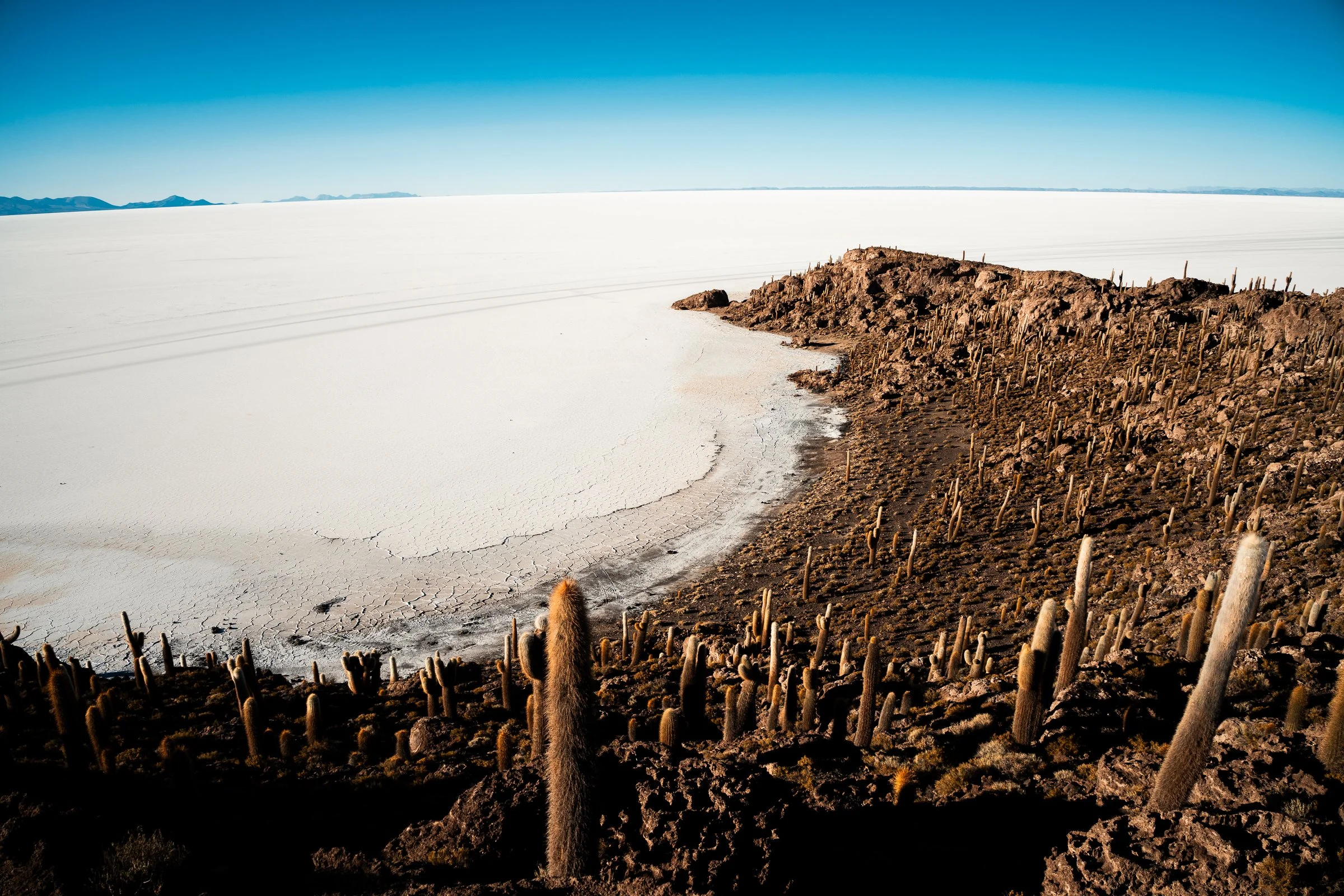
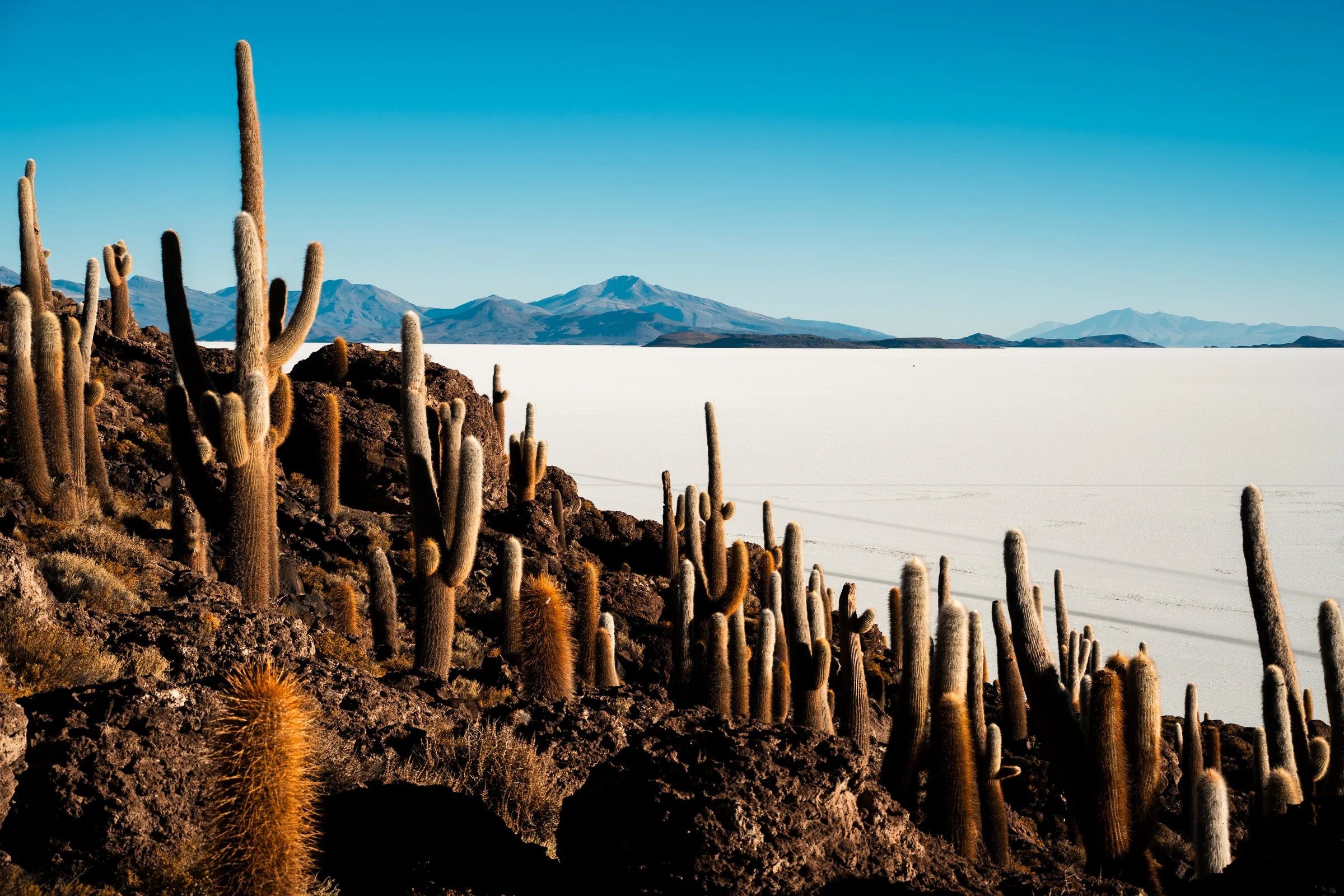
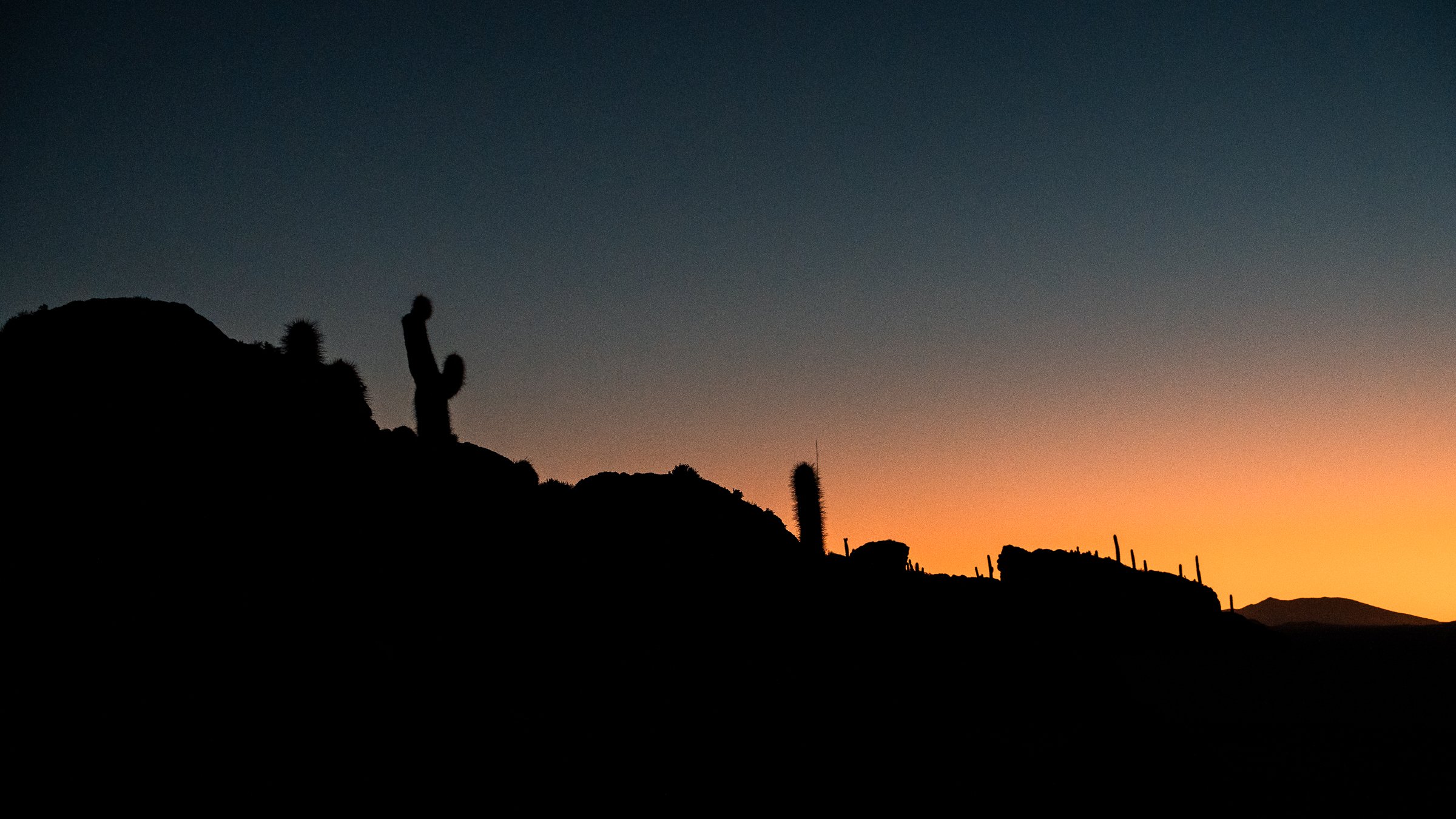
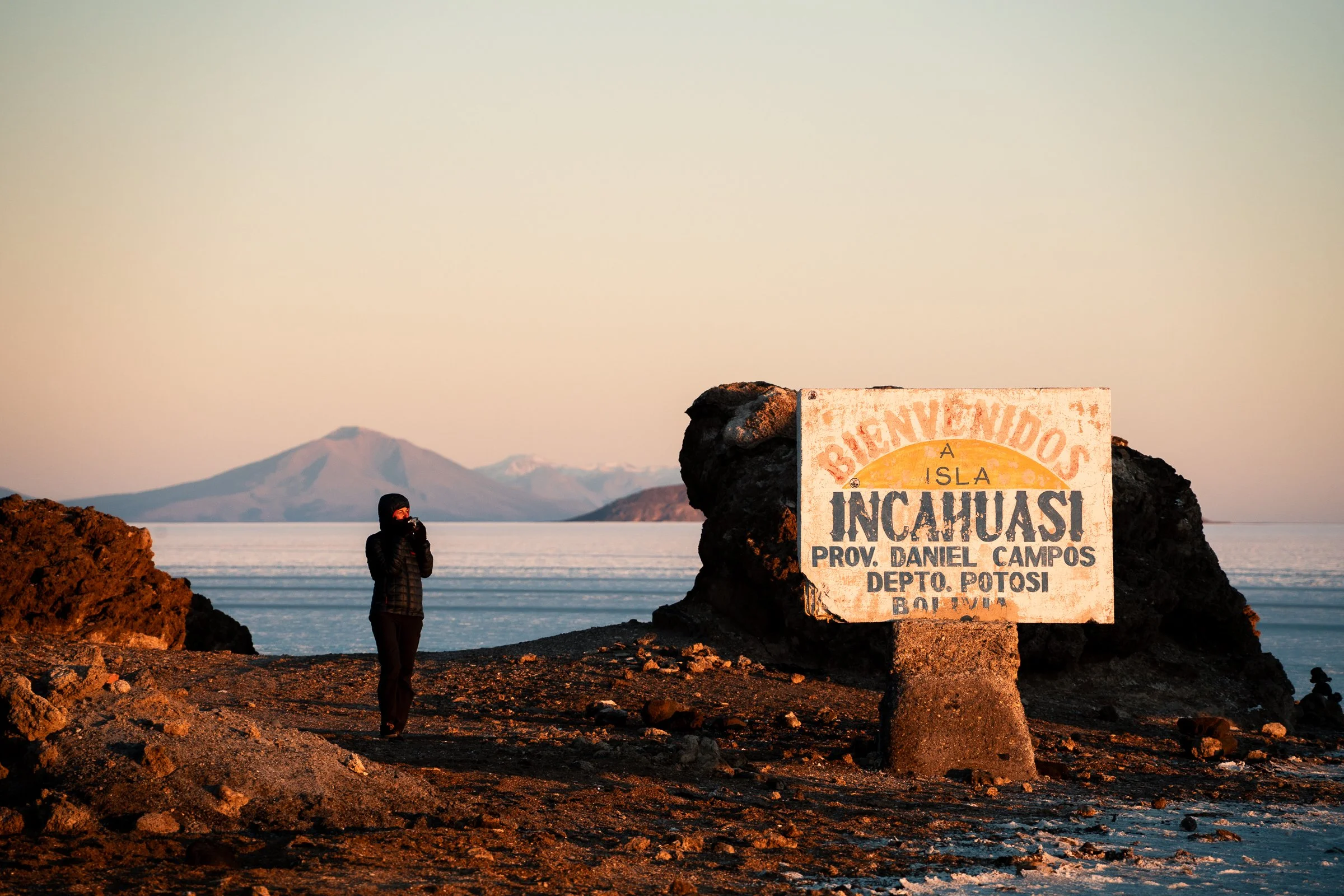
On leaving Hotel Kamana, we knew we only had 40km to ride, so were able to leave about midday. We had gone further around the coast to see some ruins (we were denied entry by a lady whose car and tarpaulin were blocking the road, drying quinoa). We used a ‘jetty’ around this way, but quickly realised it may not have been the best idea. The salar here was moist and covered in small bumps, like half golf-balls. Combined, this slowed our pace dramatically. Only after 15km or so did it become slightly more tolerable. Despite this, it was a short day and we arrived at Isla Incahuasi about 4pm. This is a popular island in the middle of the salar, populated by tourists and giant cacti. There were about 20-30 jeeps parked by the island, and two bars on shore. We dutifully paid the island entrance fee, and climbed to the top for sunset views of the salar (with the hundred or so other people there), before enjoying a cold beer.
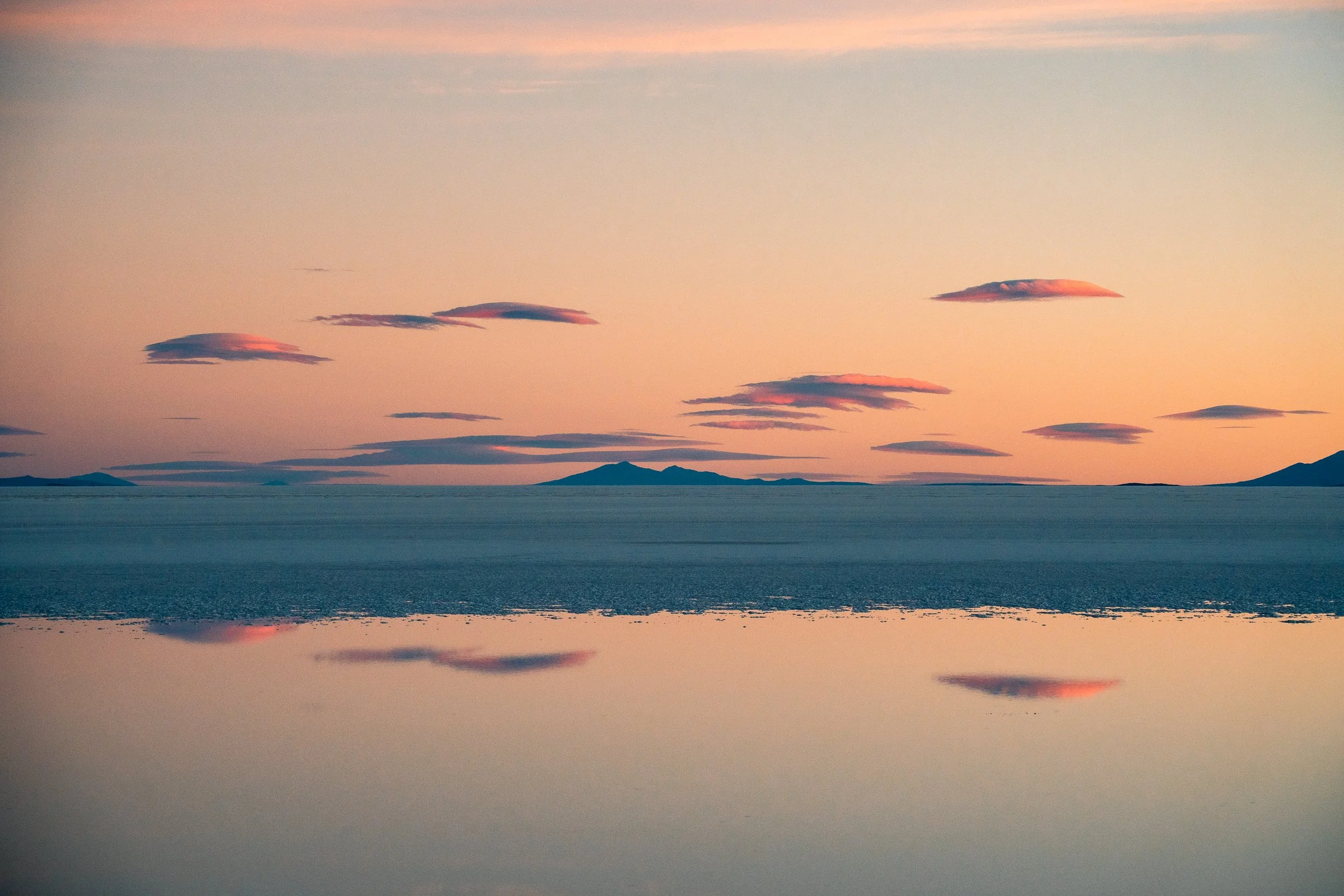
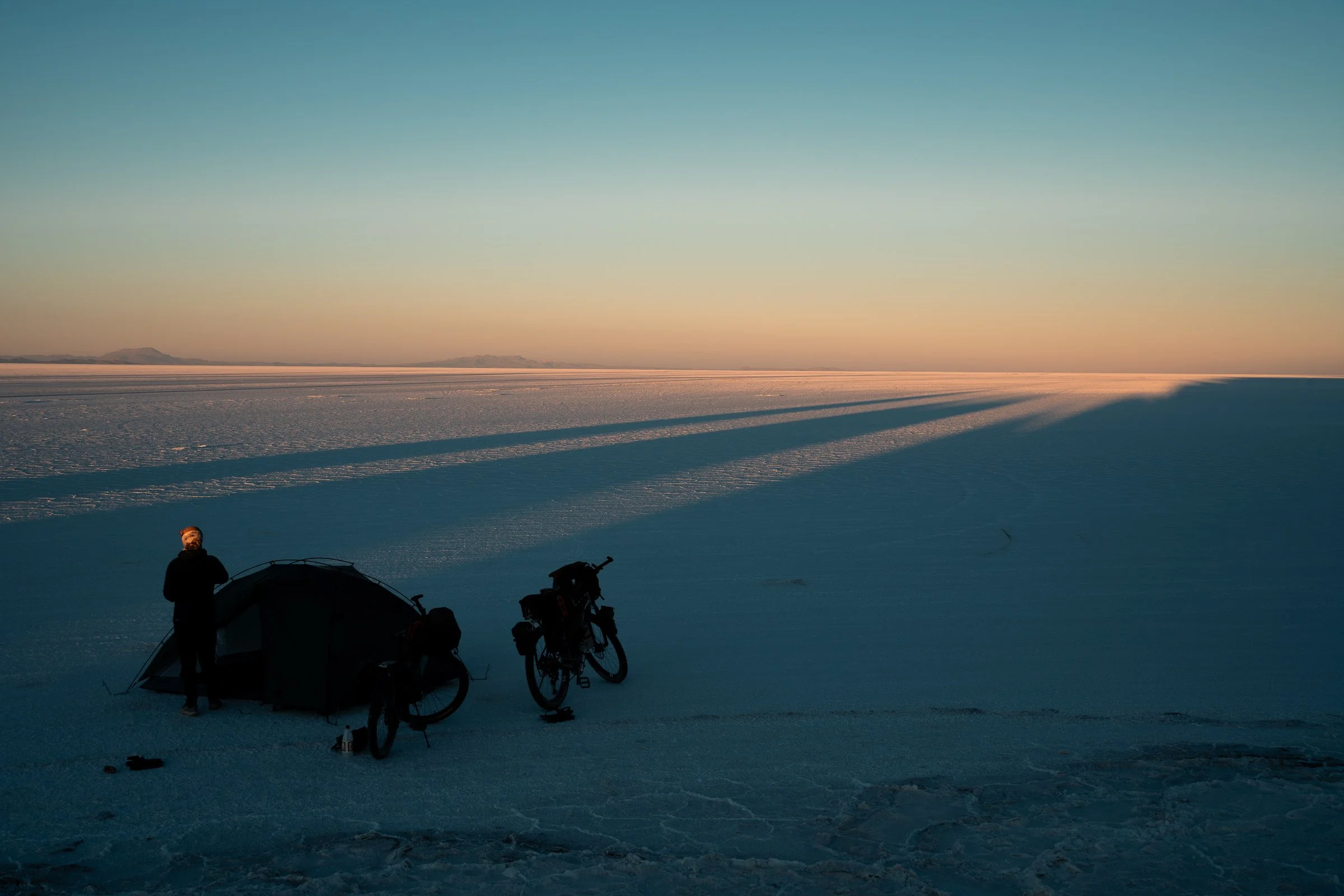
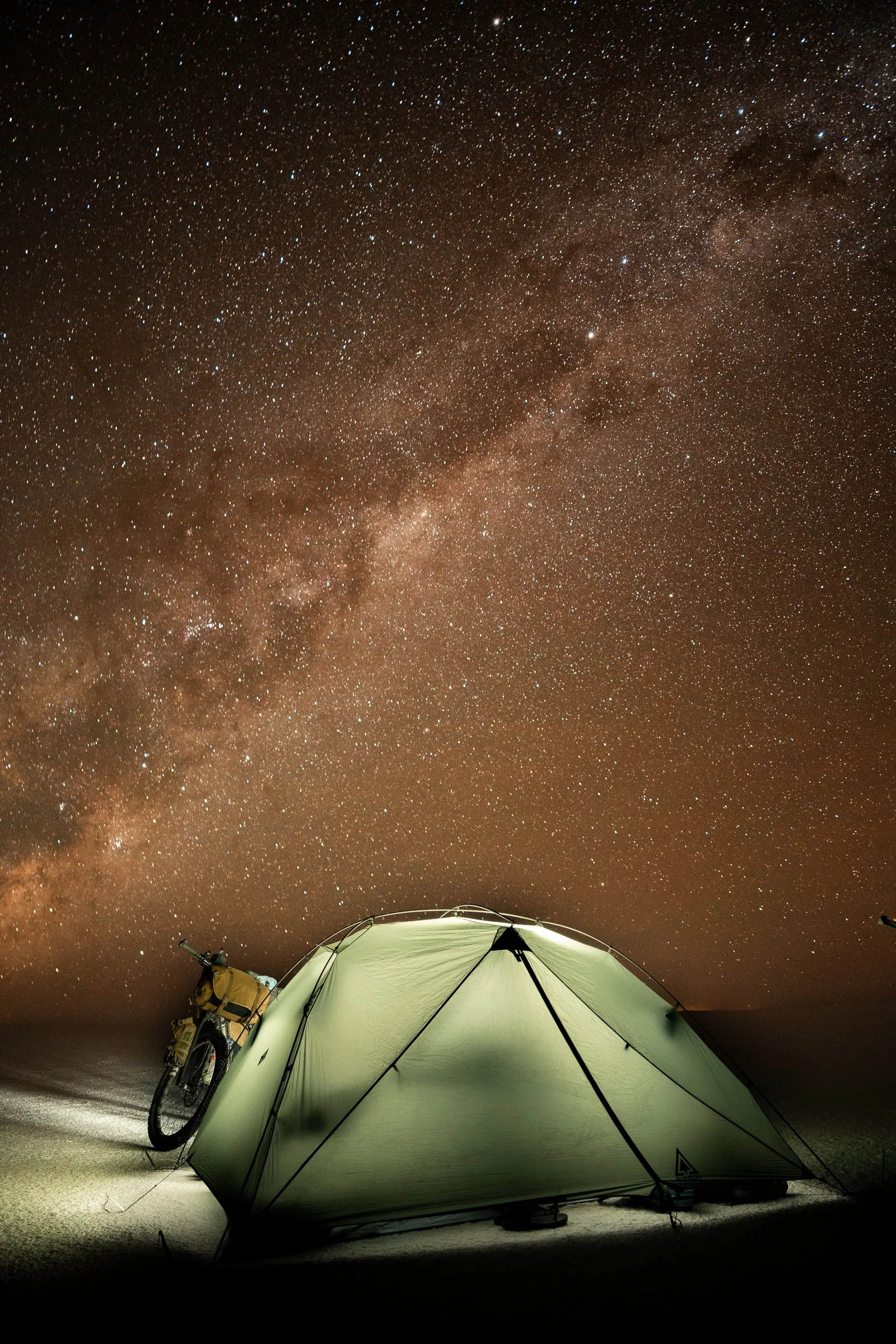
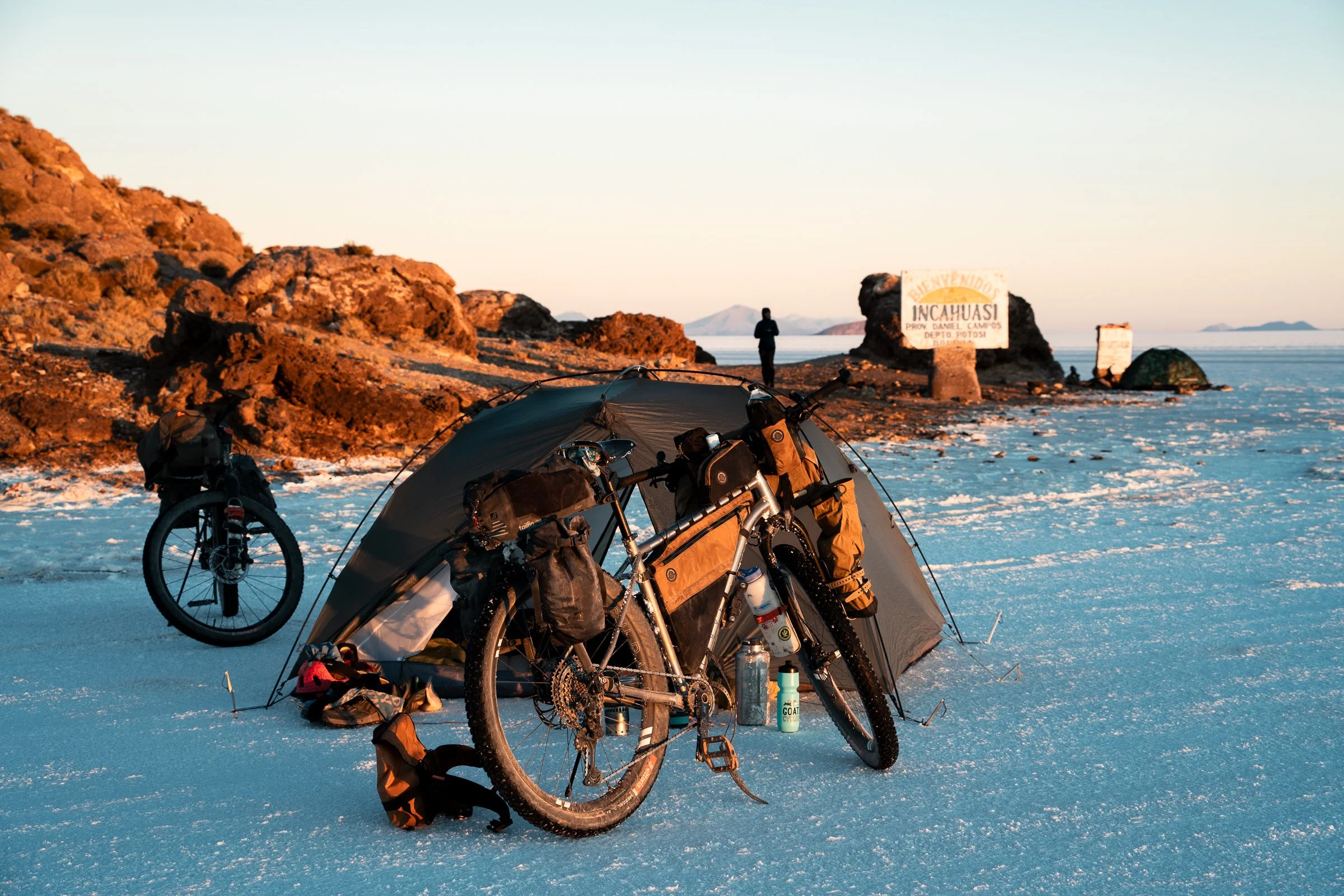
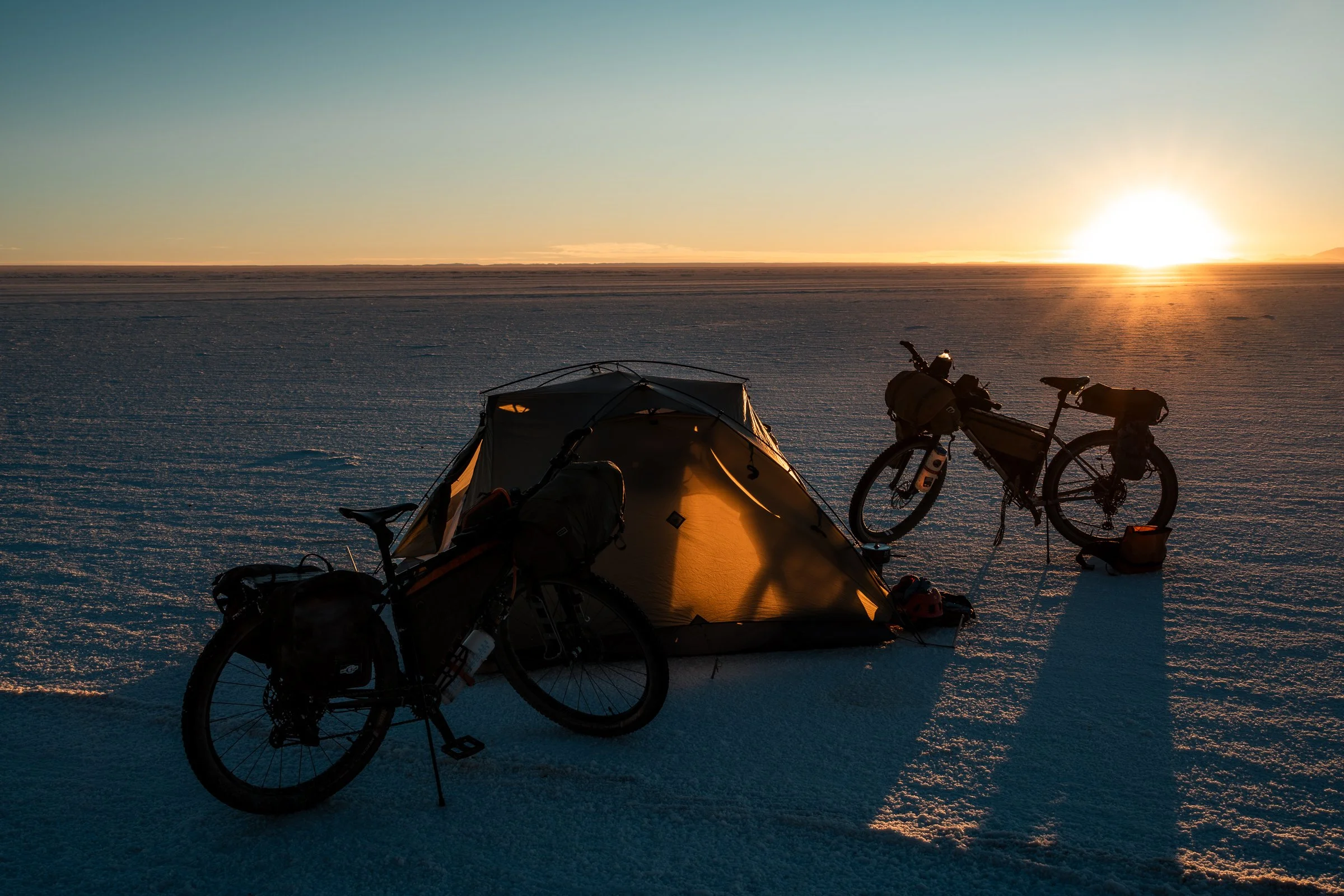
We pitched our tent on the salar at the northern tip of the island, to catch both the evening and morning sun. We were joined by two land rovers, the first time all trip we had to share a campsite. They immediately offered us food and water, so we might try and do it more often. Watching the sun set over the salar was an amazing site, as the completely flat surface means that shadows stretch to infinity briefly just before the sun fully disappears. I briefly tried my hand at some astronomy photopgraghy, but quickly gave up when my toes went numb.
Thinking the Isla was going to be deserted at sunrise, I ventured out of the tent to relieve myself and clamber up some rocks for the views. As my blurry vision focussed, I realised that what I had thought were funny cacti were actually a load of tourists. I quickly retraced my steps to somewhere more sheltered. After breakfast we checked out the overlanding Range Rovers, and convinced ourselves we would come back with something similar ourselves.
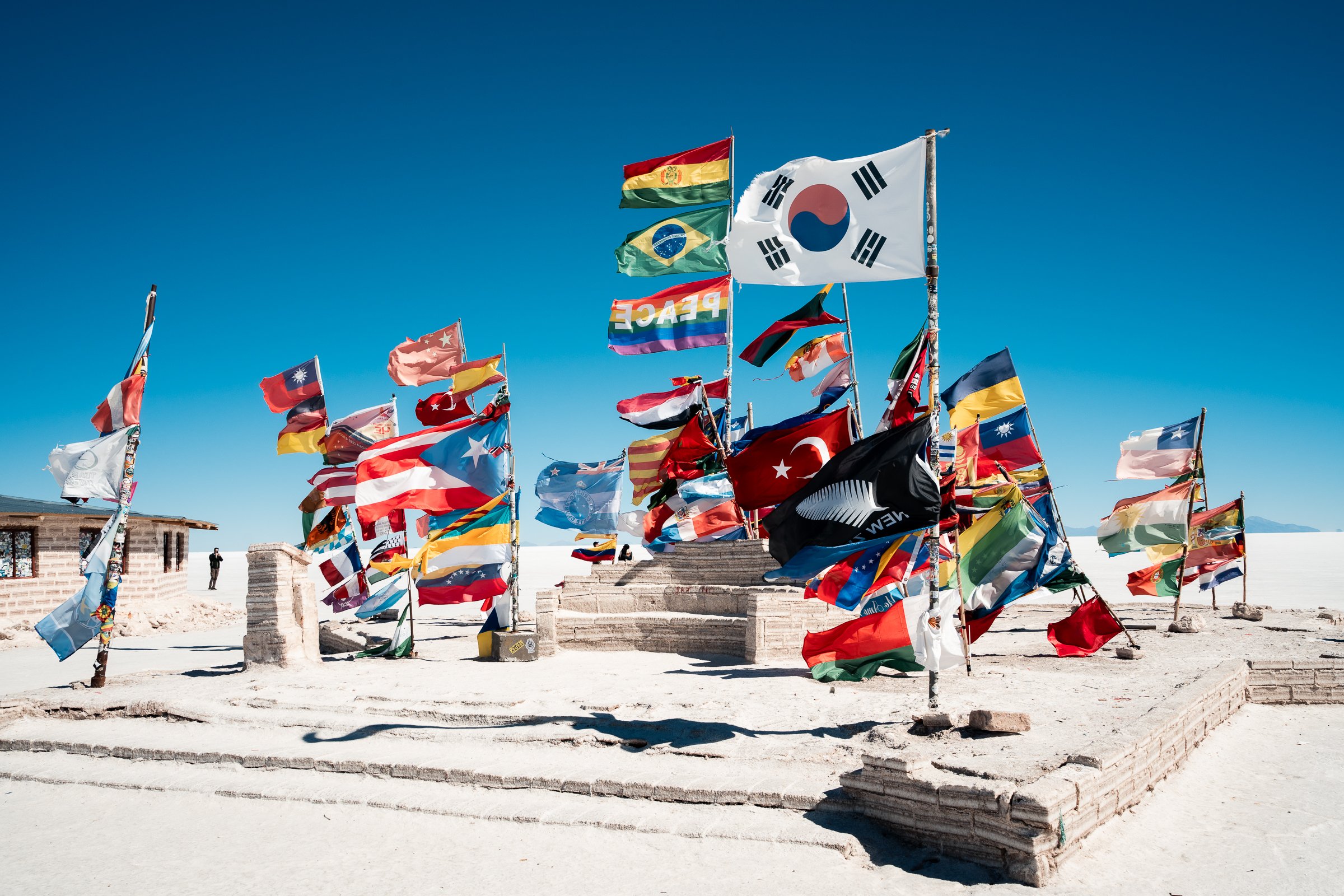
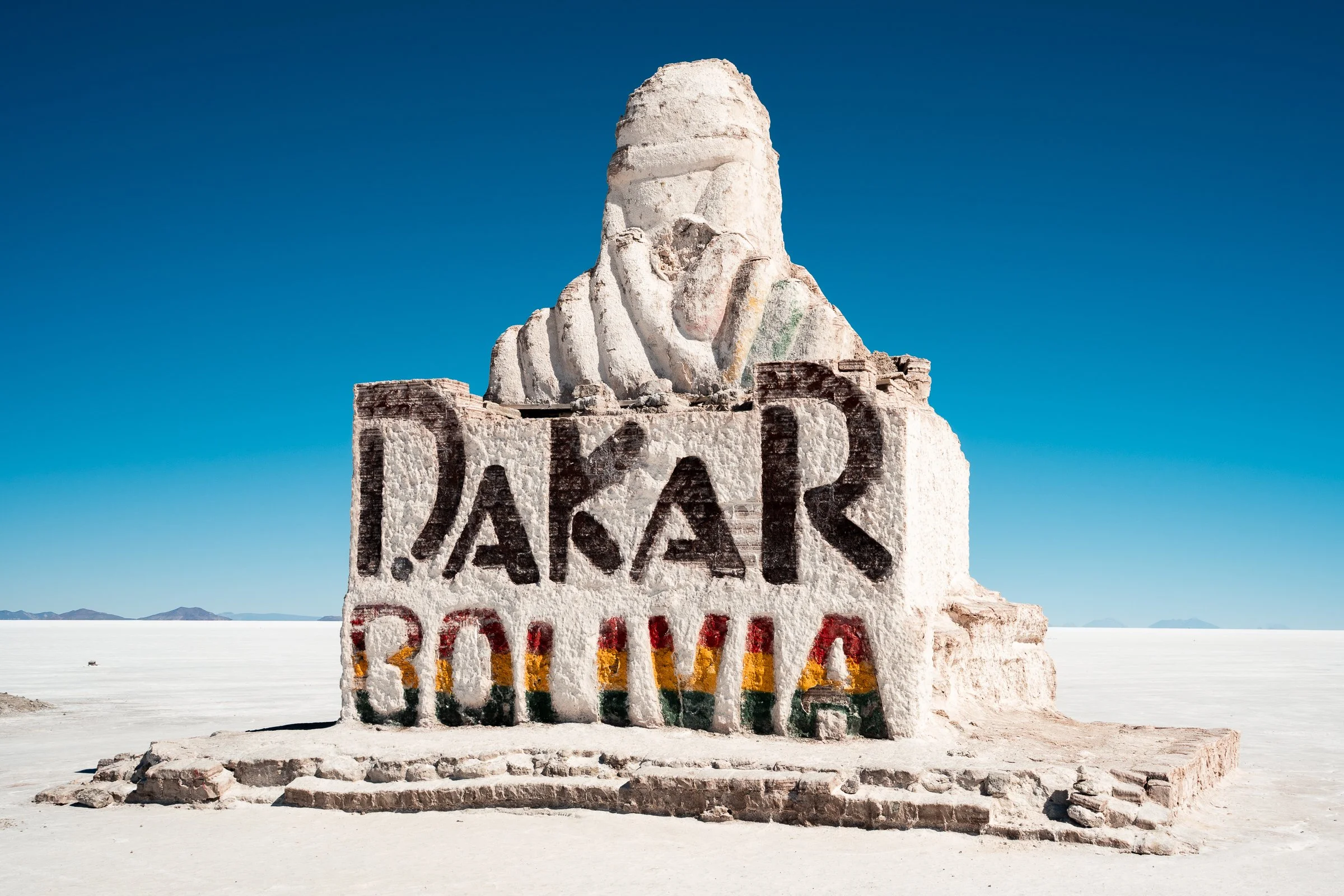
It was 75km to the mainland, over salar, and we were dreading it. The salar had been worn smooth by countless tourist jeeps though, and a light tailwind made it quick going, and by lunch time we were at the Dakar monument near the shore. On getting to shore, we saw the ‘fancy’ salt hotels, that offer ‘views of the salar’ for up to $1000NZD per night. ‘More like dirt flat hotels’, I thought, as they were set hundreds of metres off the salar, on an equal level with them. If you were lucky, you might just make out a thin strip of white near the horizon. Hotel Kamana was much better; closer, and on a hill.
The tailwind followed us into Uyuni, the first major town we had been in since leaving La Paz nearly three weeks prior. We had been looking at food options for the few days prior, for our first meal. Last minute we decided to try Minuteman Pizza, as it had good reviews. Made by an expat Bostonian and with a postcard from Anthony Bourdain on the wall, it lived up the minutes of hype we had built up. This was GOOD pizza, not just for Bolivia, but for life. We finished our first two (including starters and sides) before going back for a third: spicy llama. It was at this point that Chris, the owner, guessed we were cyclists.
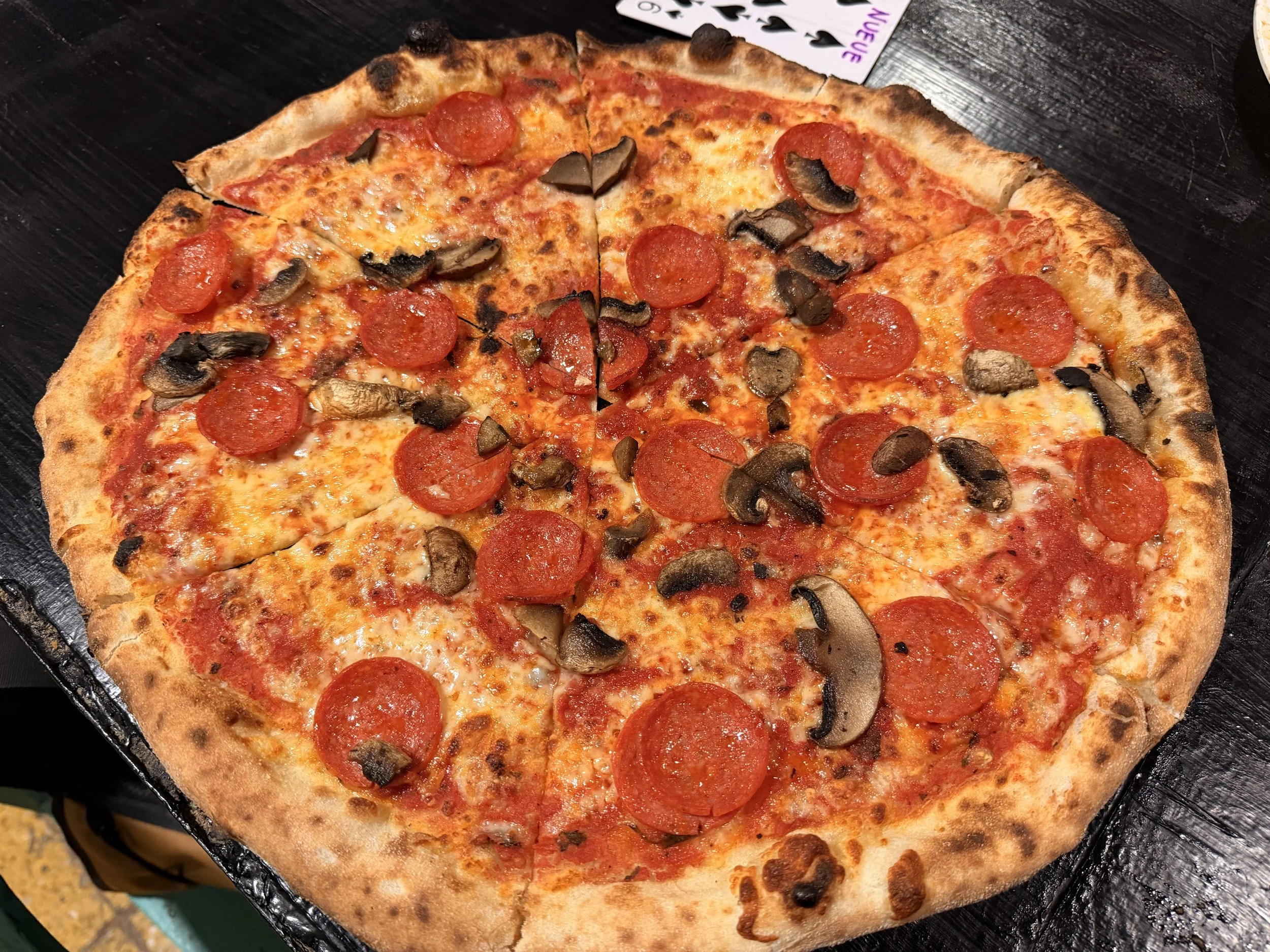
The Bostonian.