Ruta de las Tres Cordilleras - Cuyocuyo to Ausangate
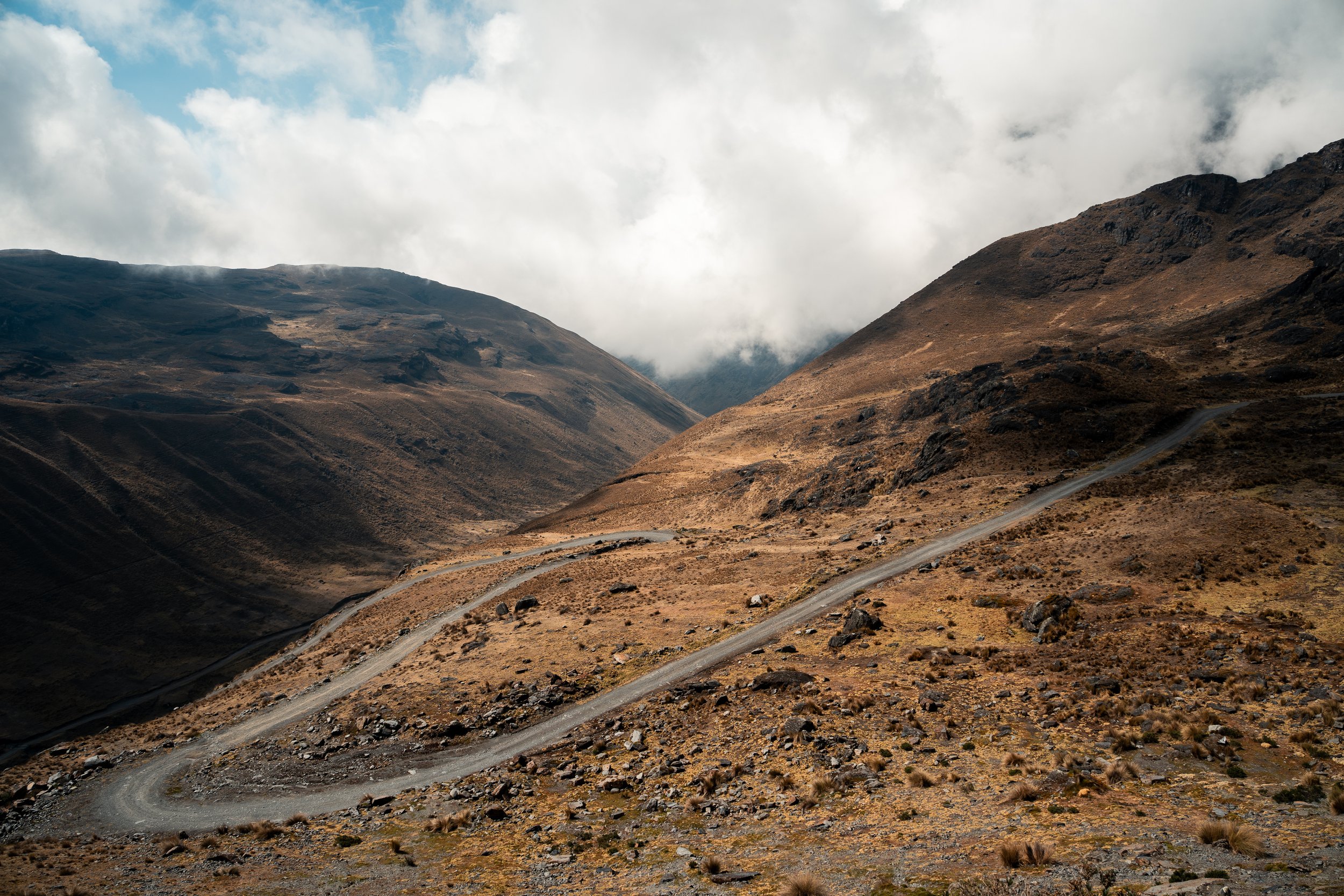
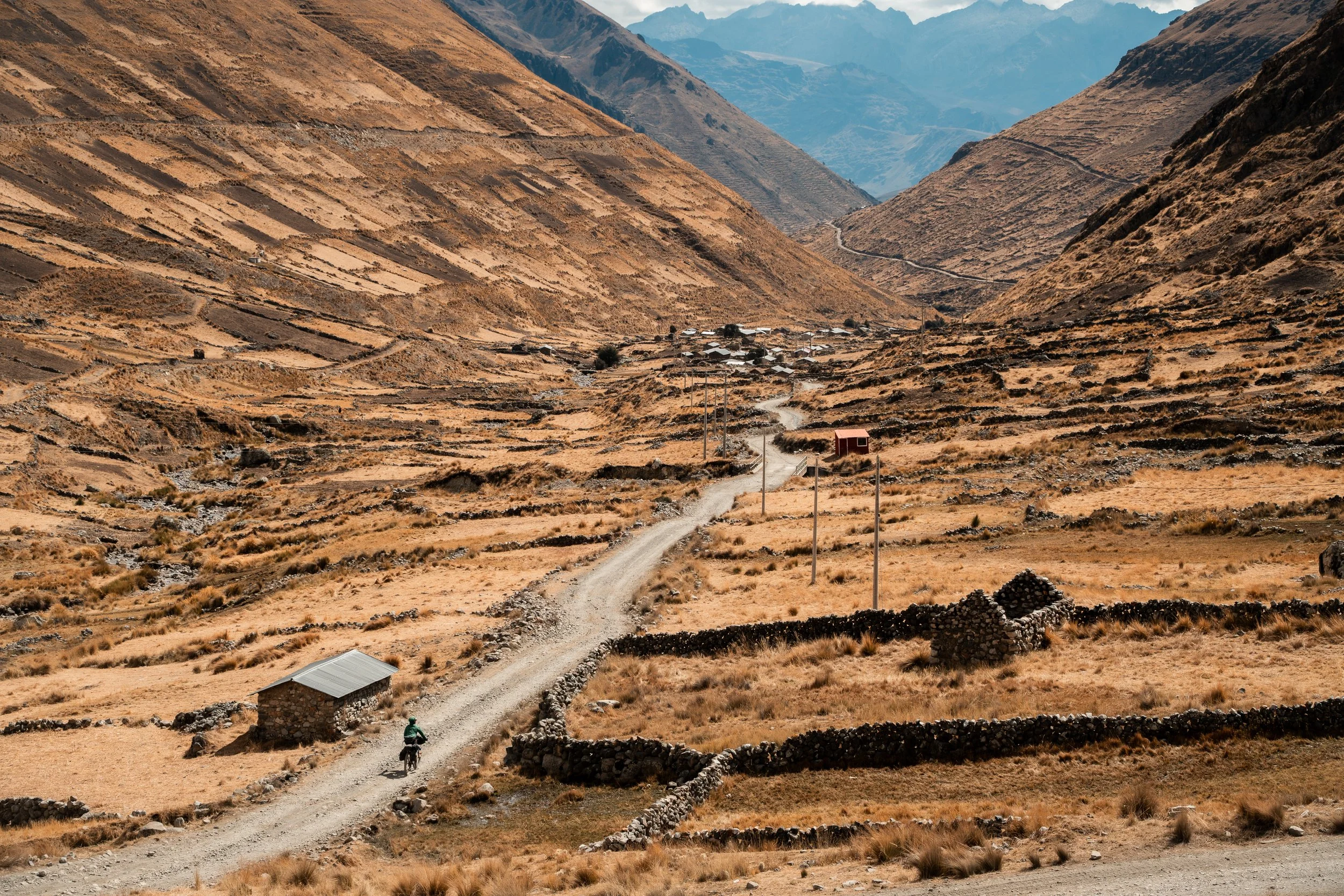
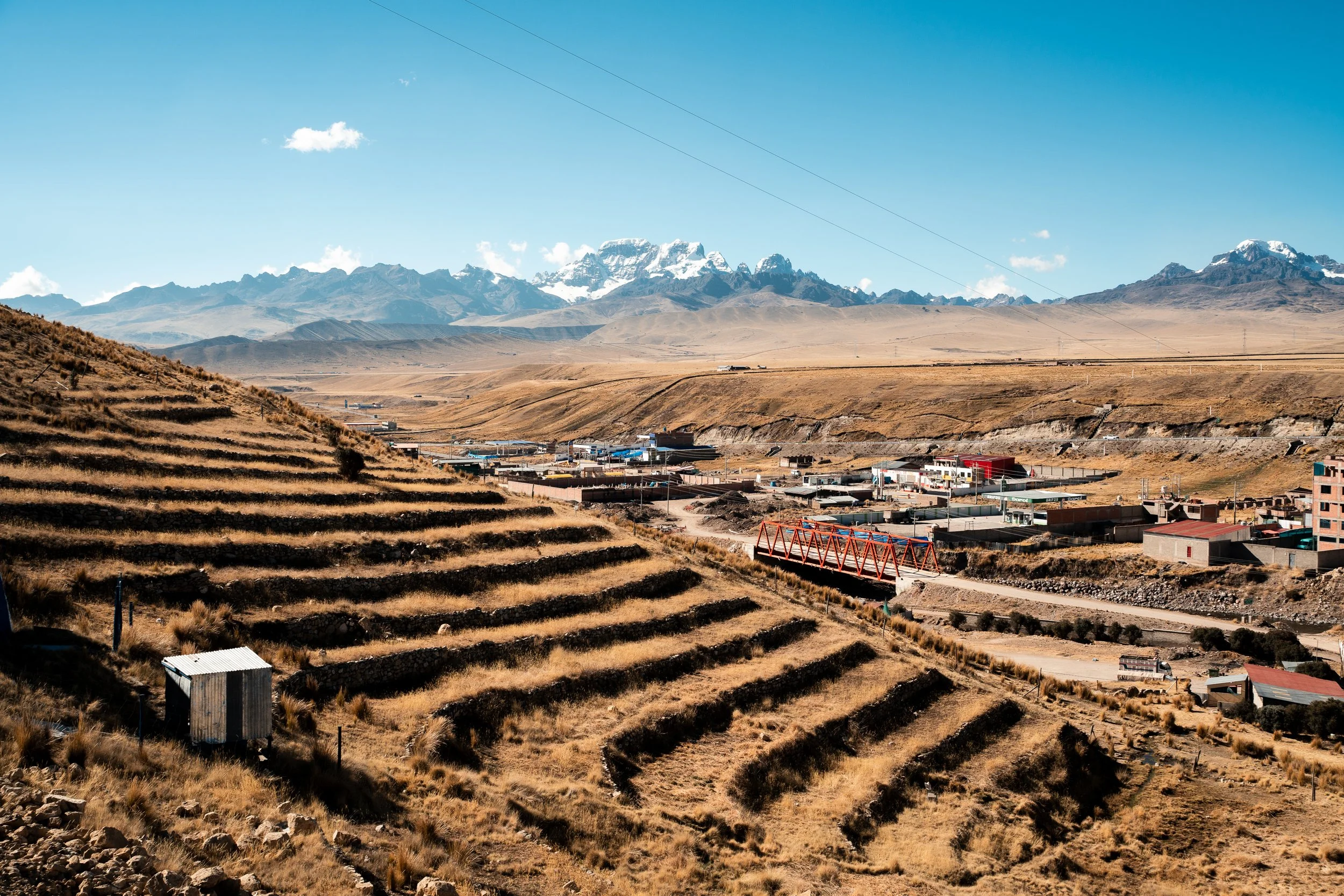
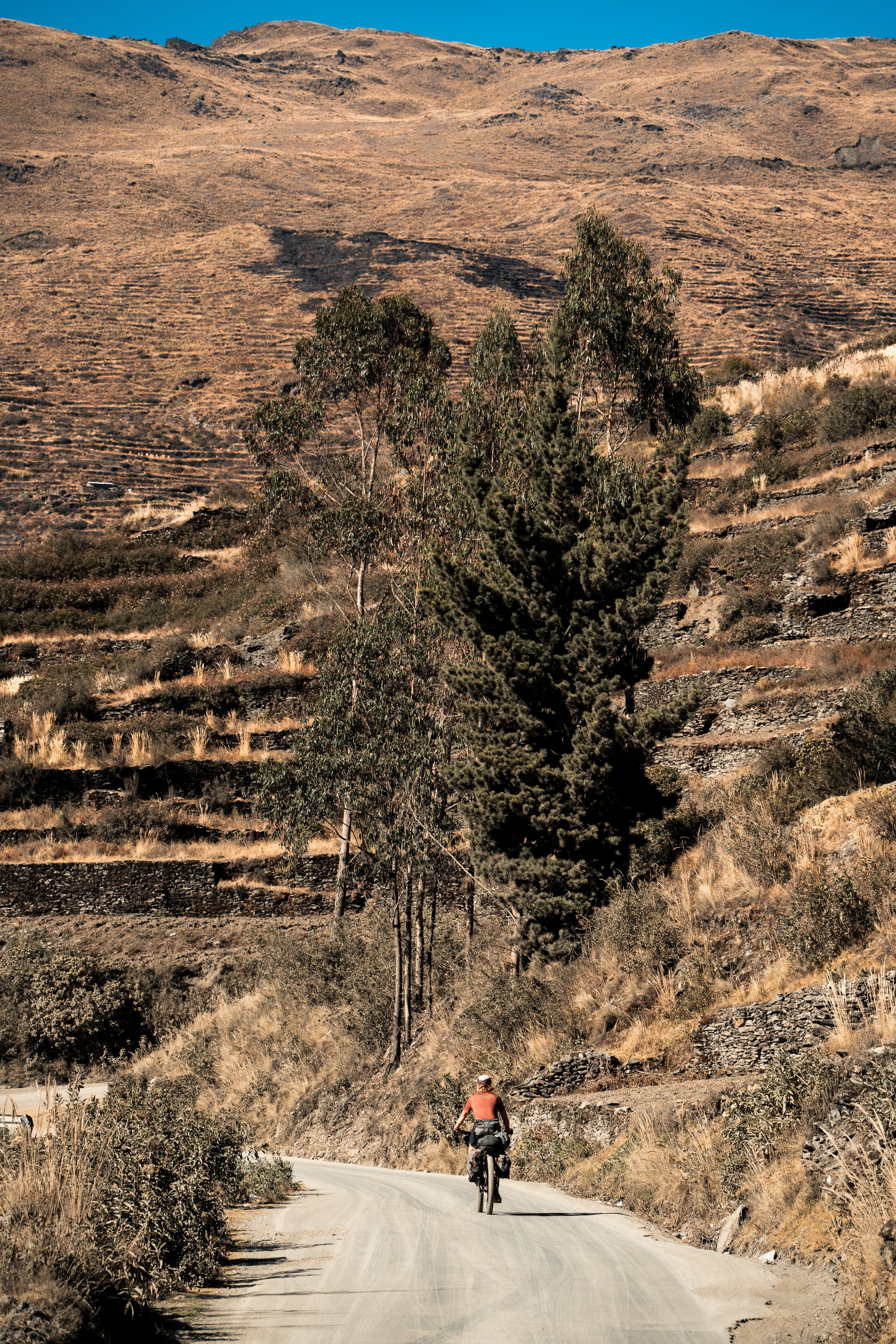
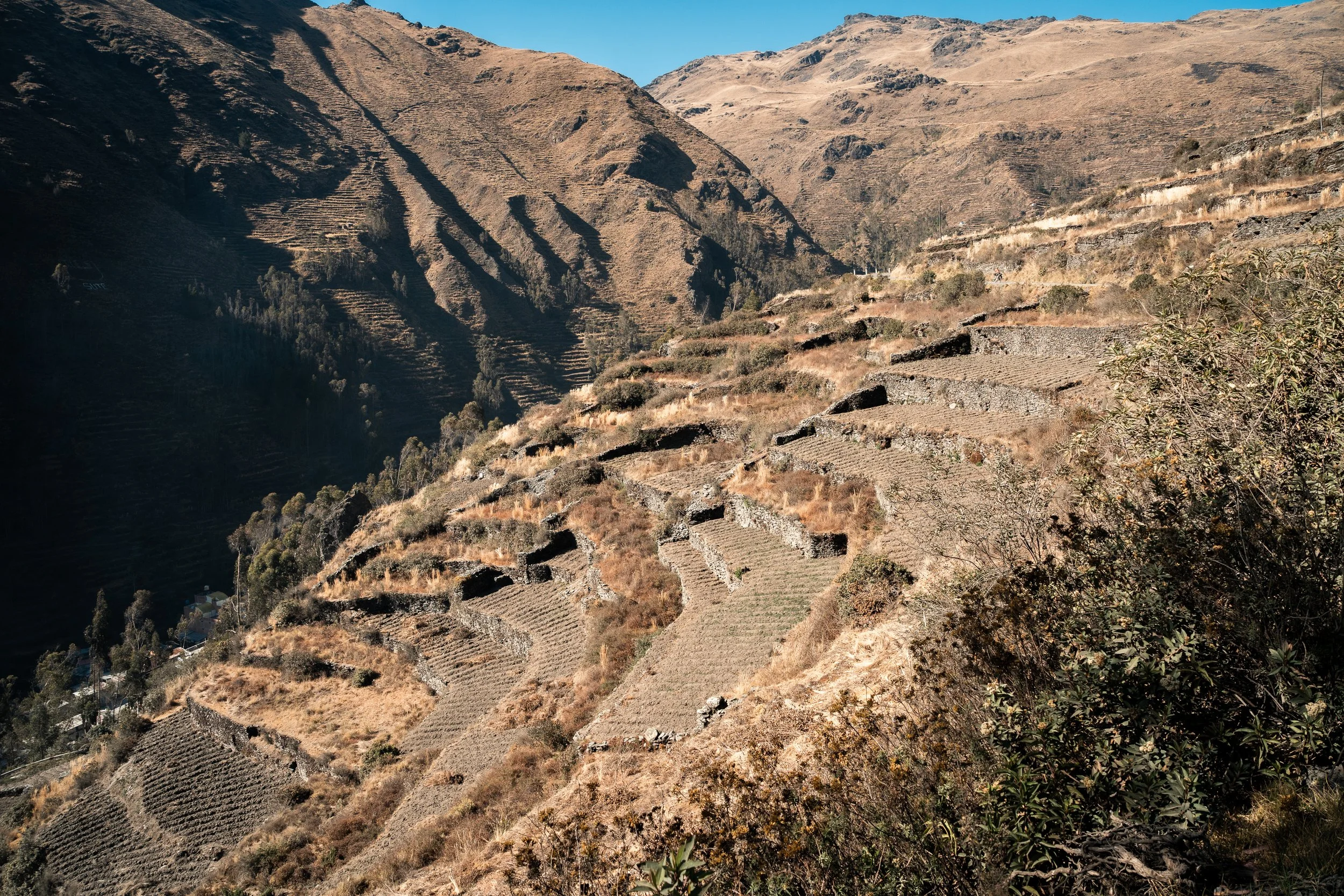
Cuyo Cuyo is a beautiful village, with the locals wearing clothing that is different from anywhere else we have been, and I would encourage anyone doing this route to spend a day here. We had taken two rest days here, hoping my bronchitis would clear up. On leaving, we wound through Incan terraces still being farmed on a forgiving gradient. Unlike Bolivia, main roads were mostly tarmac in Peru, and it was relatively easy going to start off - hampered only by my bronchitis. I was able to slowly pedal the tarmac section, but after a couple of hours we turned onto a jeep track that would take us over a pass into the next valley. The gradient steepened, and by now we were over 4000m elevation, and my lungs couldn’t take it. I couldn’t take a deep breath without coughing, and I was lightheaded every time I stopped moving.
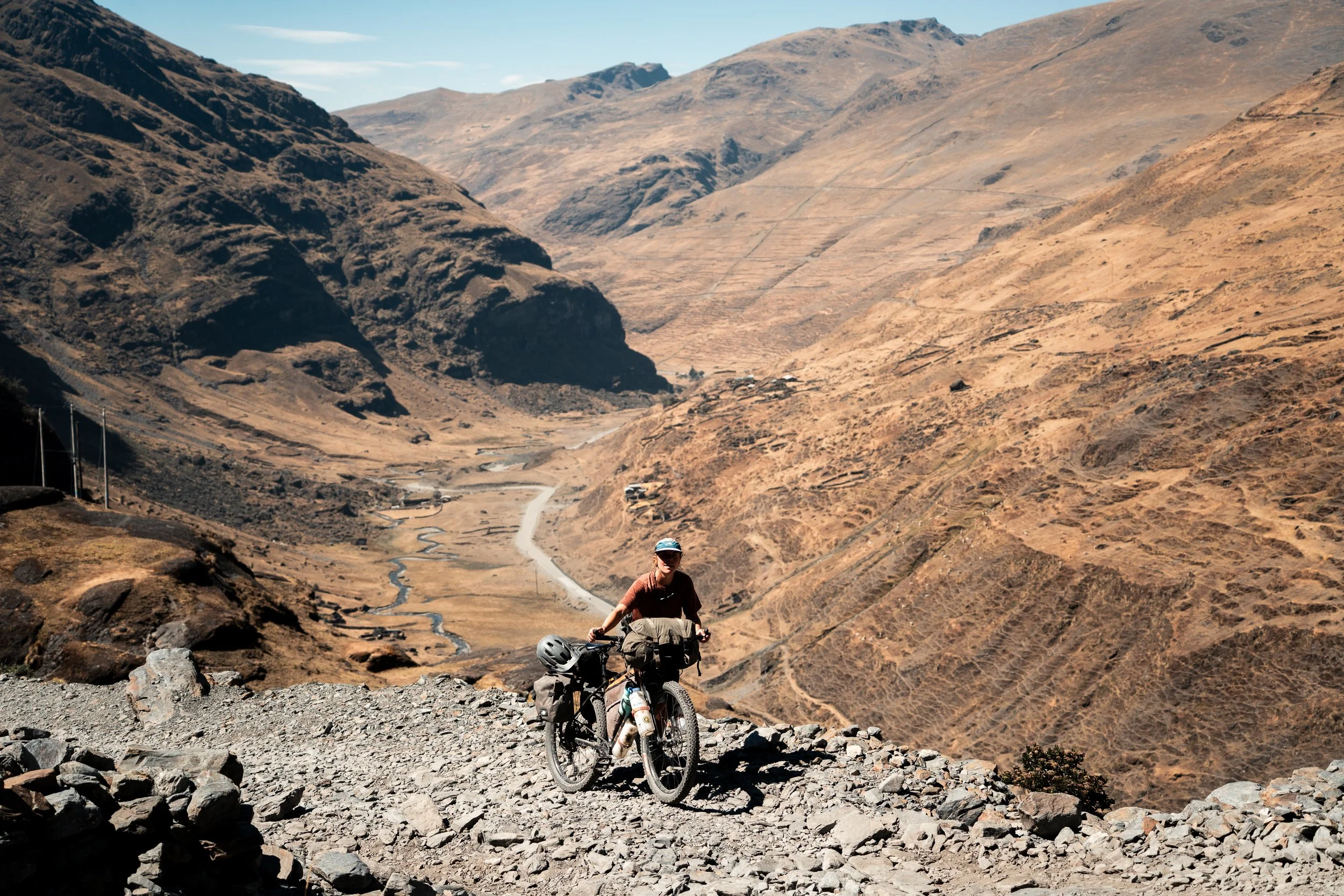
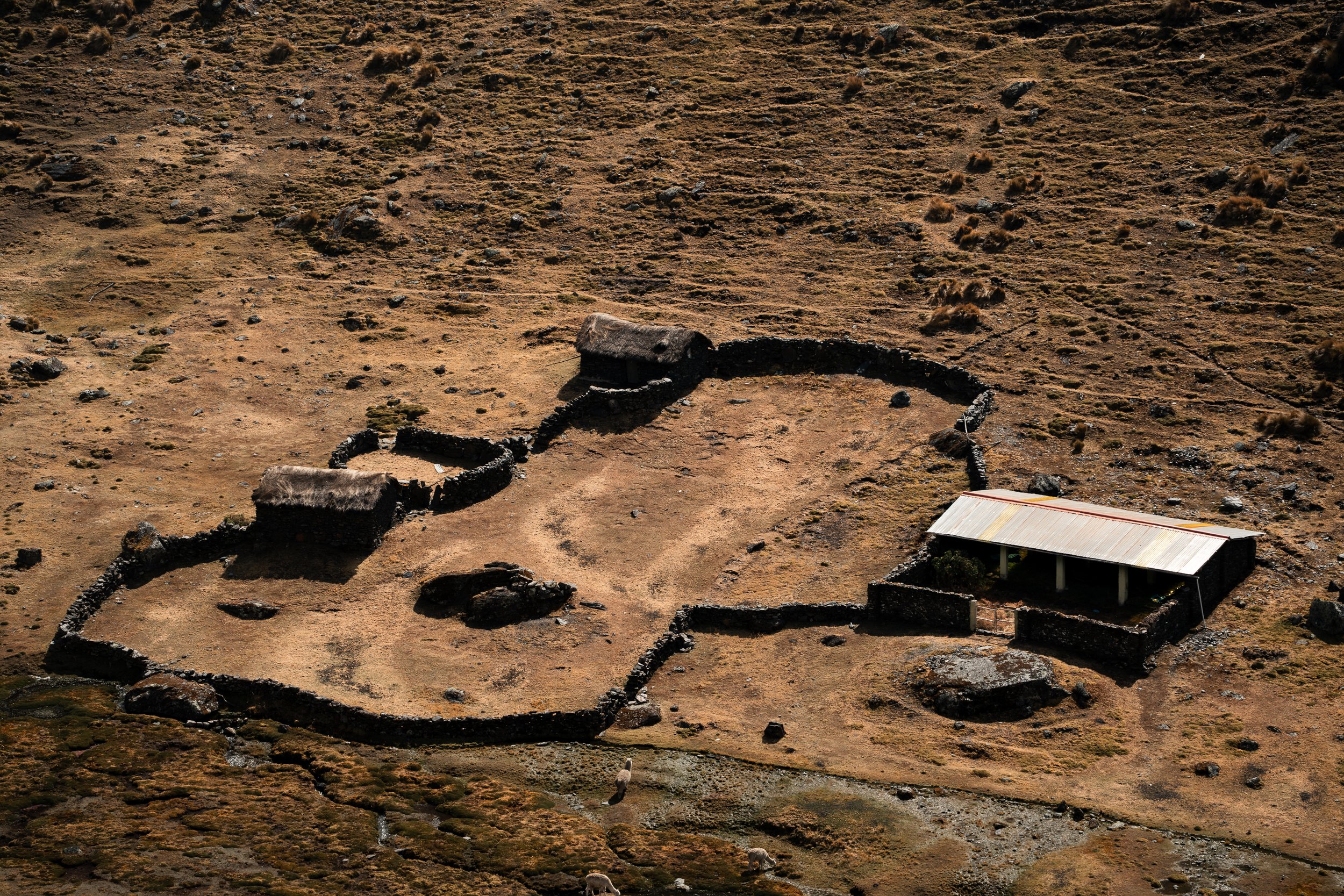
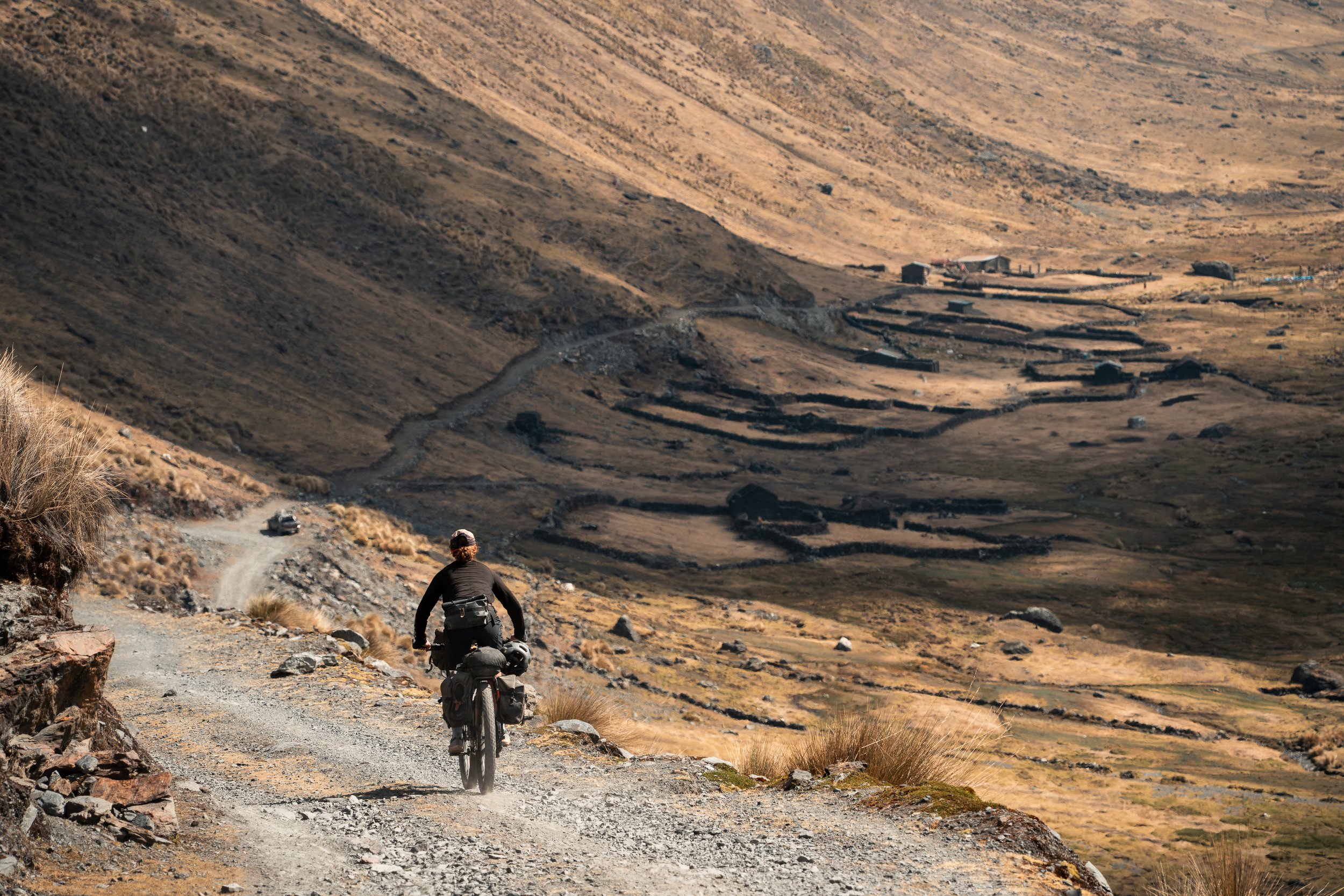
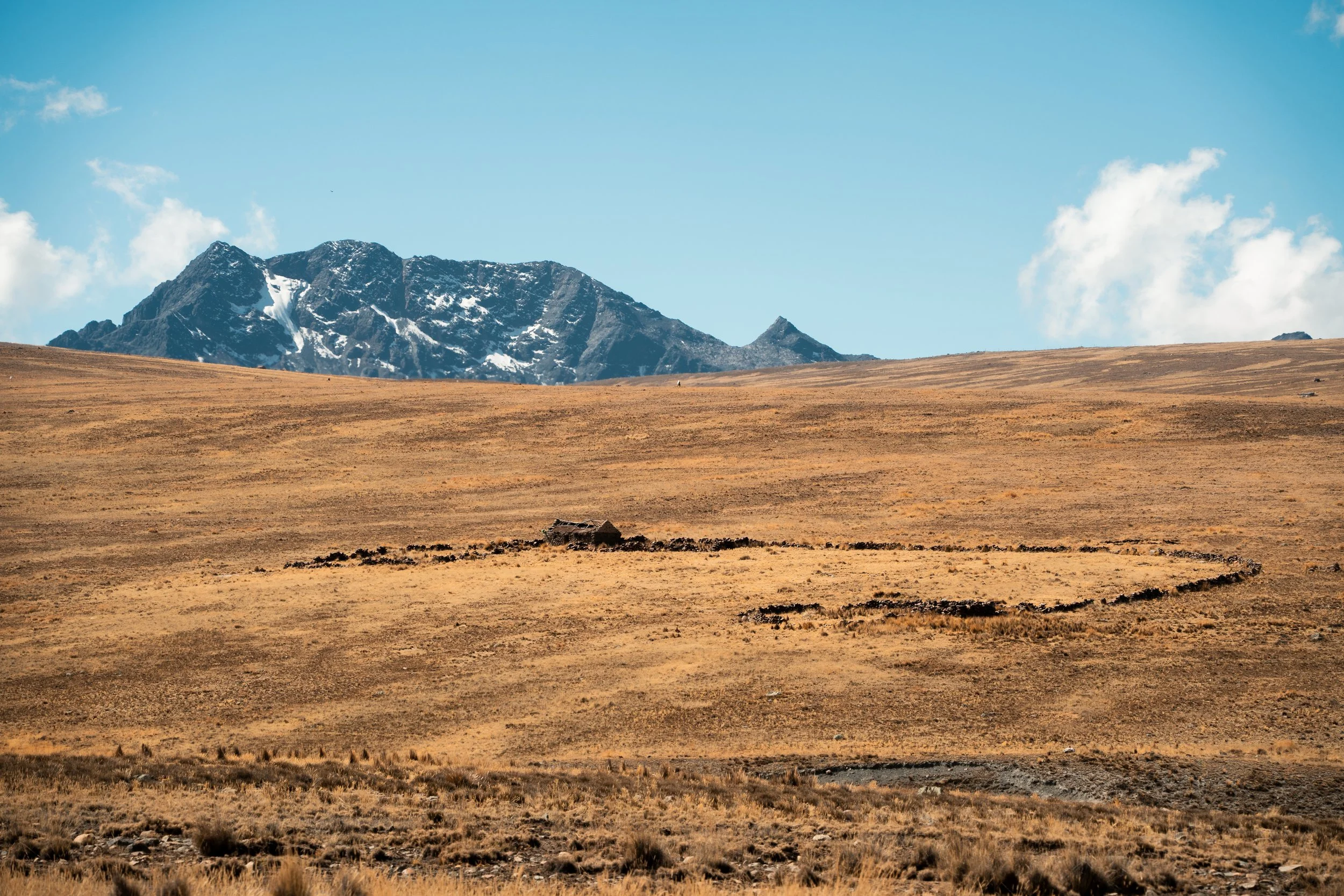
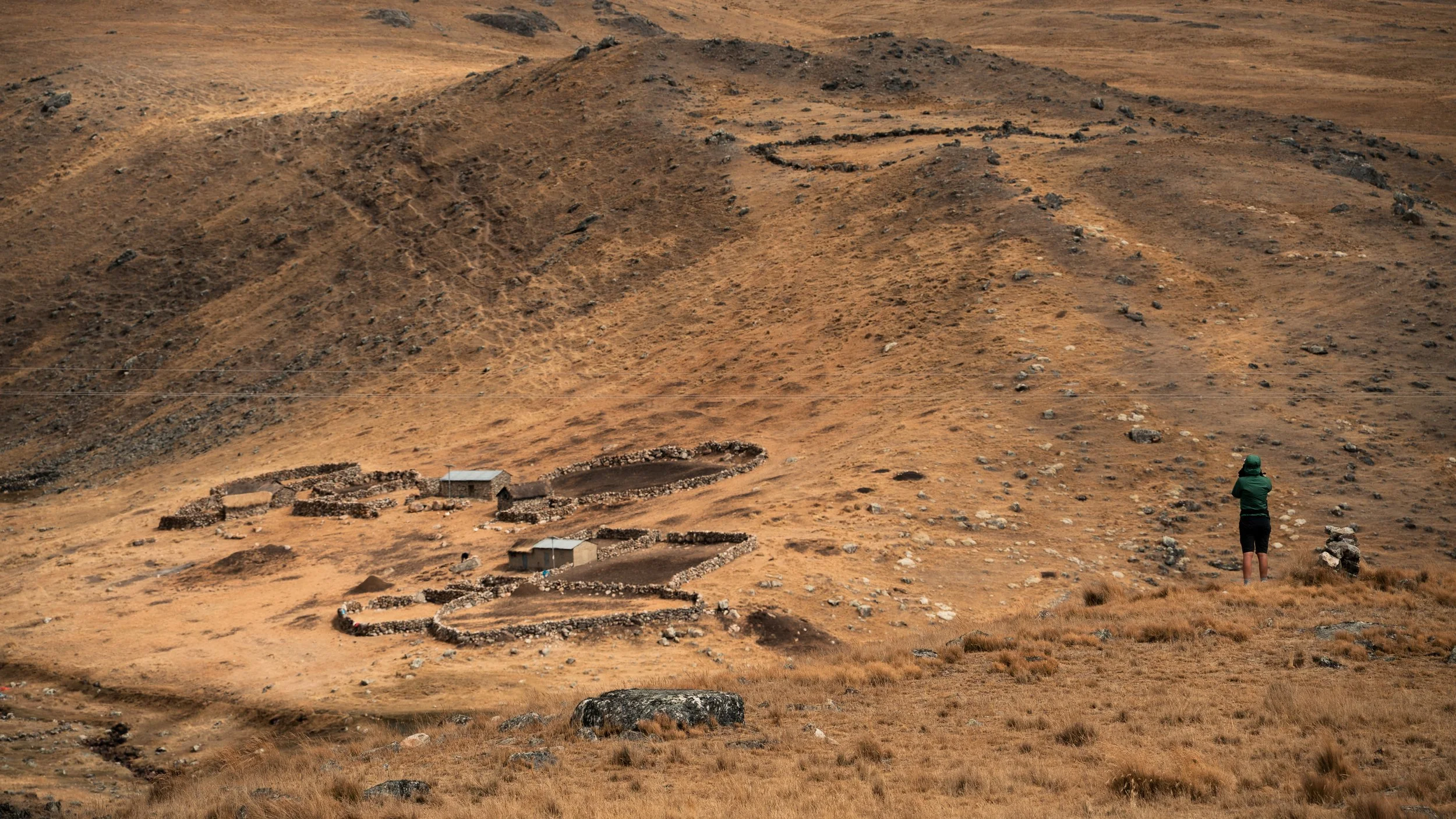
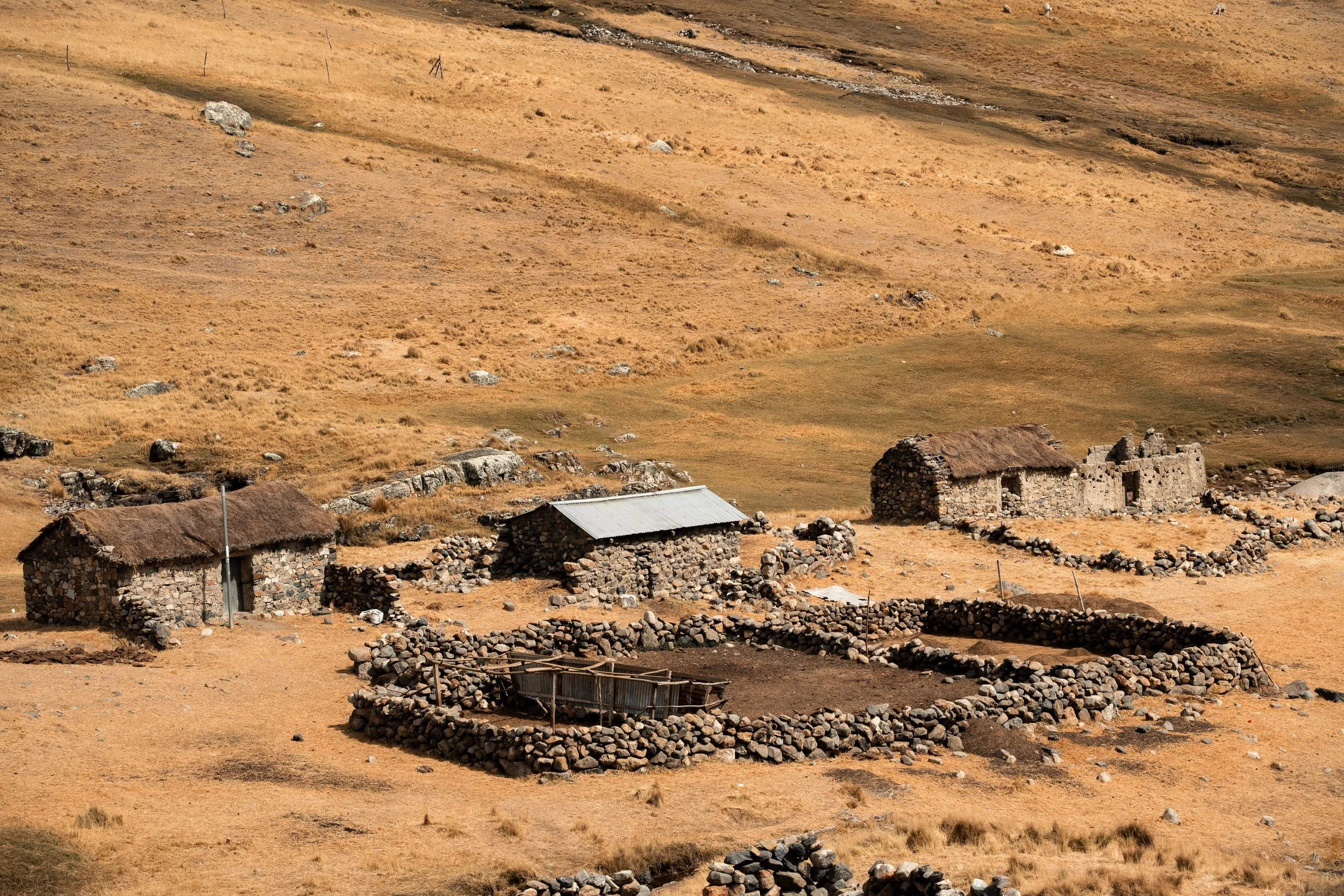
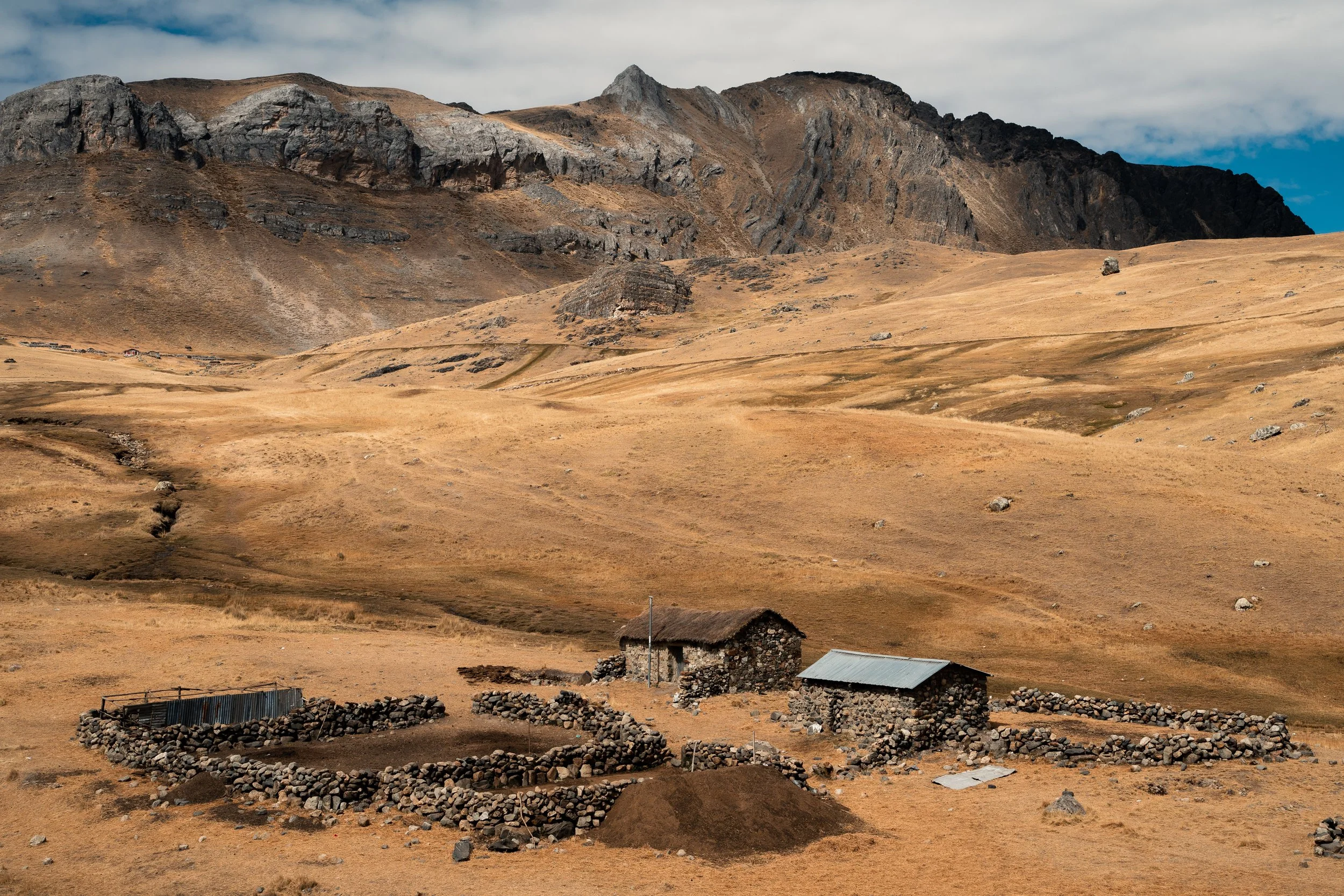
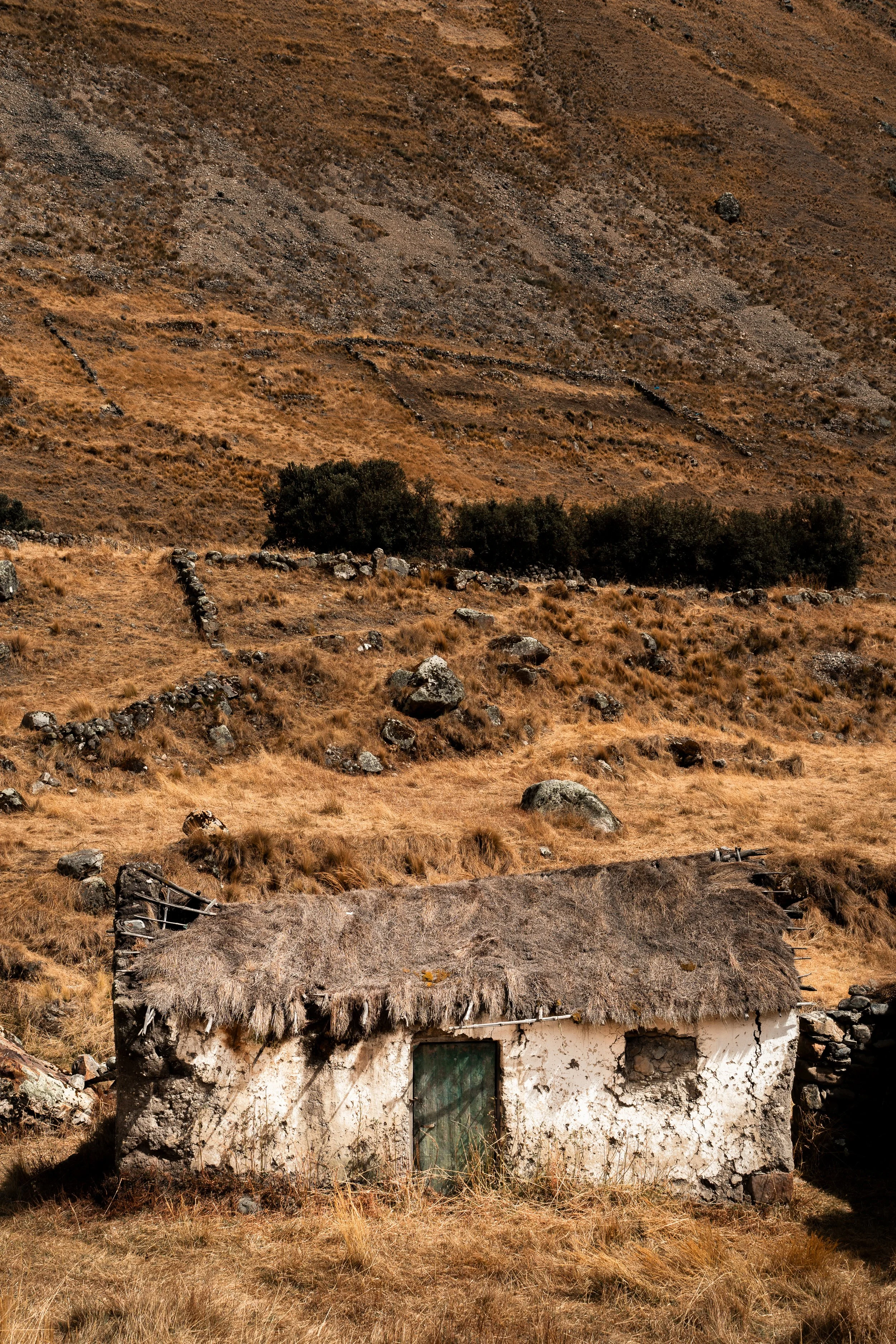
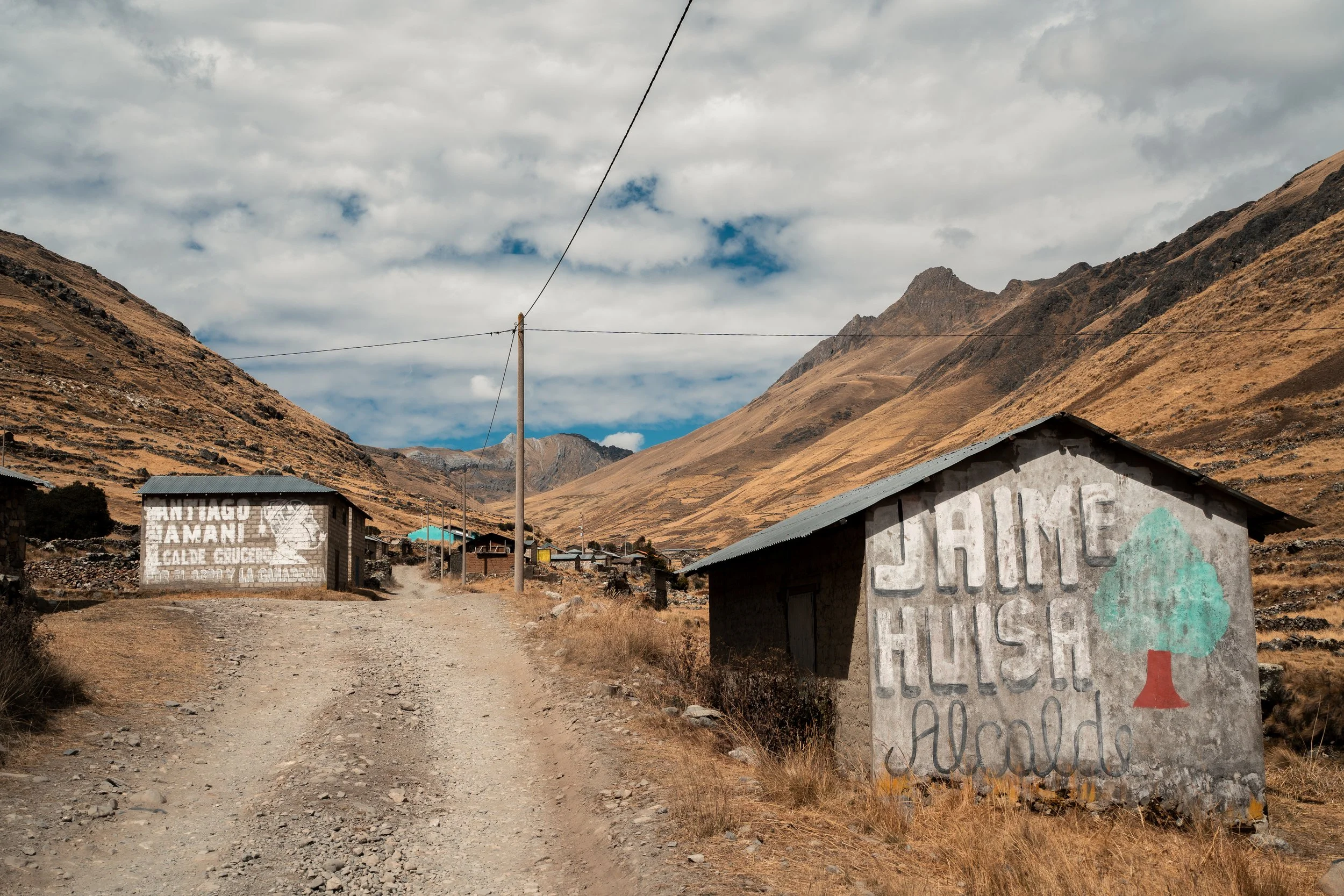
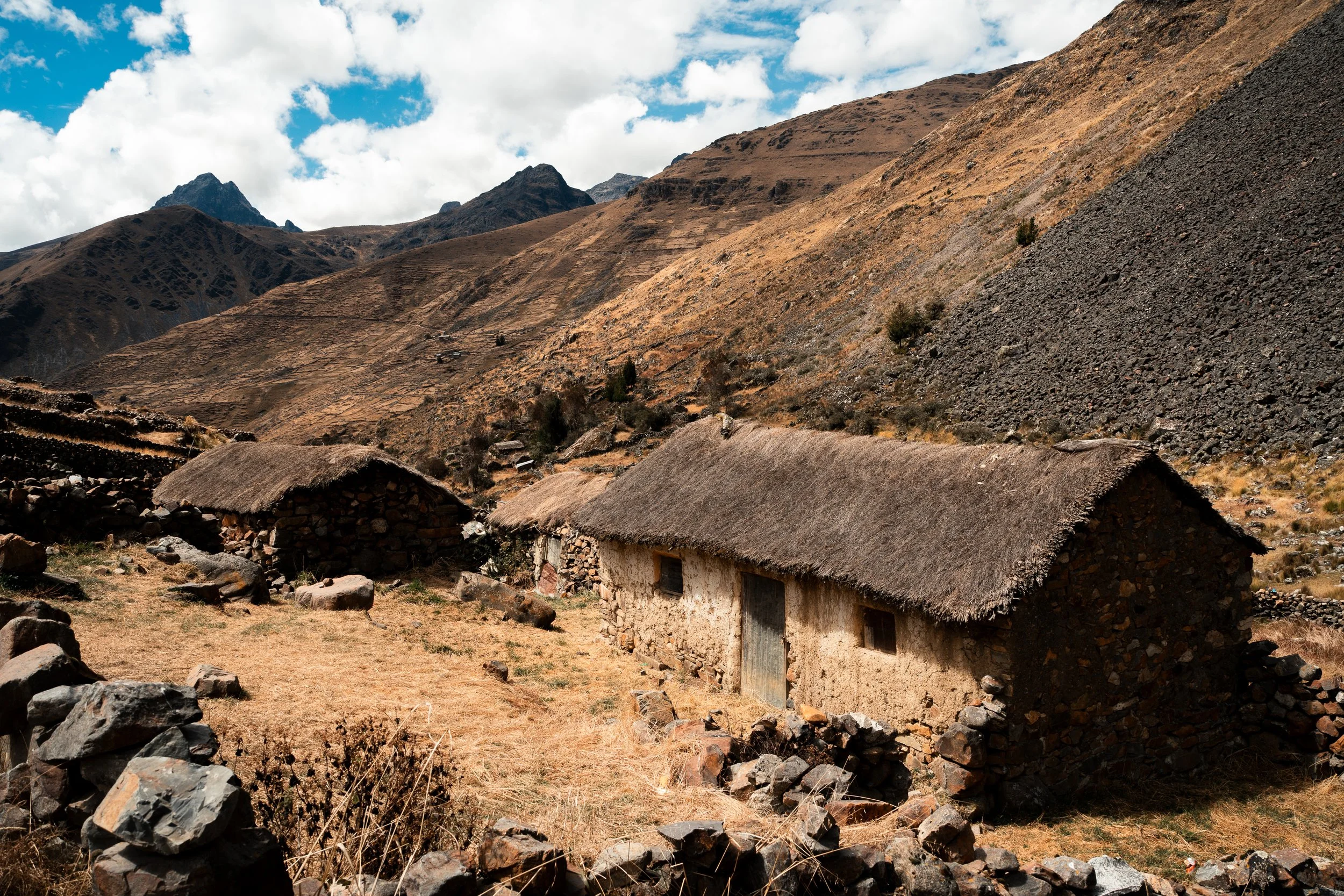
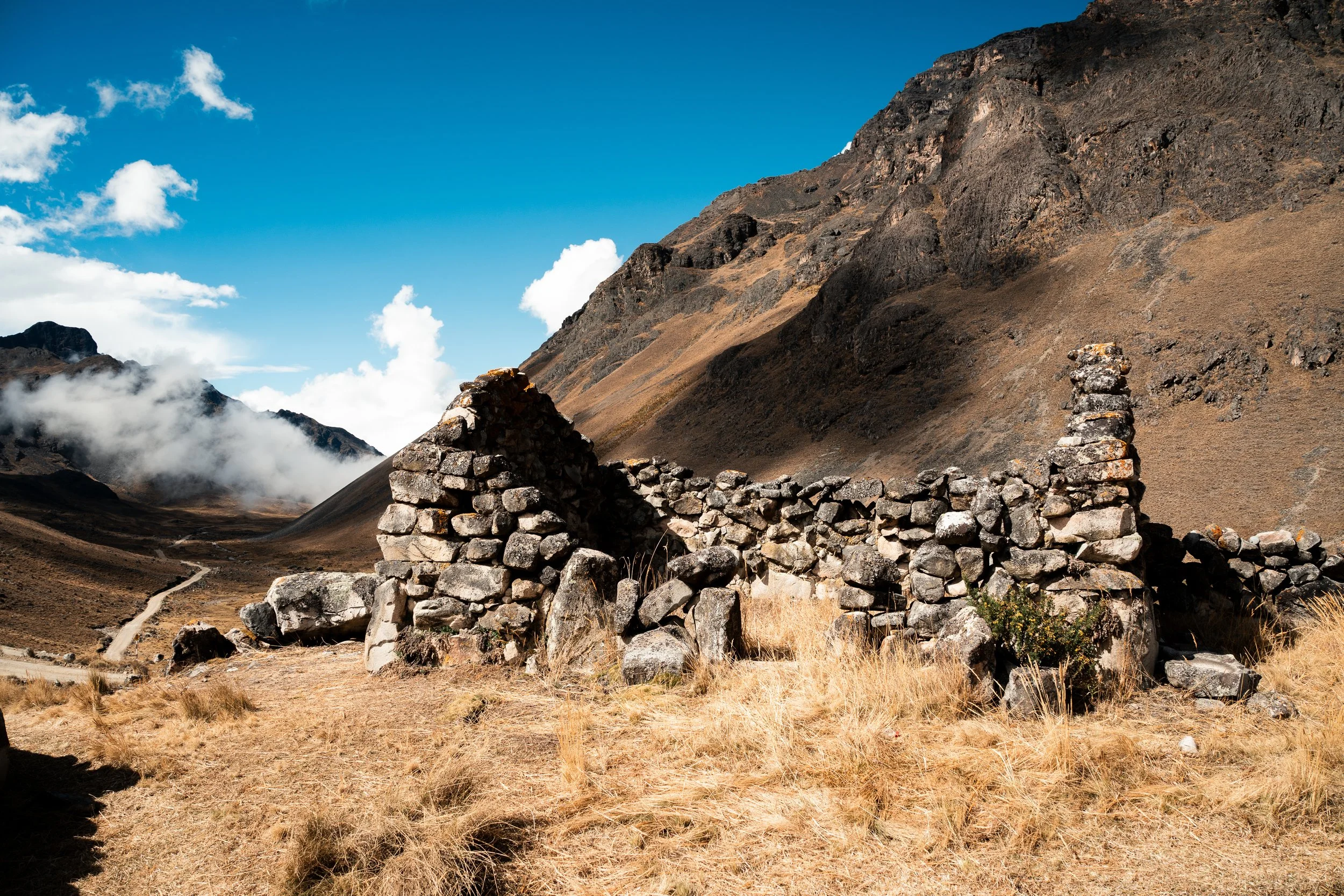
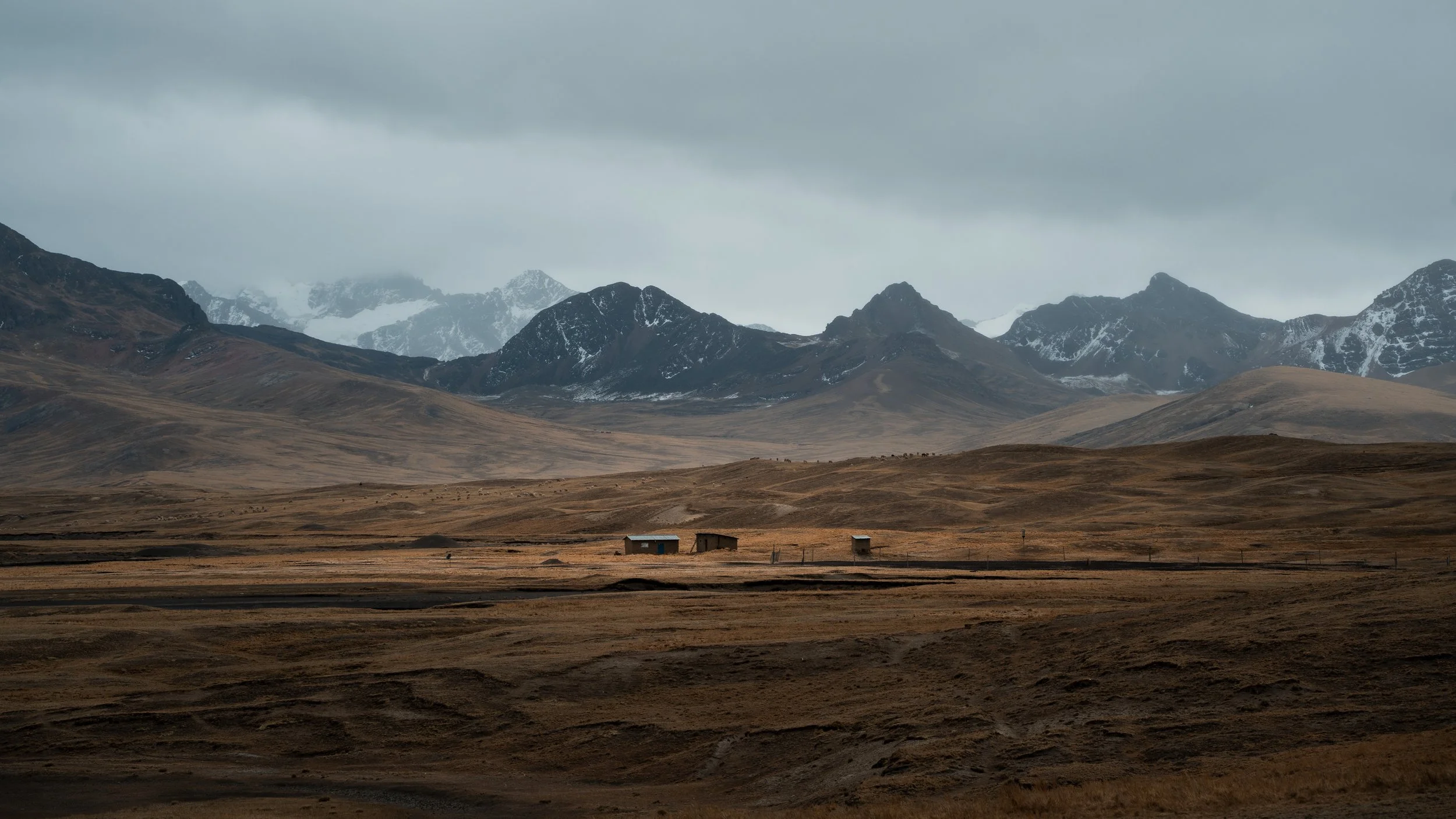
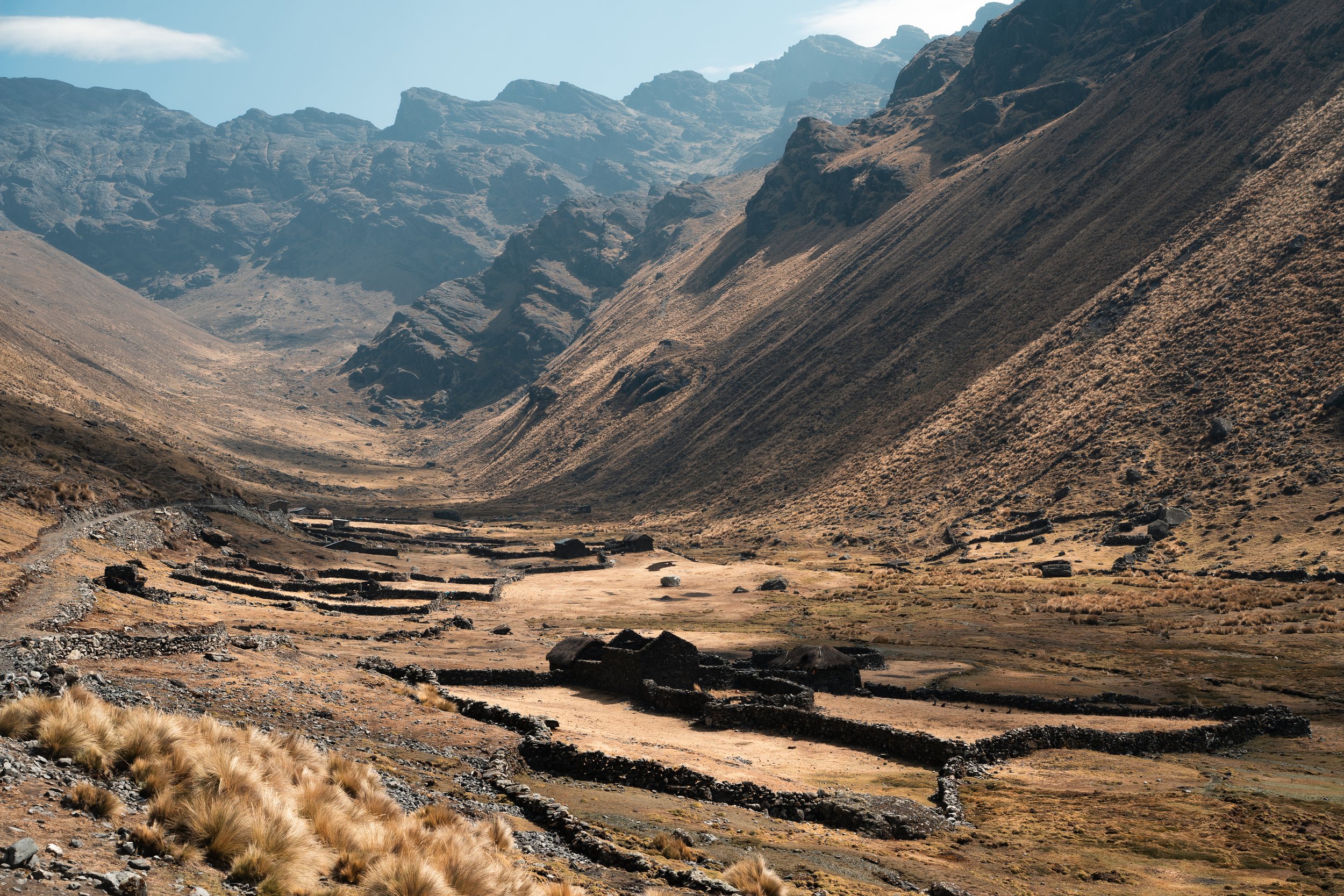
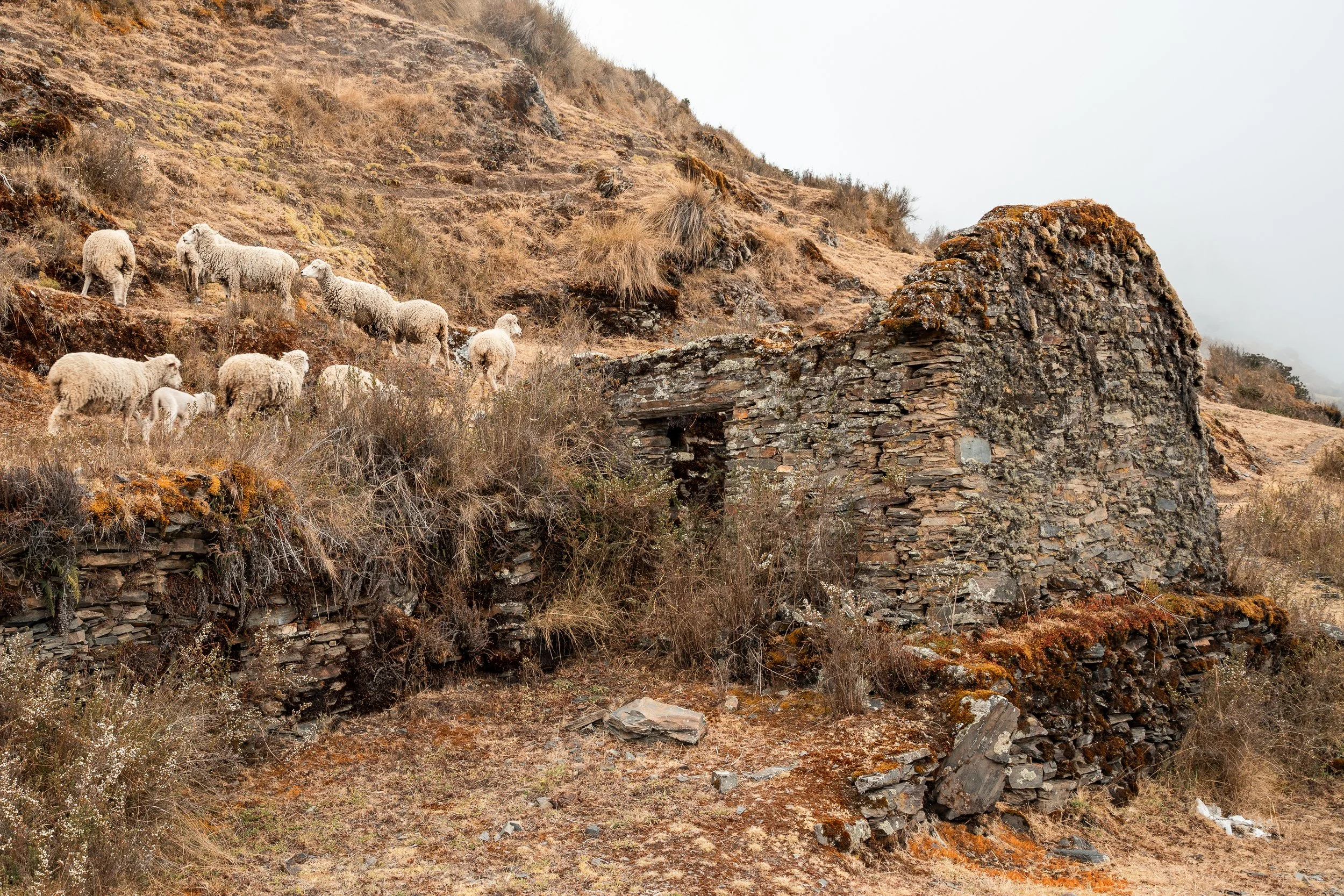
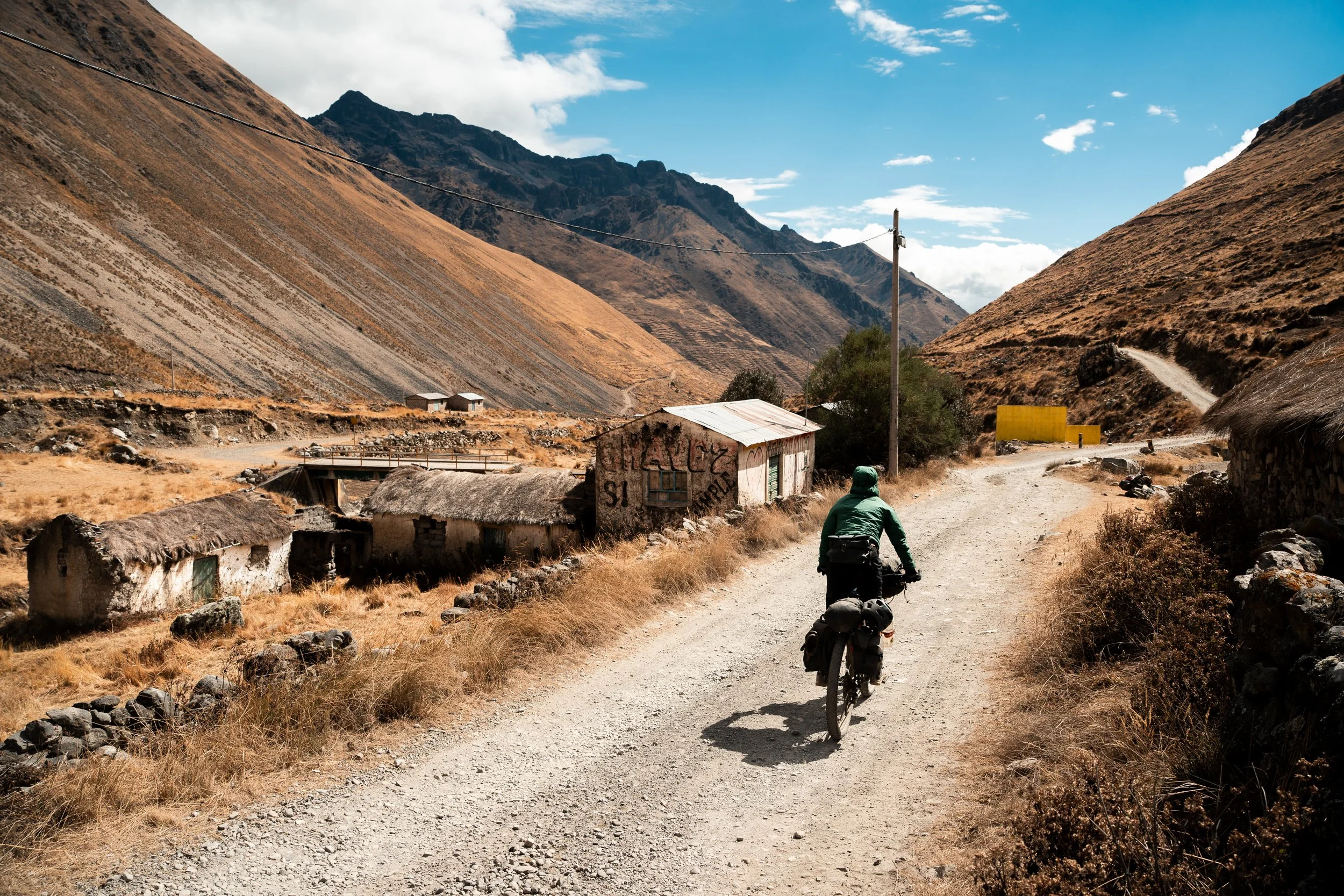
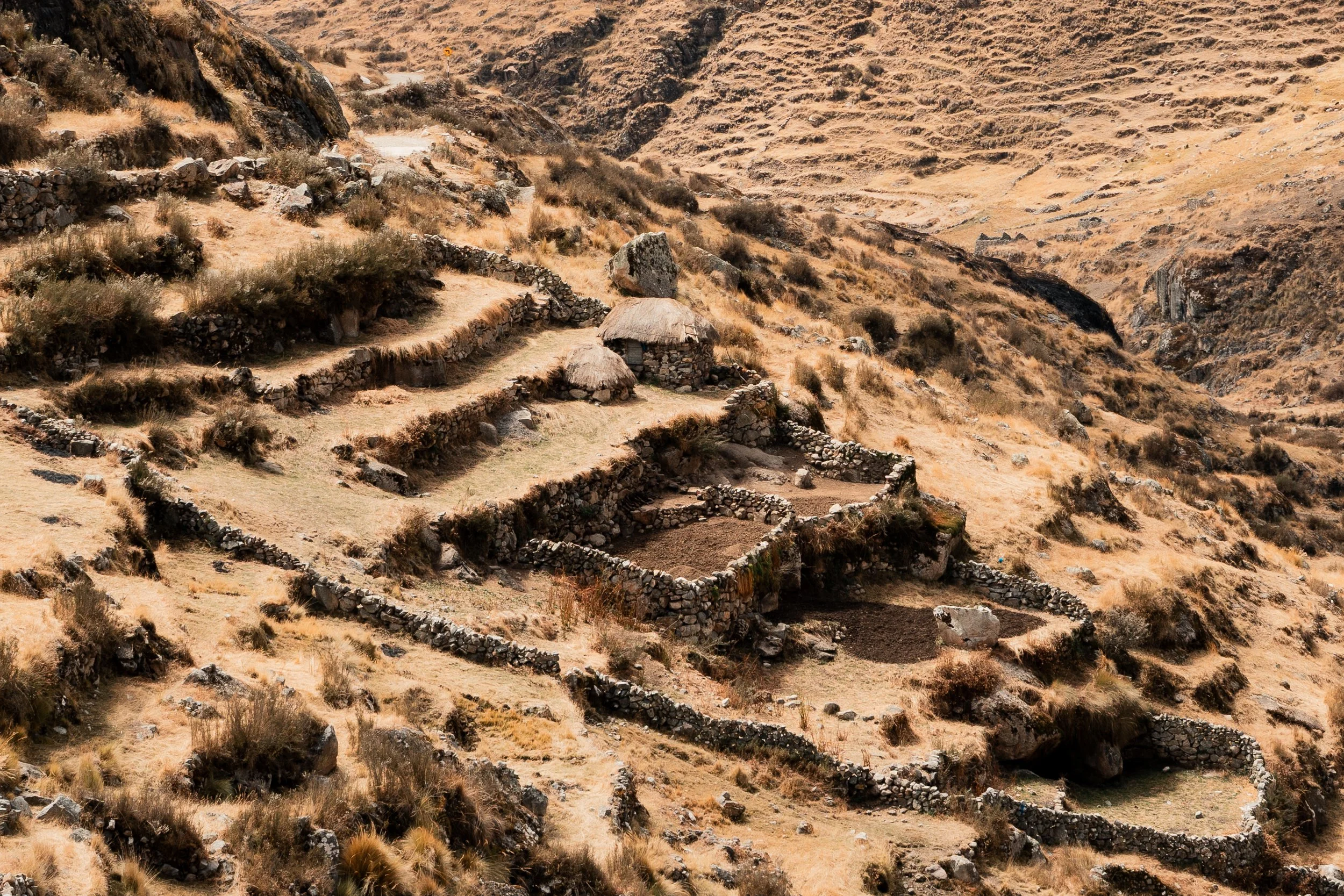
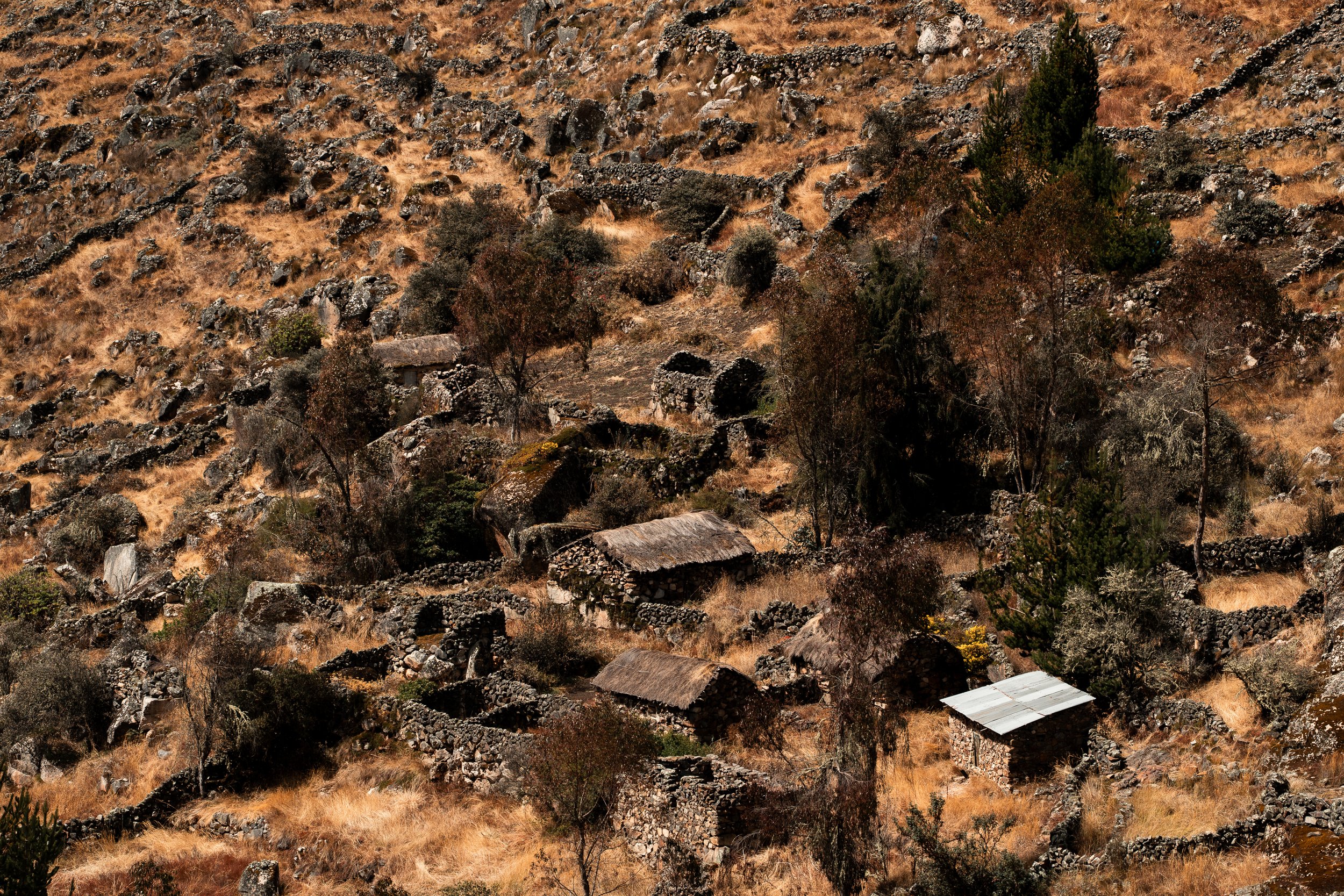
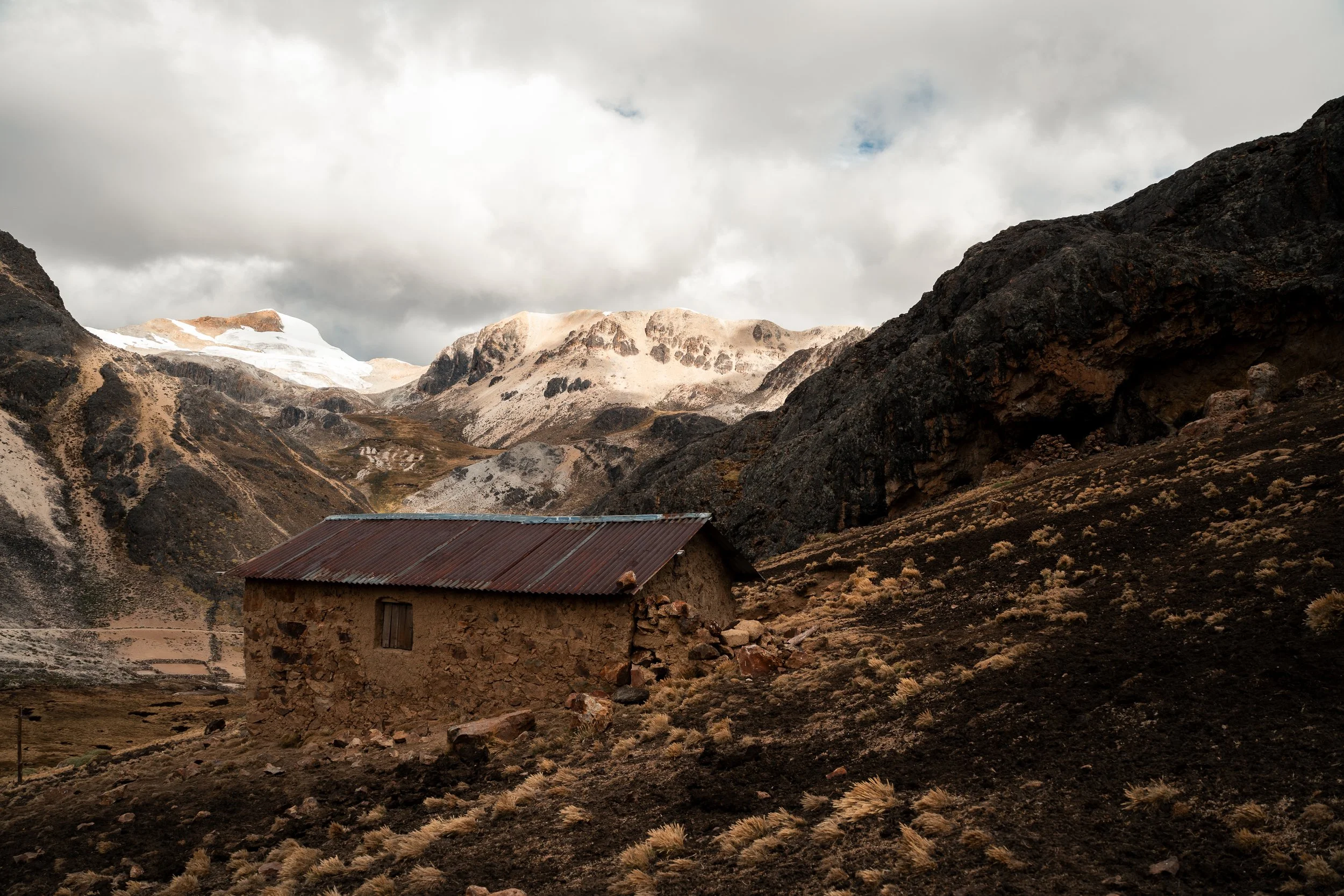
Finally we got over the pass, and descended into the next valley. After an initially steep descent, we reached the valley floor, and after a few farms, the rest of the valley was dominated by abandoned farmsteads, what appeared to be a mix of Incan and Colonial. We are no experts, but there are some tell-tale signs: the size of the rocks used, dry stone vs mortar, and the general size of the houses.
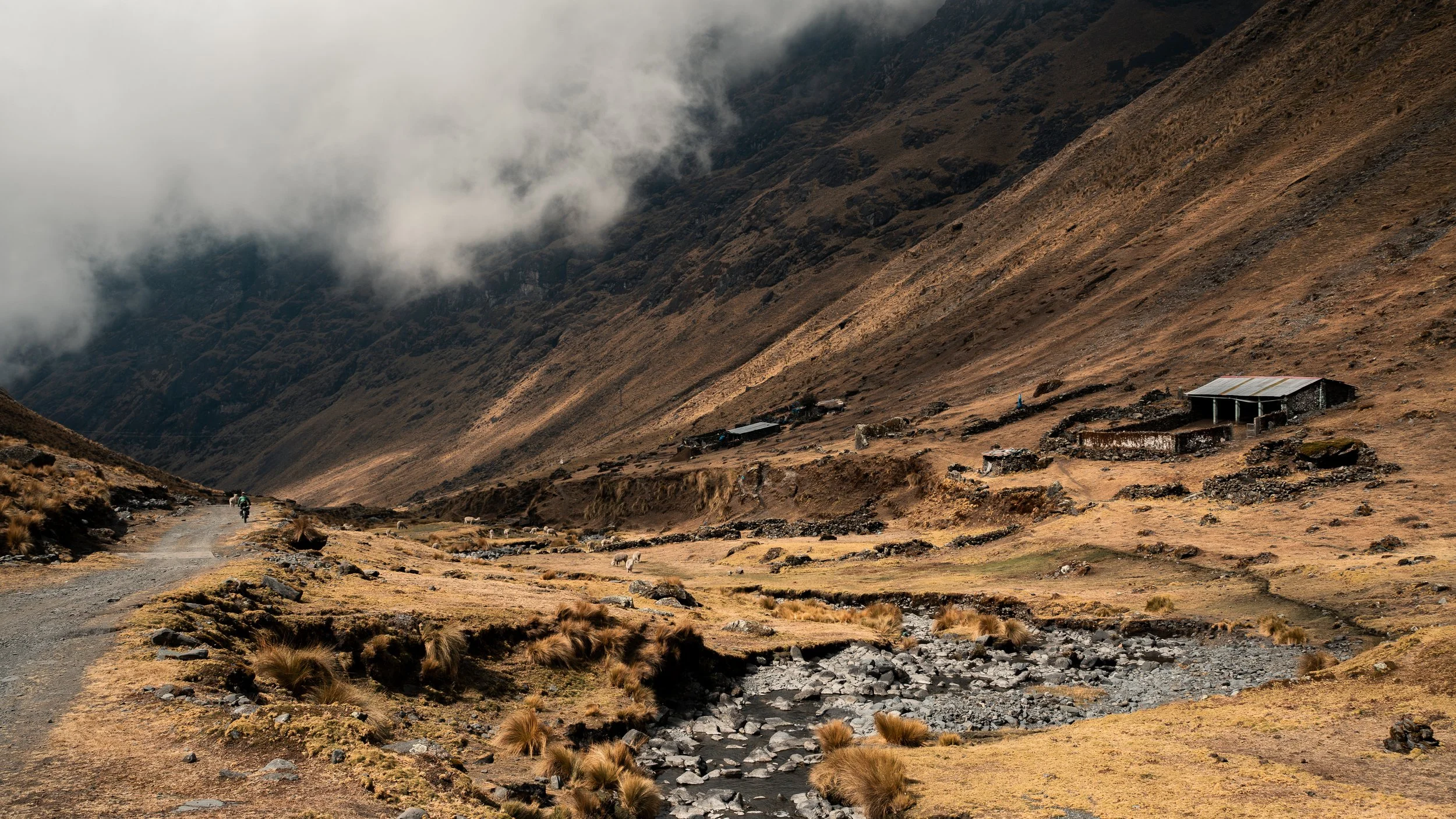
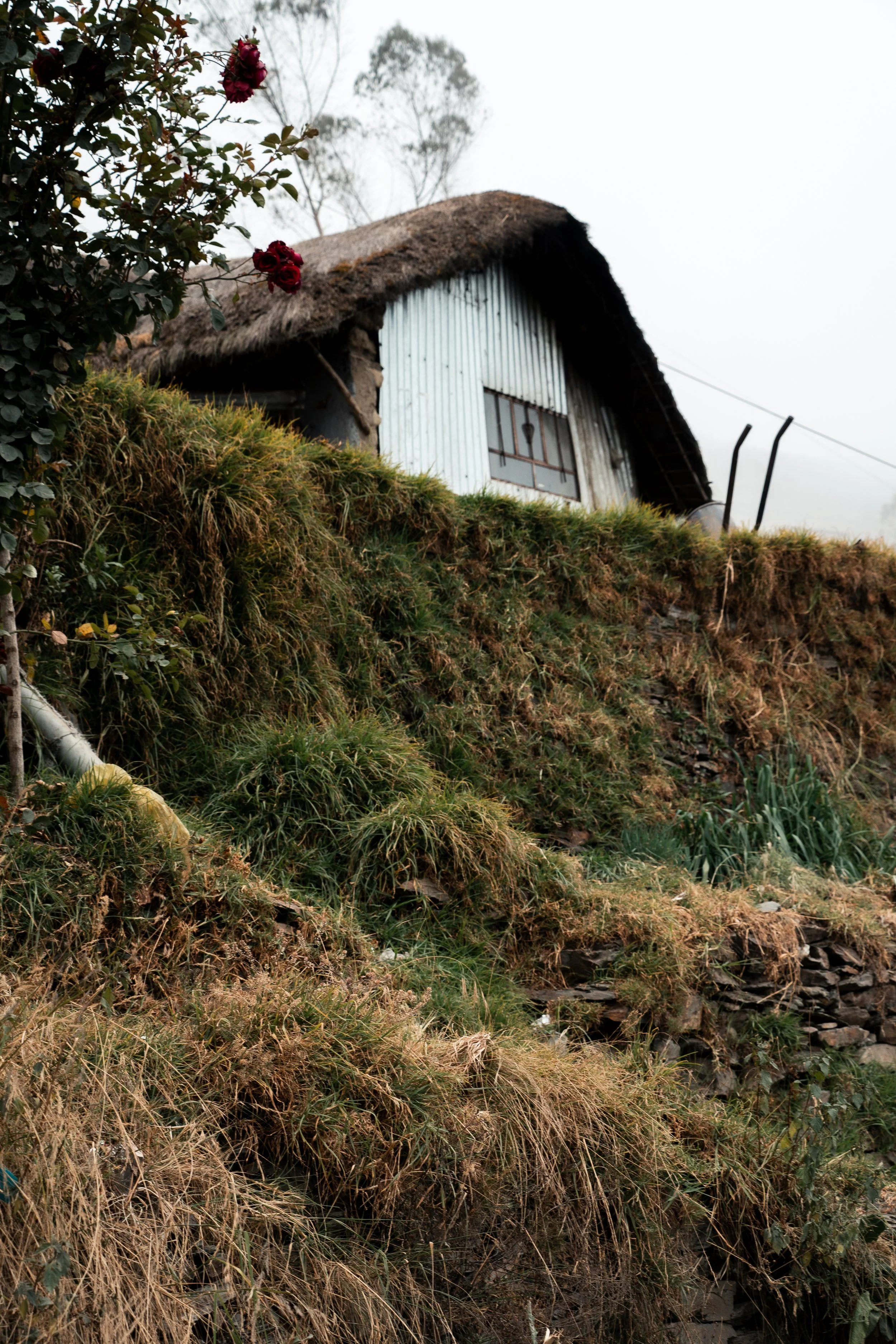
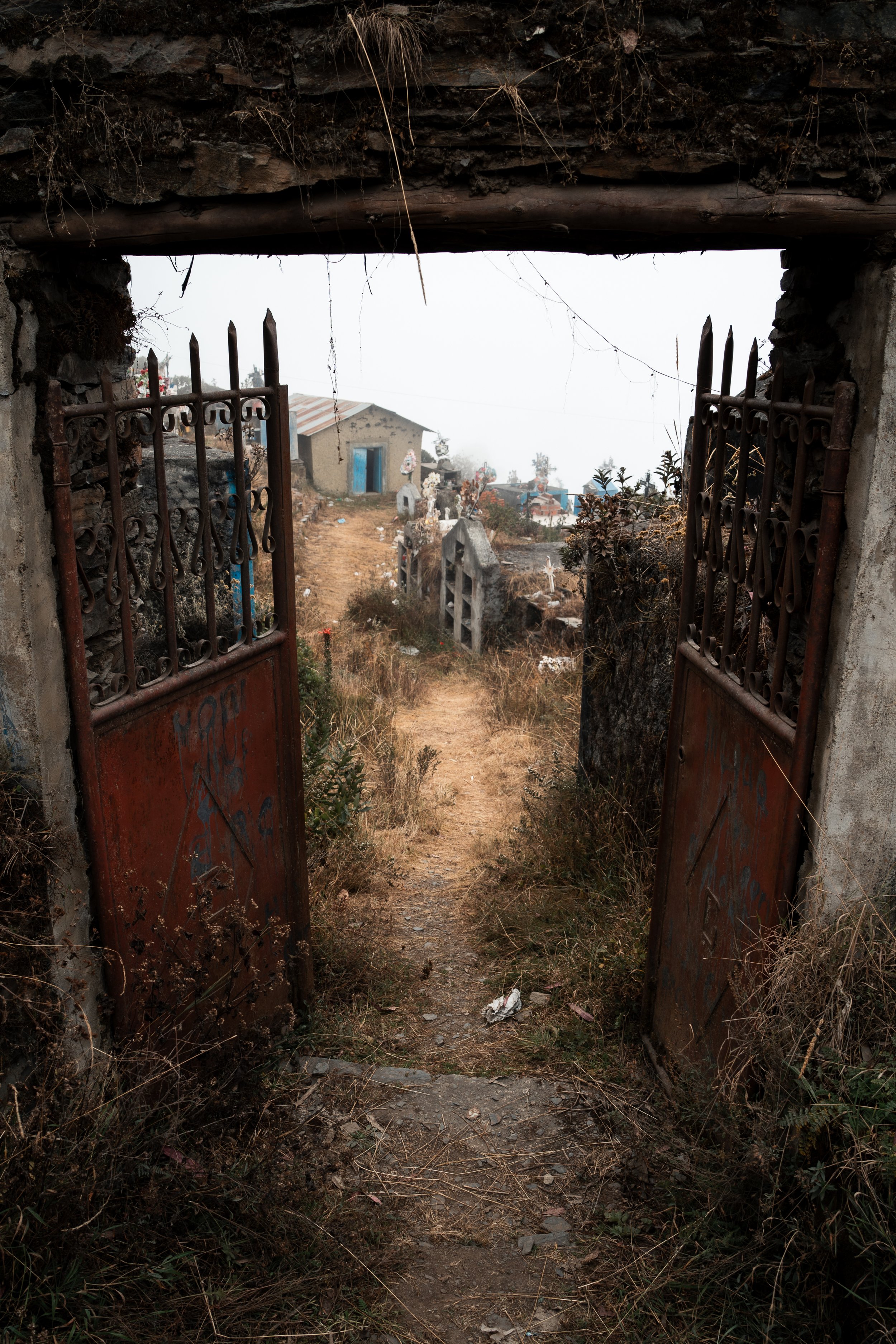
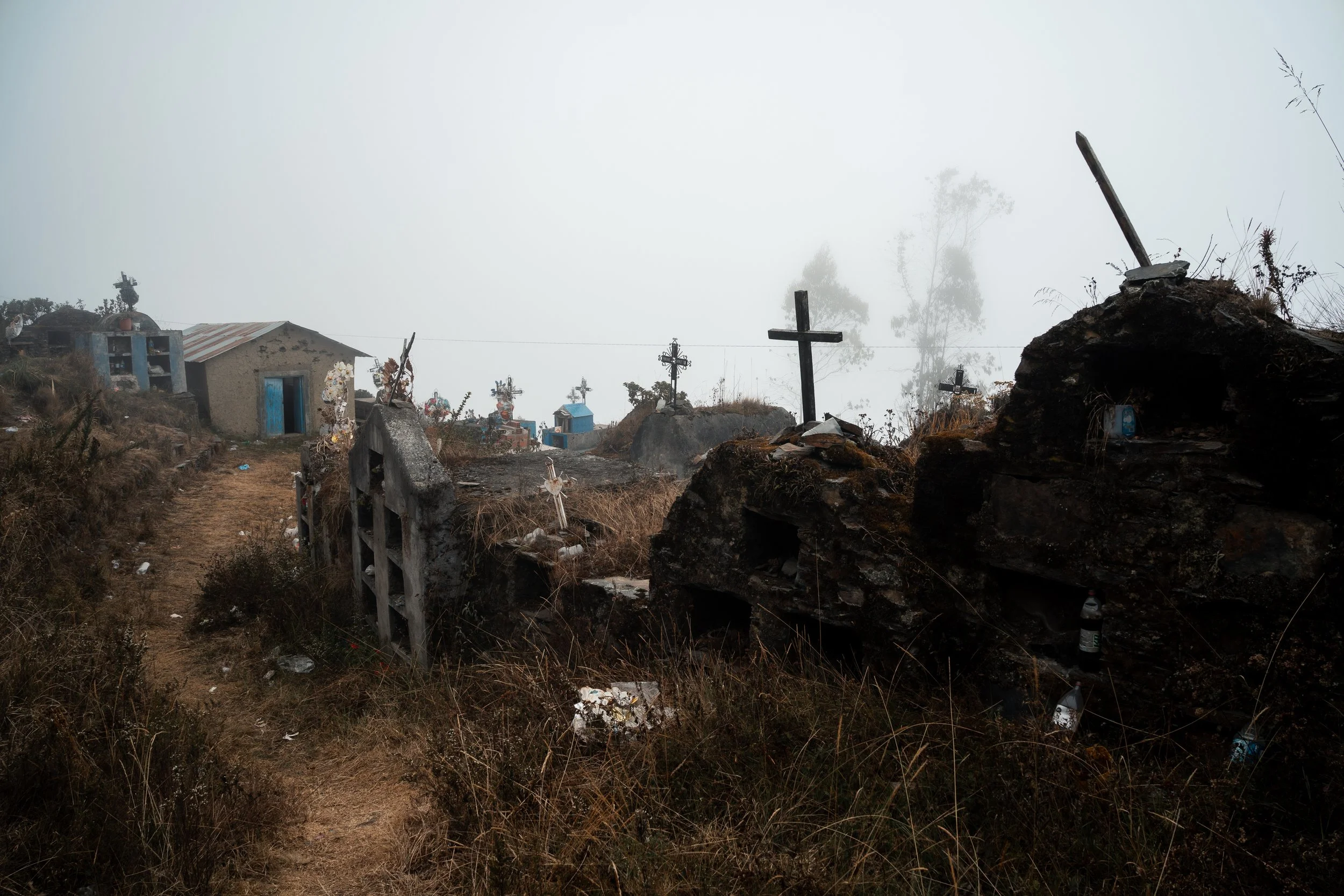
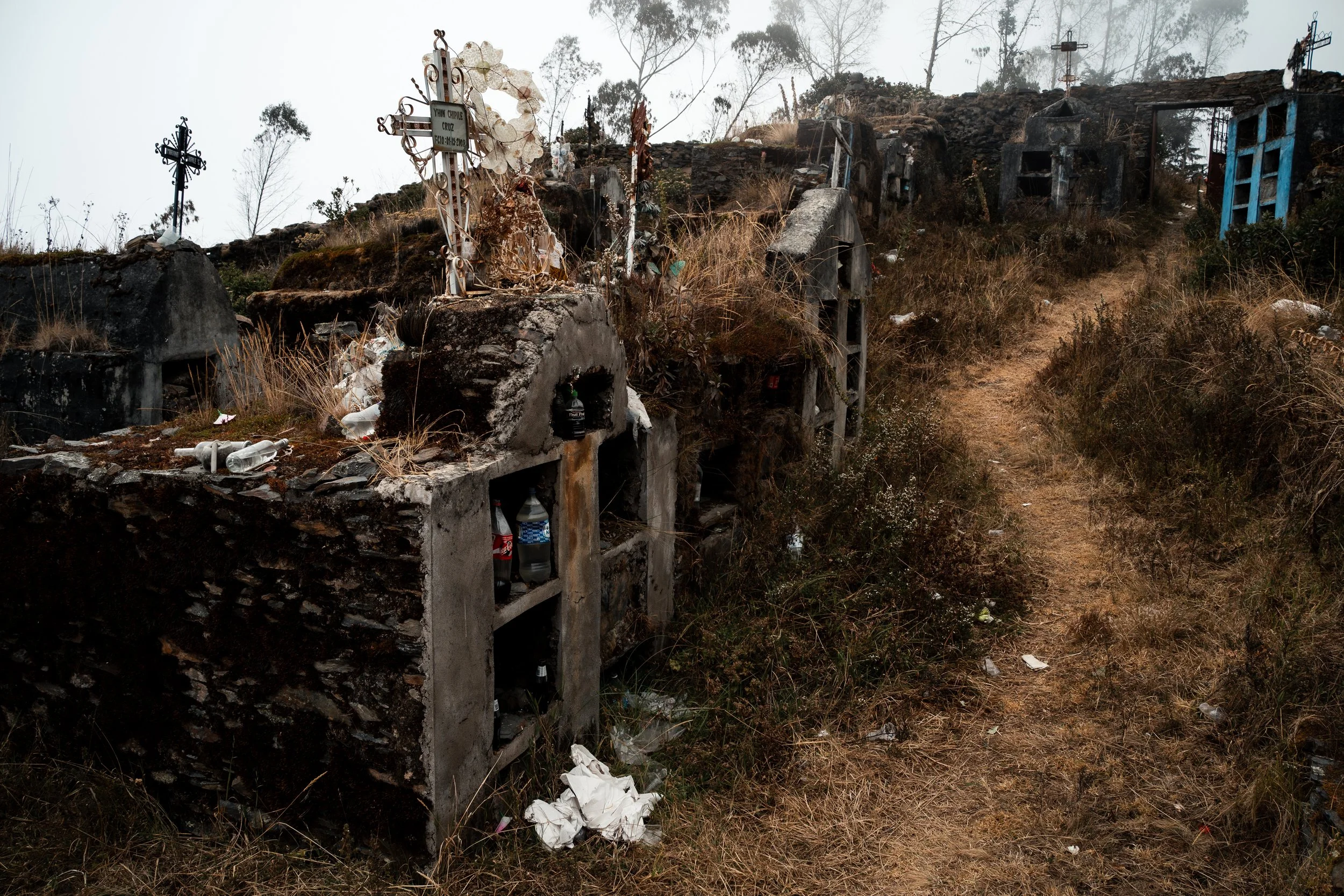
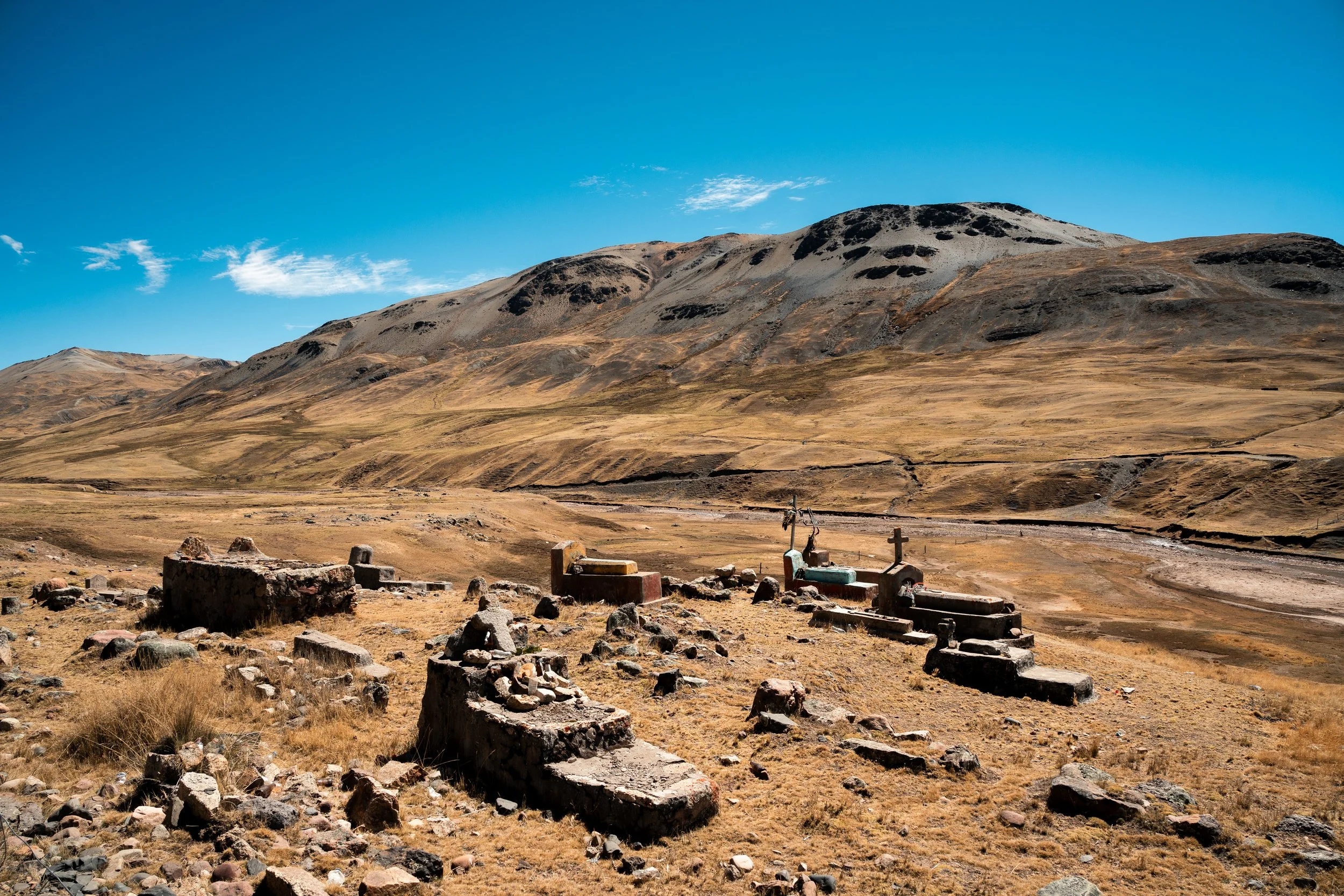
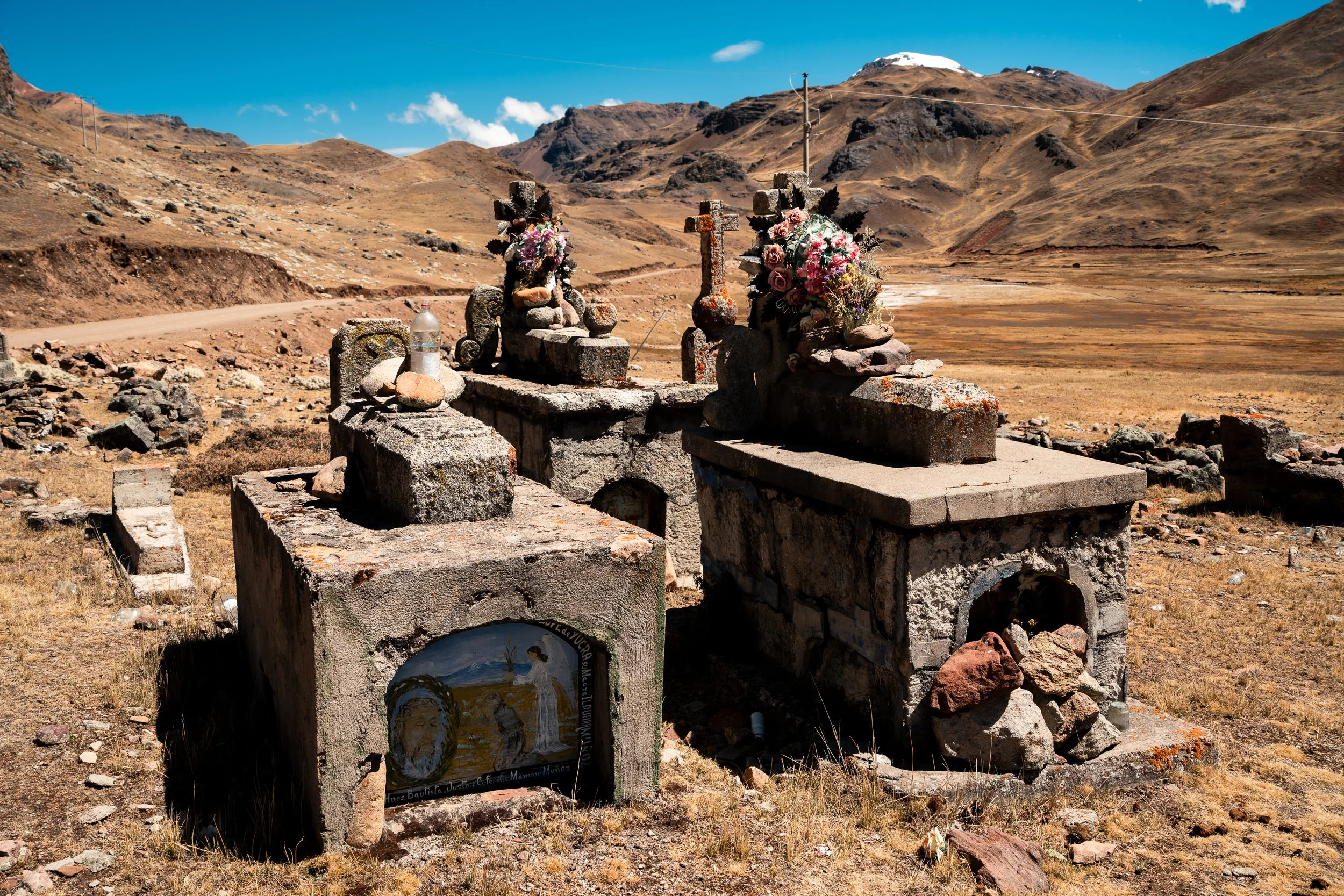
Cloud began to roll in, giving everything an eerie feeling. As we passed through one small village, a lady ran out of a building shouting ‘almuerzo’ (lunch) at us. We were a little taken aback, but decided to press on rather than stop. After a quick look around a cemetery, we continued downhill to Patambuco. This small village was perched on the slopes of the valley, currently shrouded in dense fog. We asked around for food, and were shown to an unmarked building, where the owner served us a delicious soup and then chicken with rice. He happened to have a room for rent upstairs, which we gladly took. Whilst warm, it transmitted perfectly the sounds of the TV blaring upstairs all night.
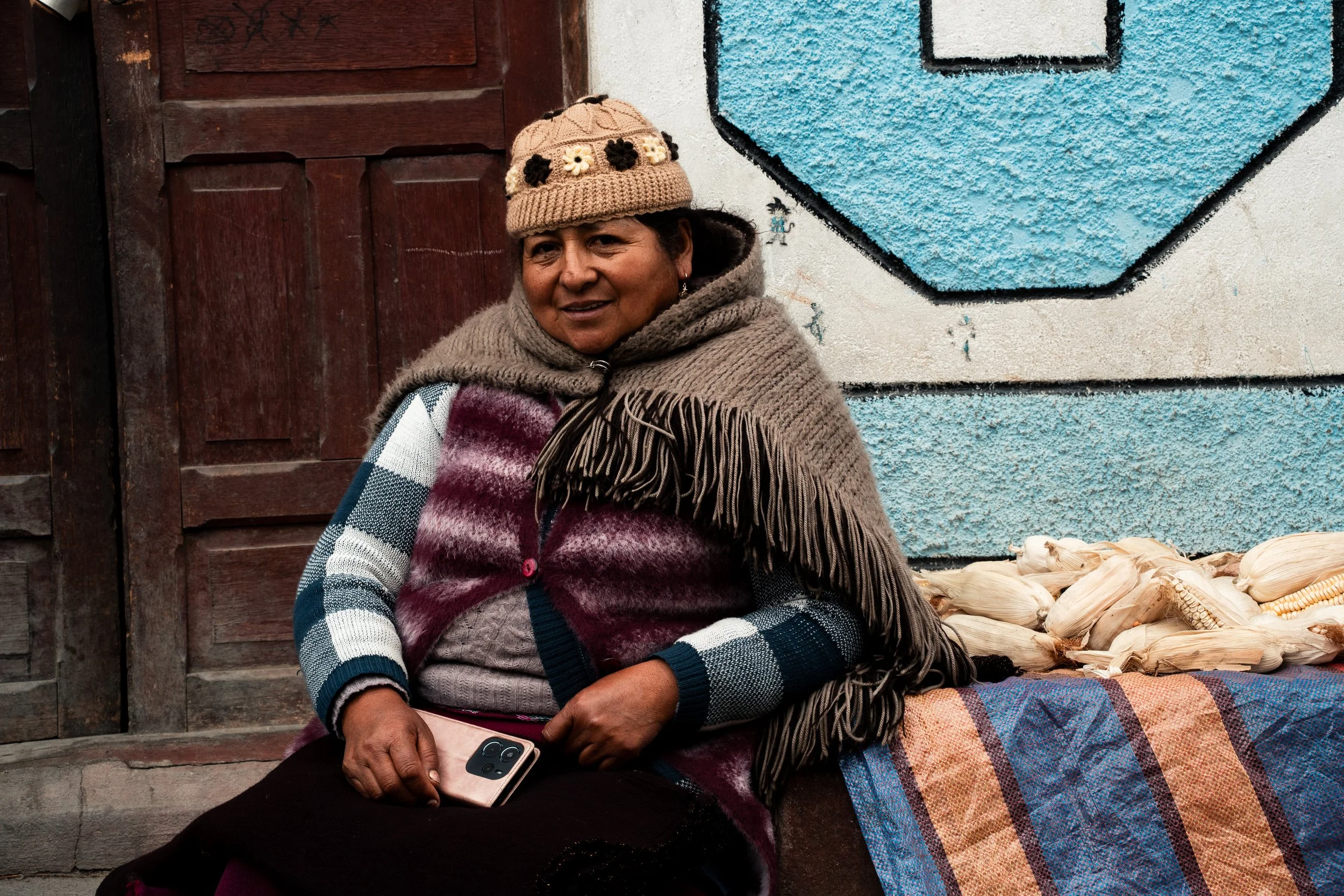
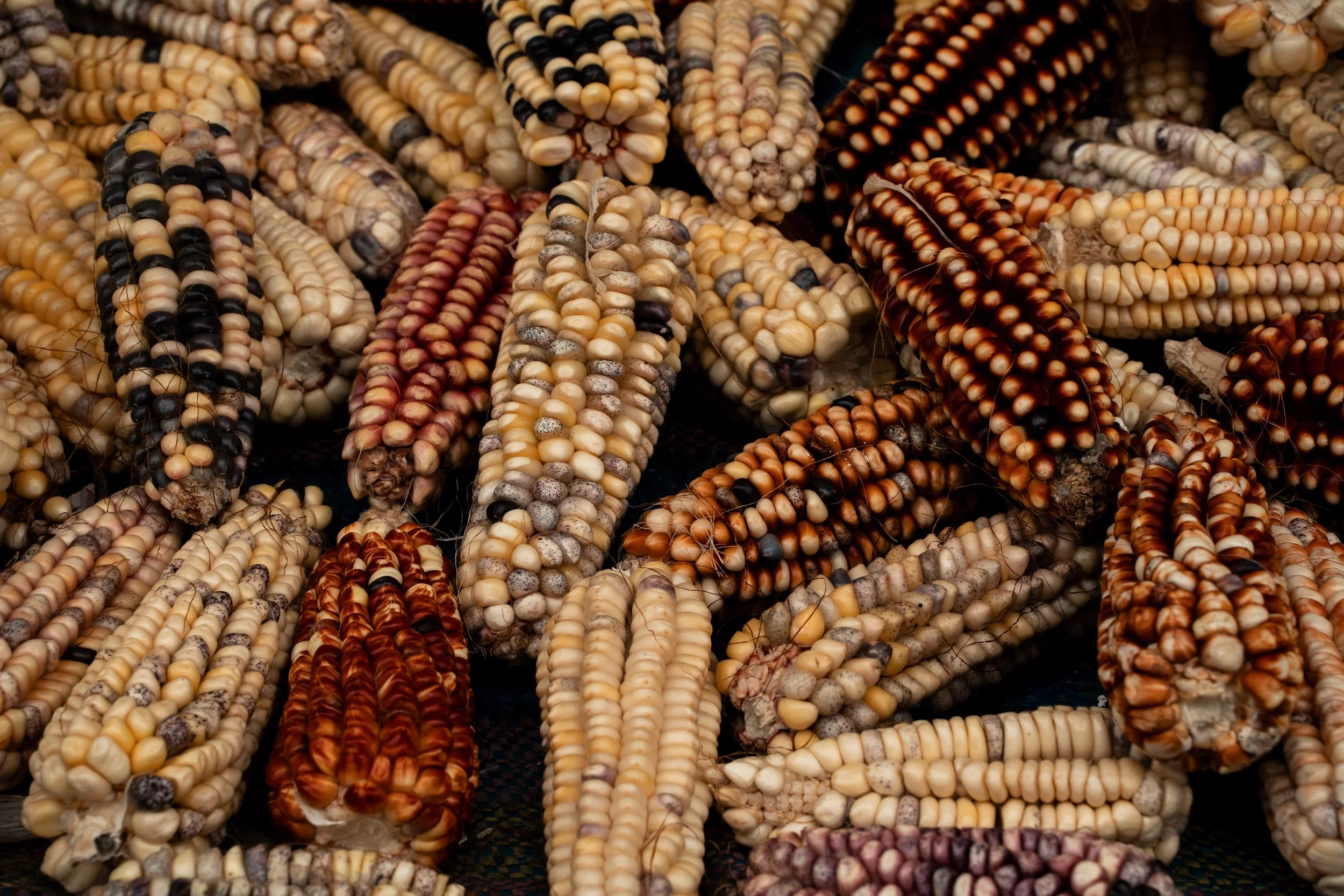
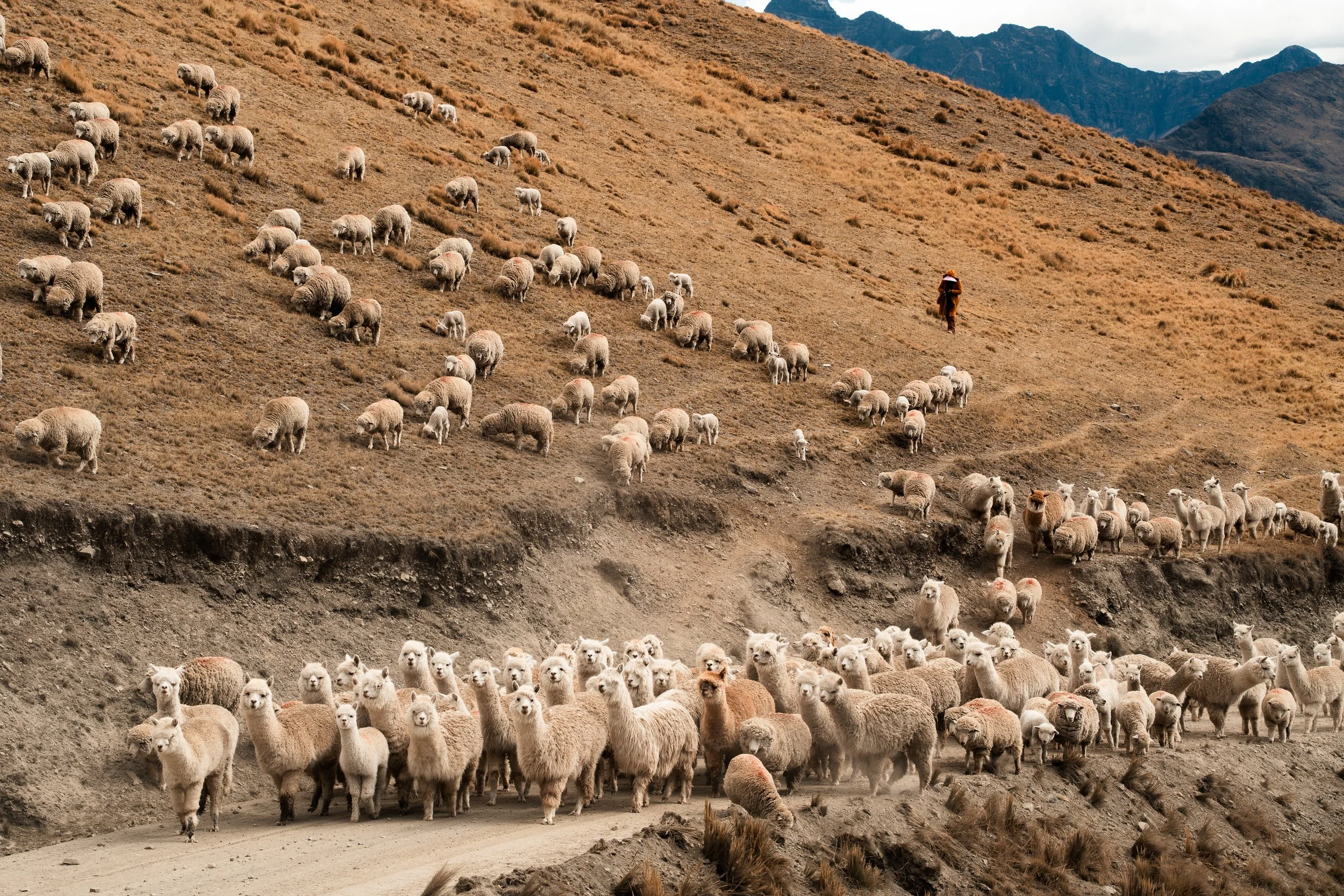
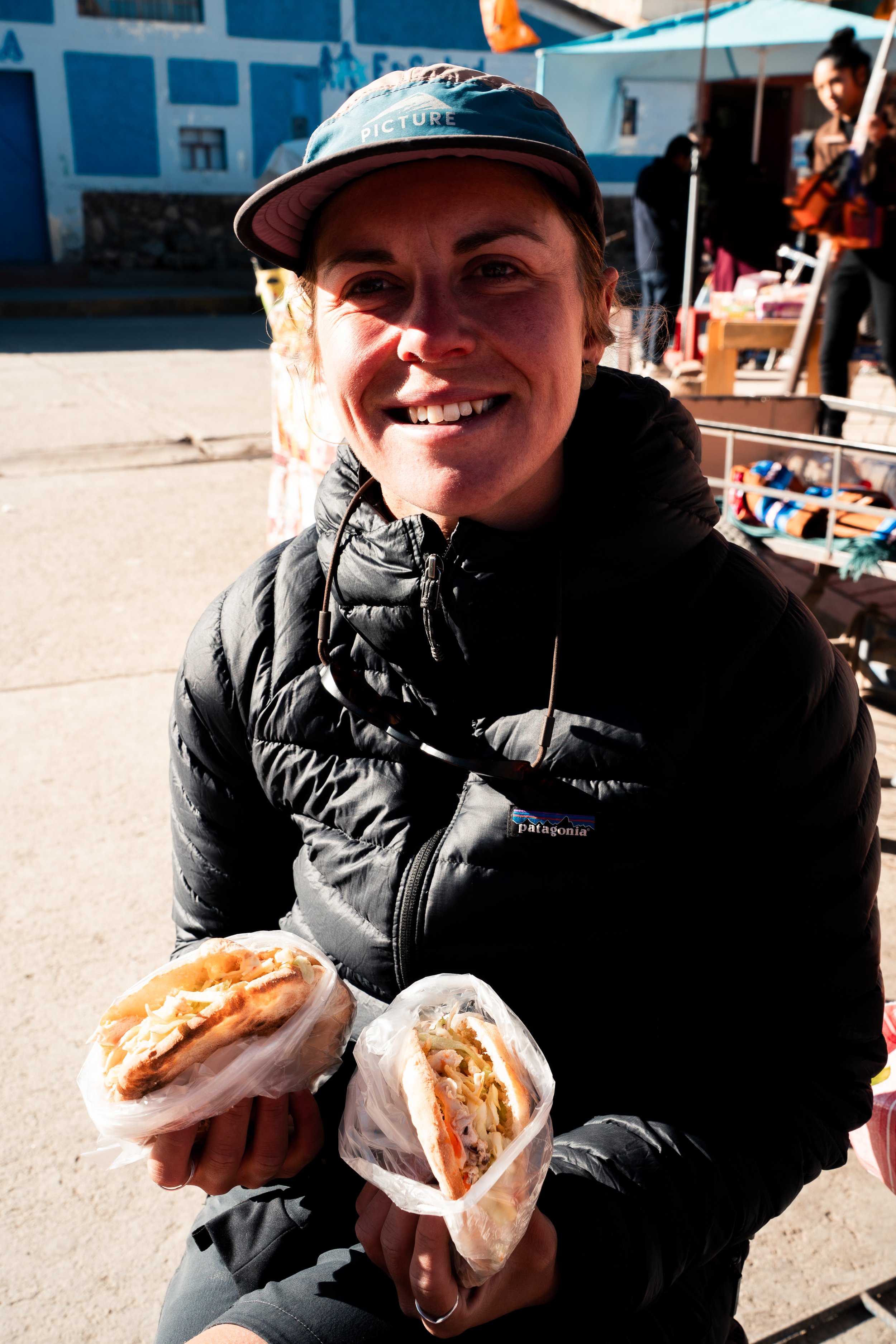
The food in Peru is notoriously good, especially Lima which is supposedly the food capital of Latin America. The basics are very similar to Bolivia - typically chicken or ‘meat’ (depending on what animals are nearby, this is beef, llama, or alpaca, but rarely specified), served with rice and potatoes. You will generally get a set menu, just ask for ‘almuerzo’ or ‘cena’. First will be a soup, followed by a main, and often a drink of some sort. Peru turns it up a notch though, with flavours and sauces. Bolivia is usually just plain rice/potatoes/corn, with plain meat. Its like the difference between a uni student trying to make a meal but skipping all the herbs and flavours to save money, and following the full recipe.
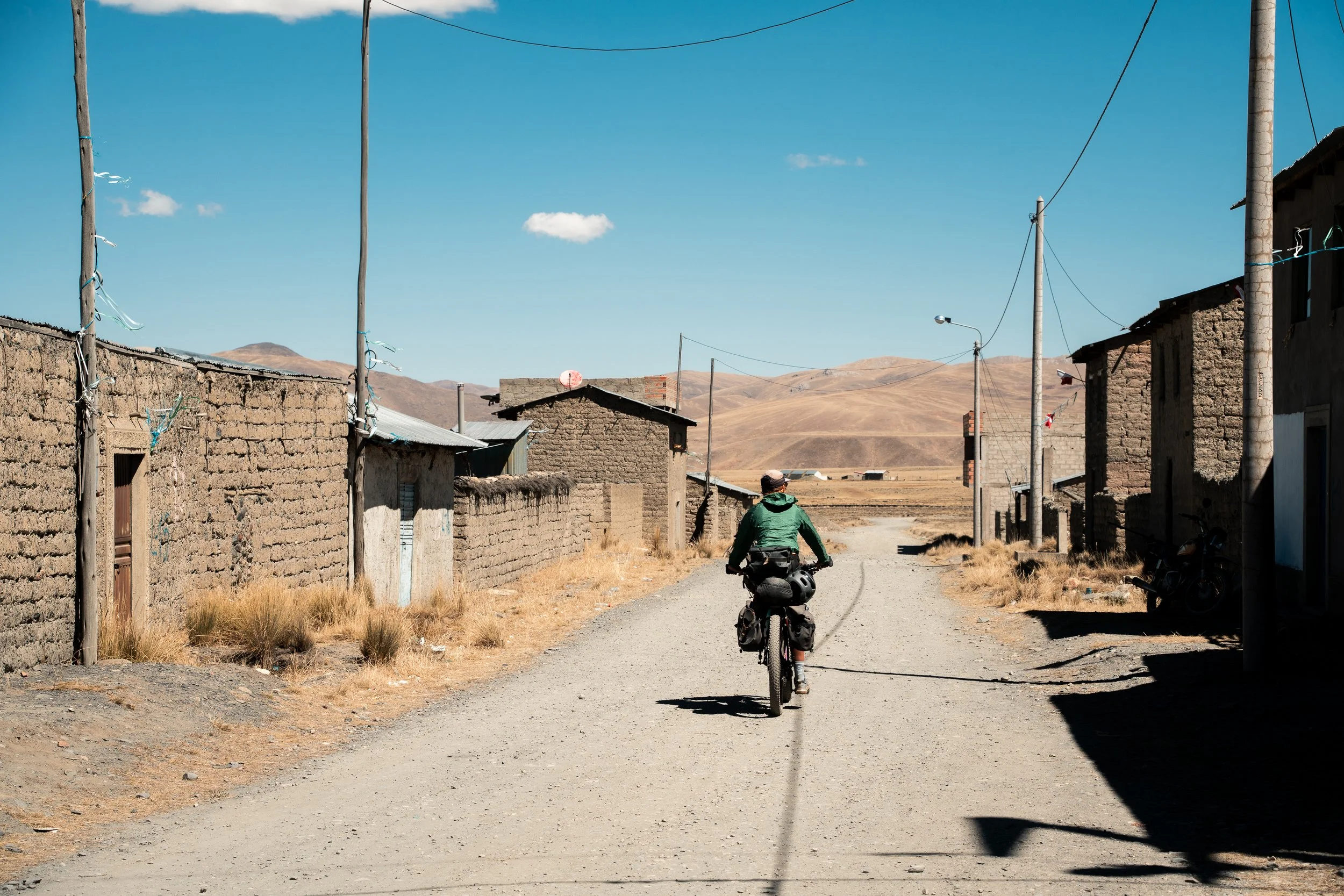
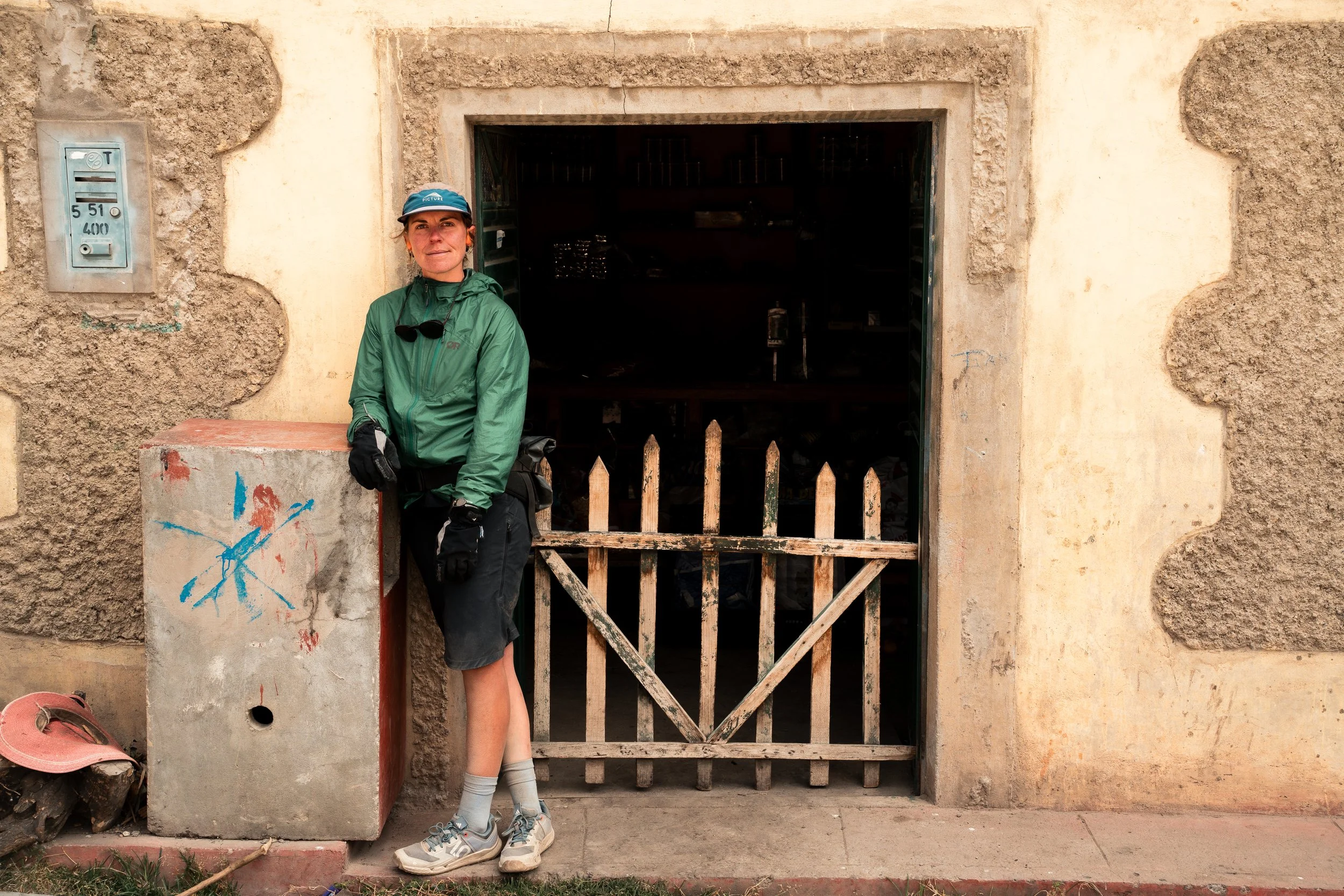
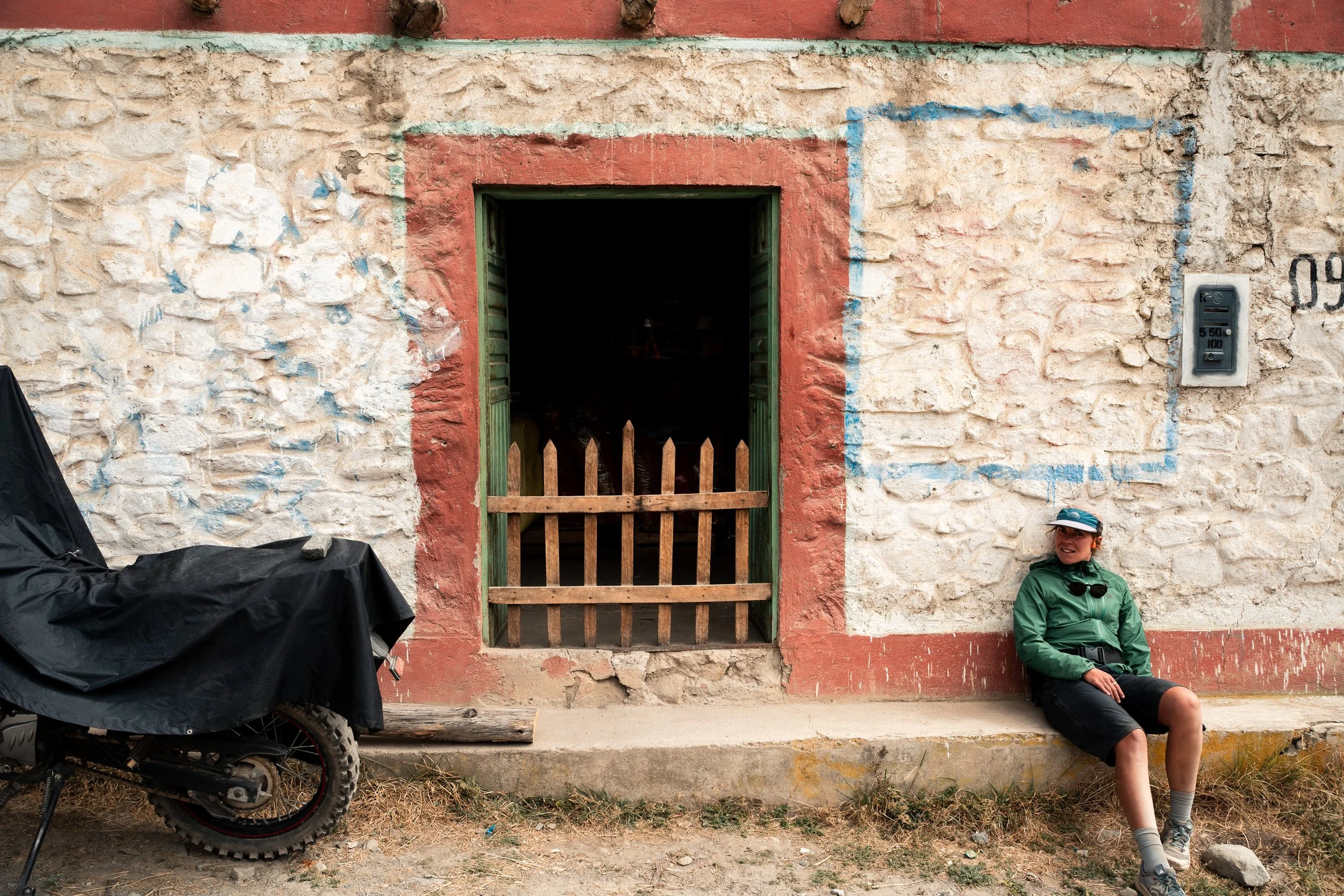
The mornings riding was again climbing 1000m on tarmac with gentle gradients, passing through numerous small villages up the valley, until we finally emerged at the top after only a couple hours. We hoped to get an early lunch in Huanjollo, a small village on the main highway passing across the base of the mountains. It was dusty, and quiet. We poked our heads in an open door, and found a tienda with very few basics, so had a meal of chocolate milk and soft drinks.
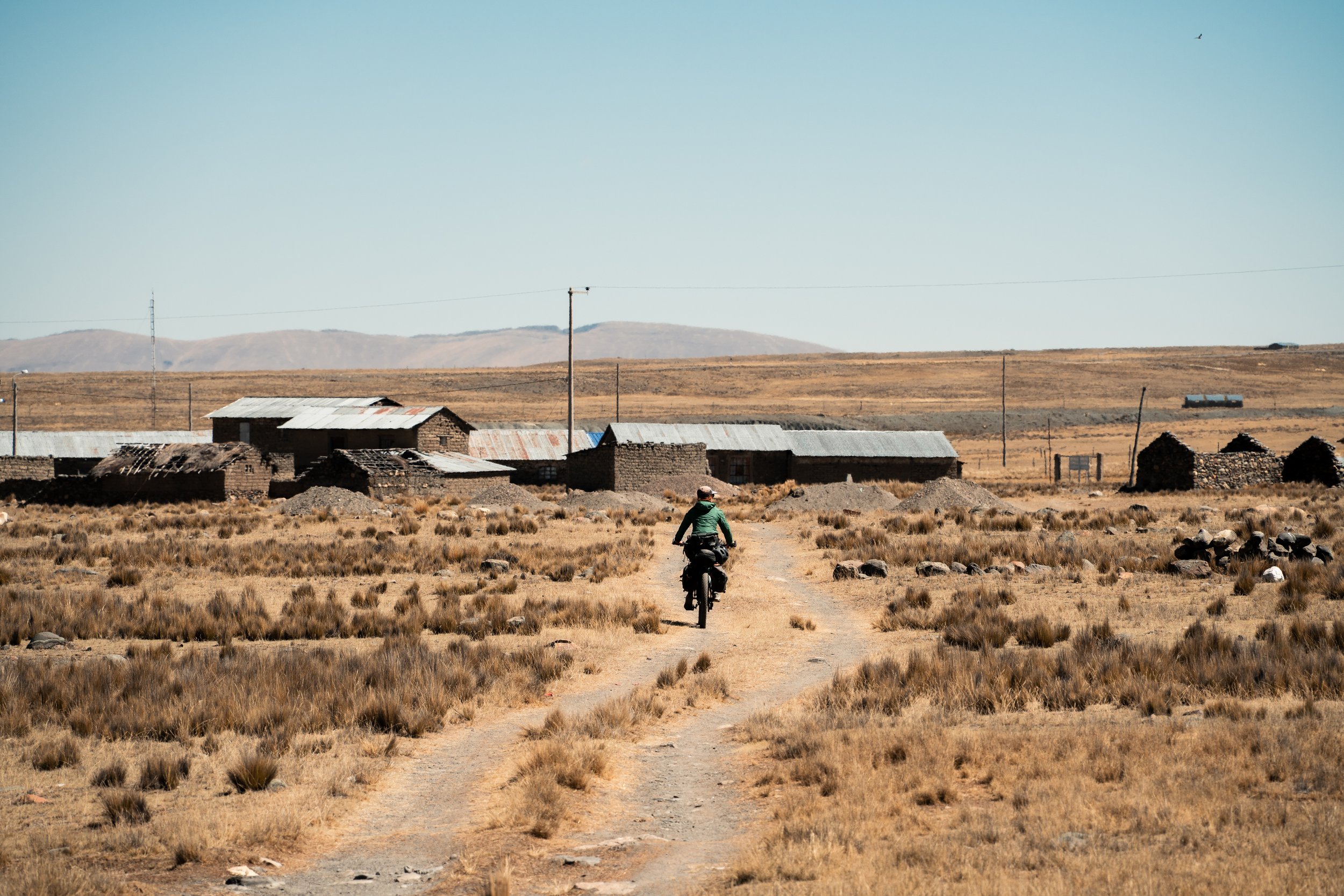
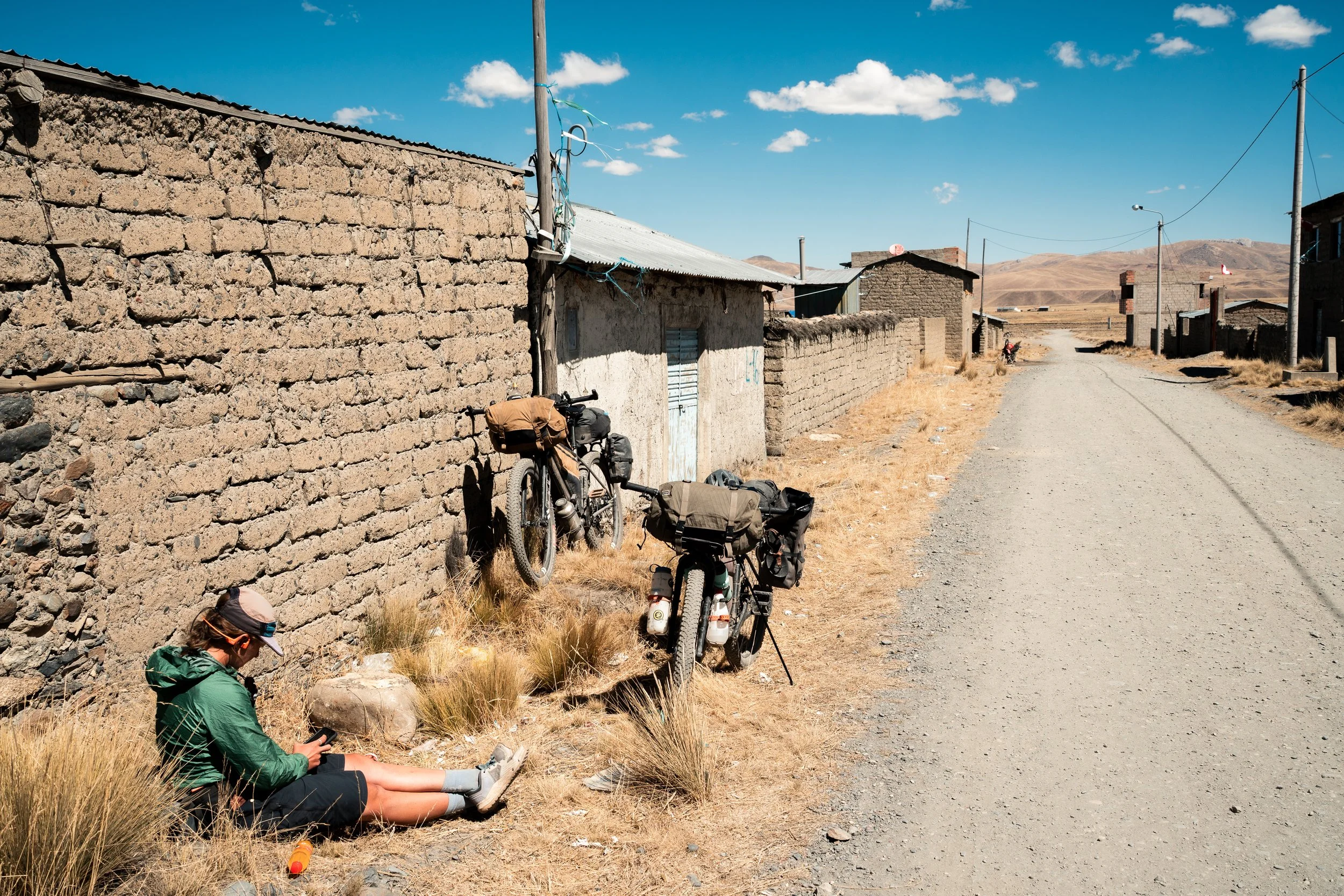
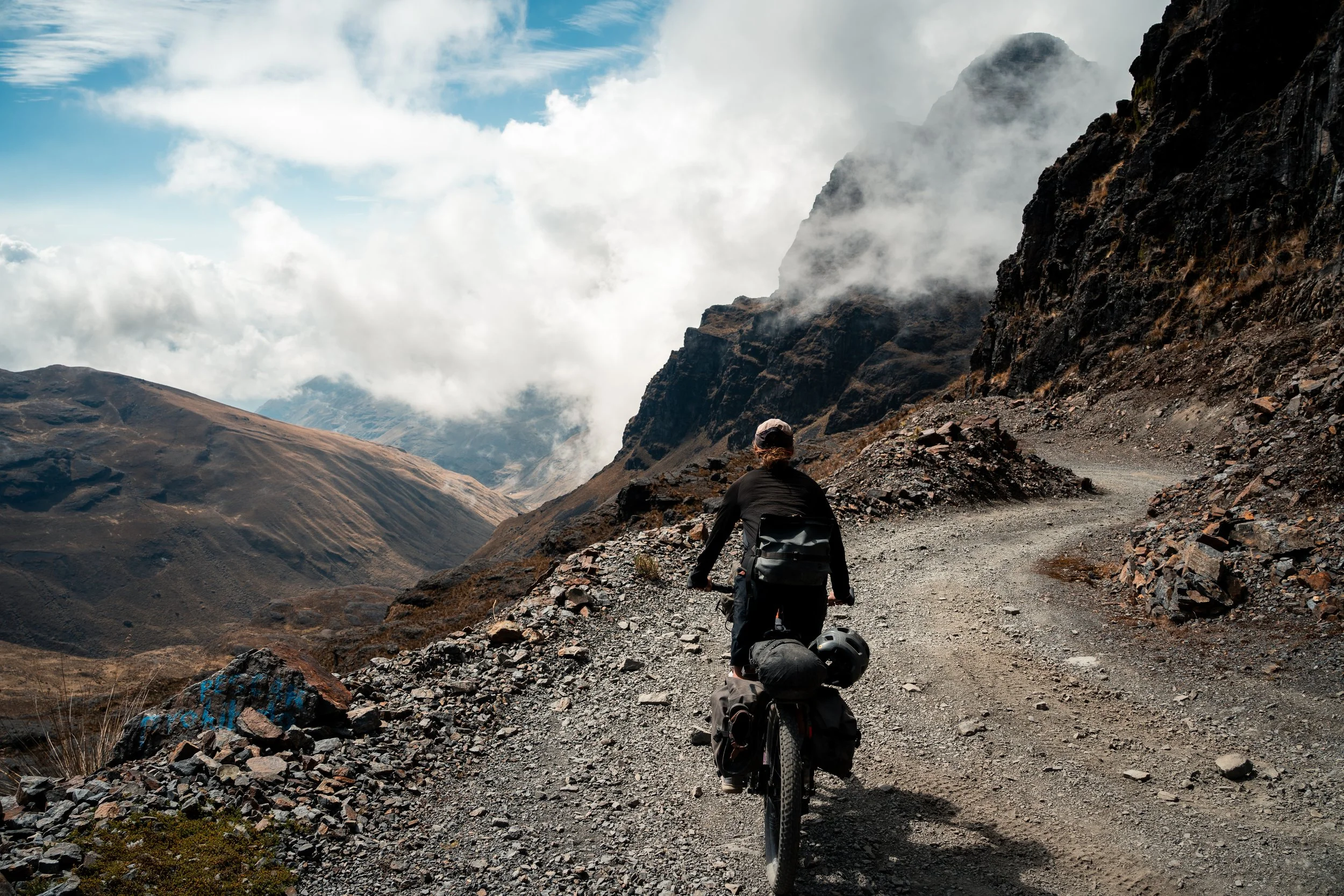
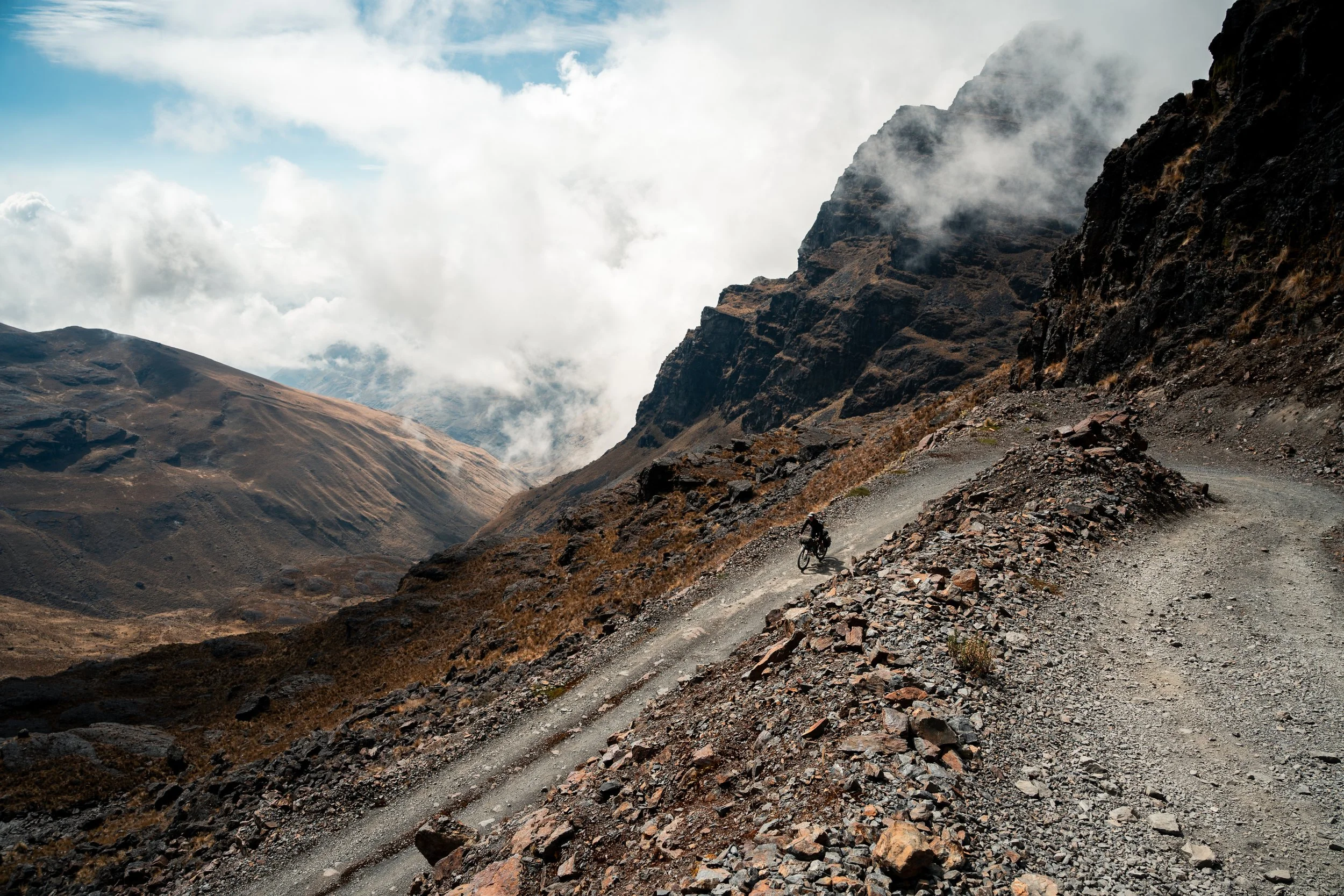
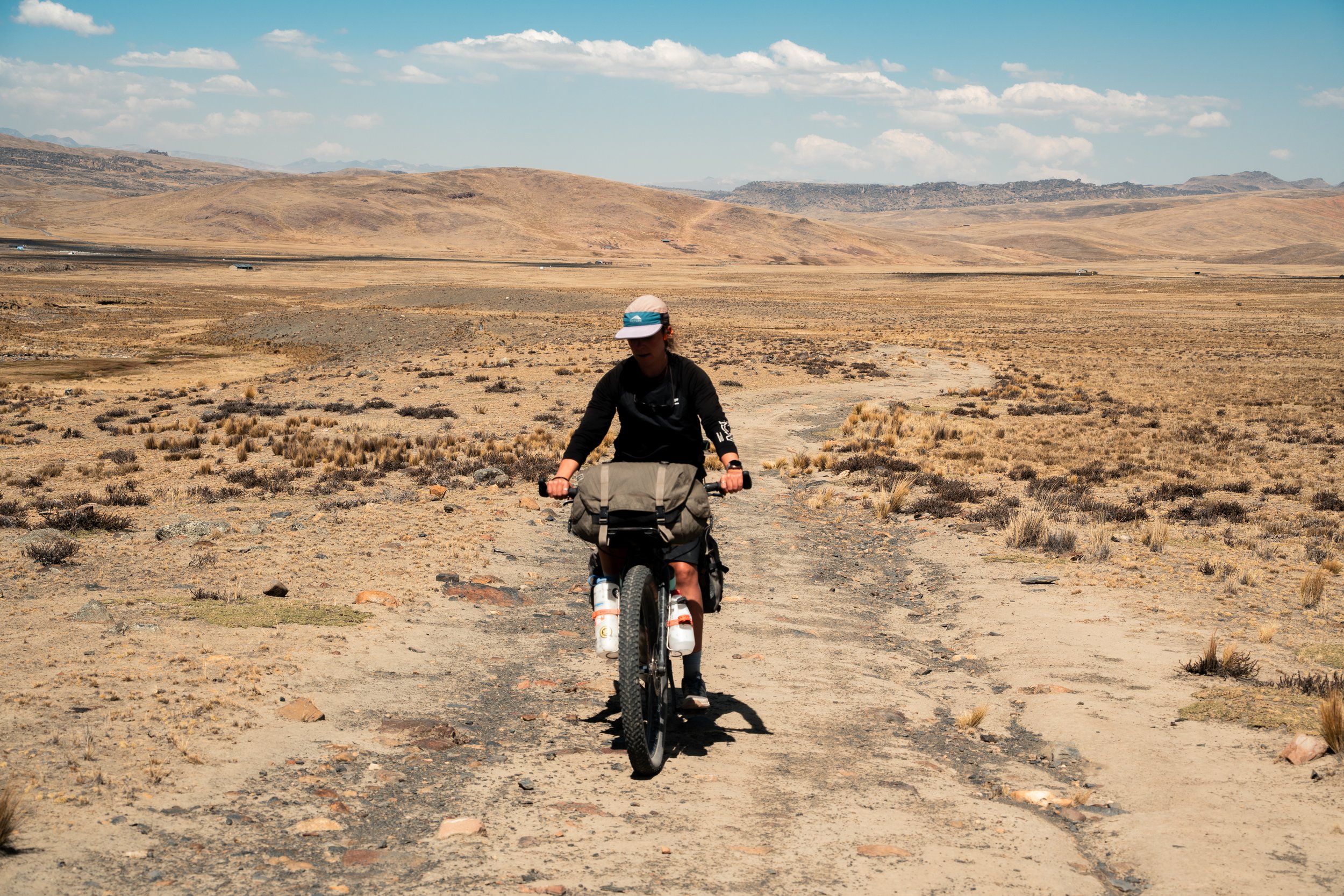
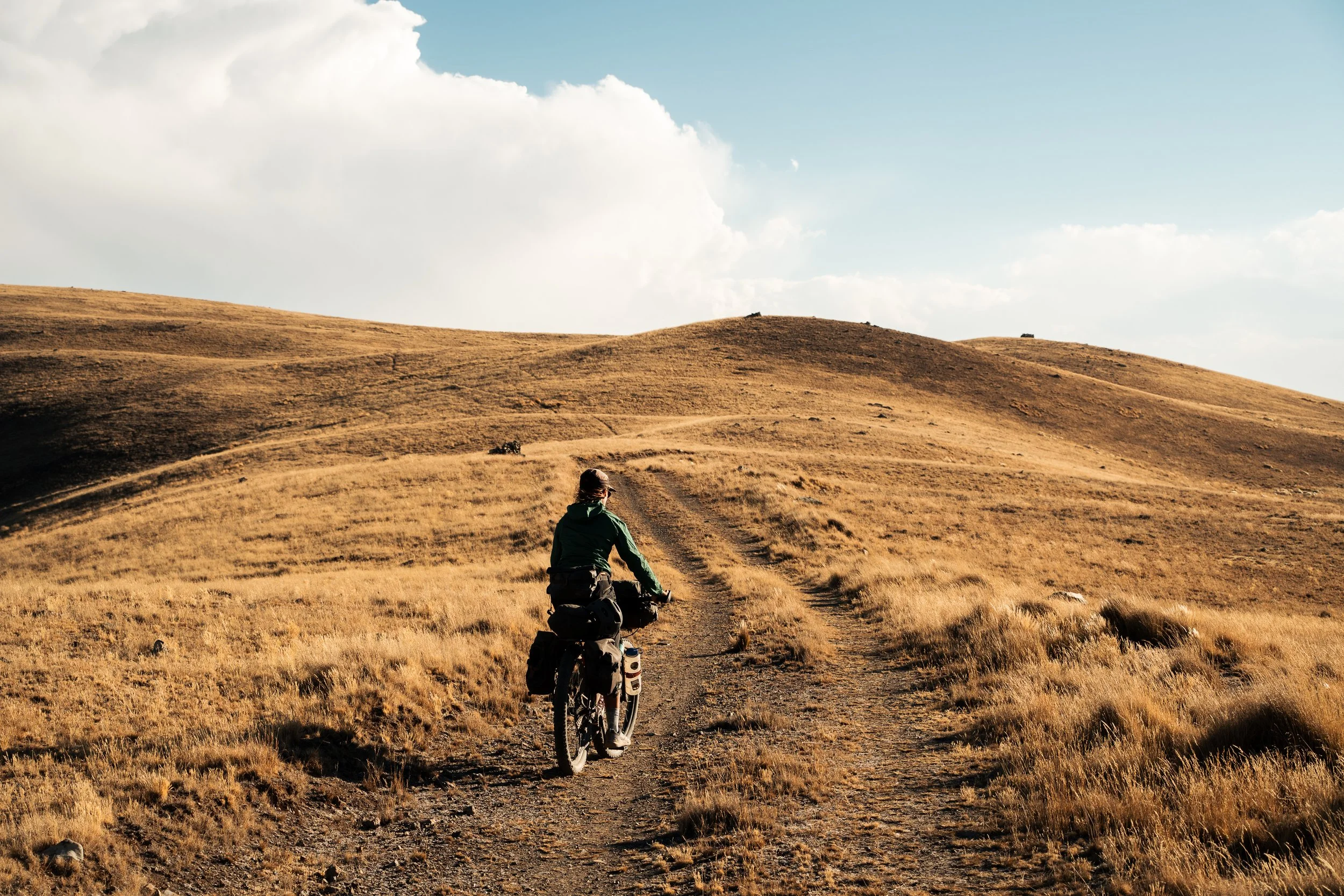
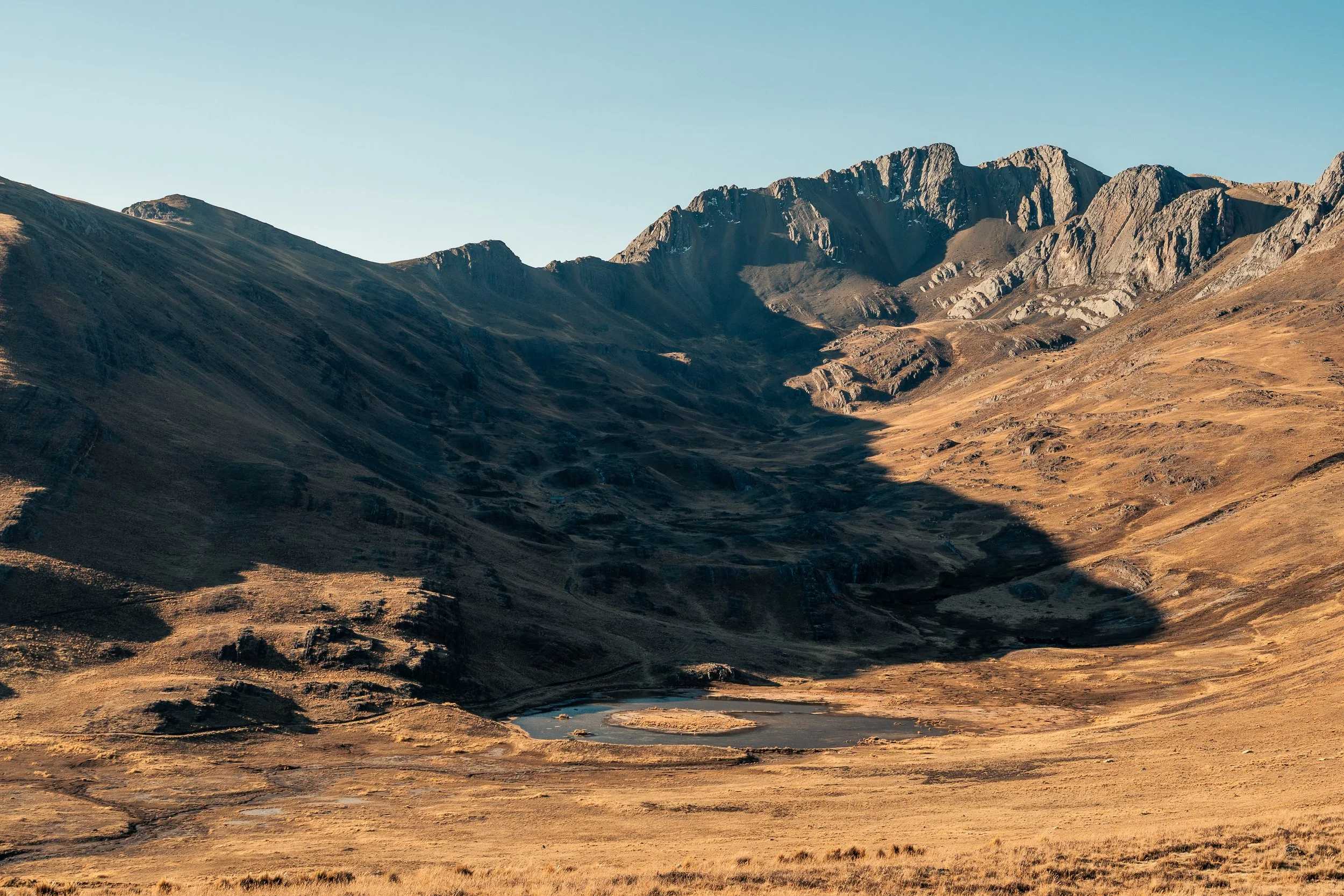
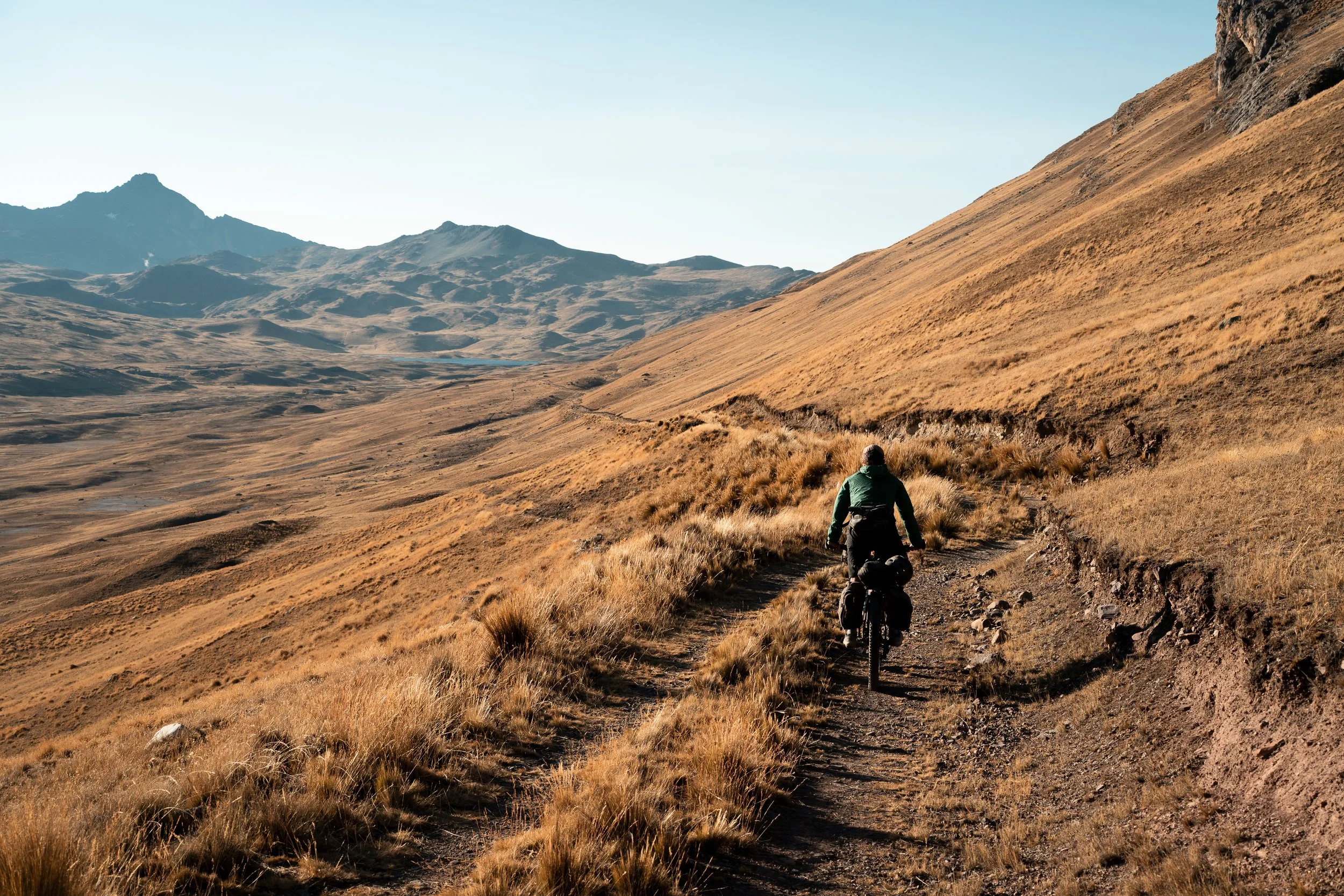
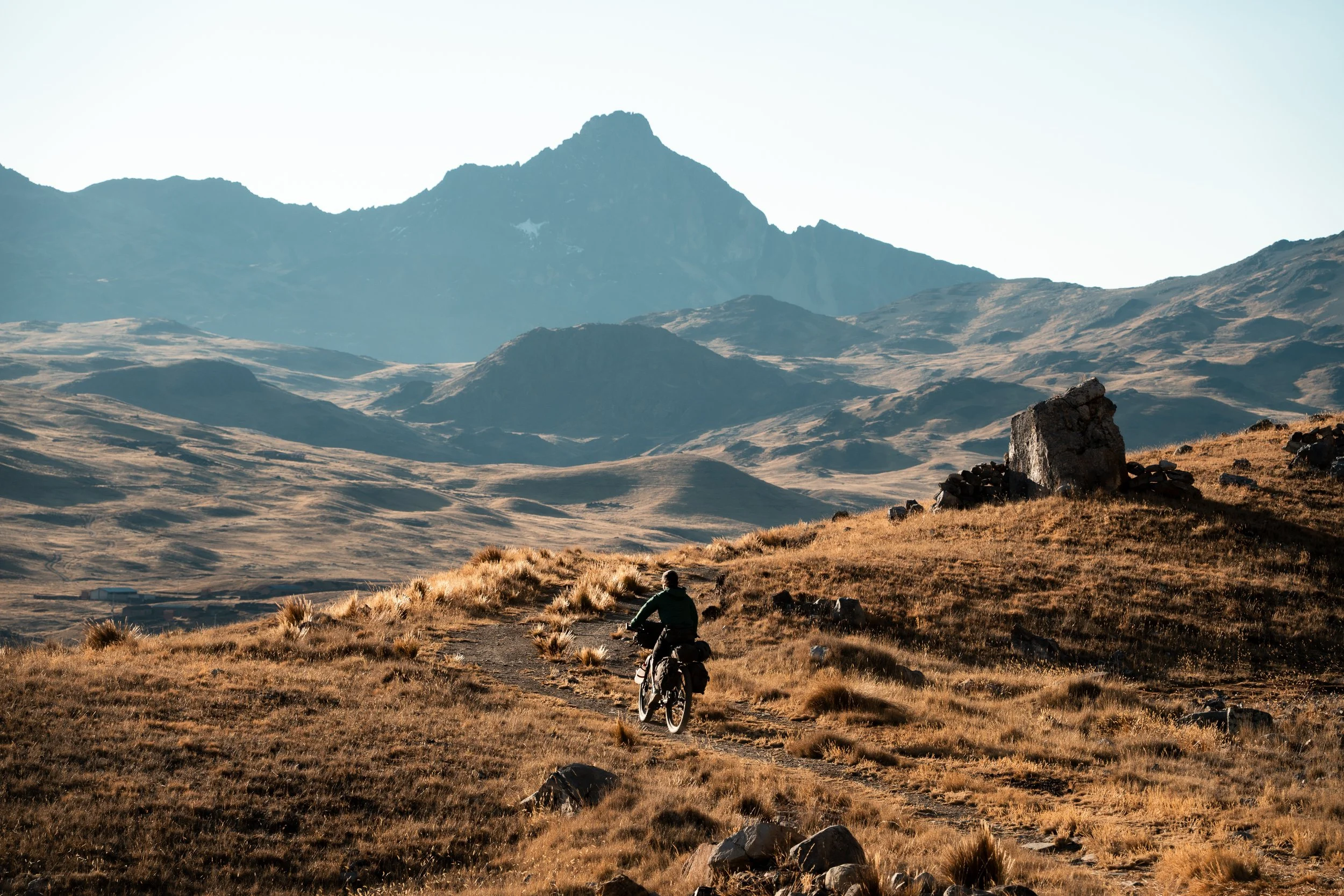
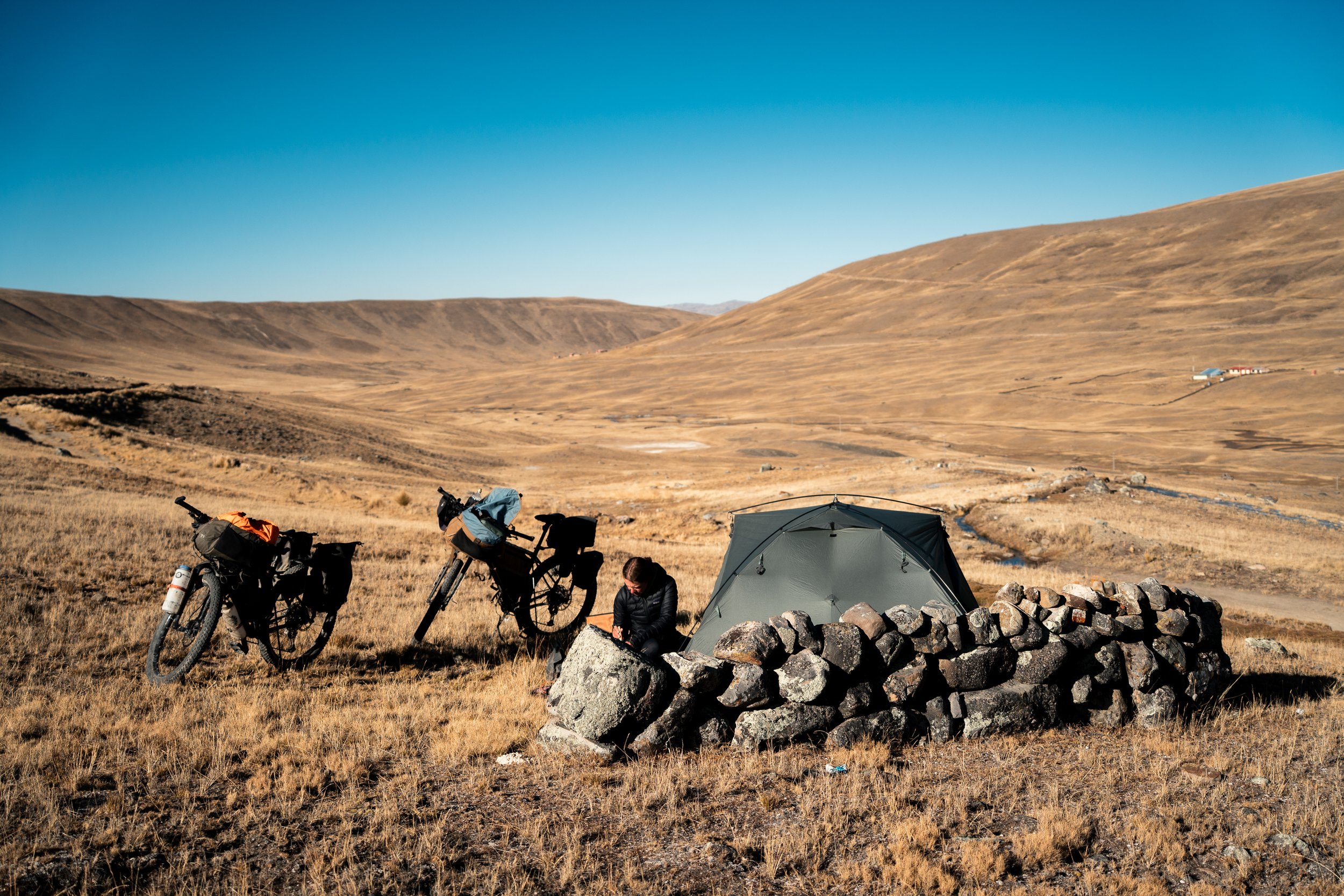
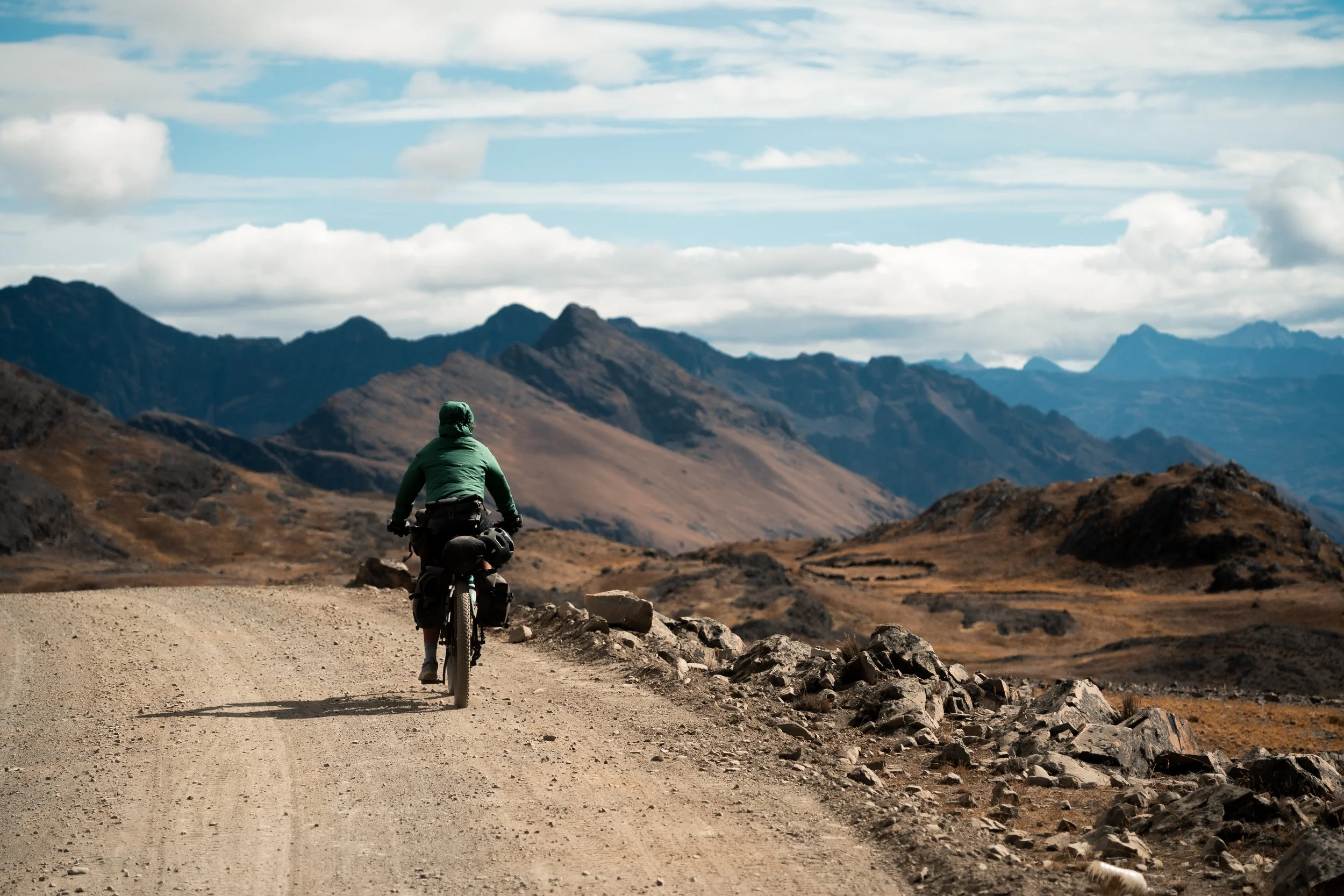
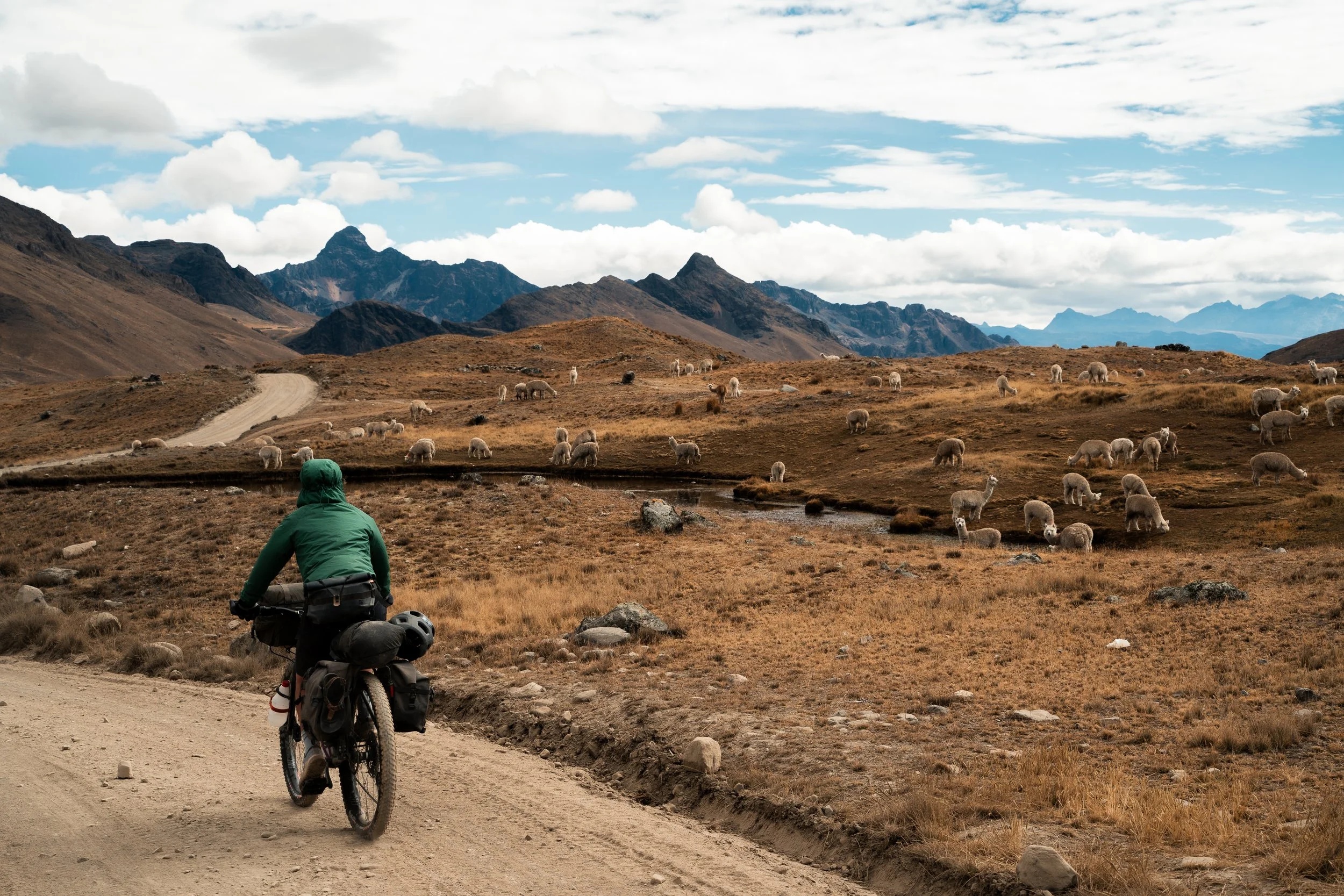
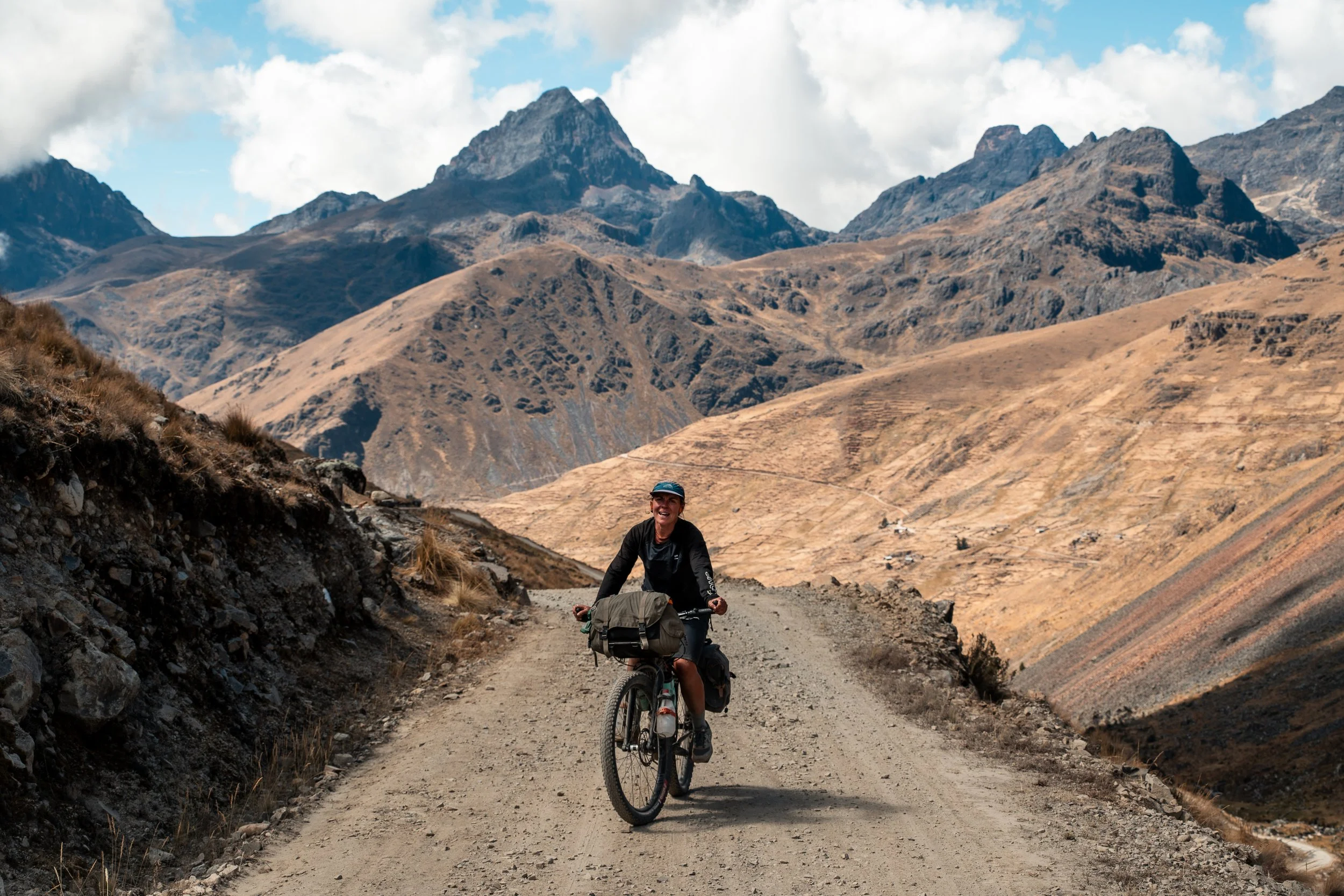
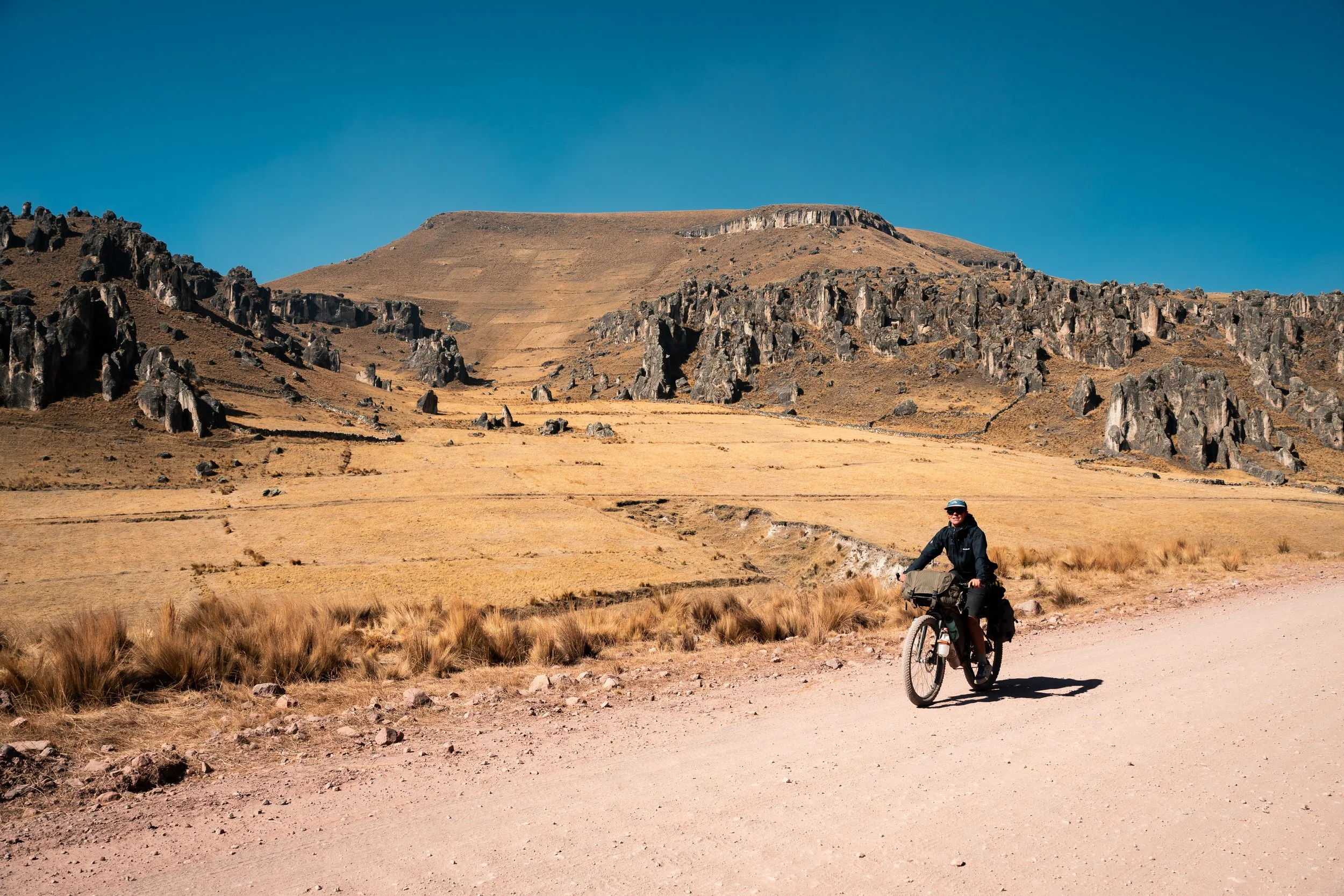
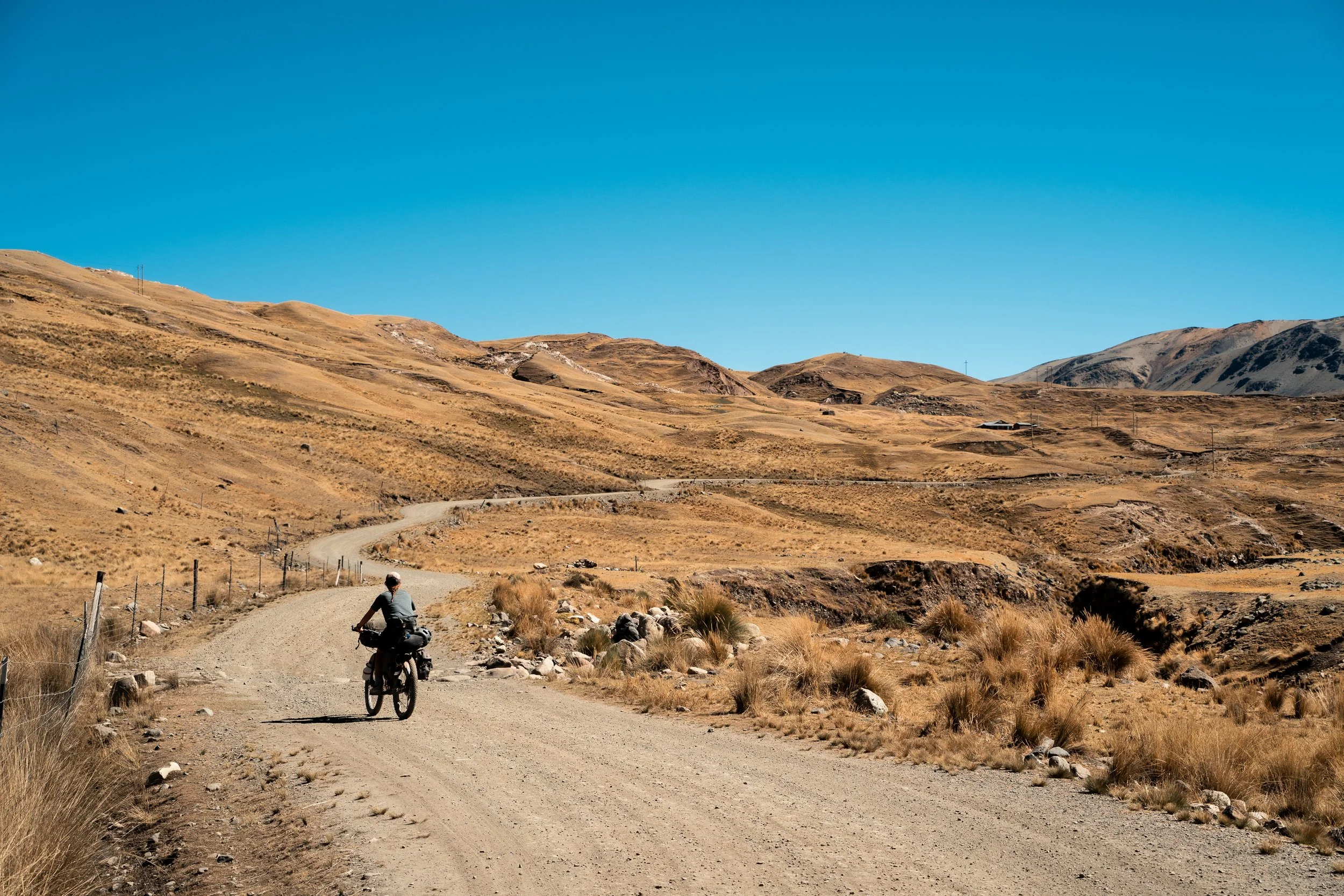
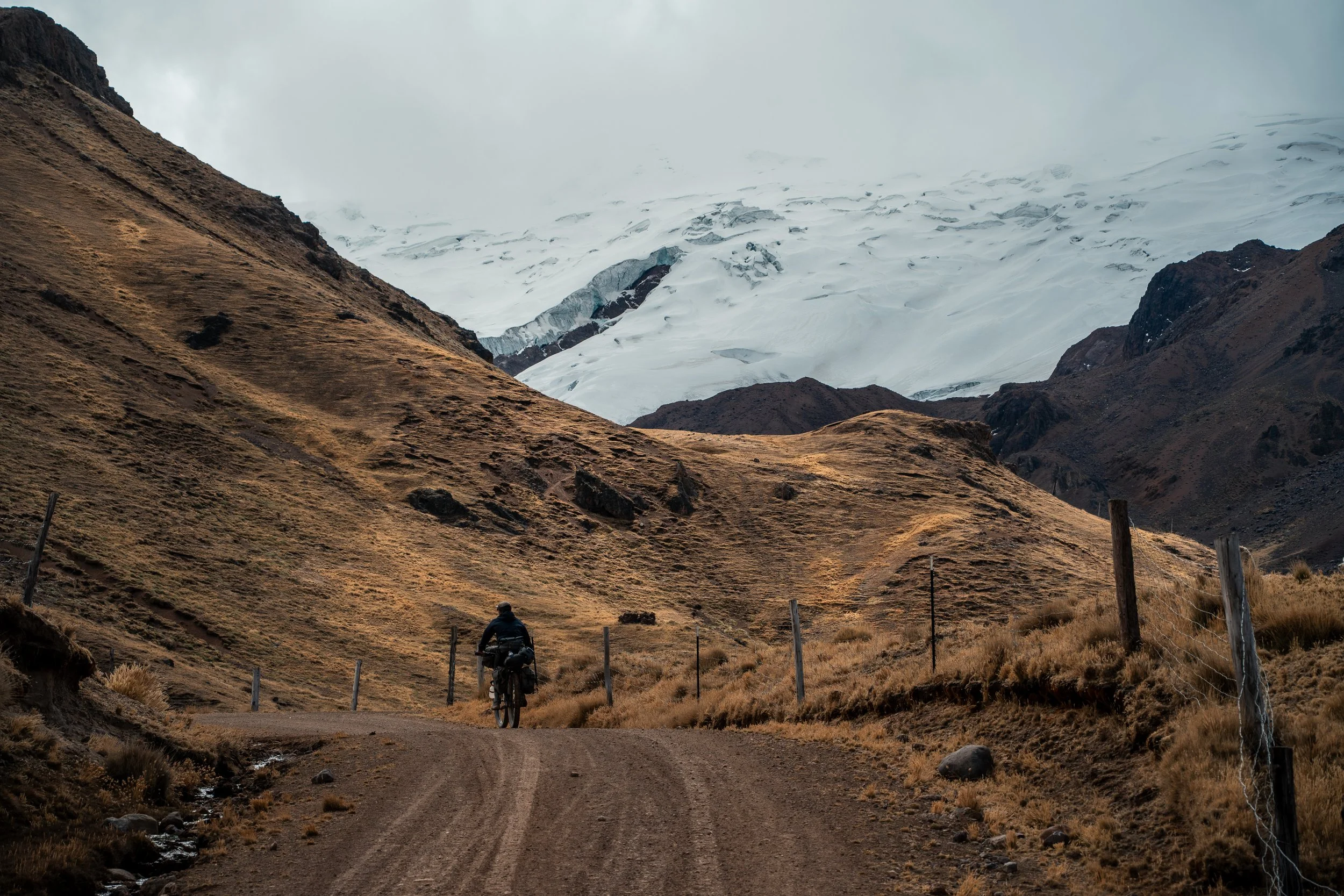
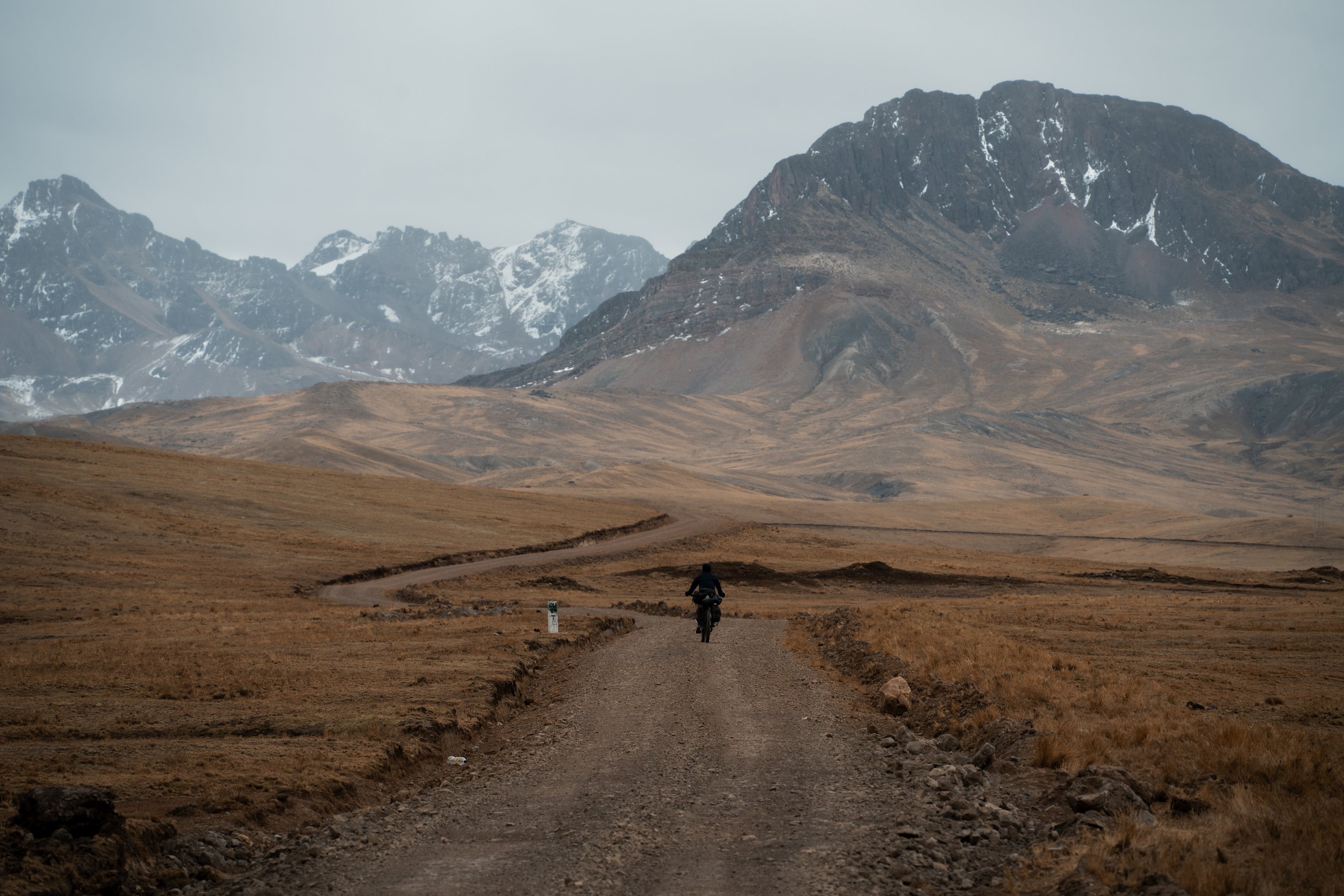
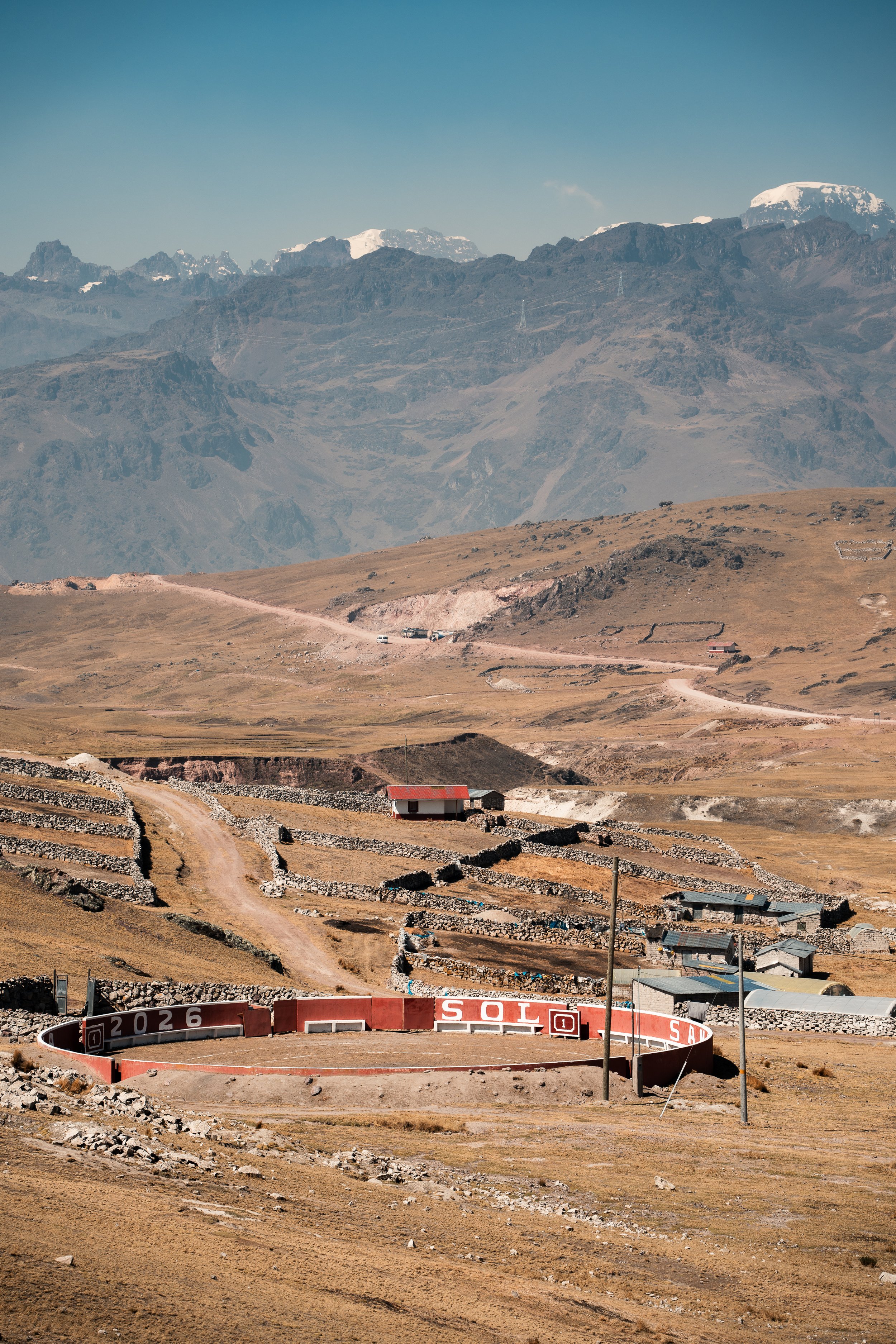
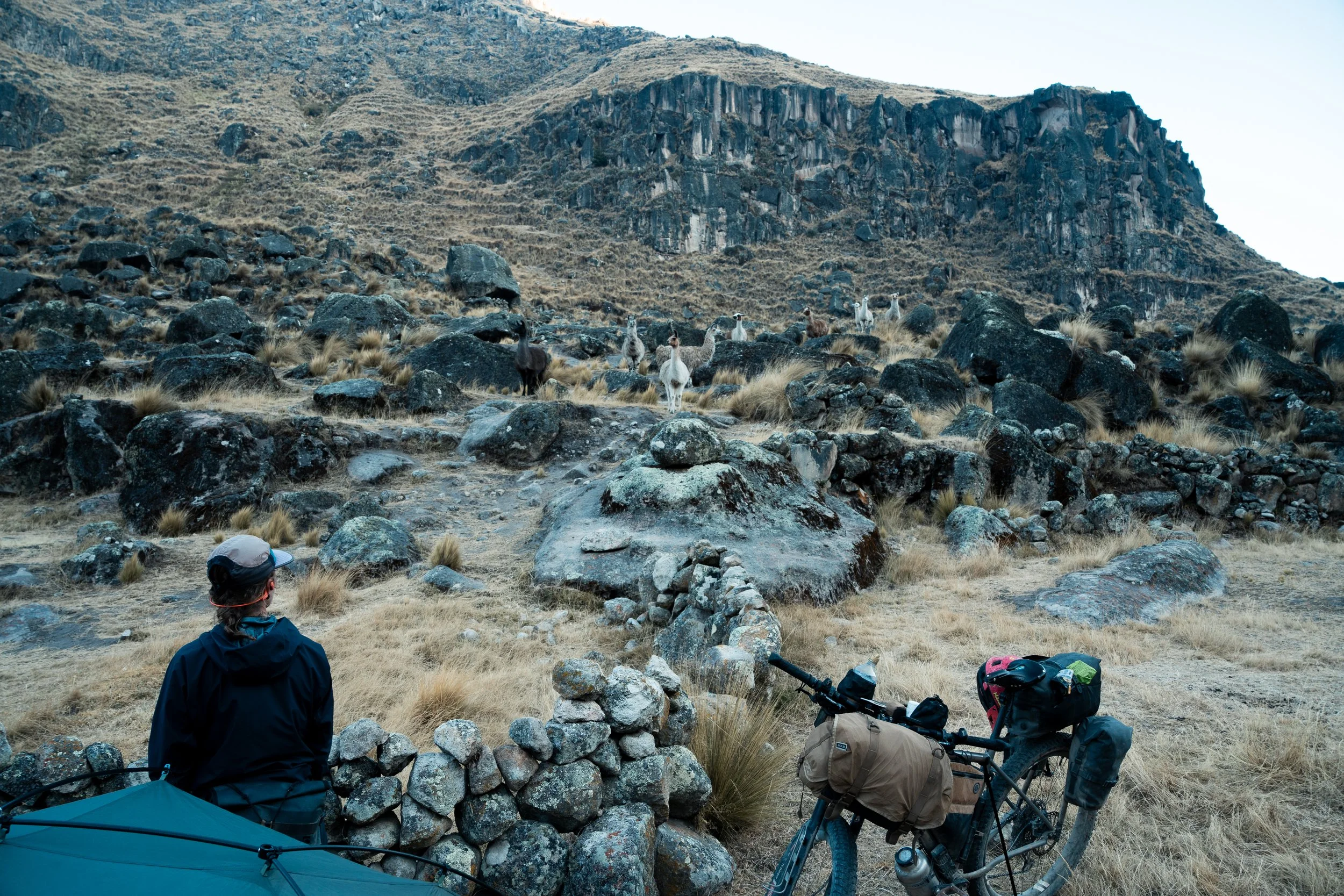
We quickly turned off the highway onto some dirt roads and jeep tracks that gradually ascended the tussock slopes. A few abandoned farms dotted the distance, but we did not have even an alpaca for company. Crossing the next highway, we were soon picking our way around a handful of small farms, as we descended and then climbed out of a gully, rough rocks forming the road. The setting sun cast a beautiful light, as we left the farms behind to traverse over some ridges. We had hoped to get into a large valley and camp at the head, but a slow morning ride meant we were running out of time, just as the evening headwinds came up. Deciding we wouldn’t make it, we pitched our tent behind a small stone wall for the barest of protection.
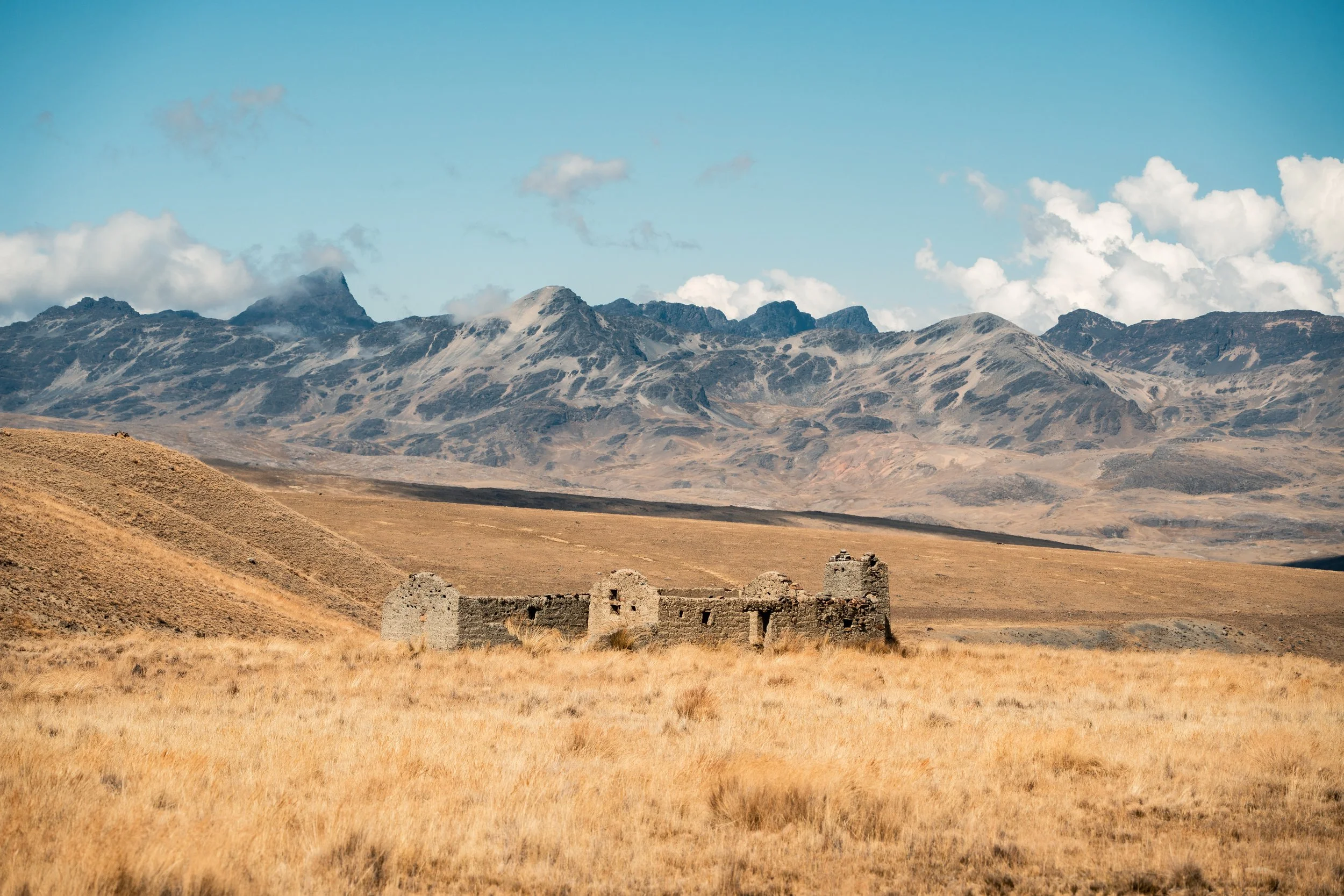
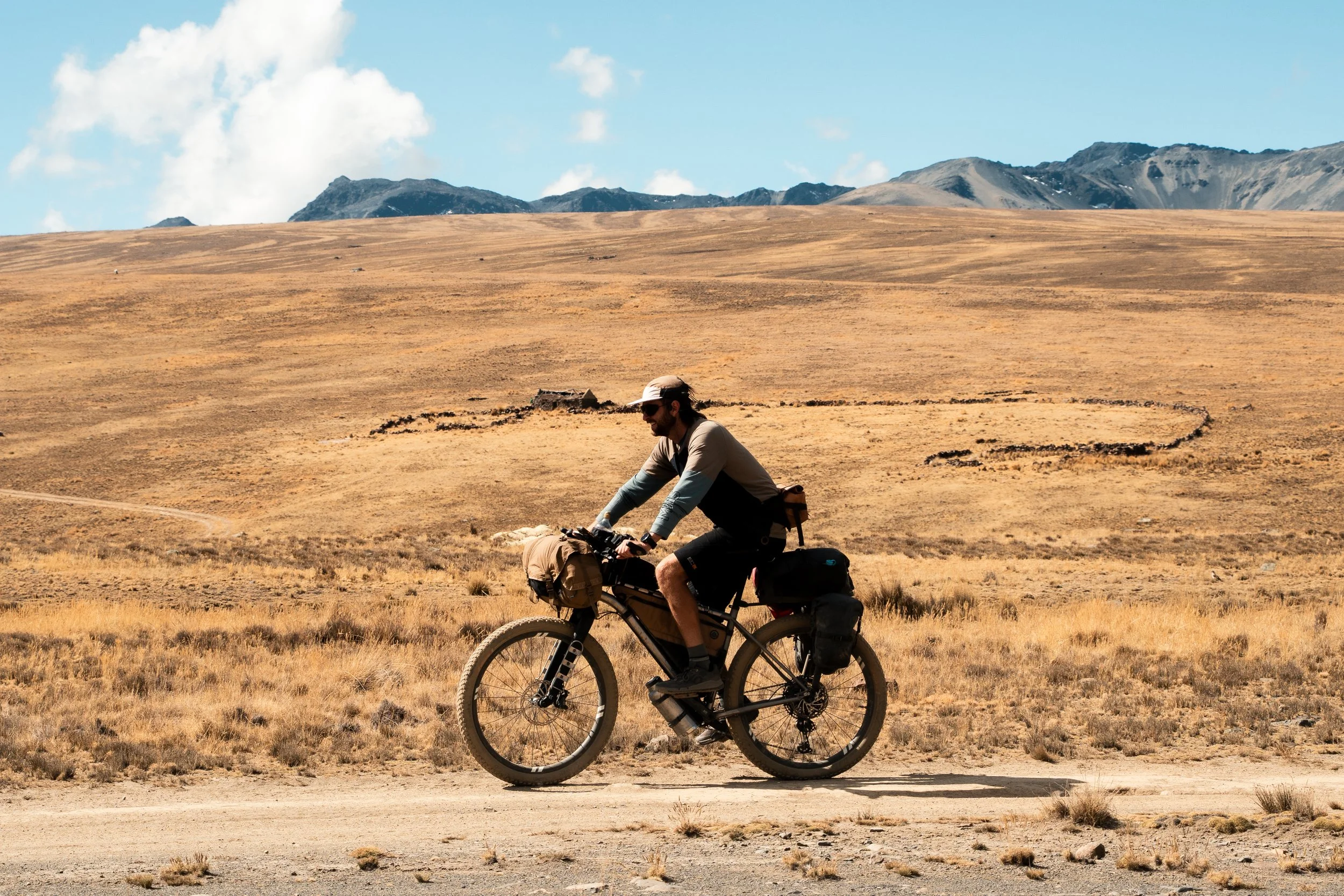
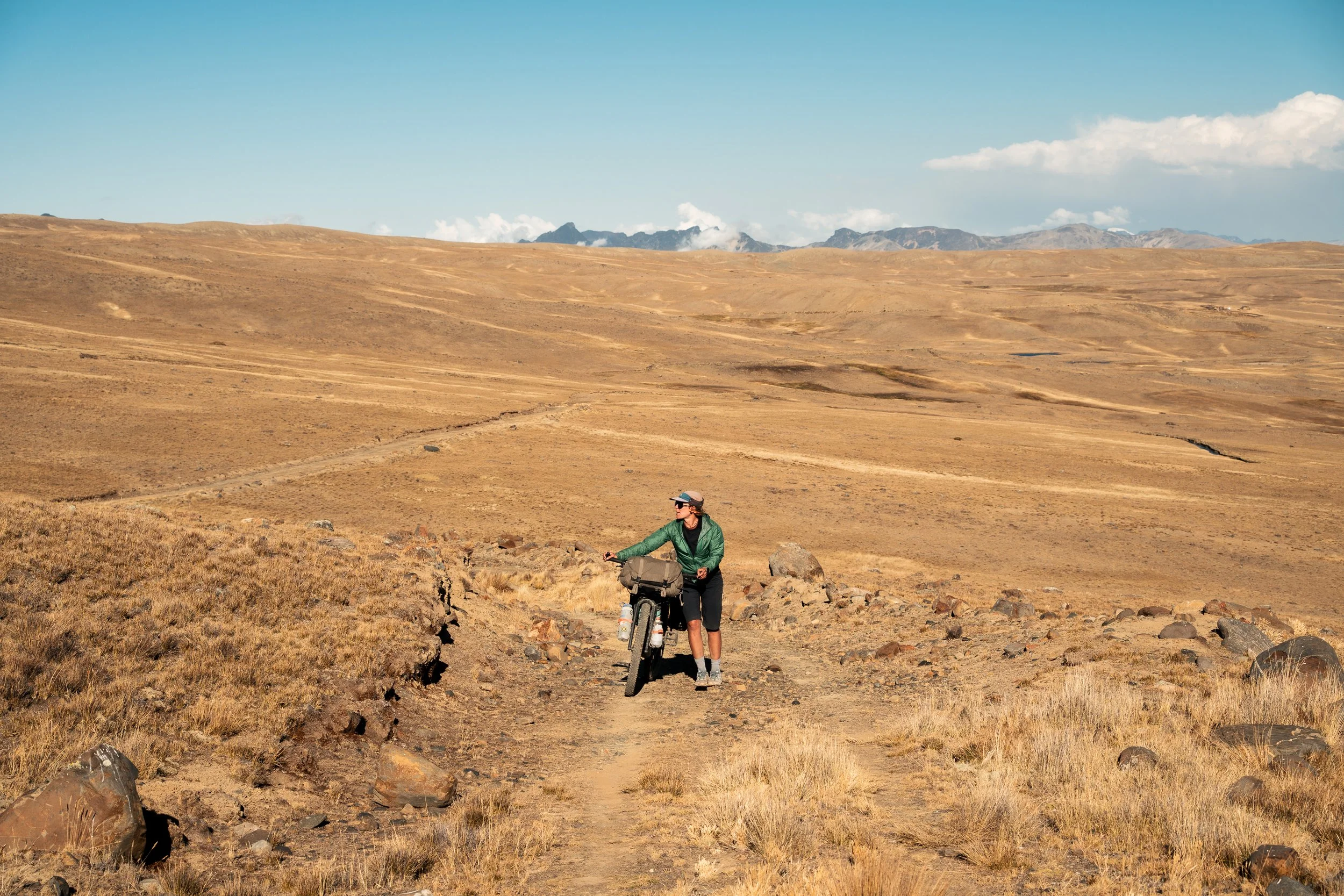
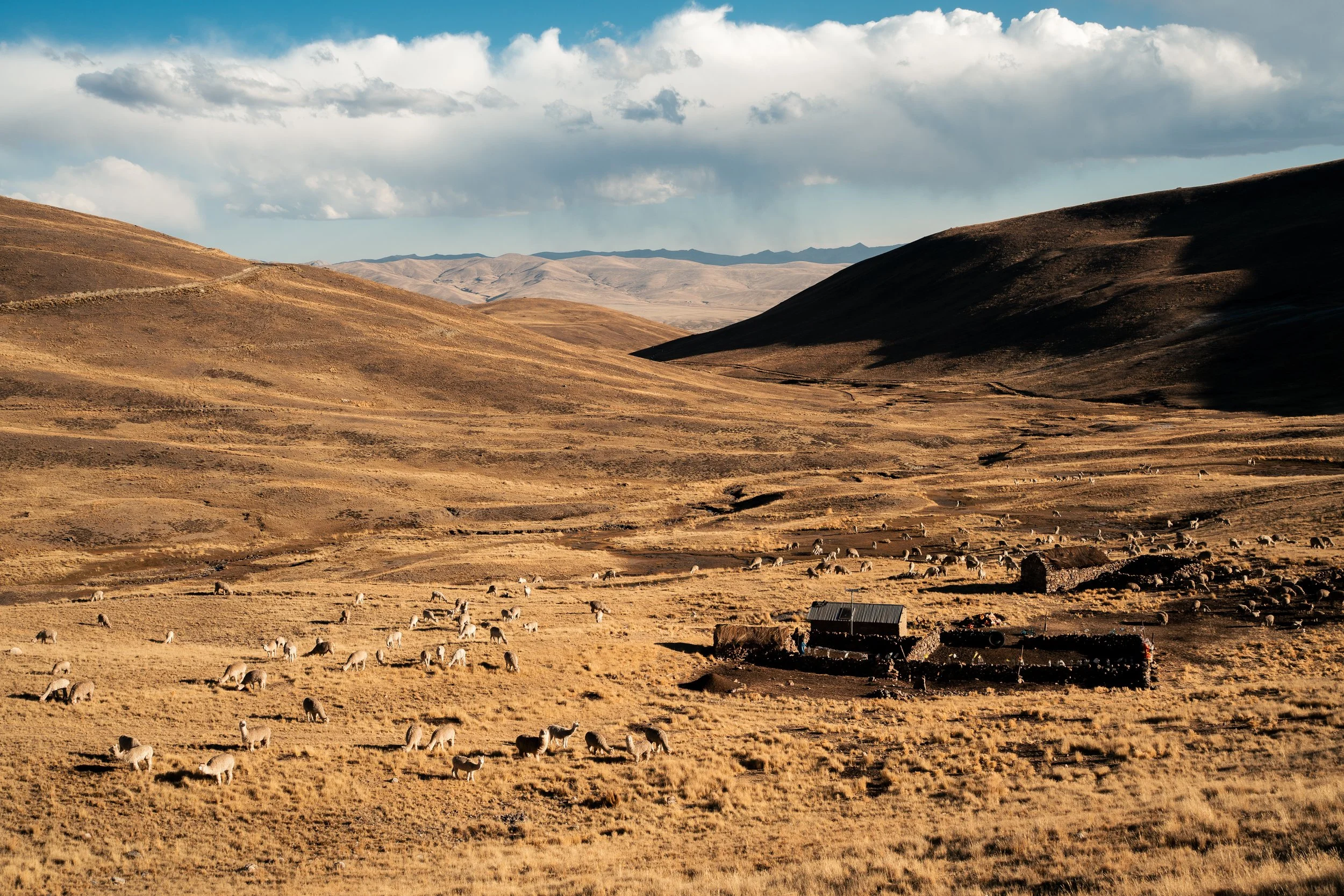
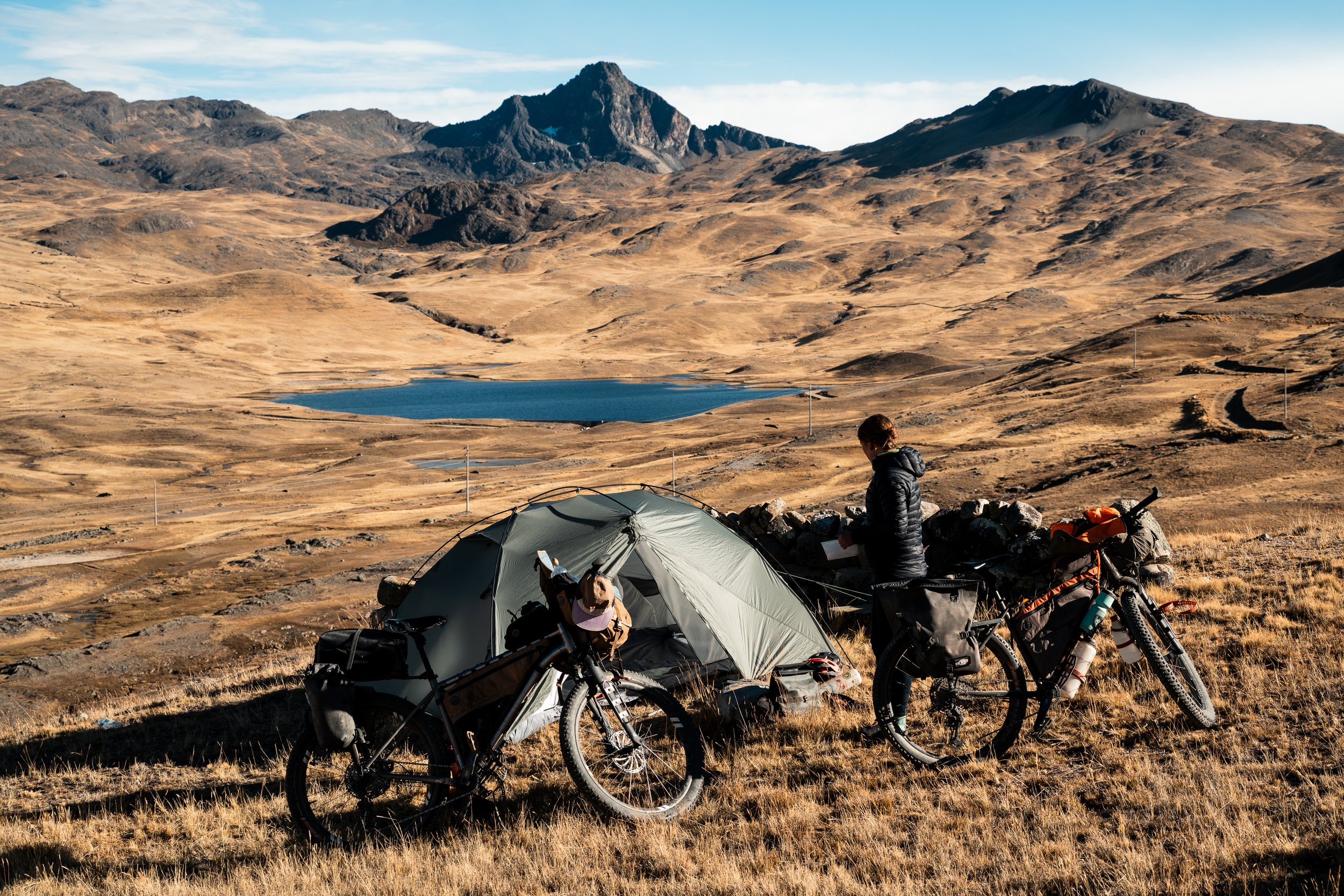
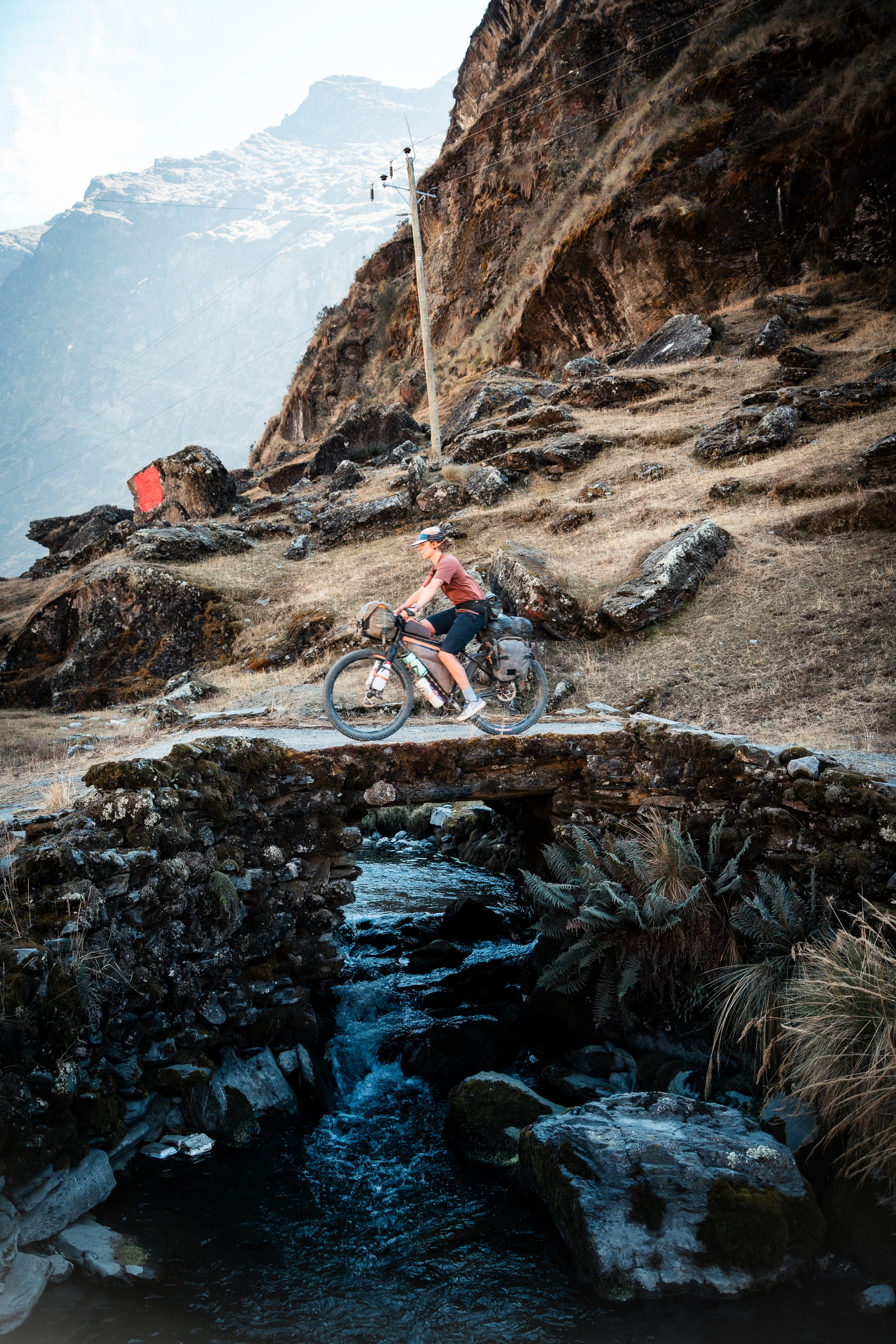
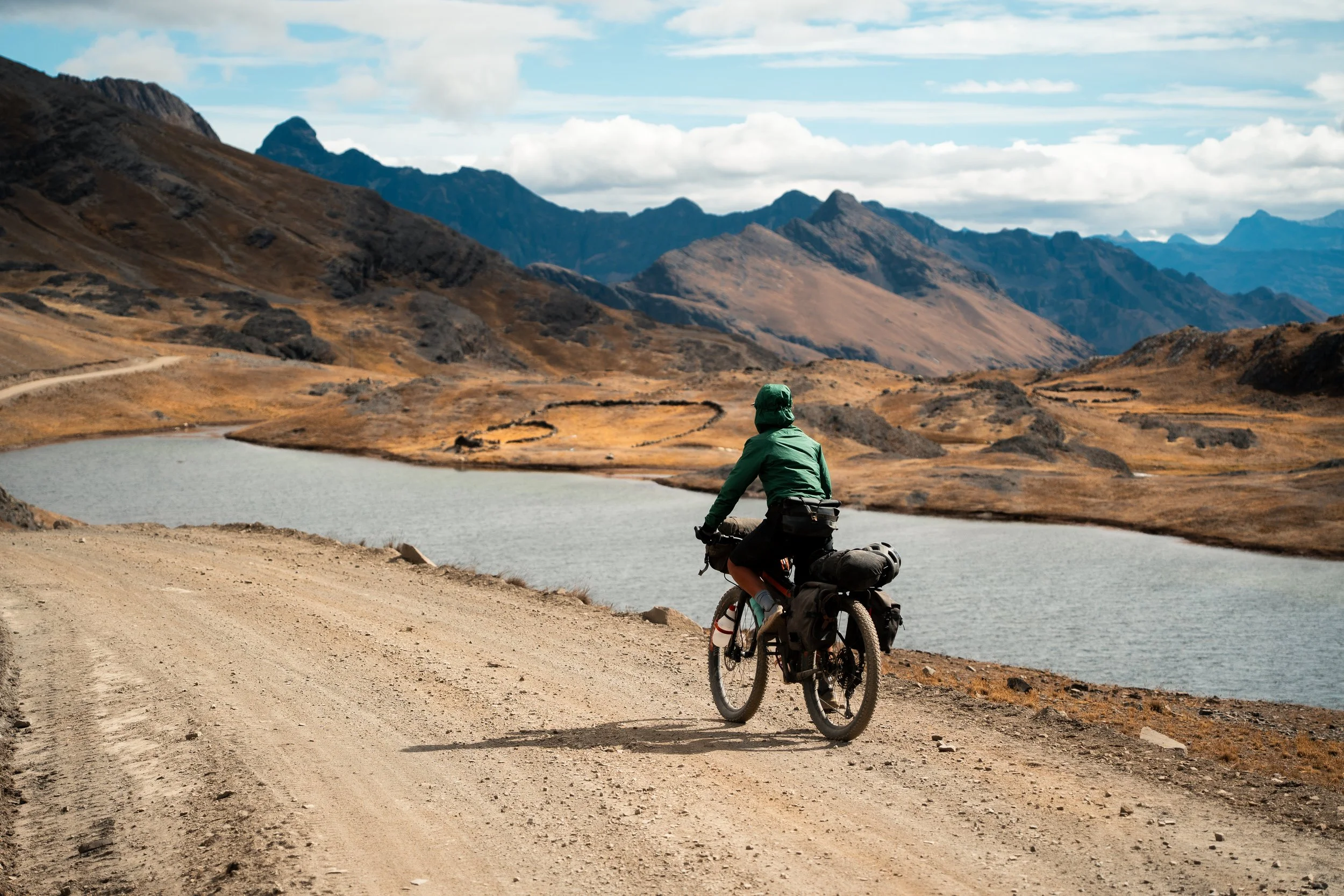
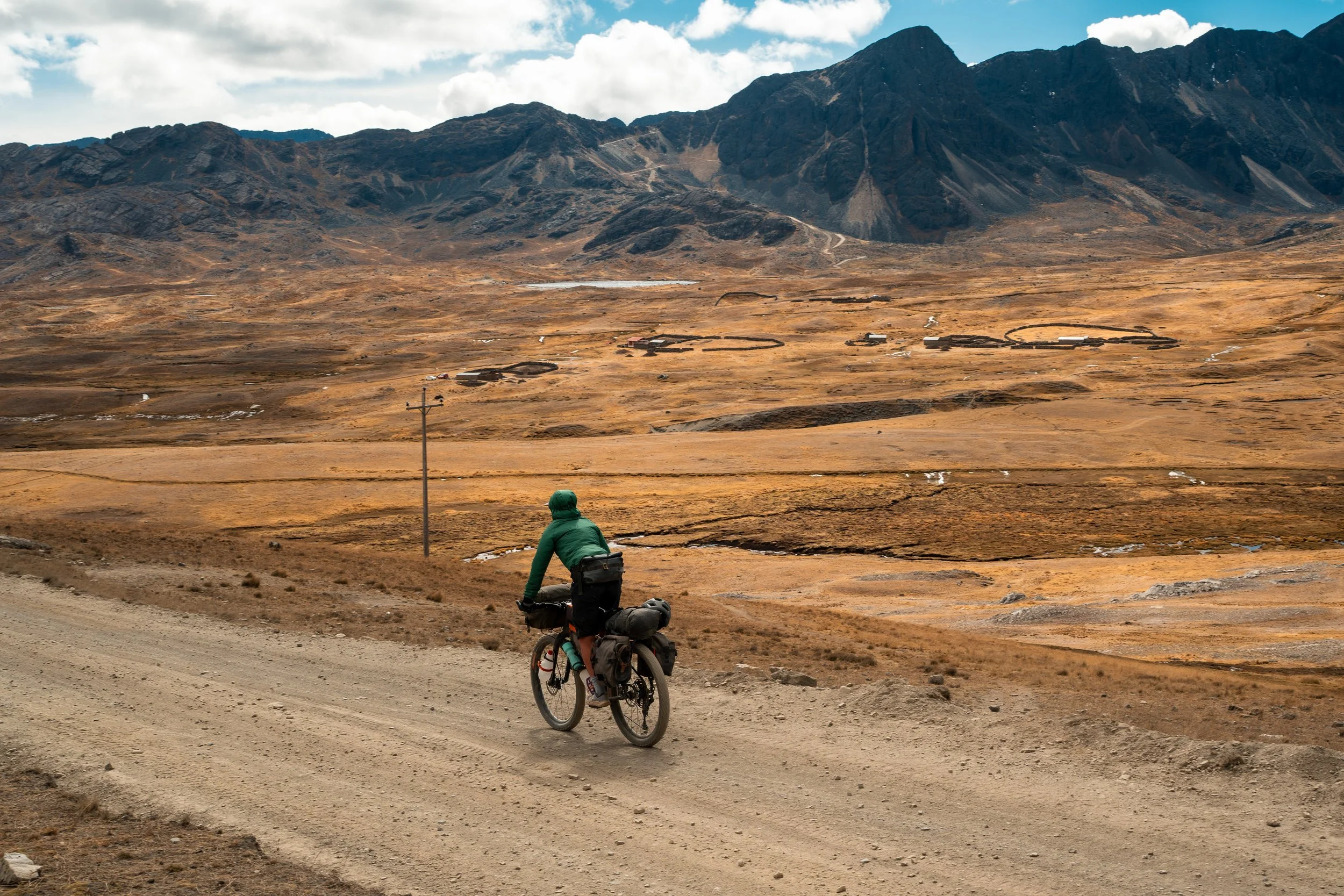
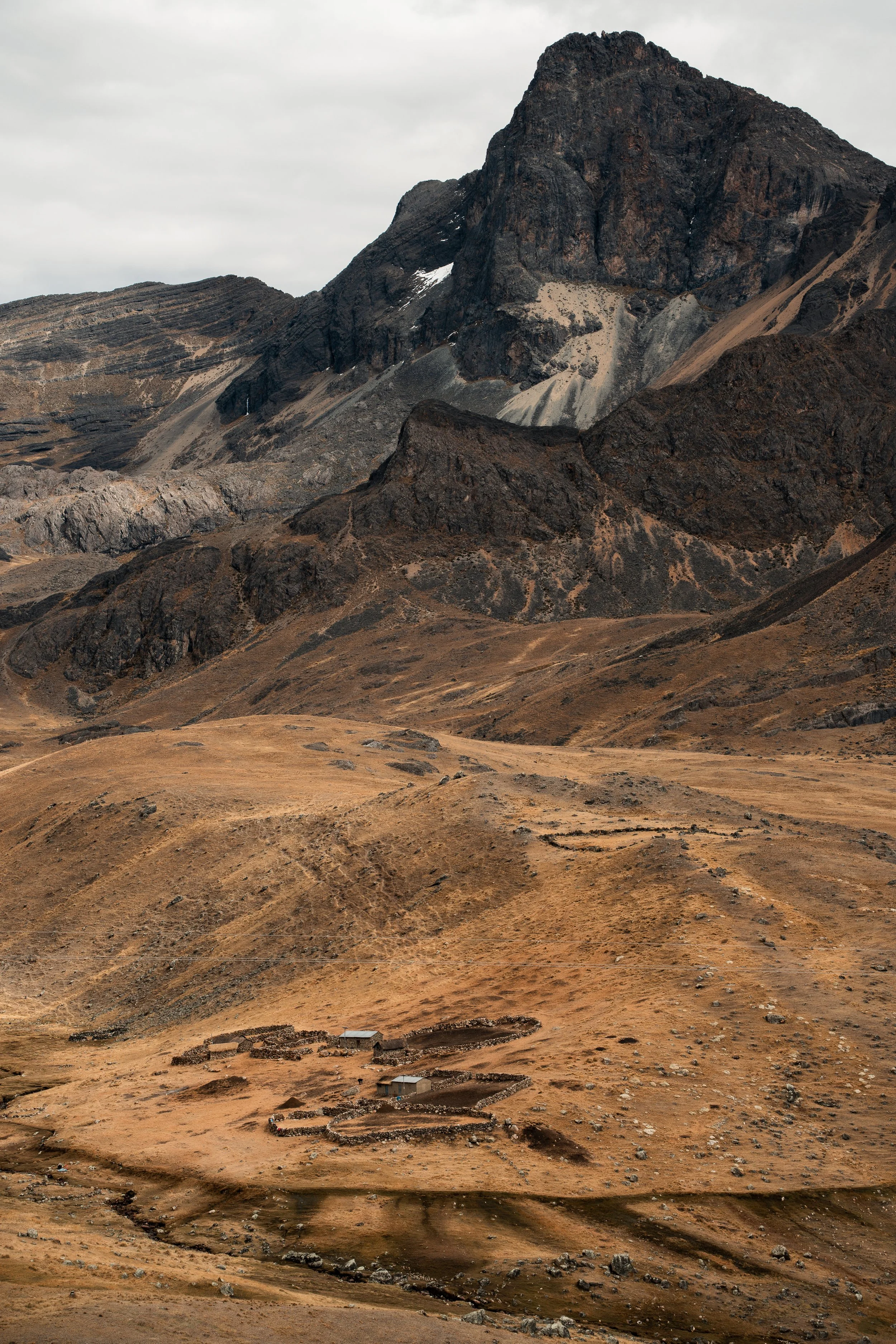
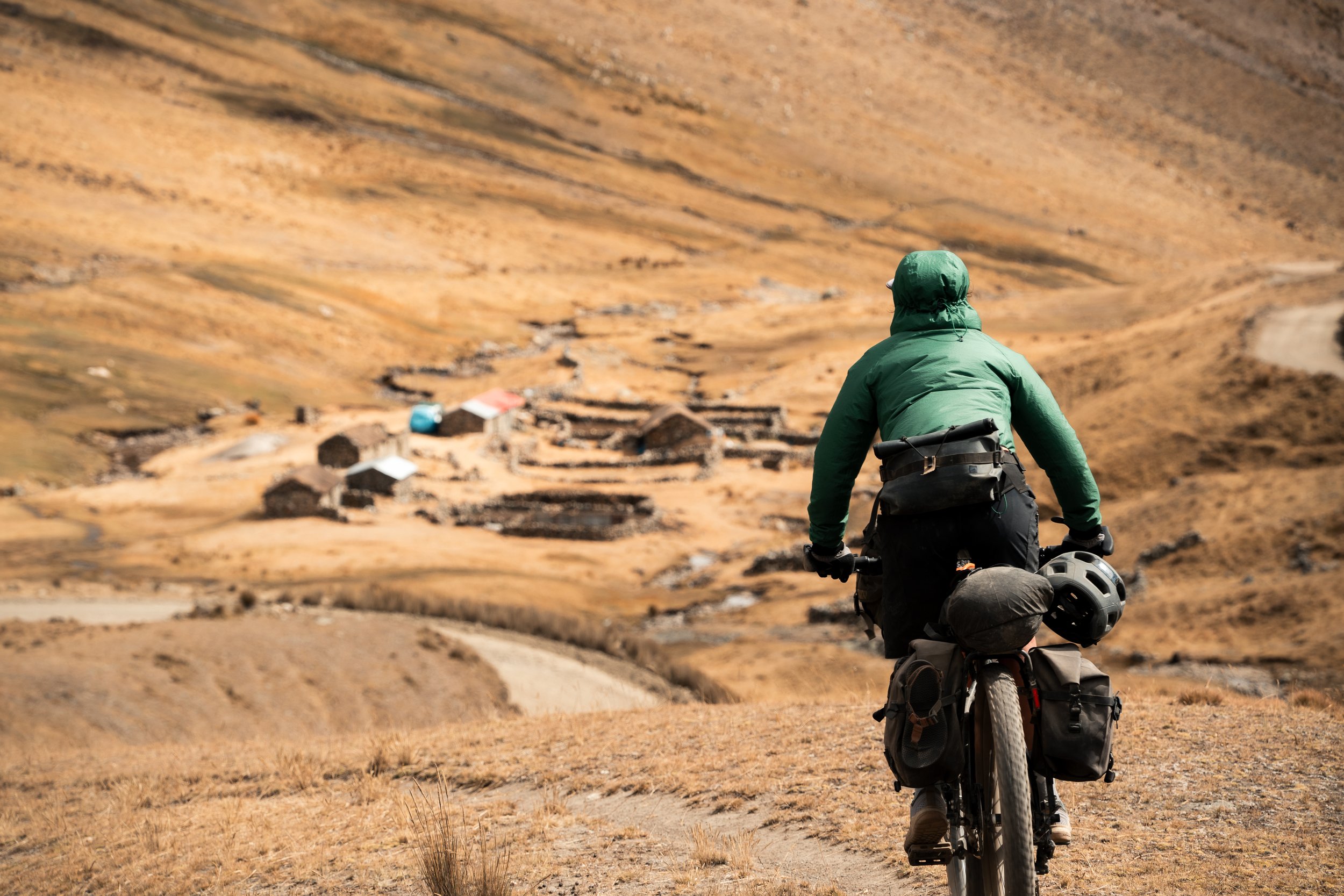
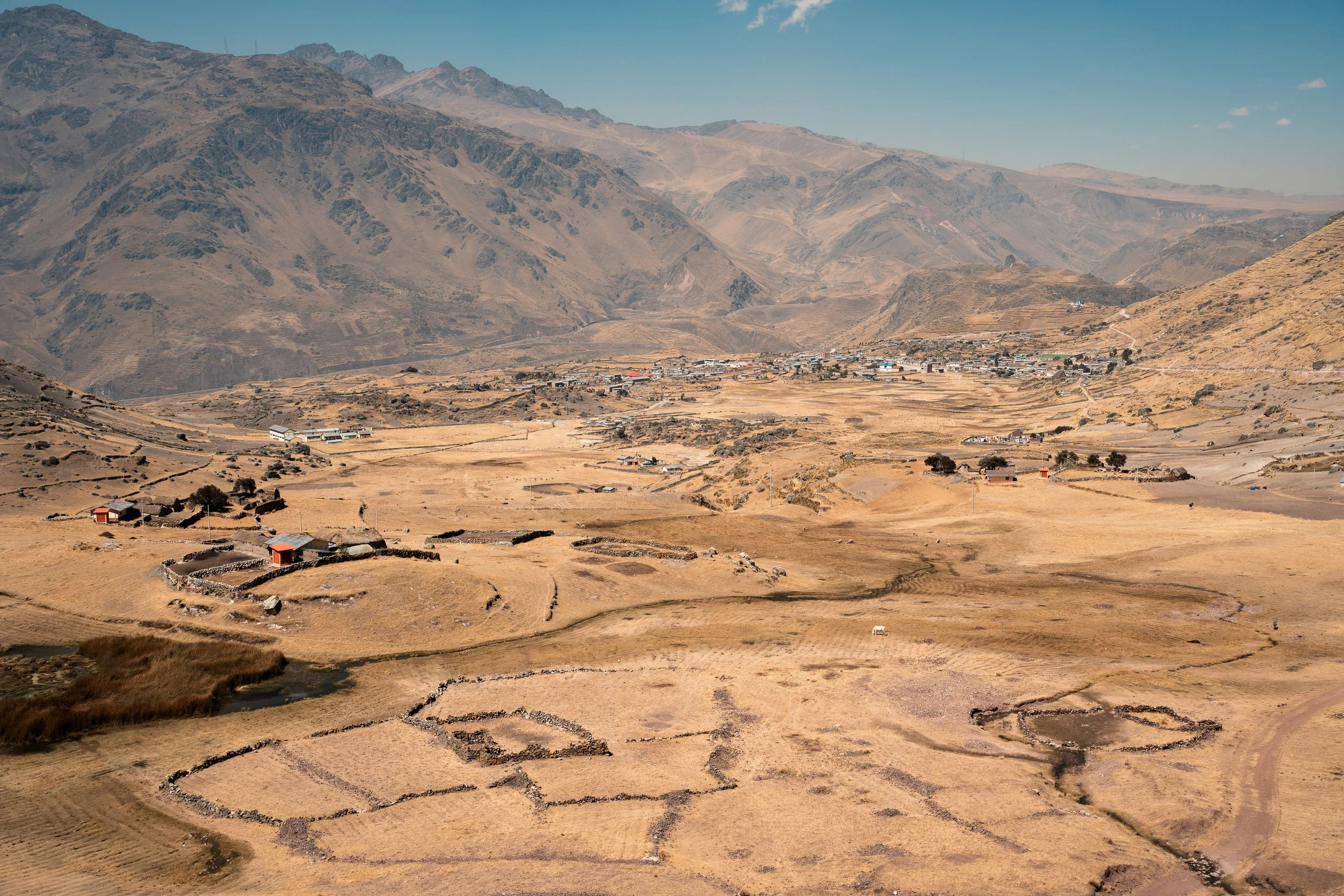
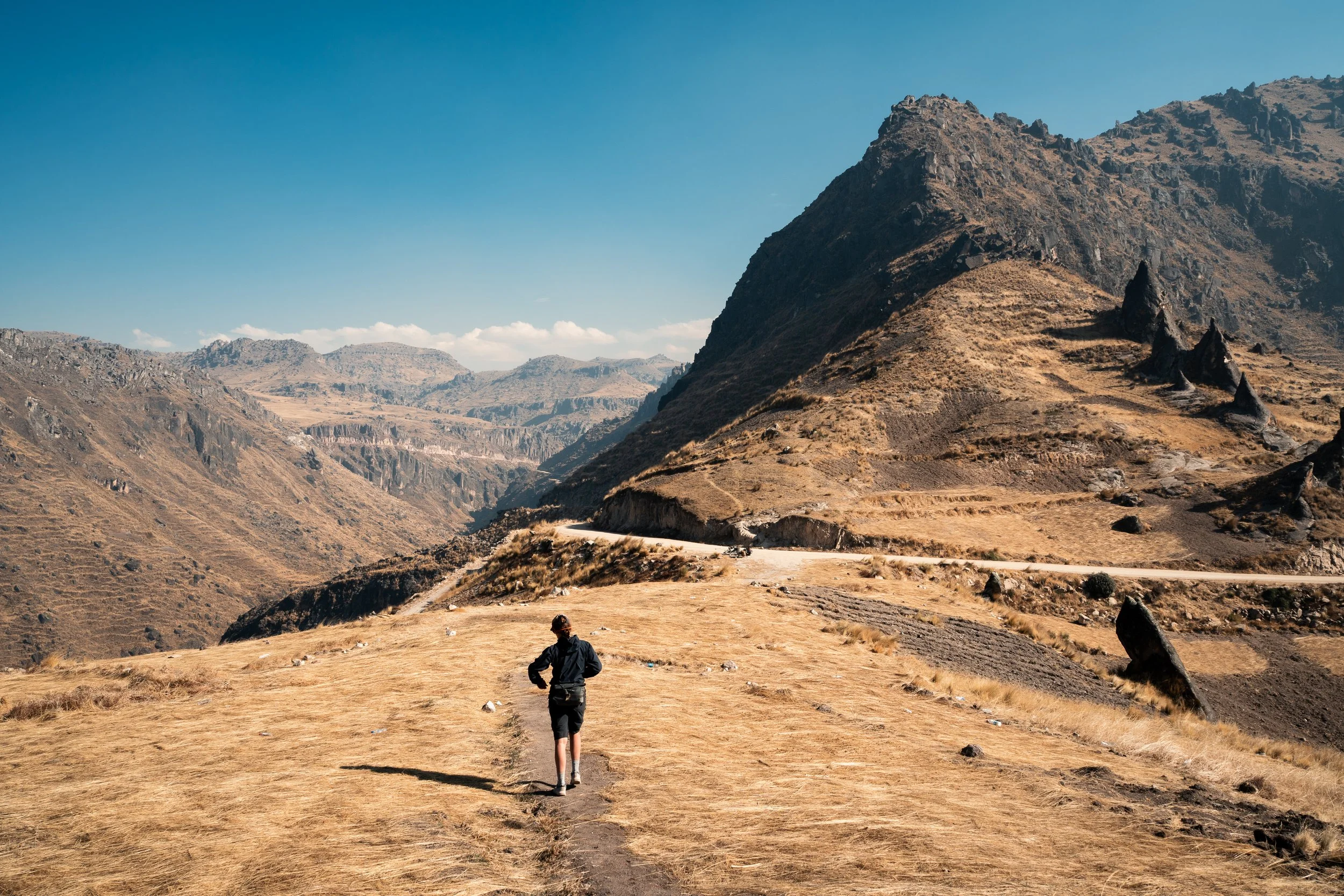
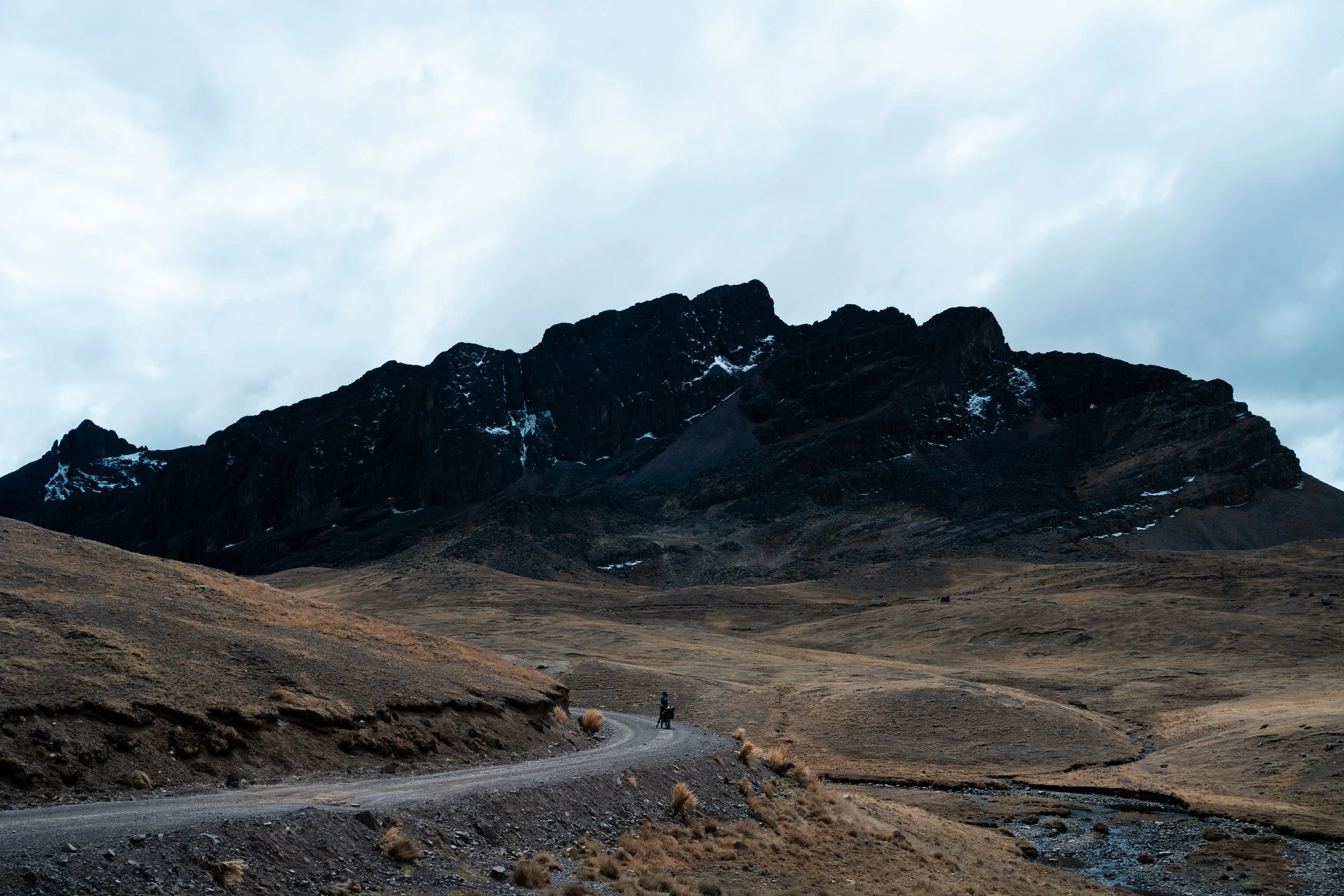
It was a bad night, as Lauren had fevers and rigors and hardly slept. She was too nauseous to make much of breakfast beyond a coffee. We packed the tent, and made plans. We were offered an amazing beautiful valley on a small detour, if we climb a small pass. The only issue was the 900m return climb up a side valley. The alternate was to take a road not far from our camp that would likely lead directly downhill to Crucero, the nearest town we could recuperate. We decided to climb the small pass and assess the valley from the top before making a decision. Unfortunately for us, the valley was one of the most beautiful we had seen all trip. Wide open at the top, dotted with stone farms, and amazing light through scattered clouds. We went for it, and enjoyed every moment of the descent.
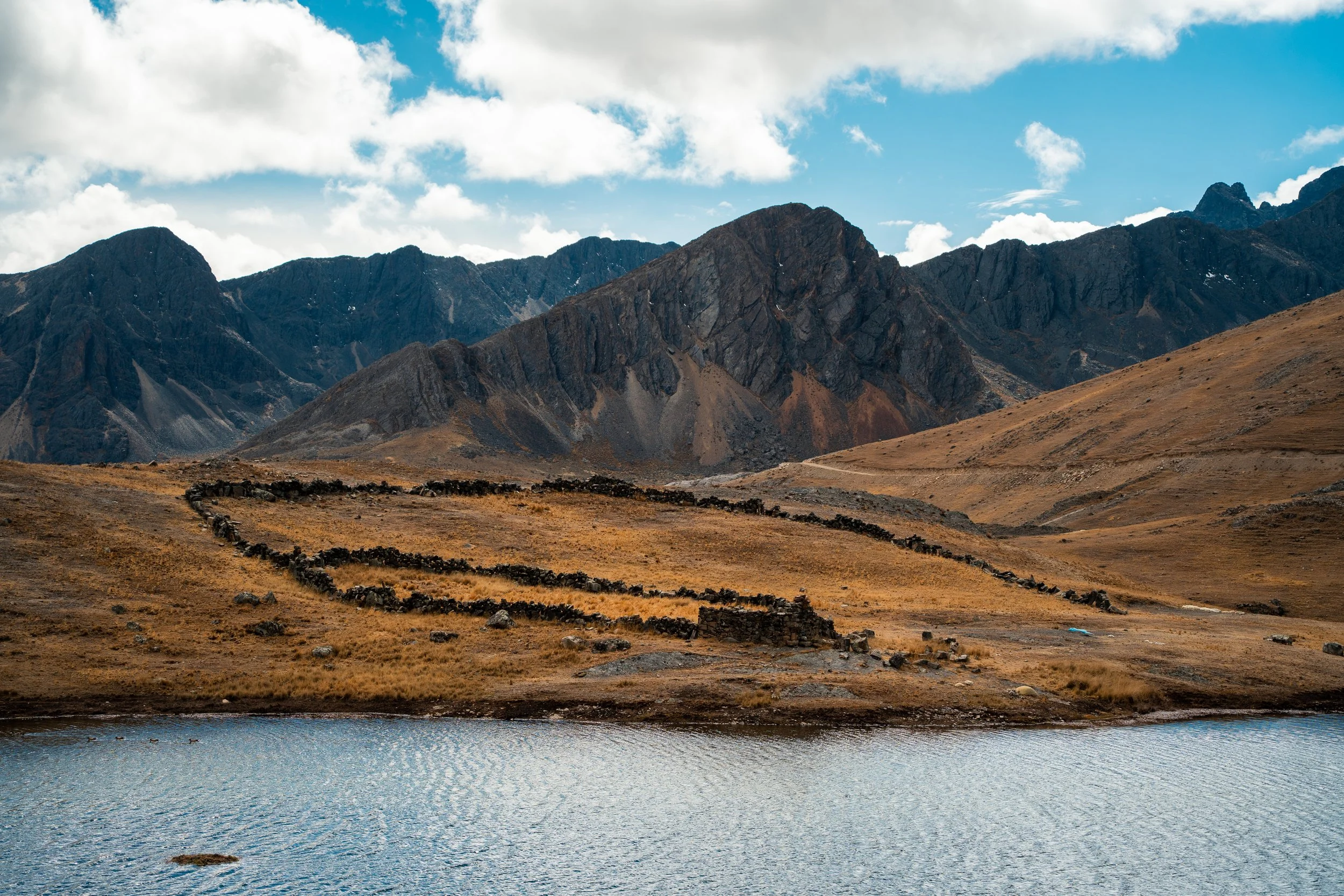
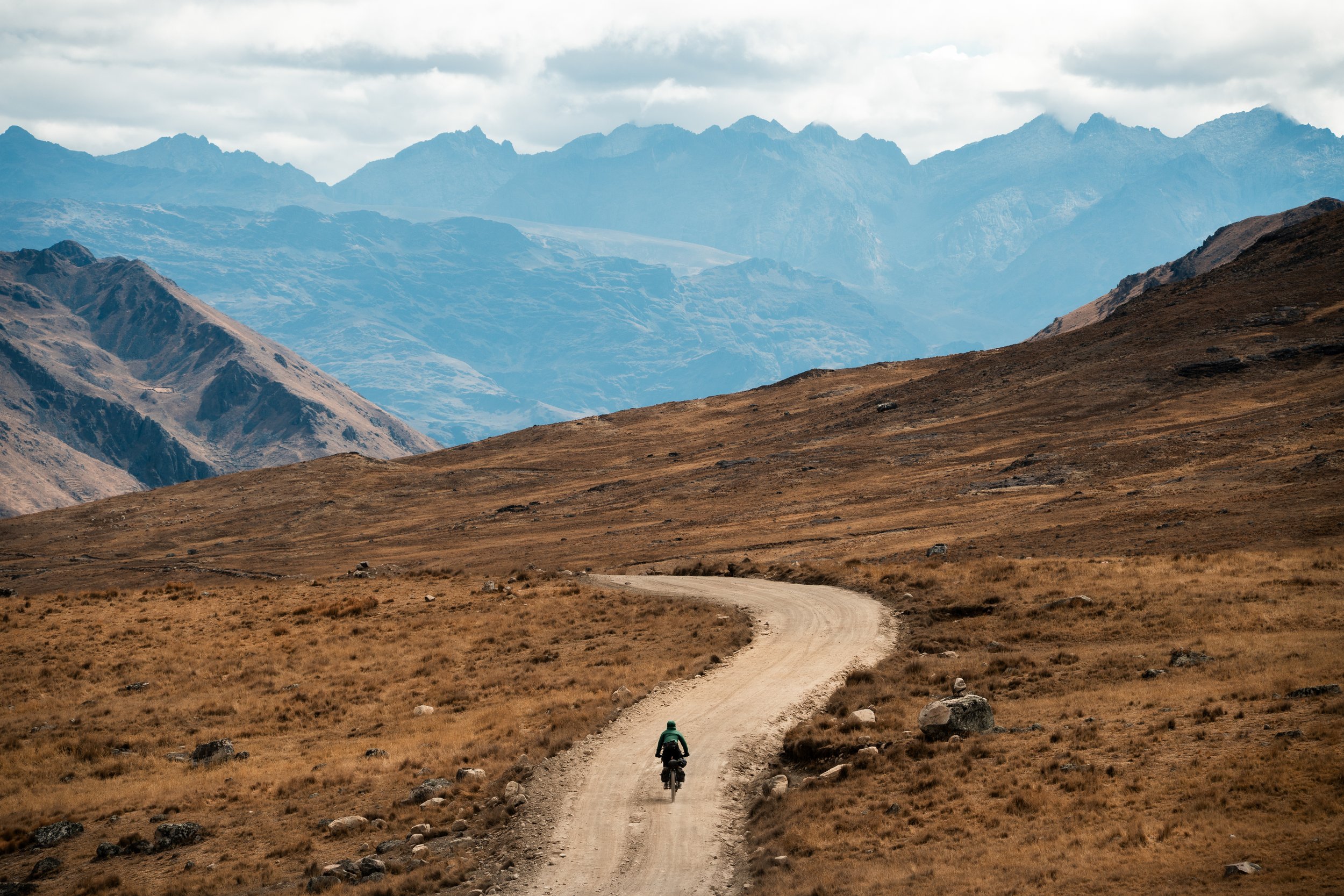
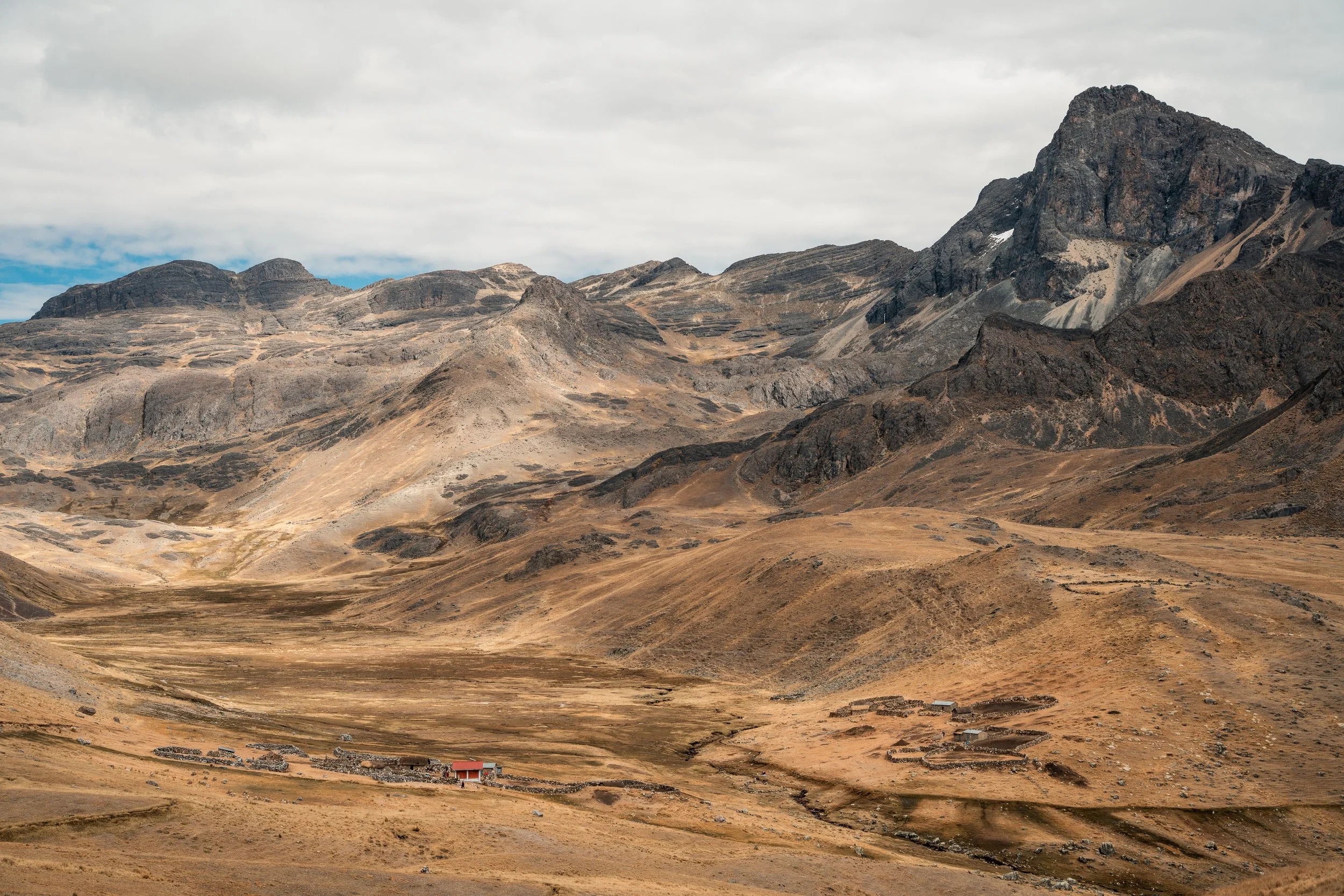
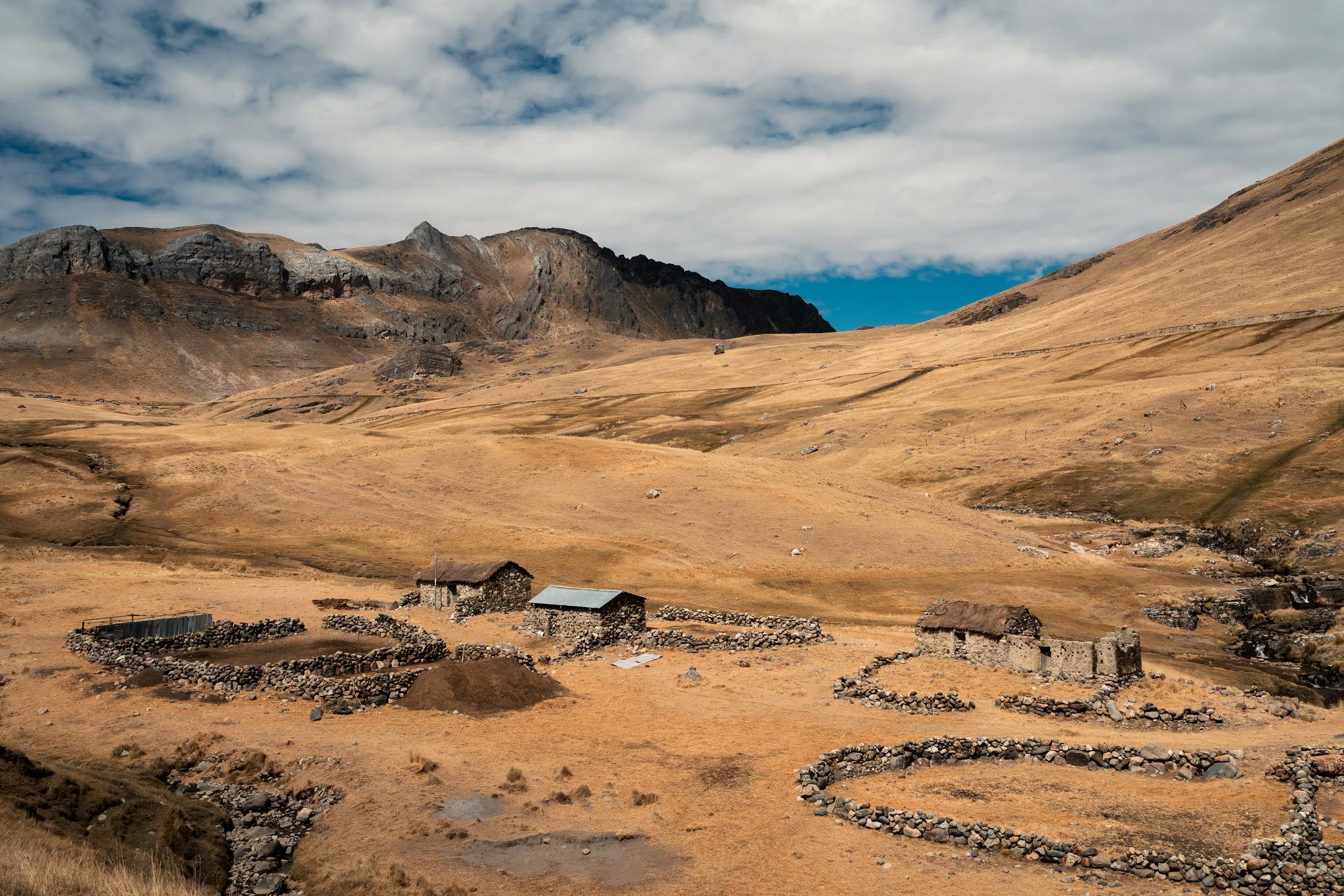
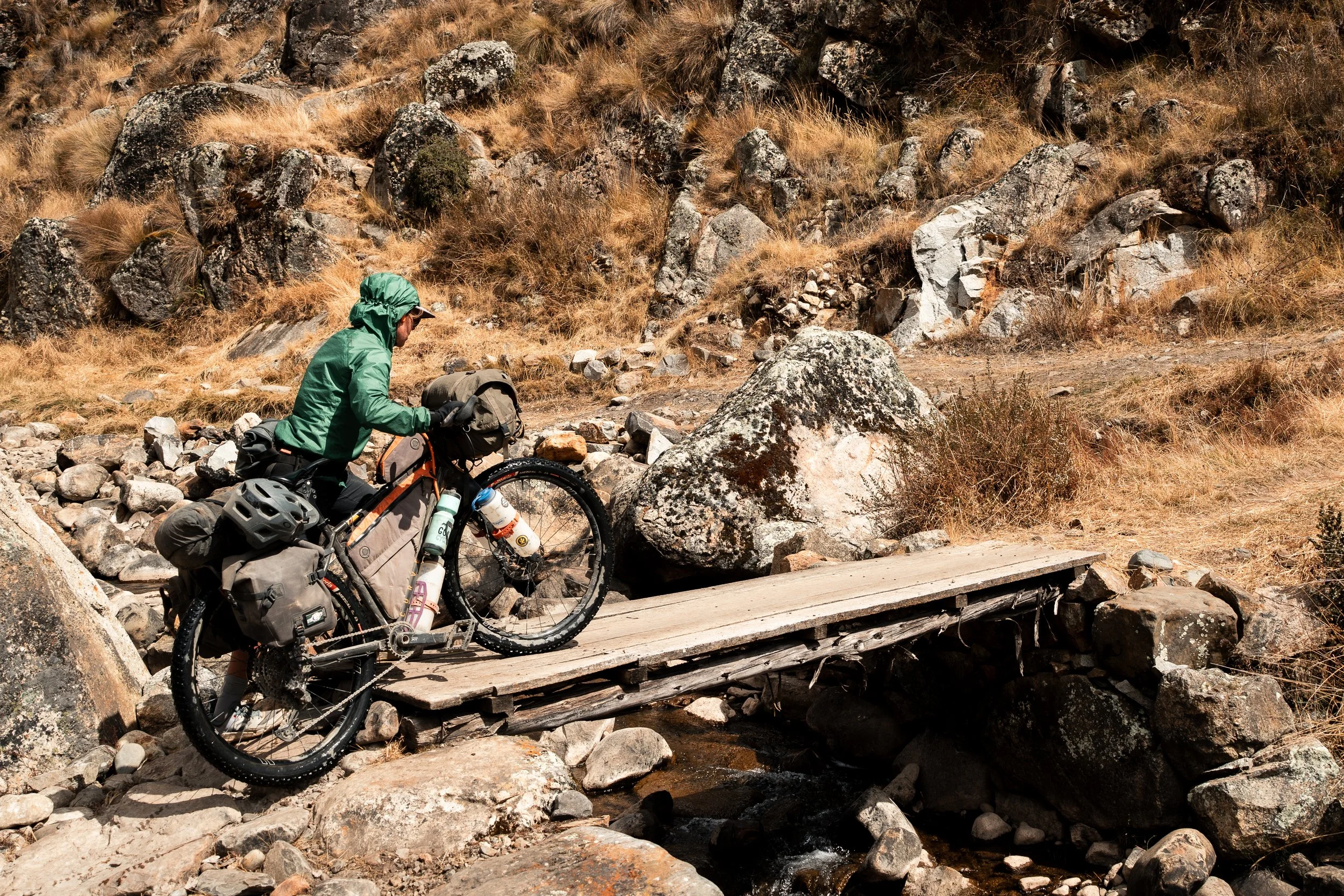
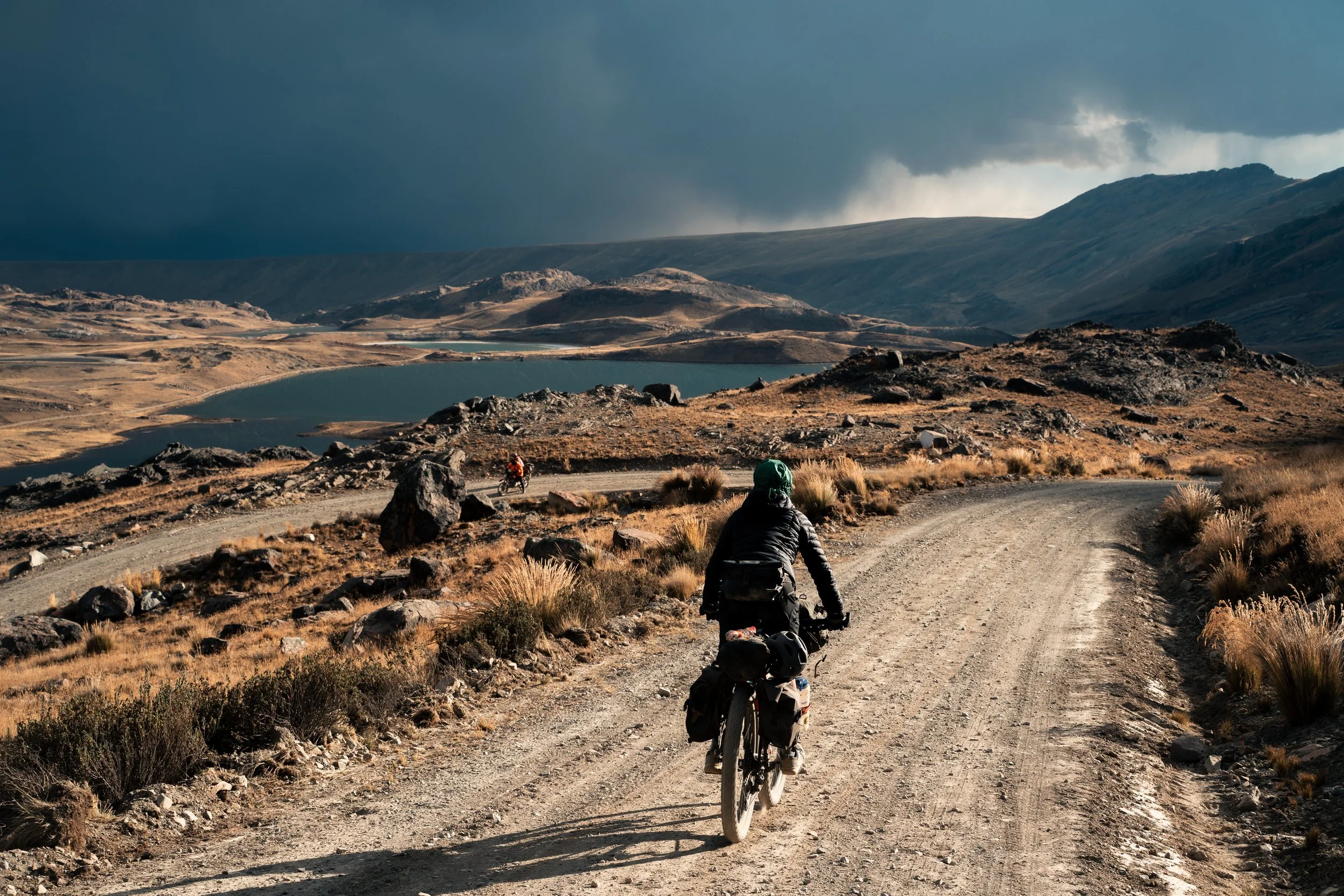
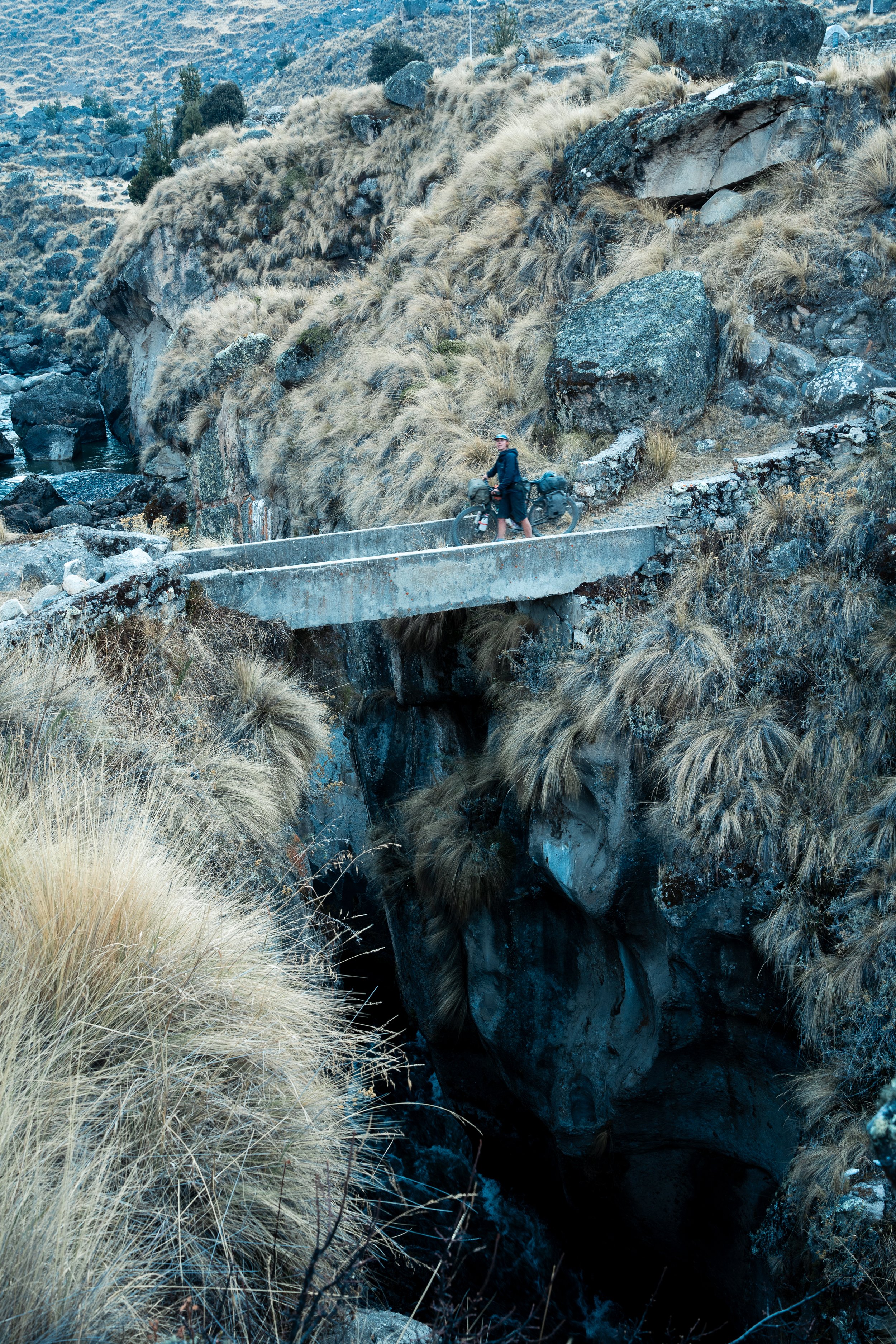
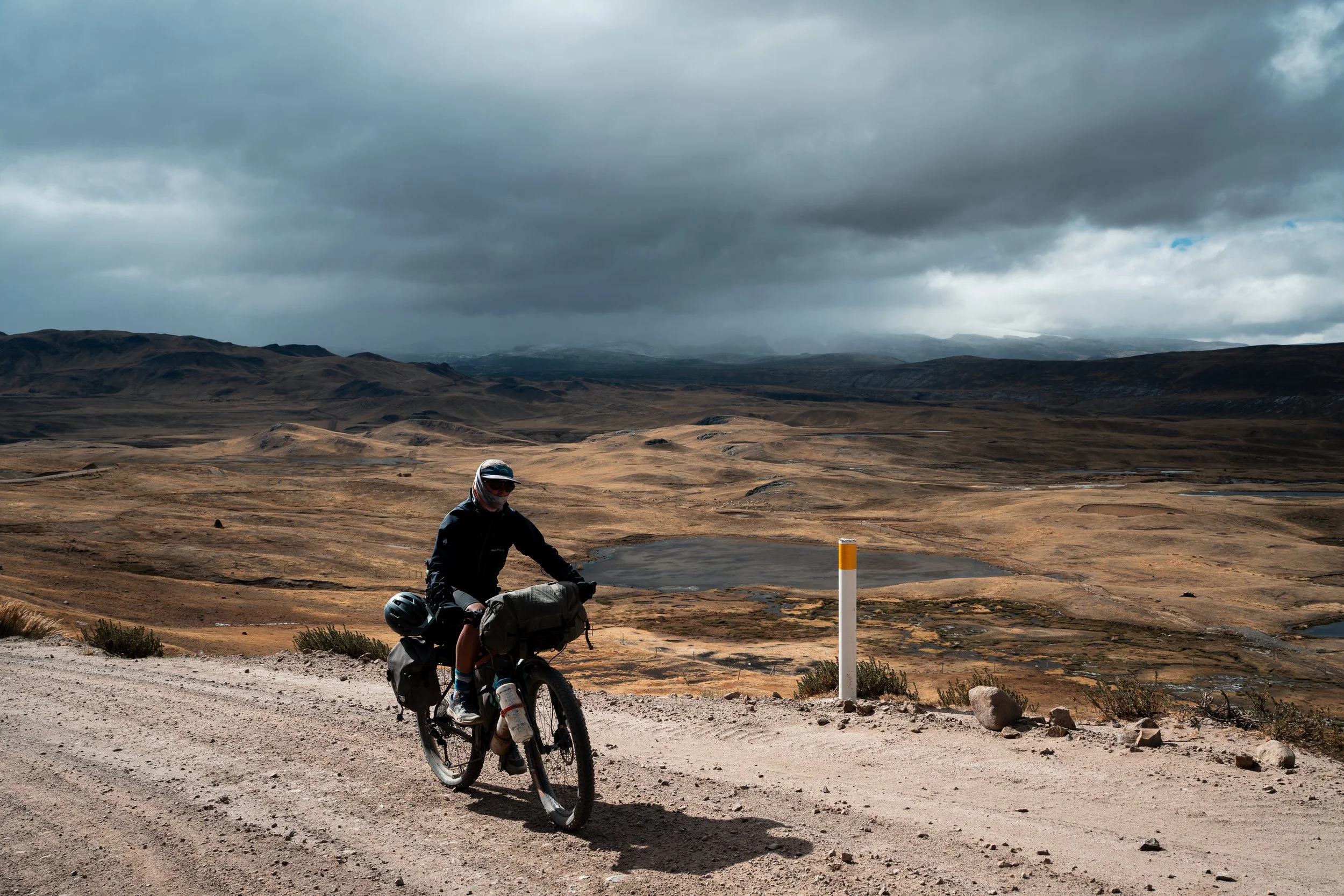
The problems arose on the climb out, as we were both too unwell to cycle our bike, and Lauren could barely push hers. The 13km climb out took us nearly 5 hours, as we just managed to avoid cloud that was quickly floating up the valley. The outlook from the pass at the top was bleak, as dark clouds covered the distance. We made it only a few kilometres before the first drops of rain started, and we put our rain gear on, for only the first time since Palca - only a few days into our trip and over 3 months prior. We quickly descended through the mix of hail and rain, before emerging from the weather and mountains just before Crucero.
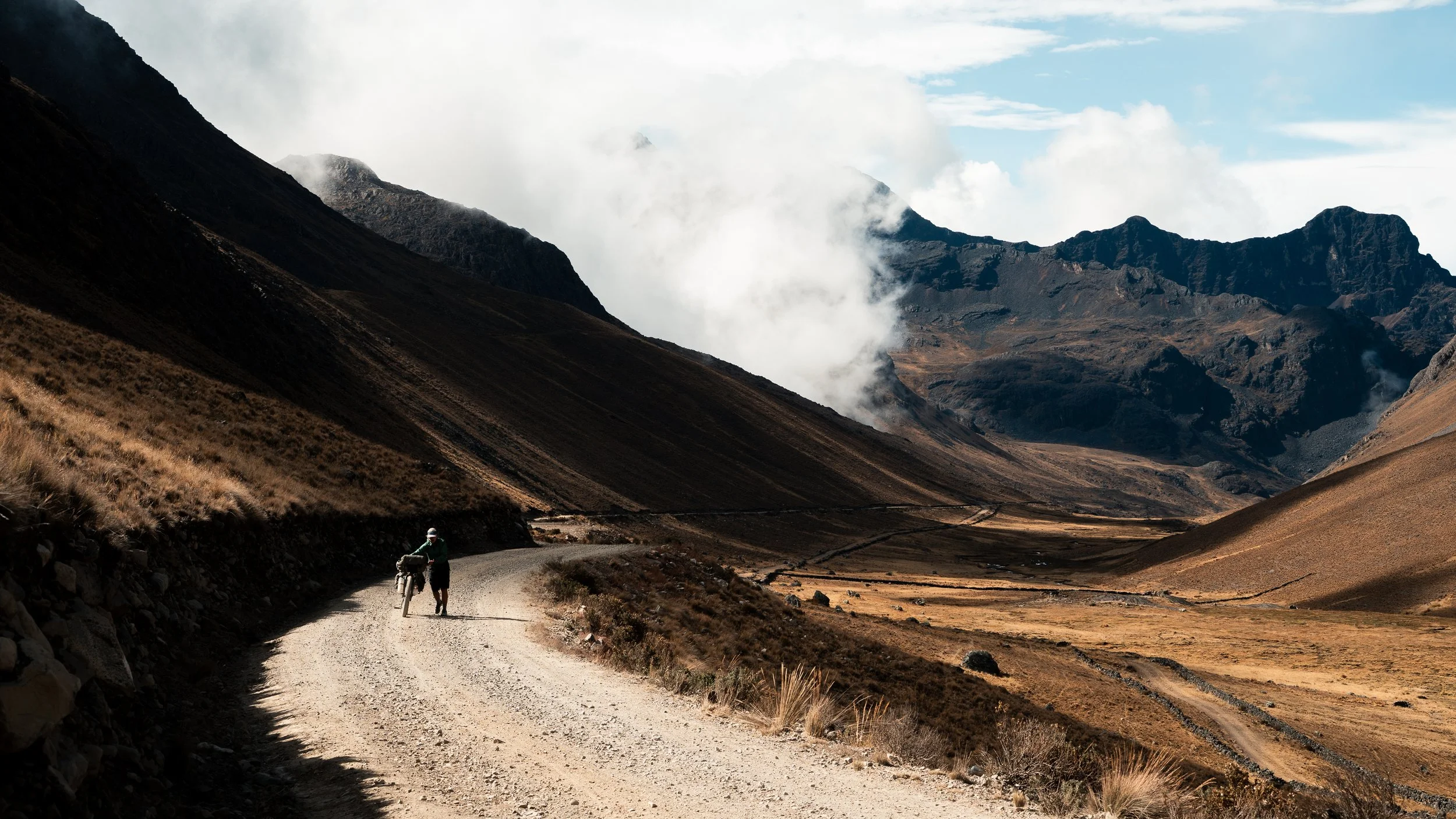
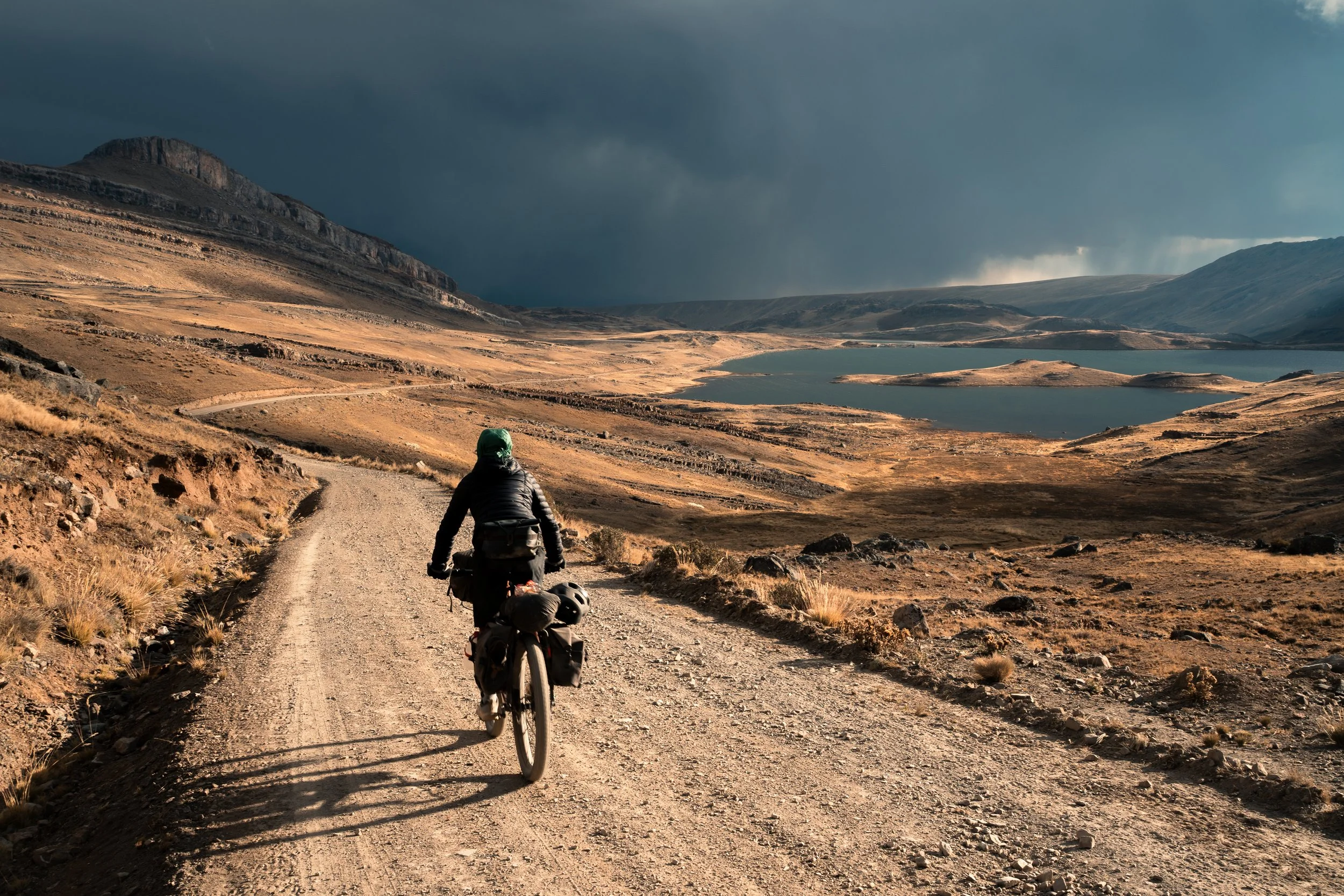
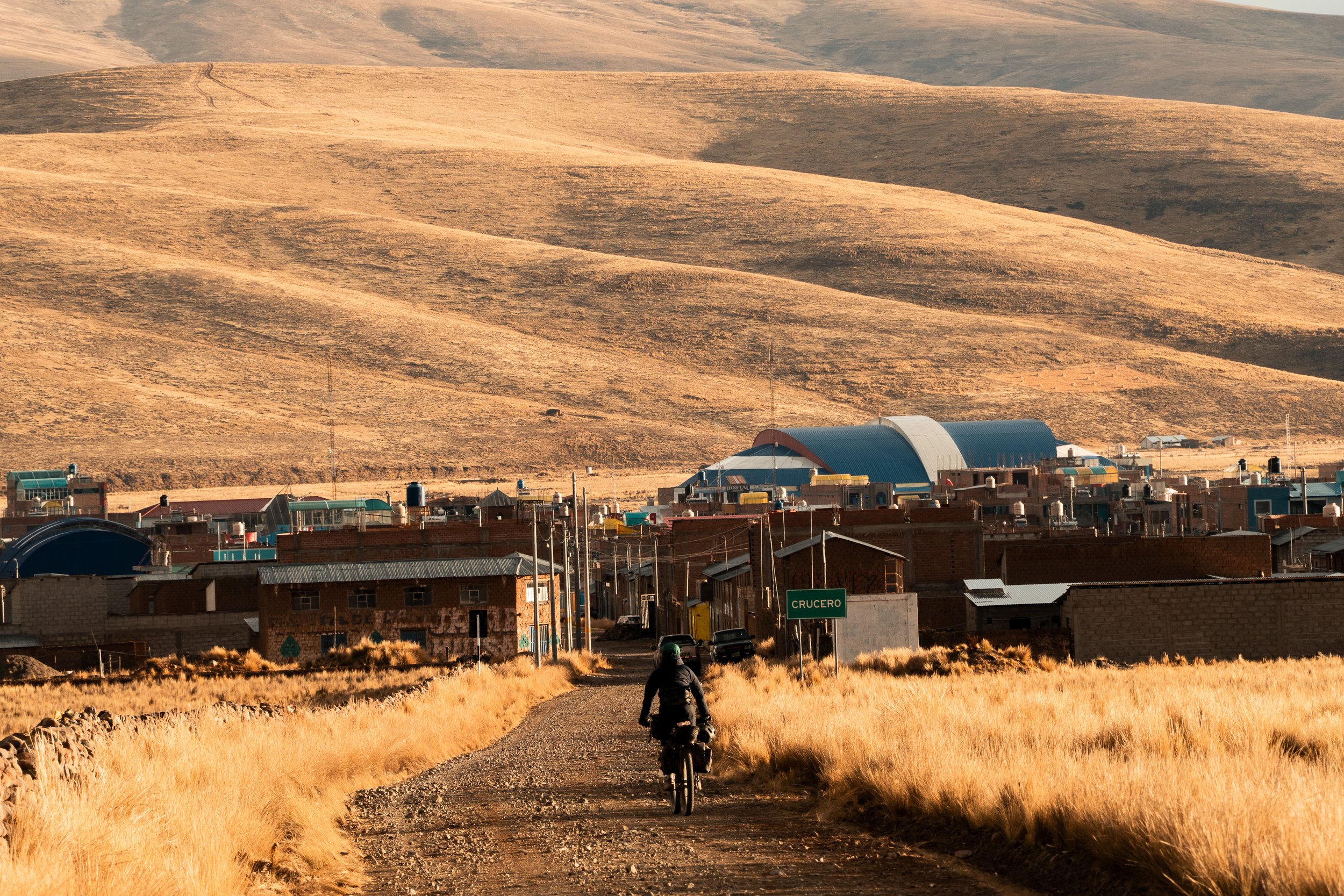
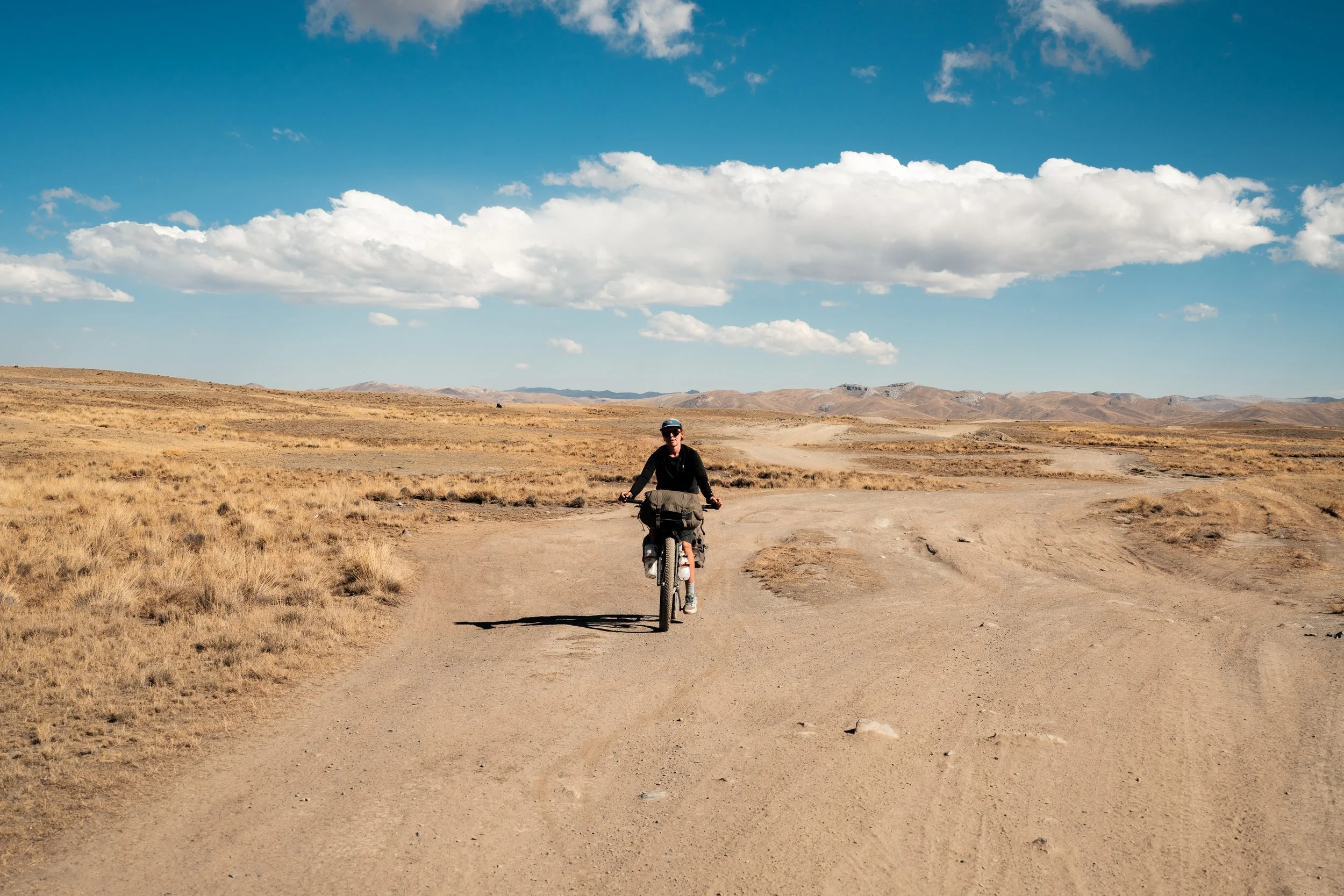
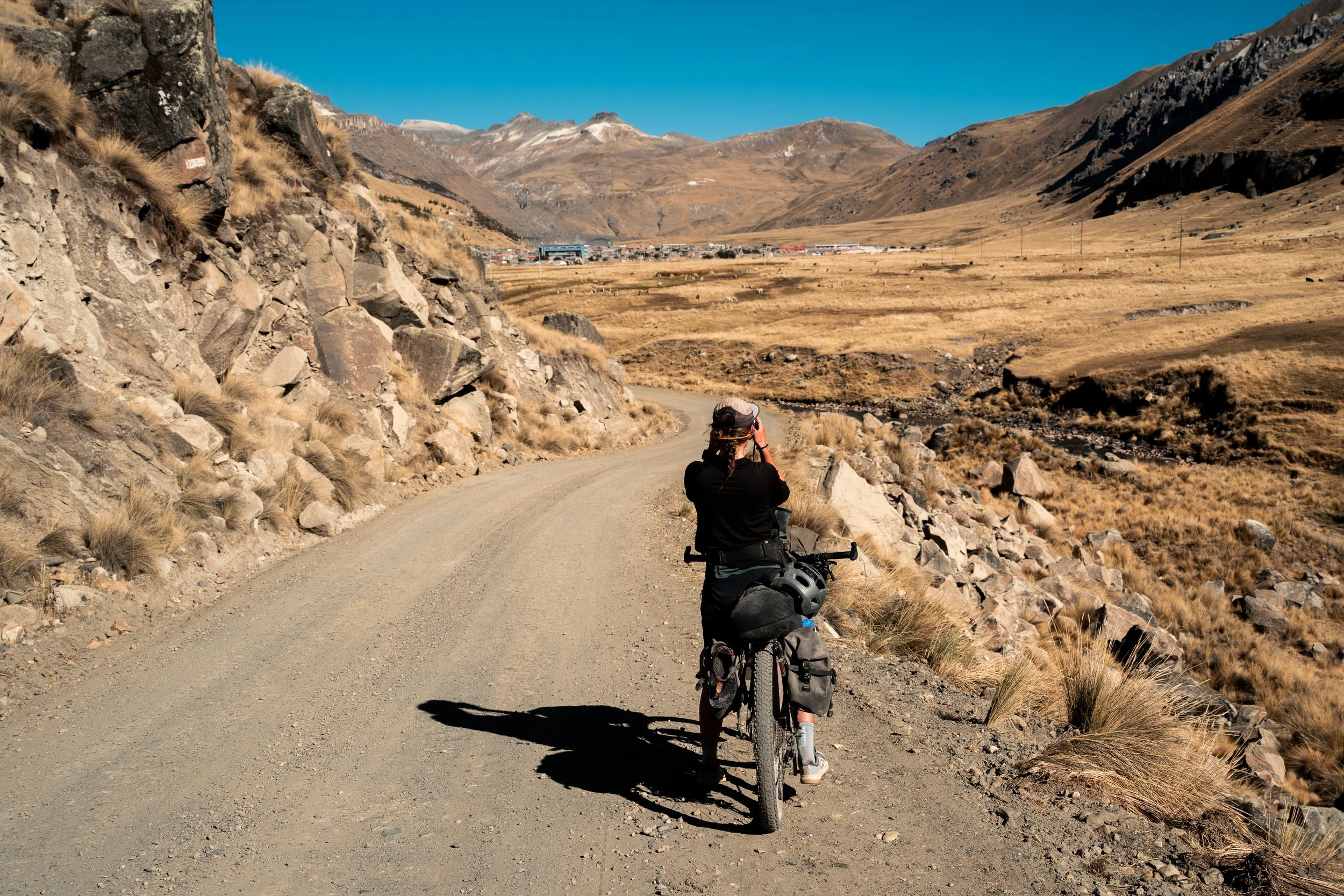
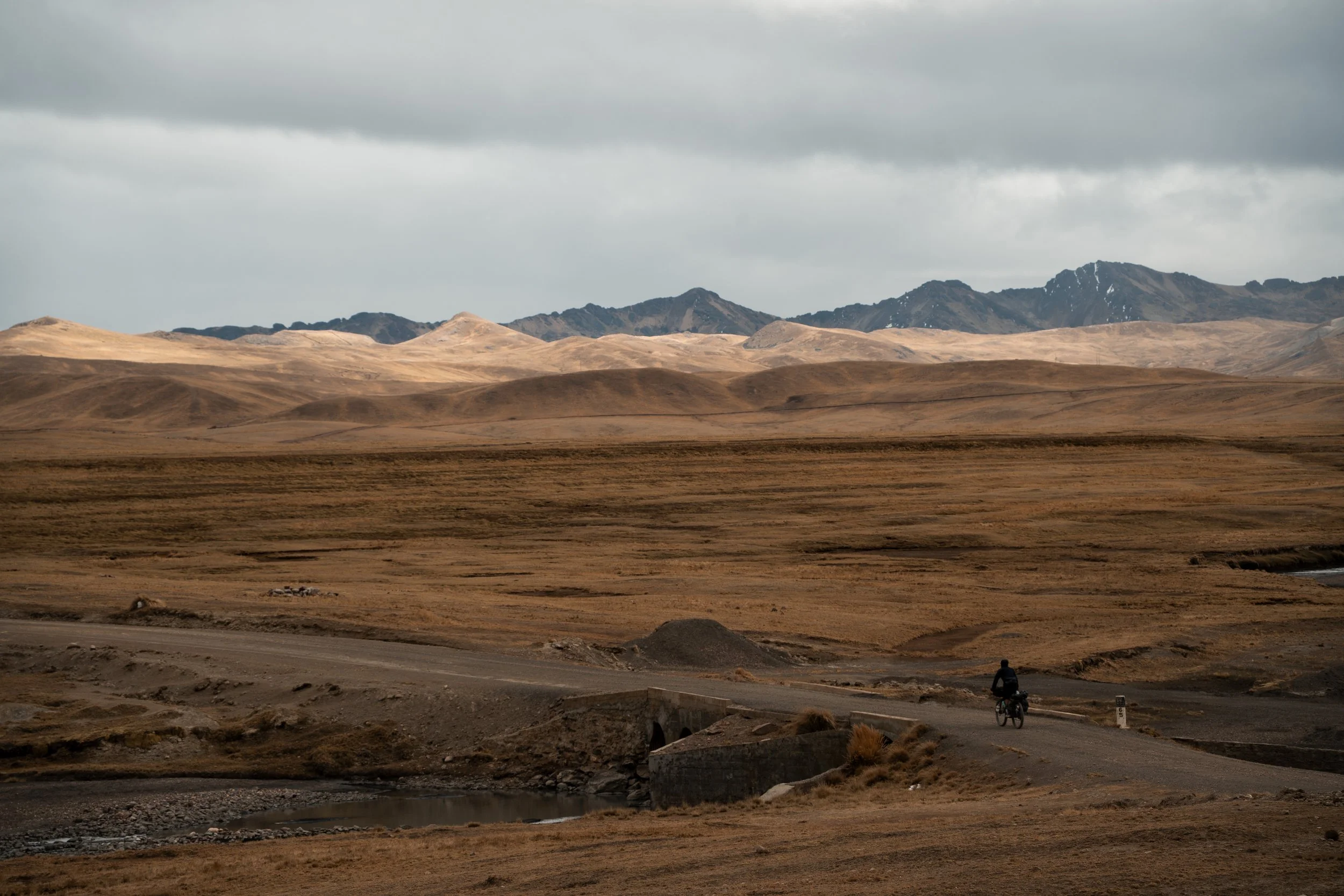
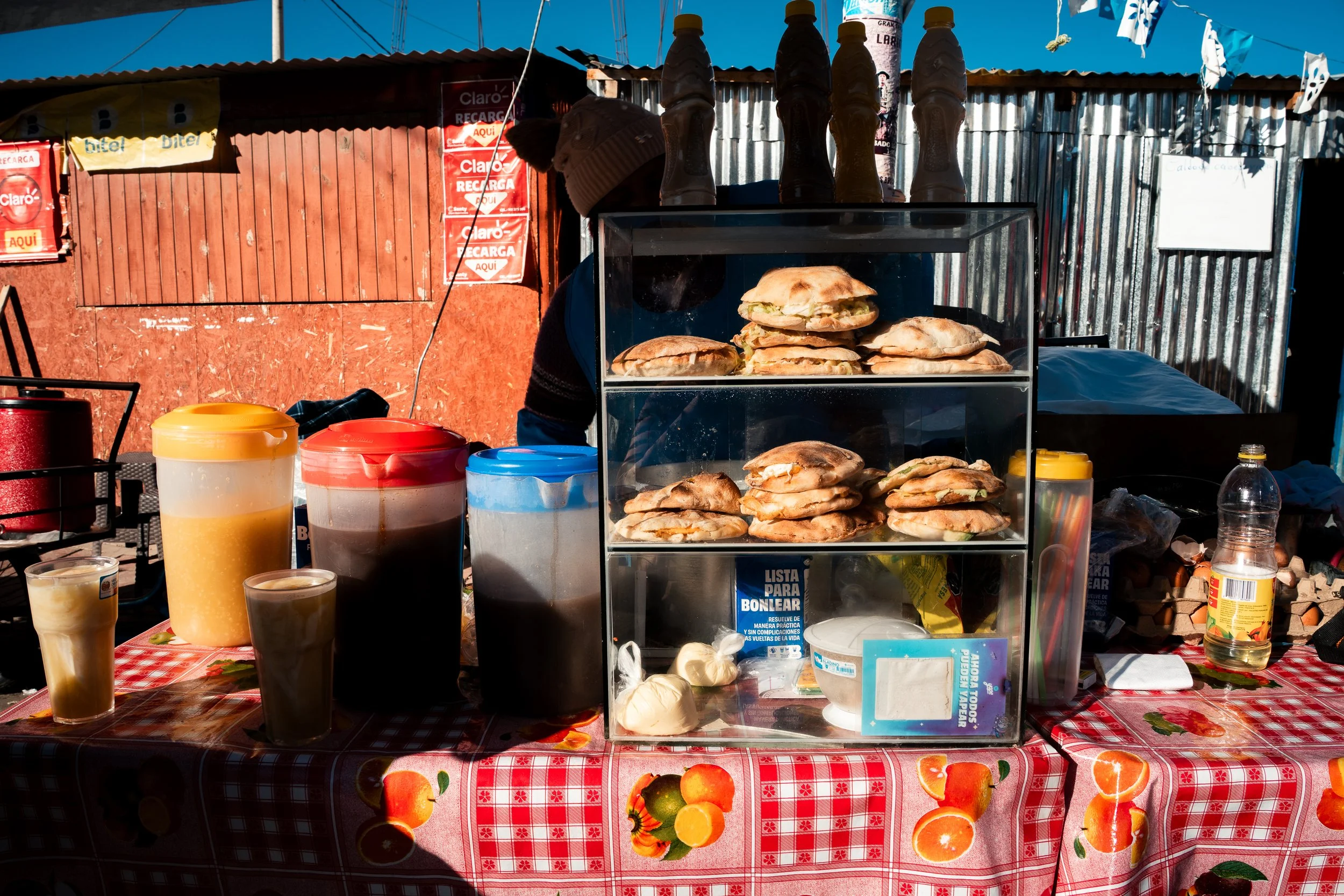
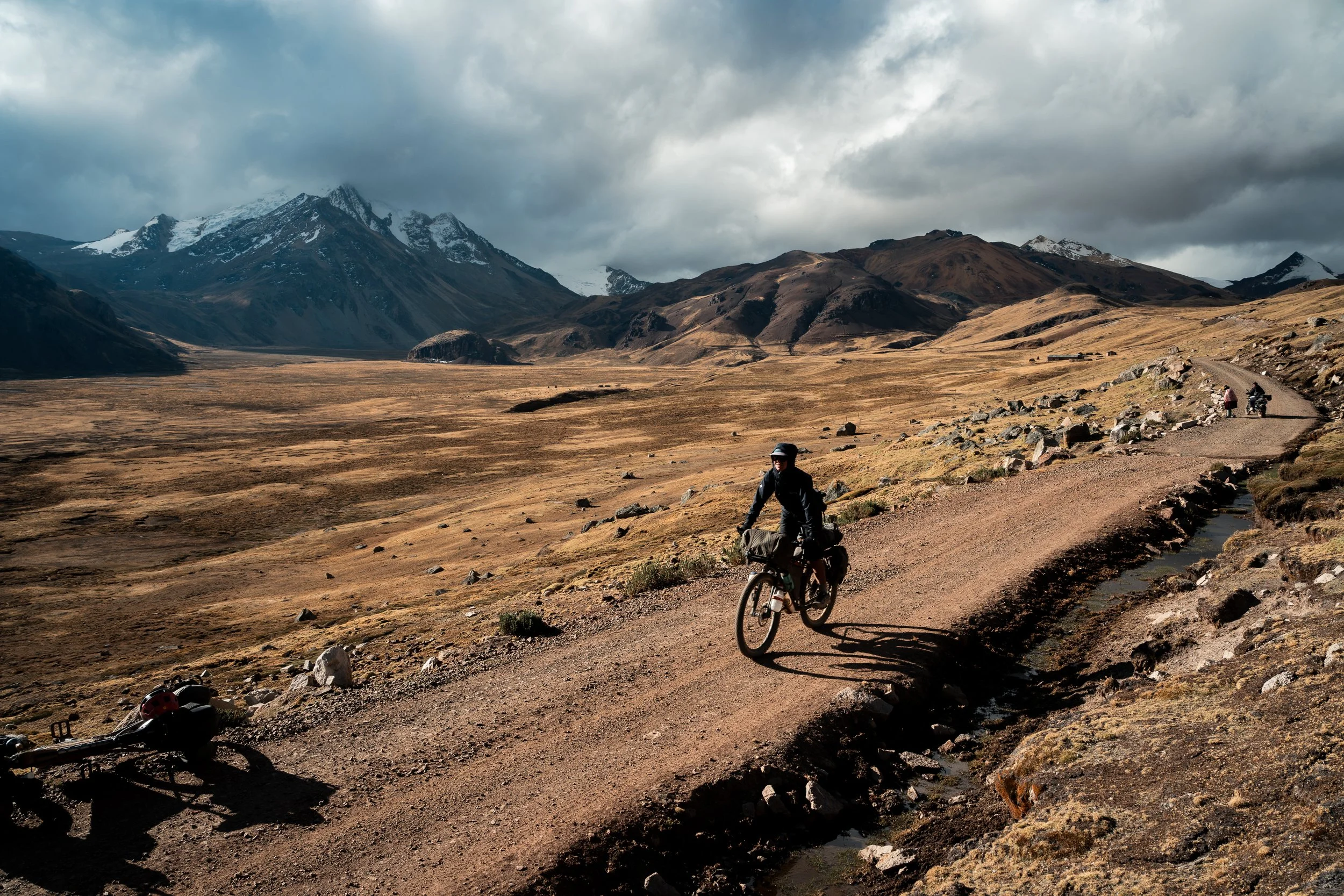
We ended up taking two rest days in Crucero, a small town, but with a lively street food scene. Hoping we would feel better, we attempted the ride to Macusani. The first 30km were mostly gentle downhill tarmac, and we made good time. From the town of Antauta the road became rough gravel, and the gradient began to climb, ever so slightly. Passing through farms and hills, we kept an eye out for dogs as we heard they were particularly aggressive on this stretch, but had no issues.
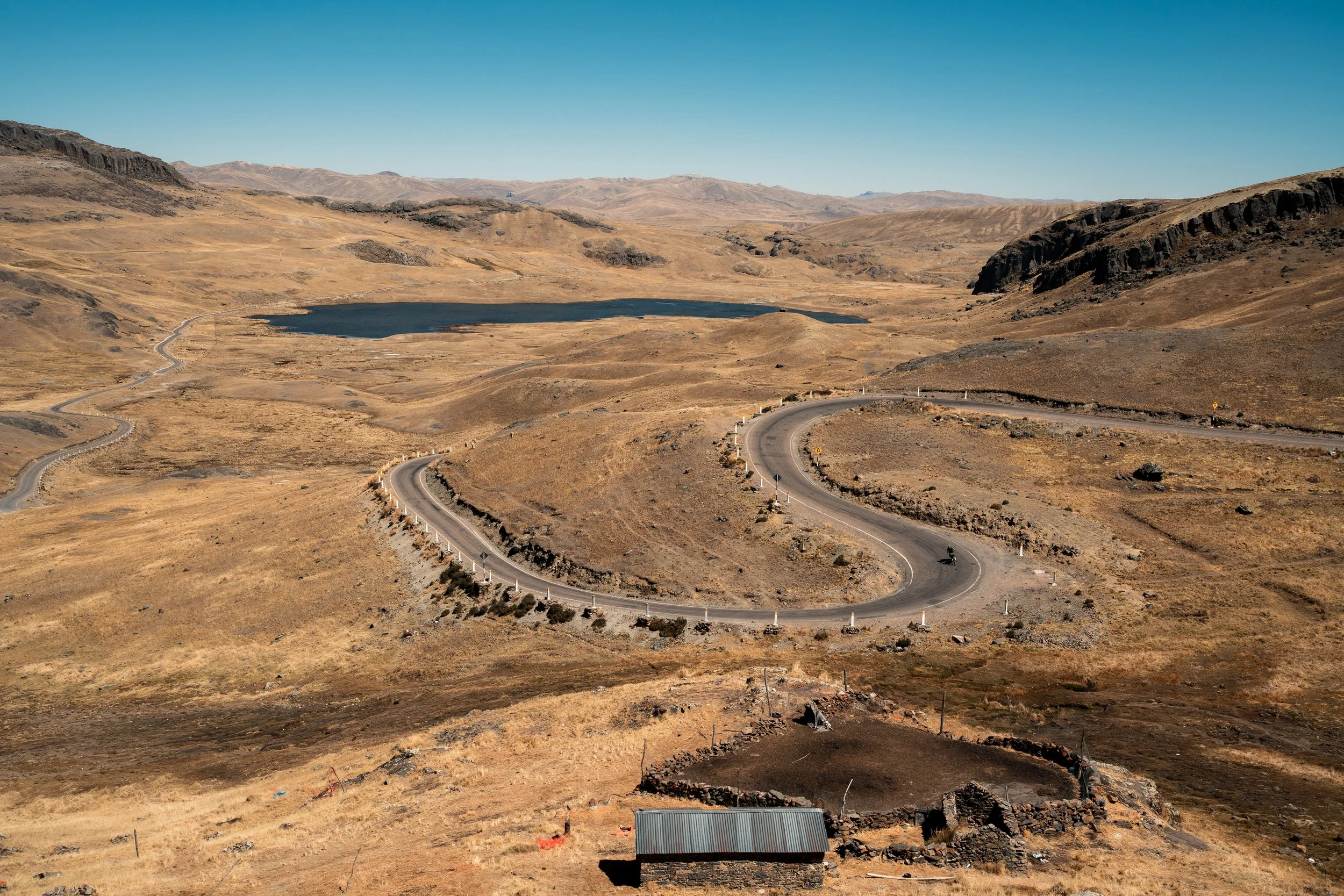
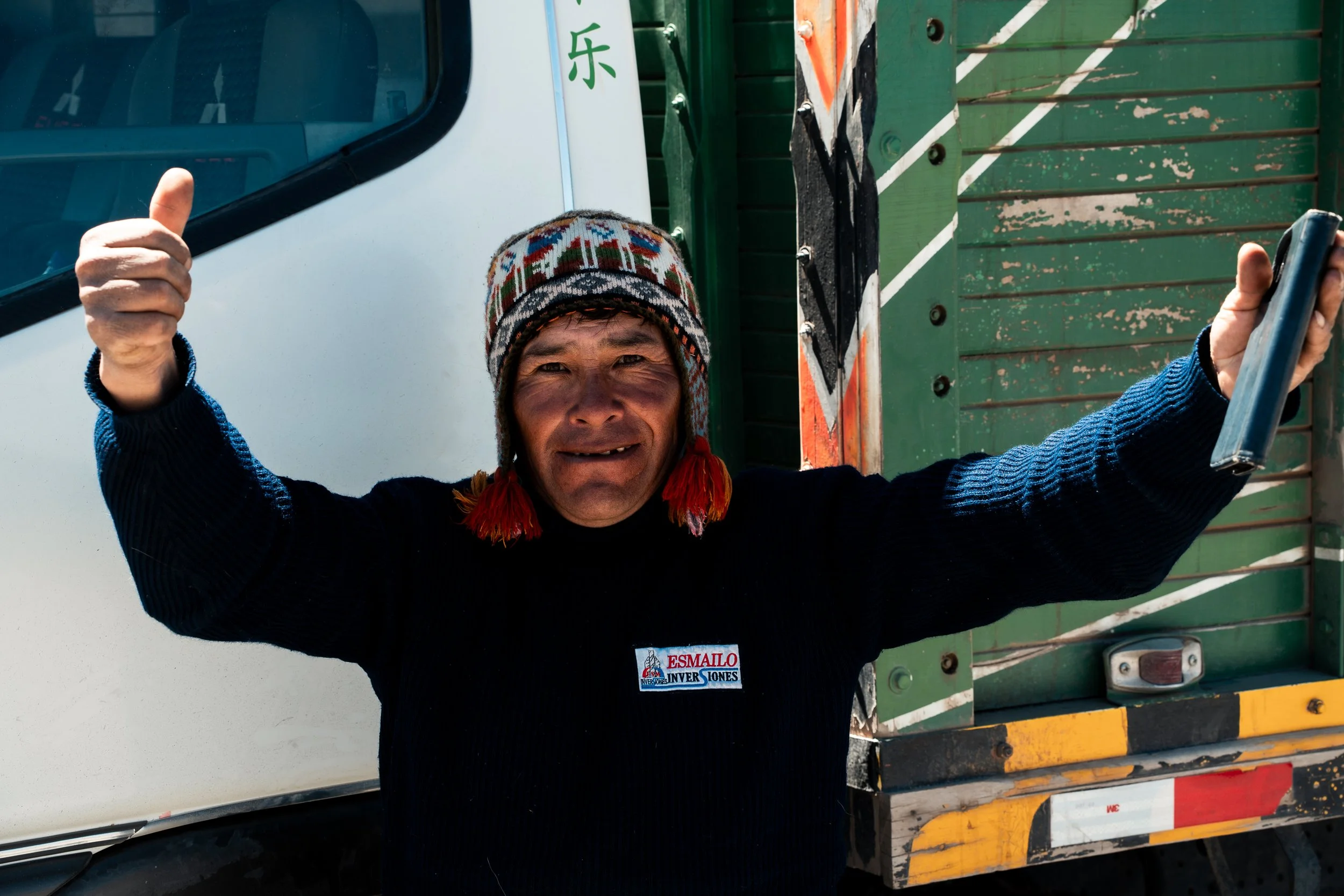
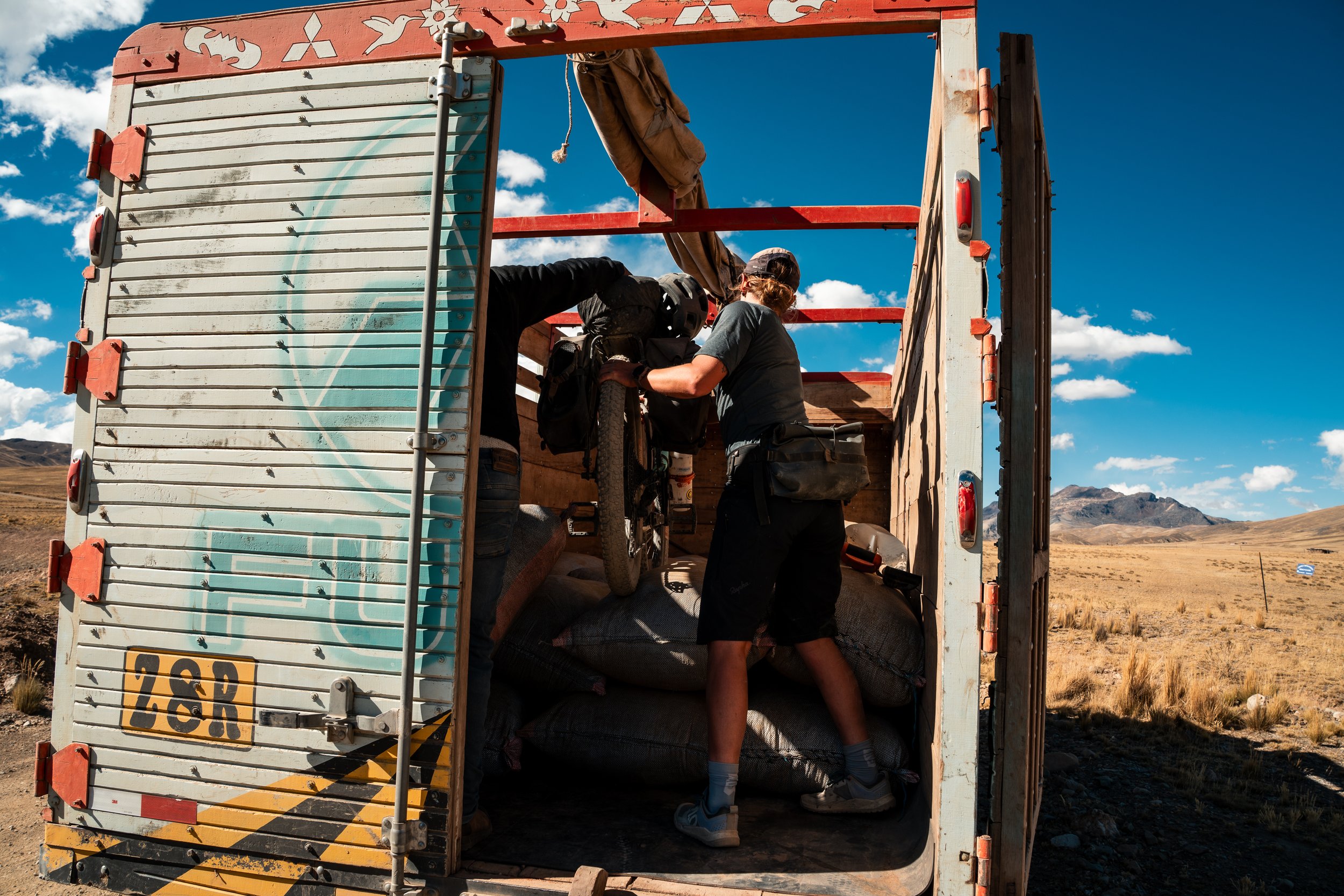
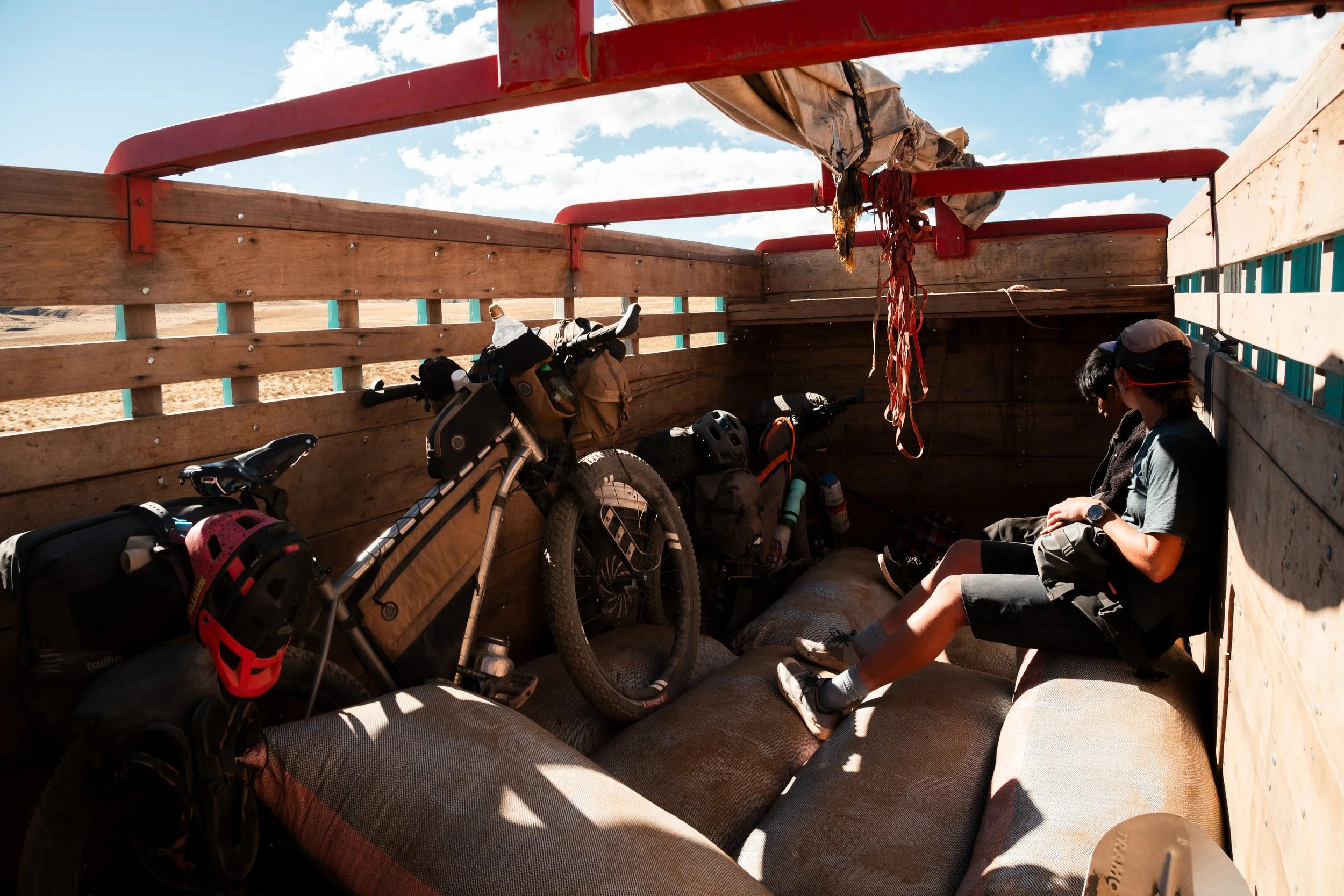
I was looking at the slowly reducing distance to the pass we had to cross, and realised we were unlikely to make it before sunset. The mixture of respiratory illness and trying to cross 4800m passes was a bad one. A single truck passed, with its rear door hanging open. We took it as a sign. Luckily it had stopped at the top of a set of hairpins, apparently waiting for us to appear. We approached the driver, and he graciously offered us a ride the whole way to Macusani. We loaded our bikes in, and joined another man, a lamb, and a number of sacs in the rear as we bumped and jostled our way along the road, getting completely covered in dust through the wooden slats.
What we had hoped would be just the one rest day turned into five, as my breathing got worse day-to-day. Ultimately I decided to start taking antibiotics for pneumonia, as I had been unwell for 12 days at this stage and still getting worse. Coincidentally, I also got gastroenteritis at this time, and spent a night (successfully) trying not to soil the bed. Fed up of all the sick days on this route (eight and counting at this point) and being just a few days from the end, we decided to just crack on at this stage, regardless.
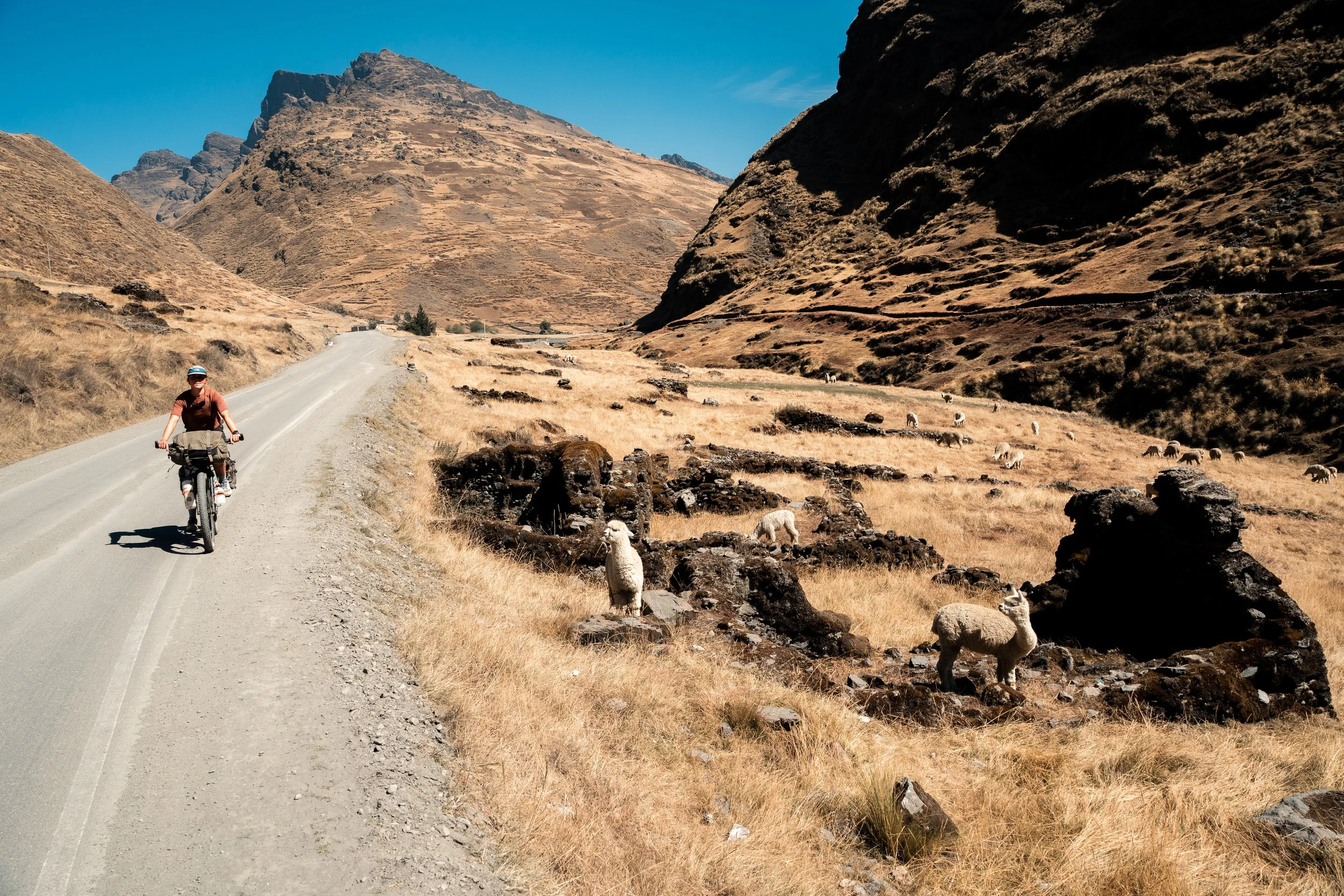
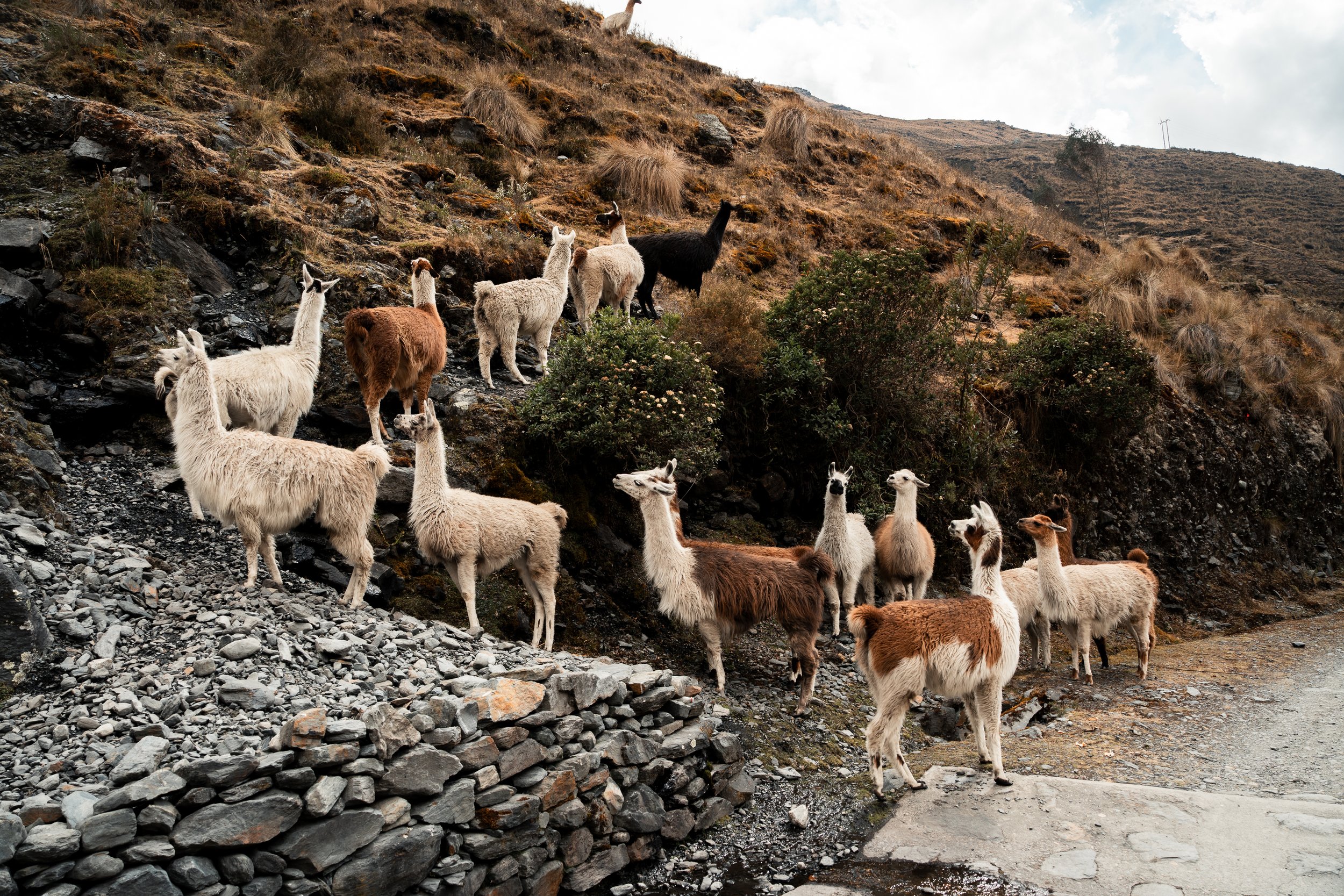
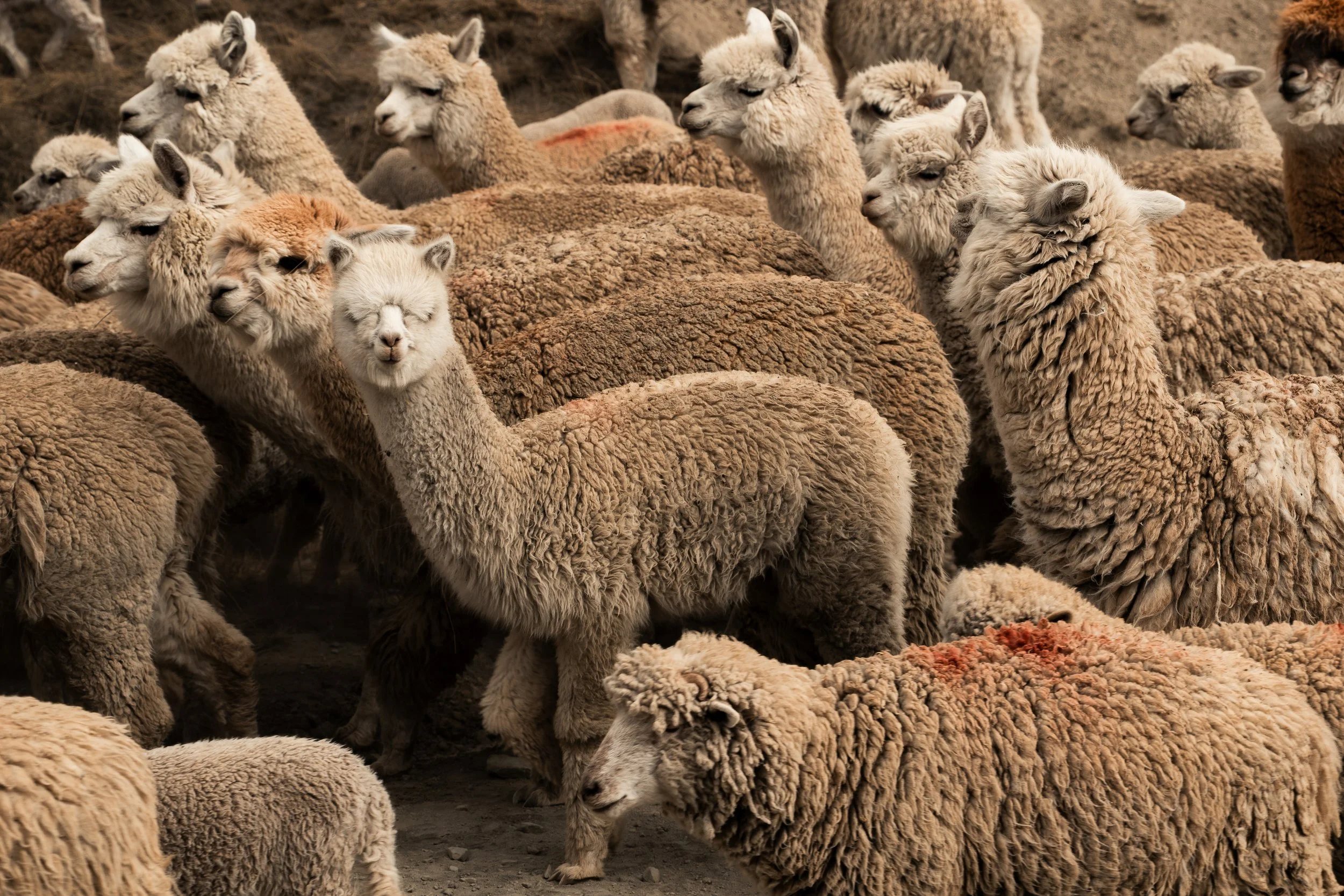
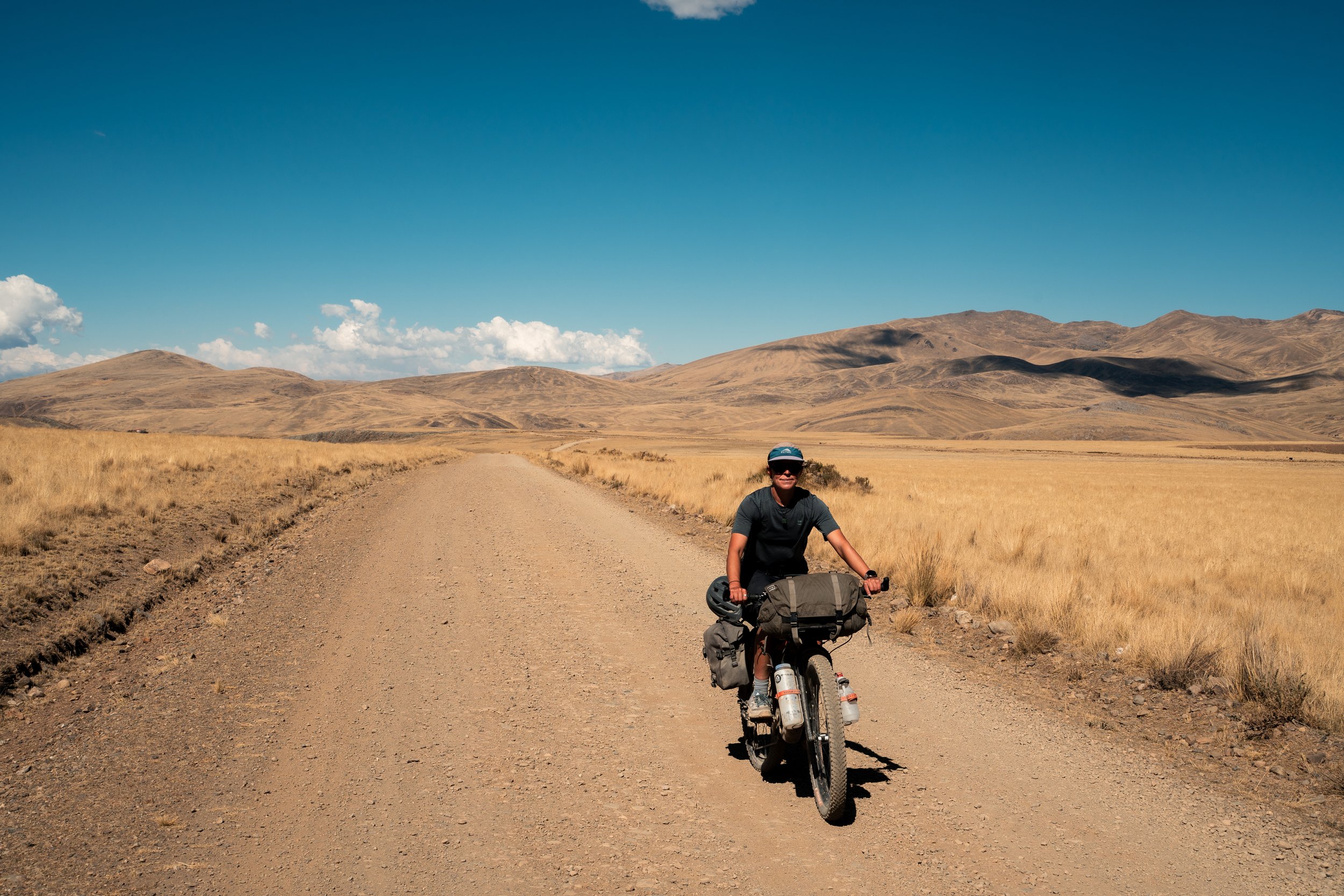
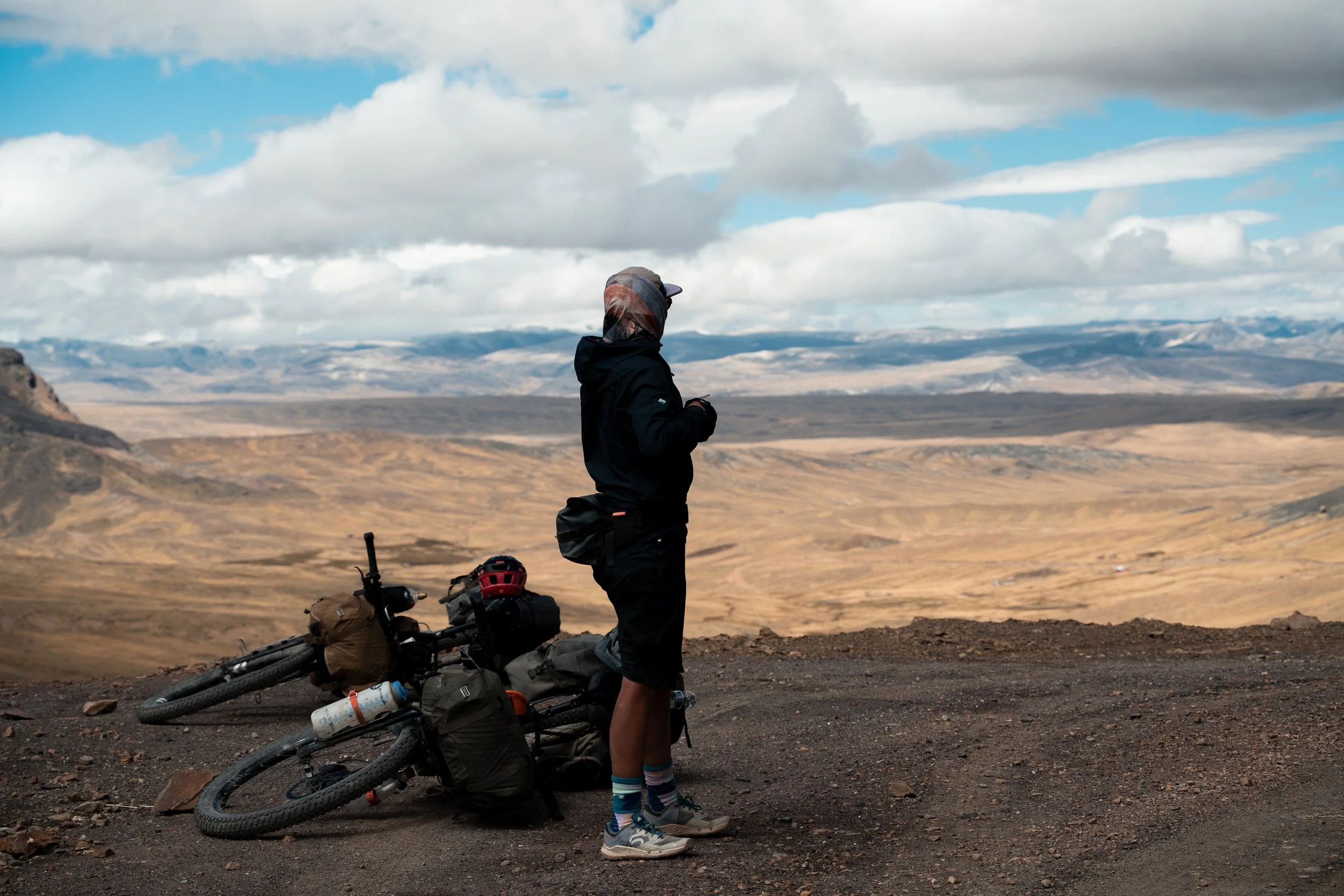
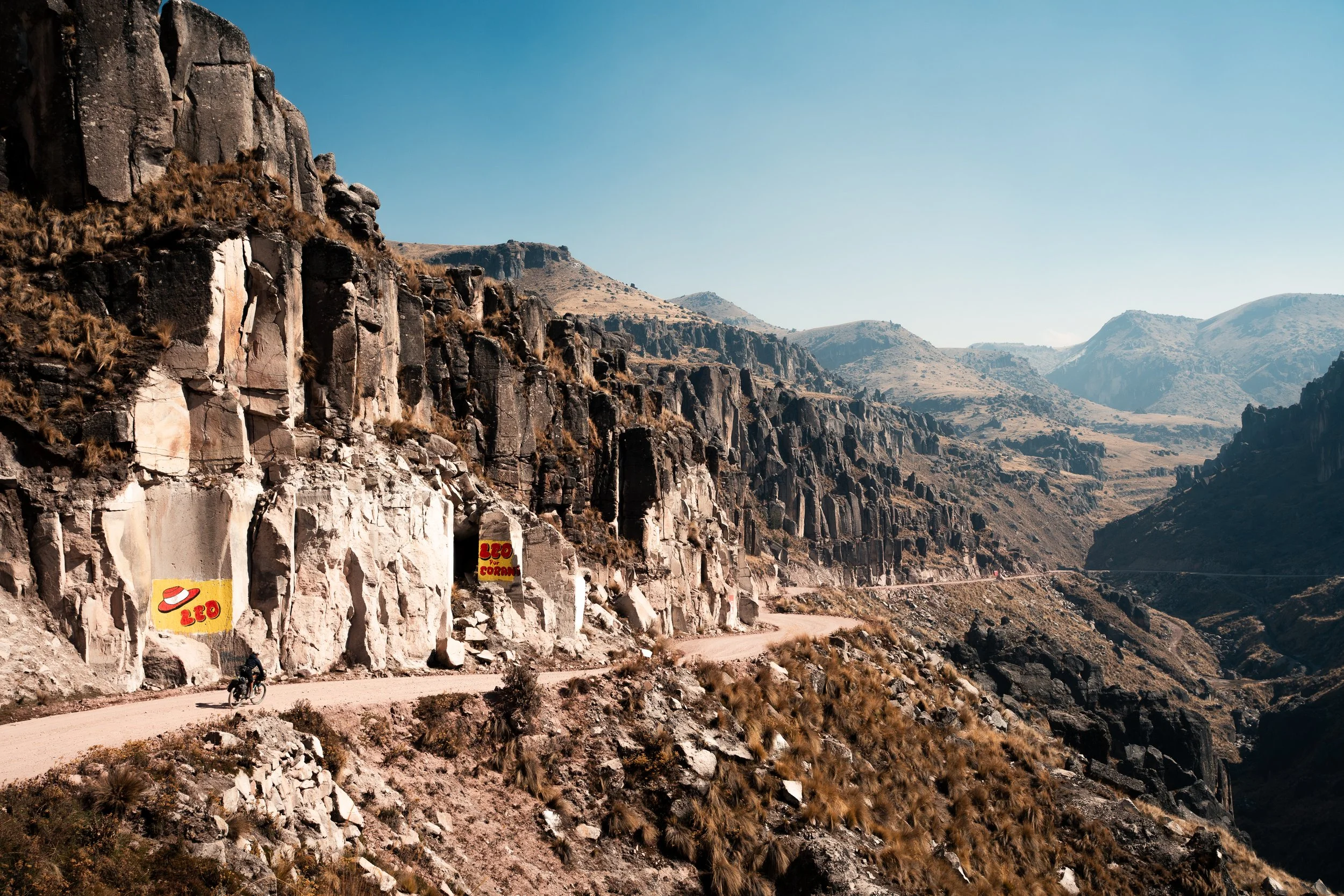
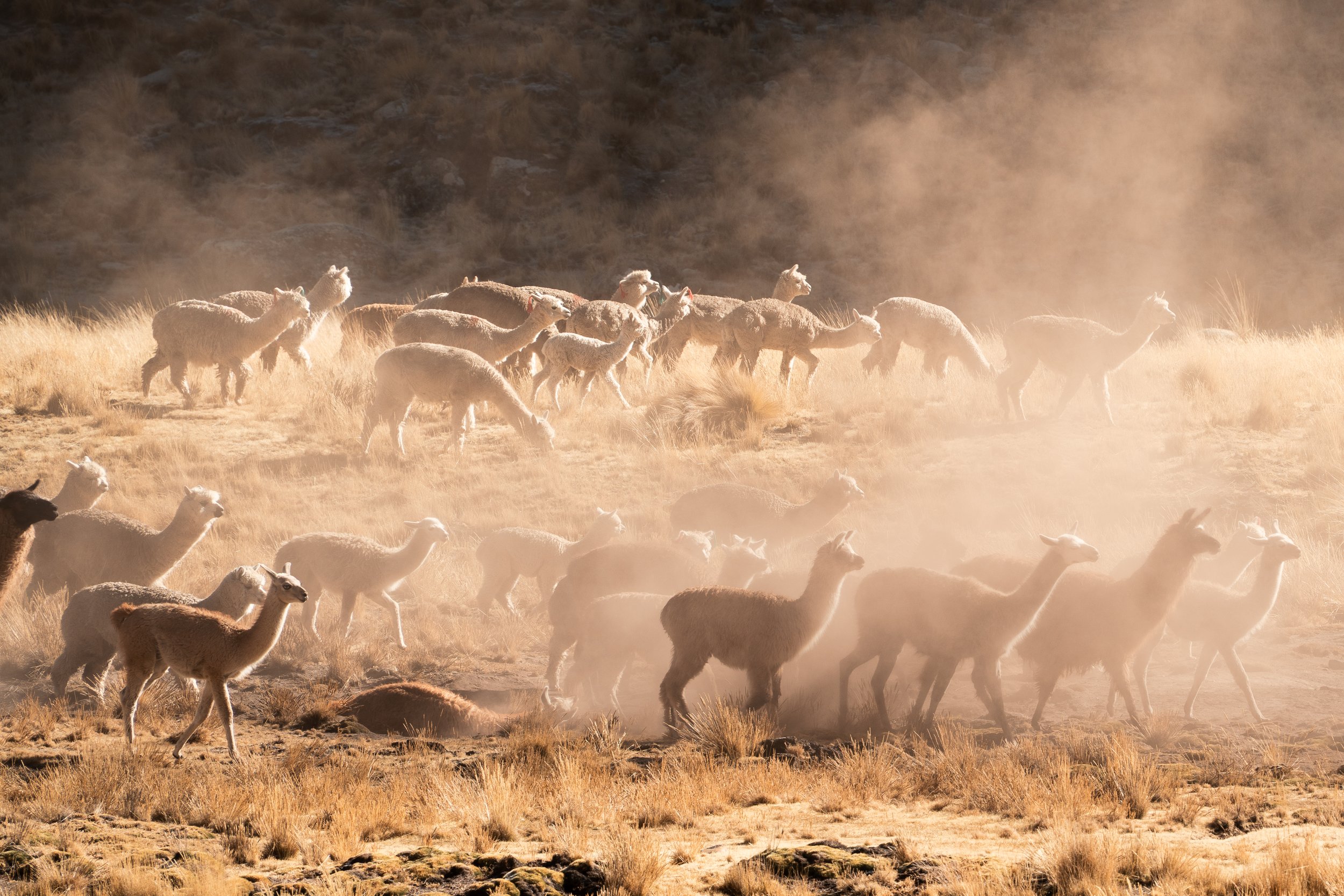
Fortunately, this first day didn’t feature any high passes, as we initially coasted downhill through canyons on tarmac, before cresting over a couple of low passes between farming villages. We then reached the town of Corani, where we stopped for a few snacks and an ice cream. We would follow this valley for the next day, up and over a 5100m pass at its head. Partway along we found a campsite in an old paddock, startling some llamas when they tried to pass by in the evening.
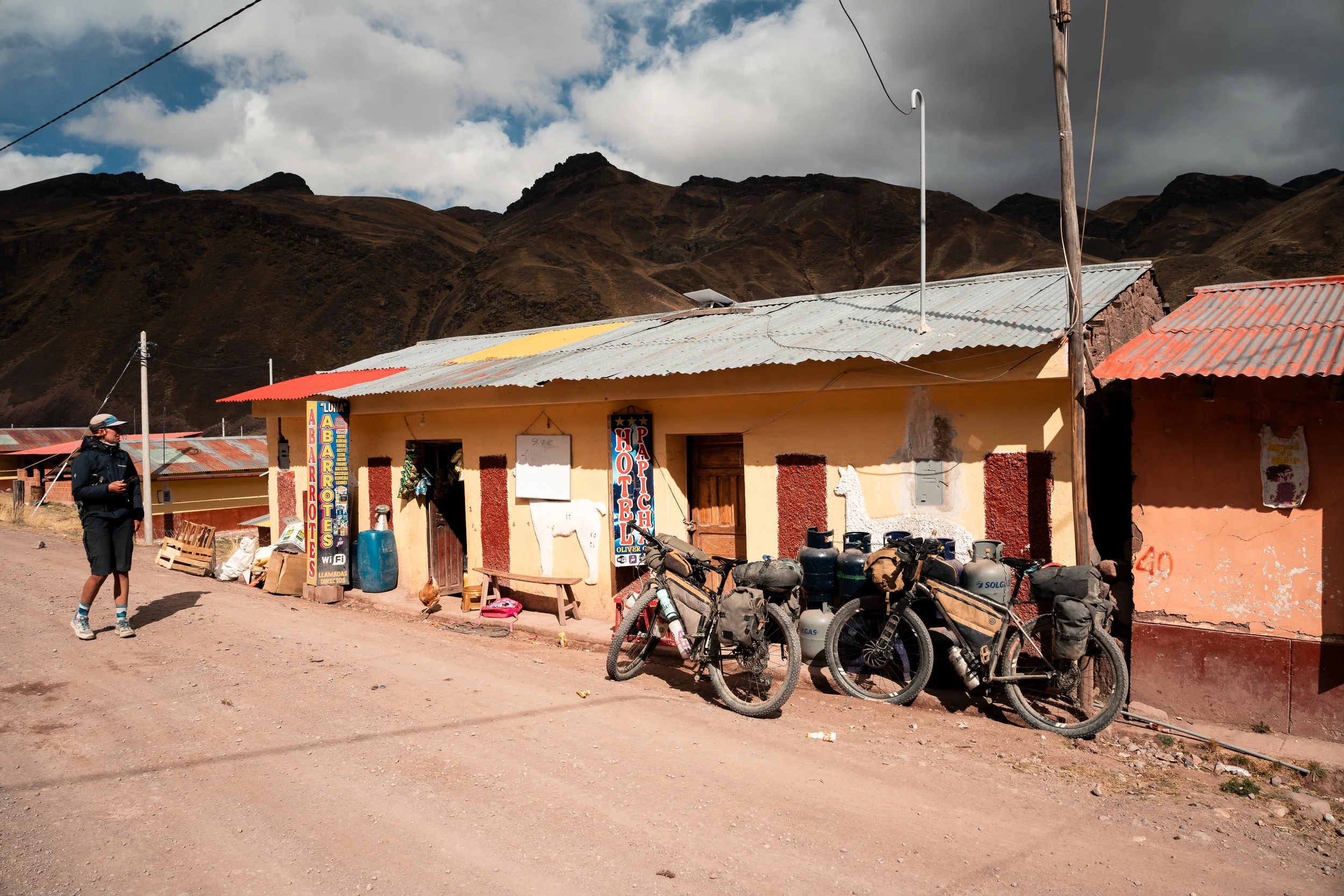
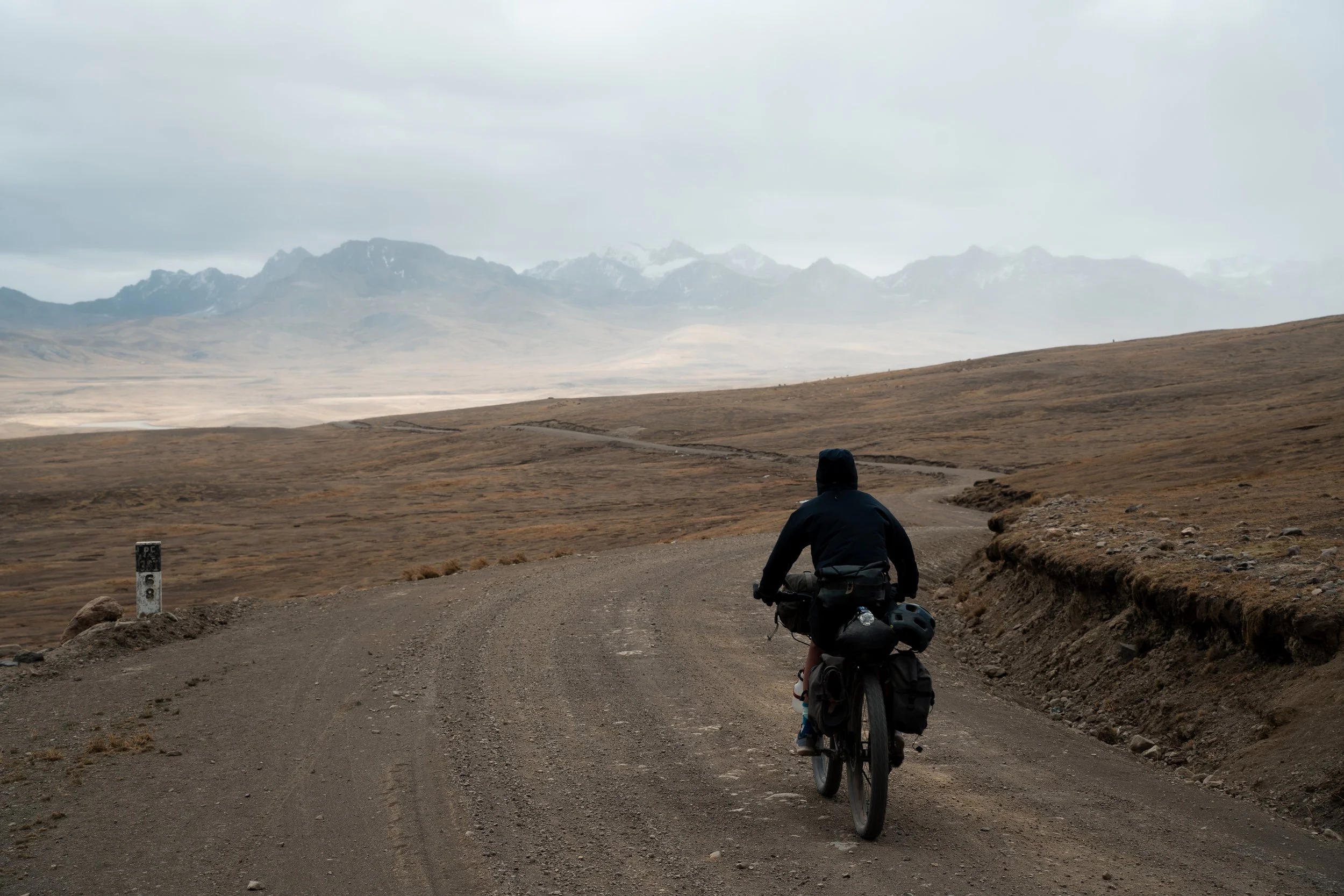
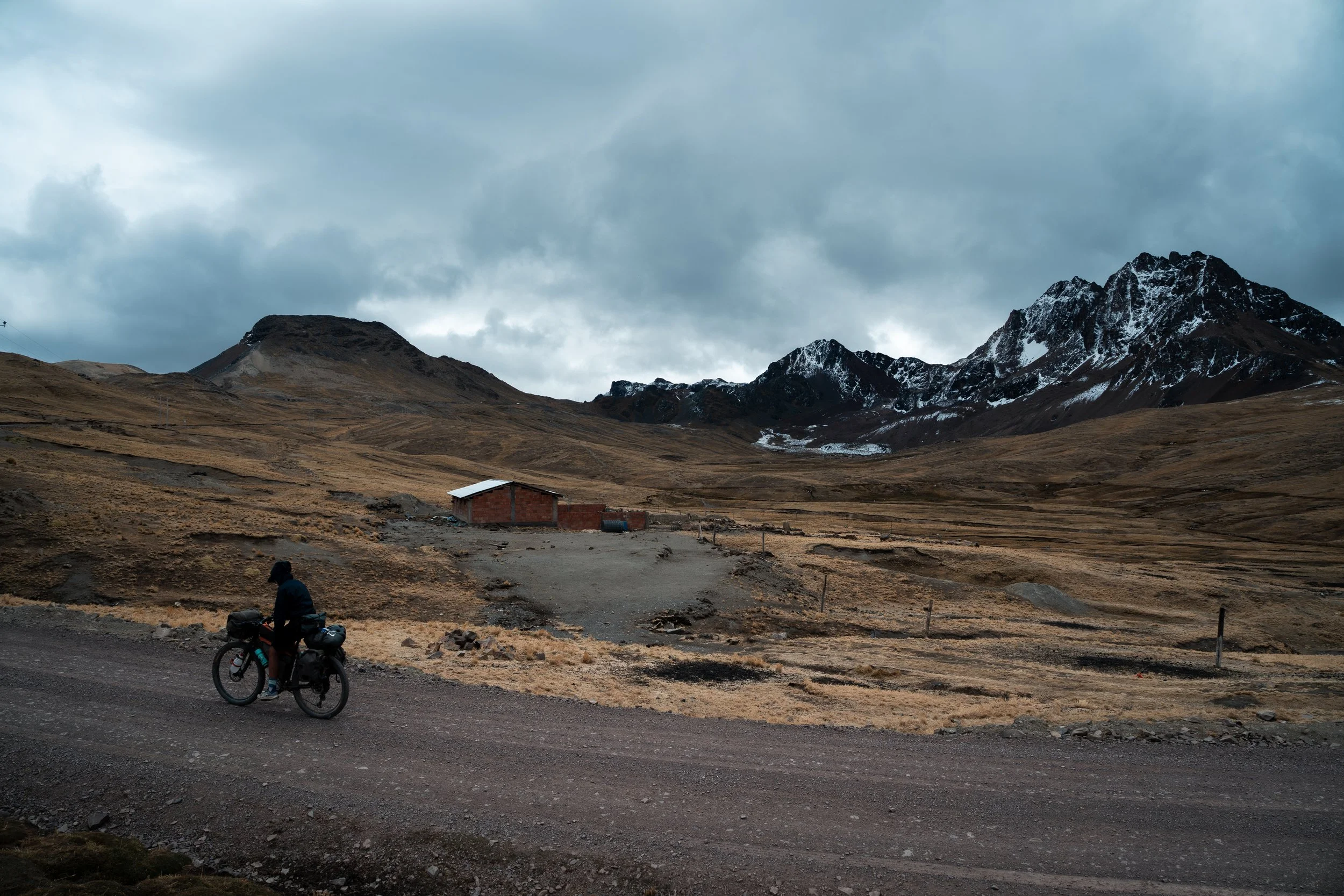
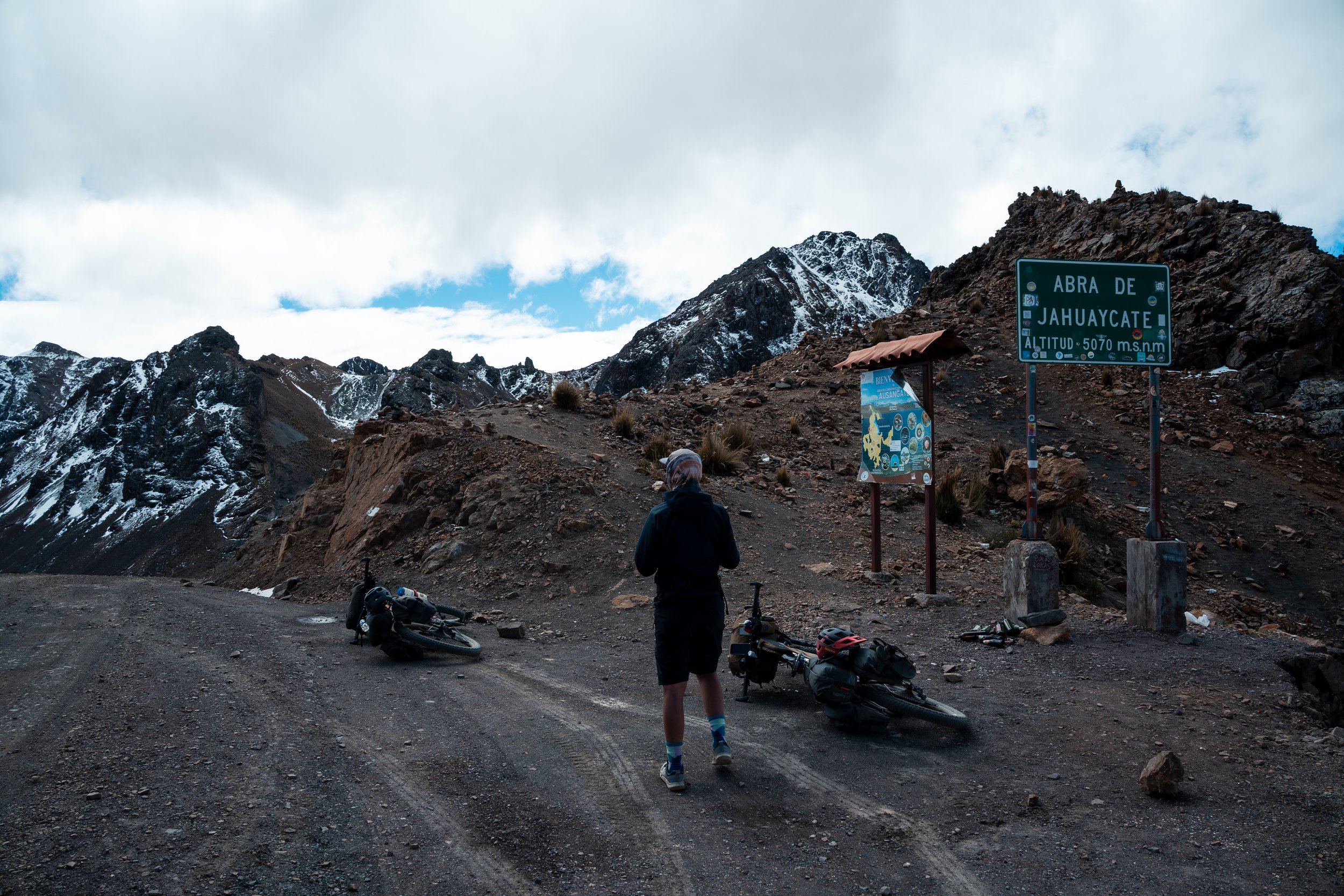
We started the next day continuing up the valley, gradually climbing for the first 25km or so, before the gradient picked up slightly. Towards the top, we began to see some glaciated peaks up the side valleys. Around this time the temperature dropped, and cloud began spilling over the mountains around us, threatening to really pack in. The pass was home to a single old stone building, seemingly unoccupied. It began to sleet, so the rain coats and puffer jackets came on. The ominous clouds stayed on our descent, but never anything more than light sleet eventuated. The small village of Phinaya appeared ahead of us, where we had hoped to get a lunch, but by now it was nearly 4pm and we were freezing. Rather than push on, we decided to get a room at the hostel in town, out the back of a tienda.
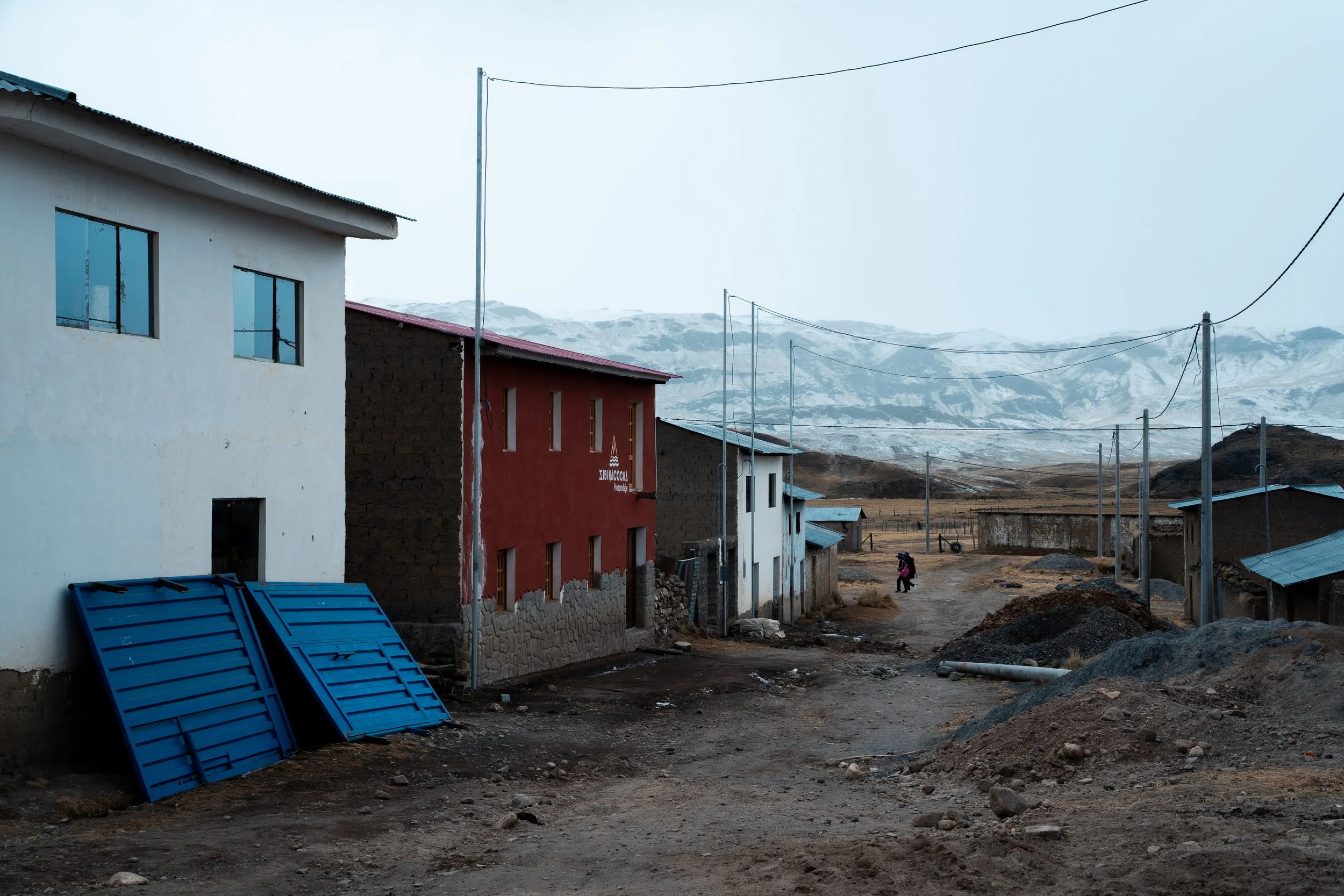
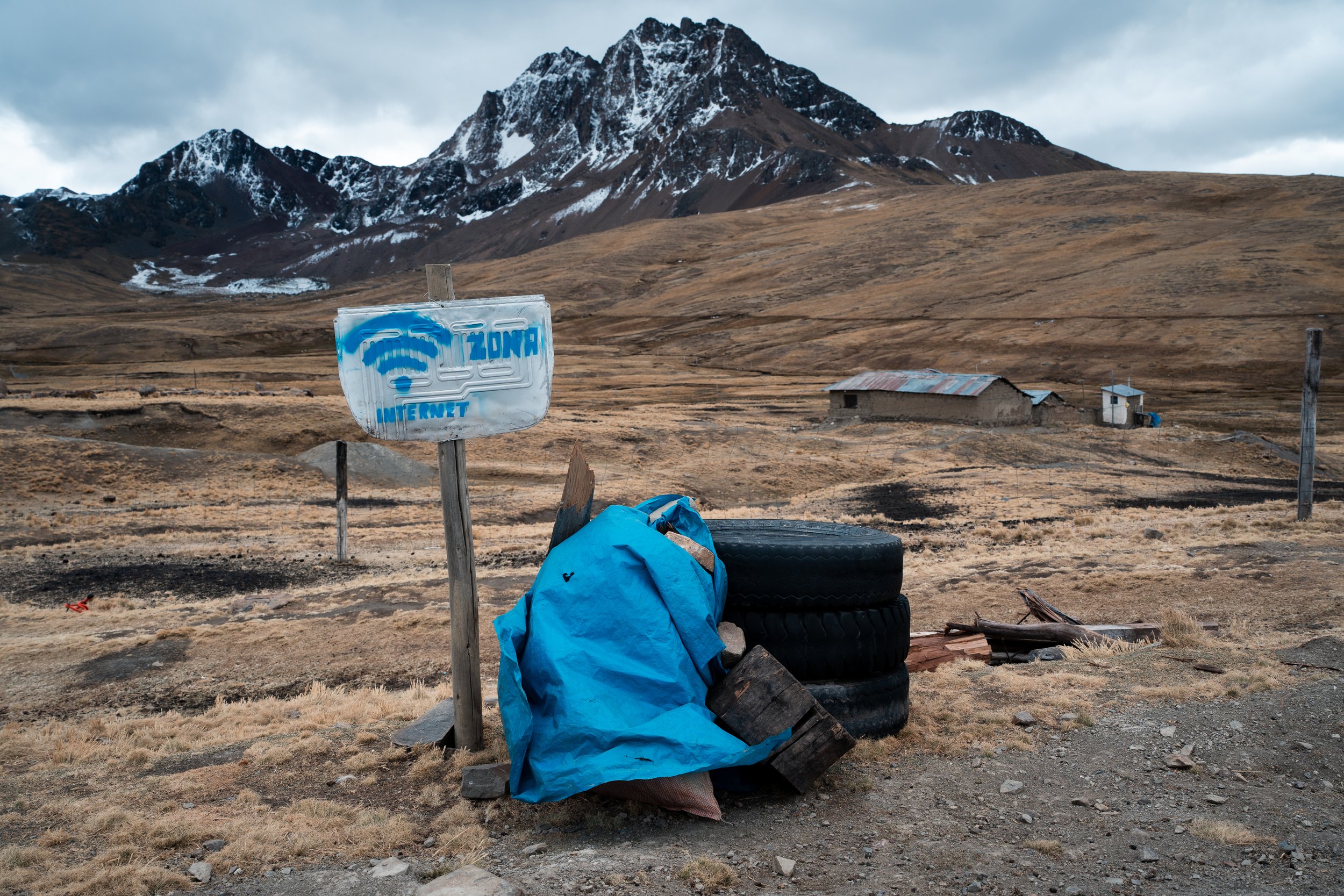
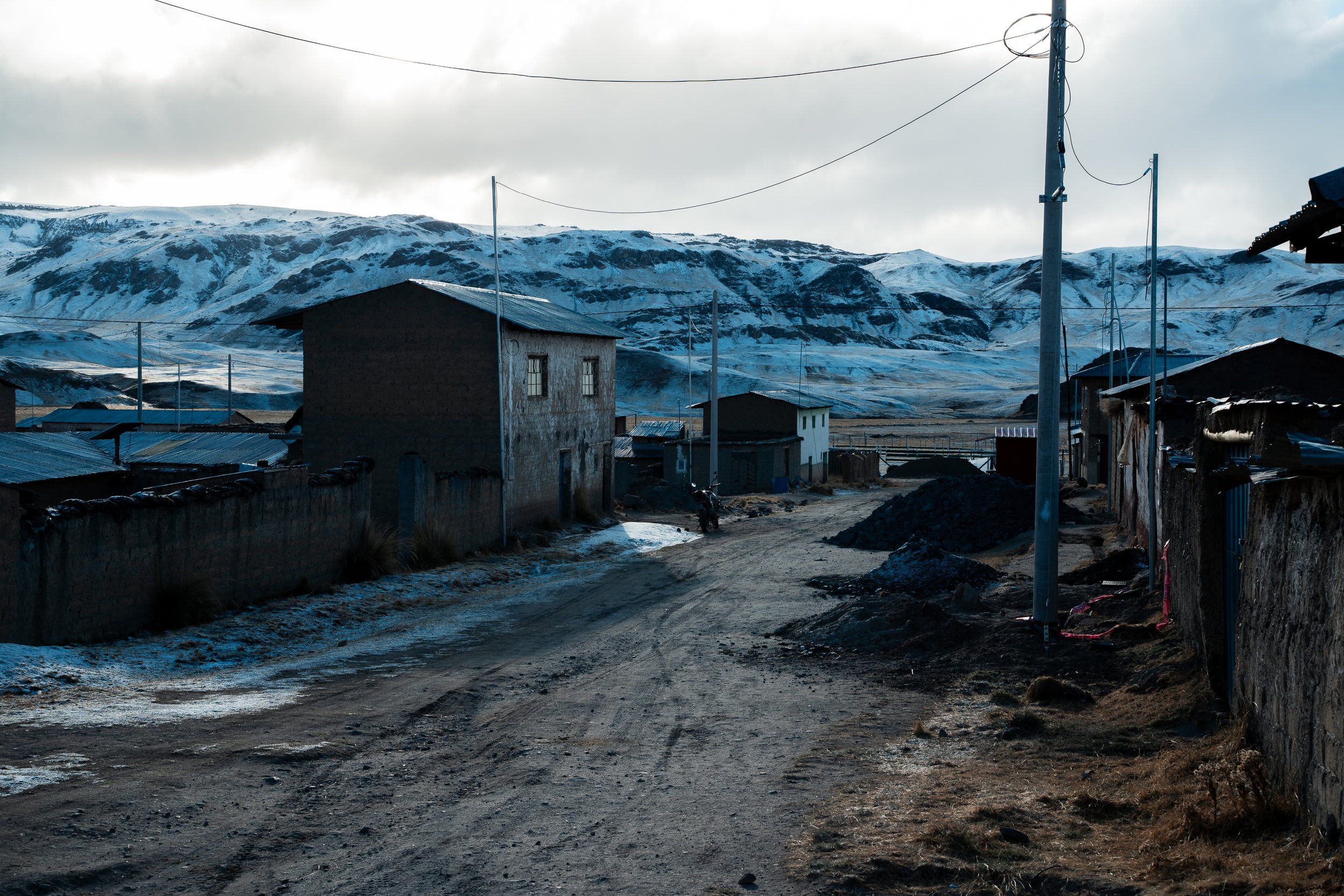
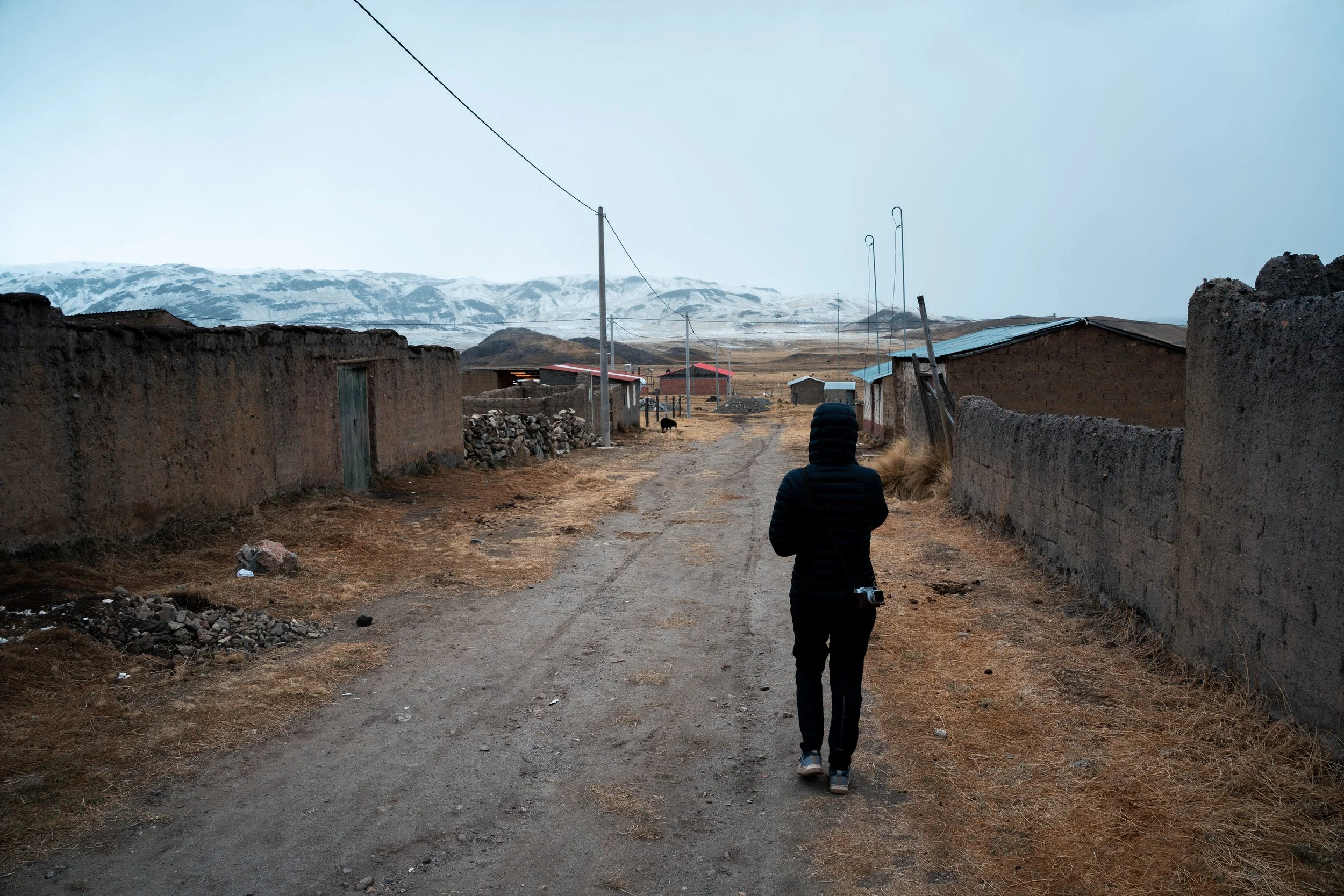
Despite not being connected to the electricity grid, there is some solar power in town, and our hostel had wifi. By evening snow was coming in, as we were shown on the pitch black streets to a restaurant for dinner. Some people had noted there was an excellent restaurant in town - this was not the one we were shown to. We were served cold, undercooked rice with cold fried eggs; not the hearty warming meal the weather outside indicated. Unfortunately we had already arranged a time to come back for breakfast the next morning, where we were served chunks of tough alpaca meat in a light stew, again with undercooked rice. Luckily it was warm this time, as the snow returned in flurries as we ate. With the forecast meant to get worse, we finally decided to take a rest day - we were already at 4750m, and the days riding was to take us over an isolated plateau at about 4900m before another 5000m pass. The potential for doing this in sub-freezing temperatures wasn’t appealing.
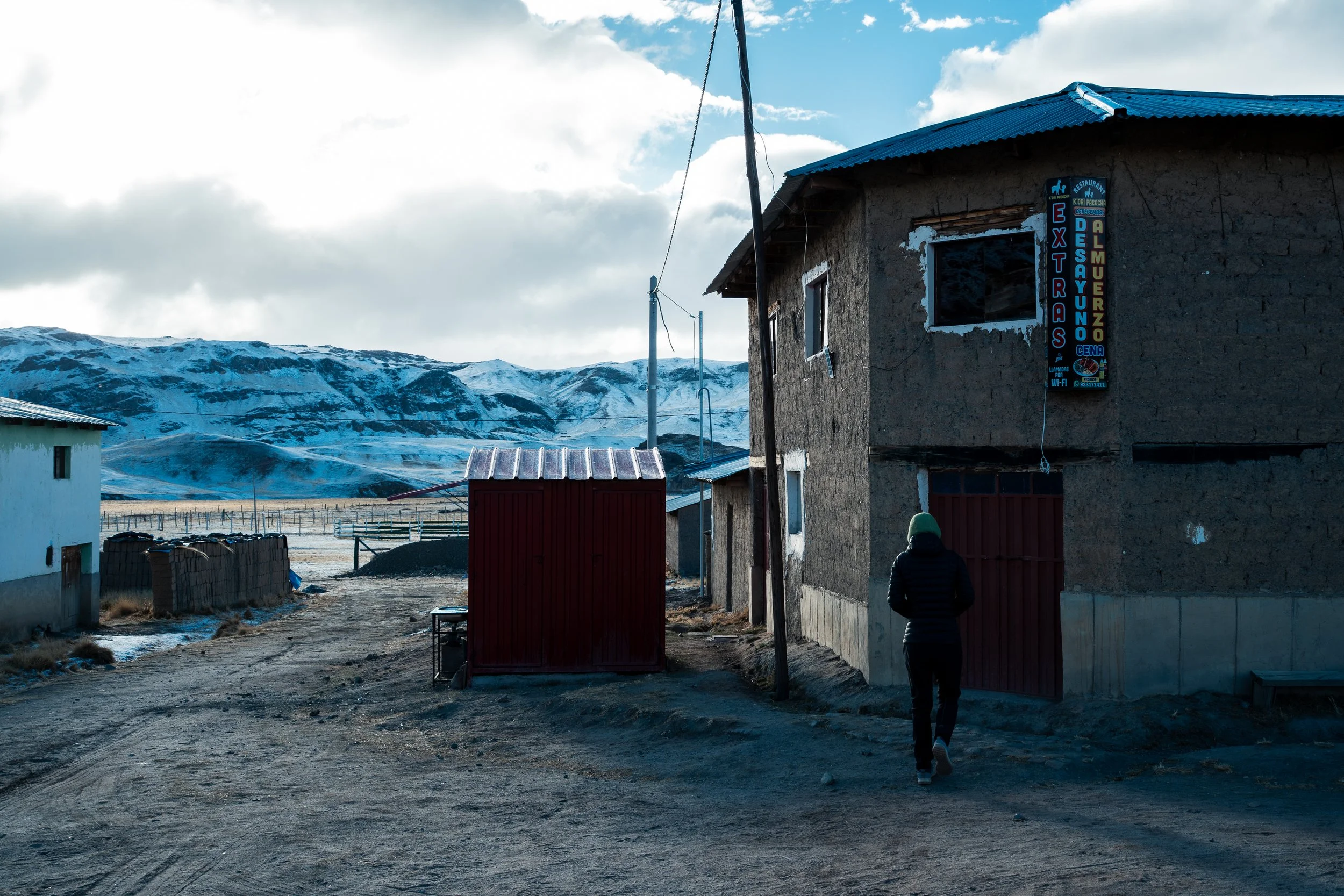
The bad restaurant at breakfast time
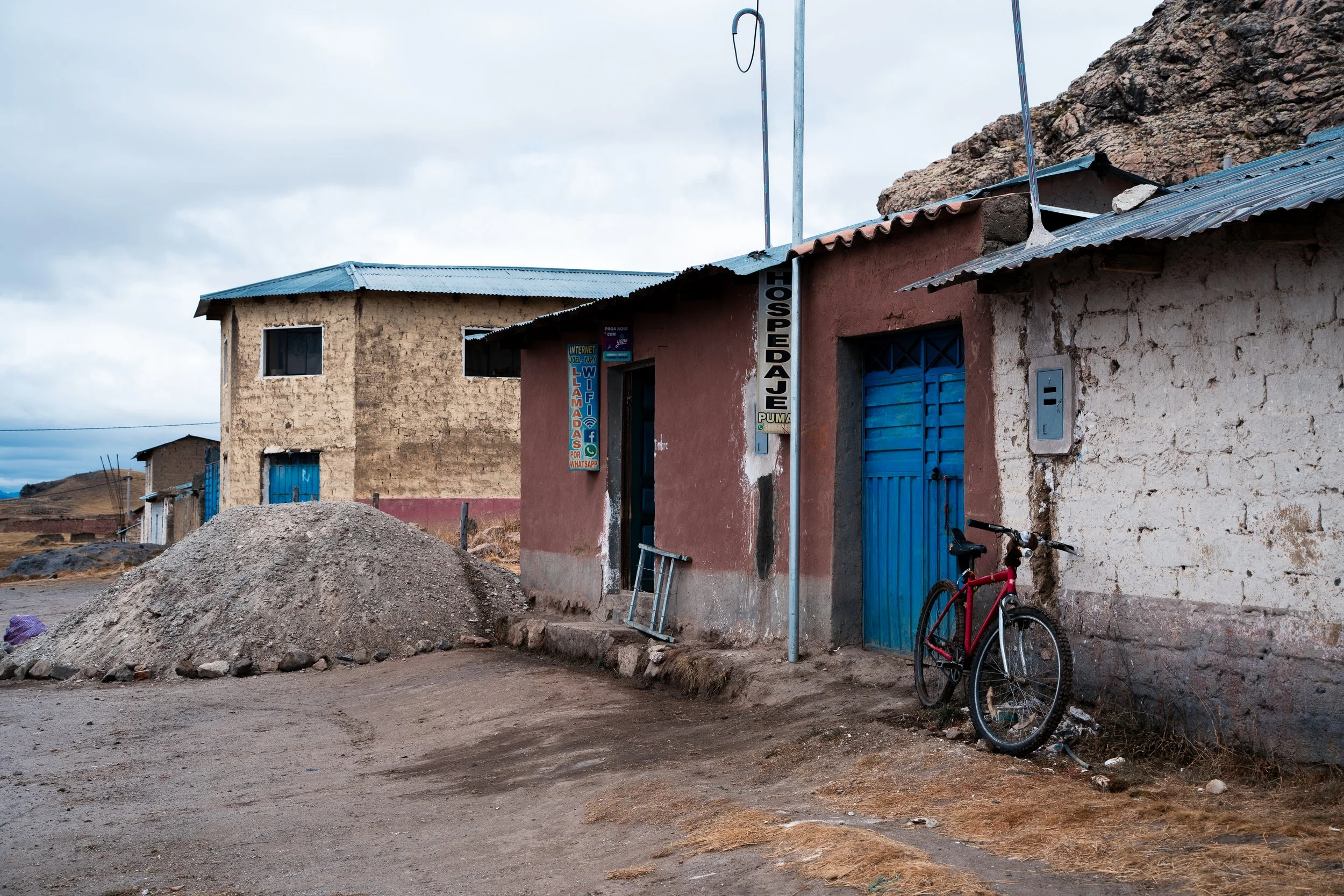
Surprisingly good wifi.
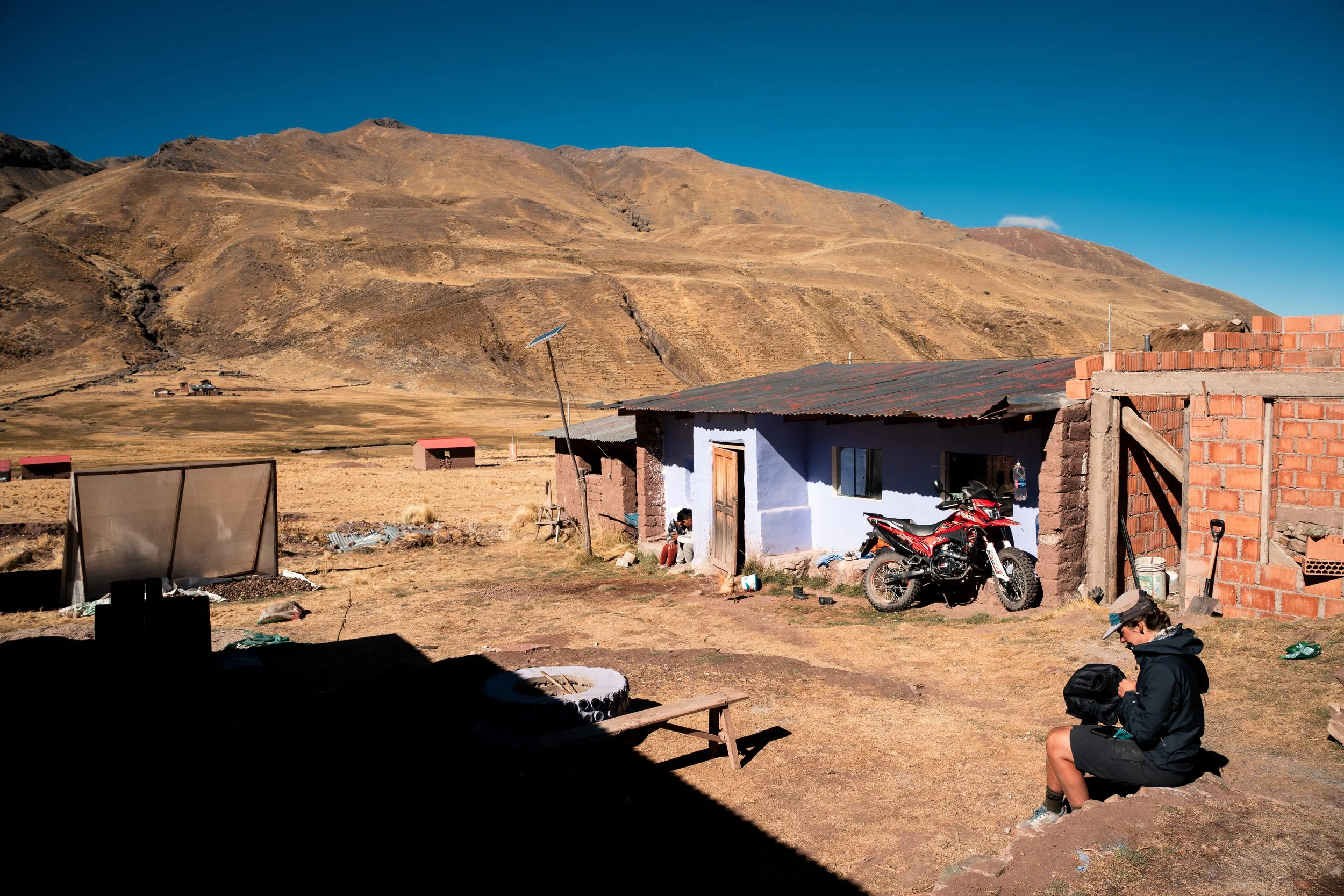
We passed the day looking around town and reading books. A small indigenous community, there were about 4 streets in town, and no new buildings. Flurries of snow came and went all day, briefly settling. We were able to get to the better restaurant for dinner, where we were served the same alpaca stew as we had for breakfast. This time the alpaca was tender, in small chunks, and the rice was perfect.
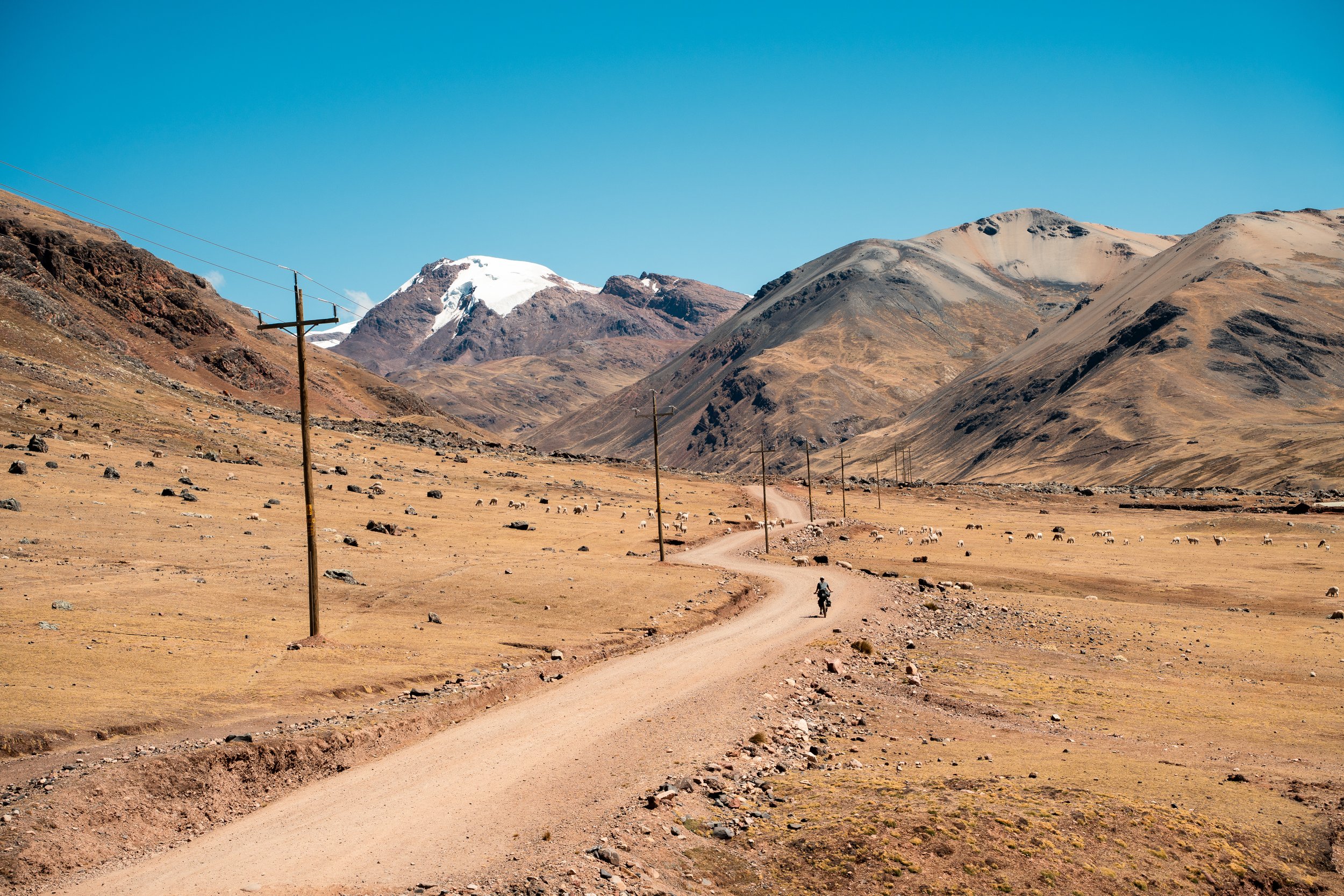
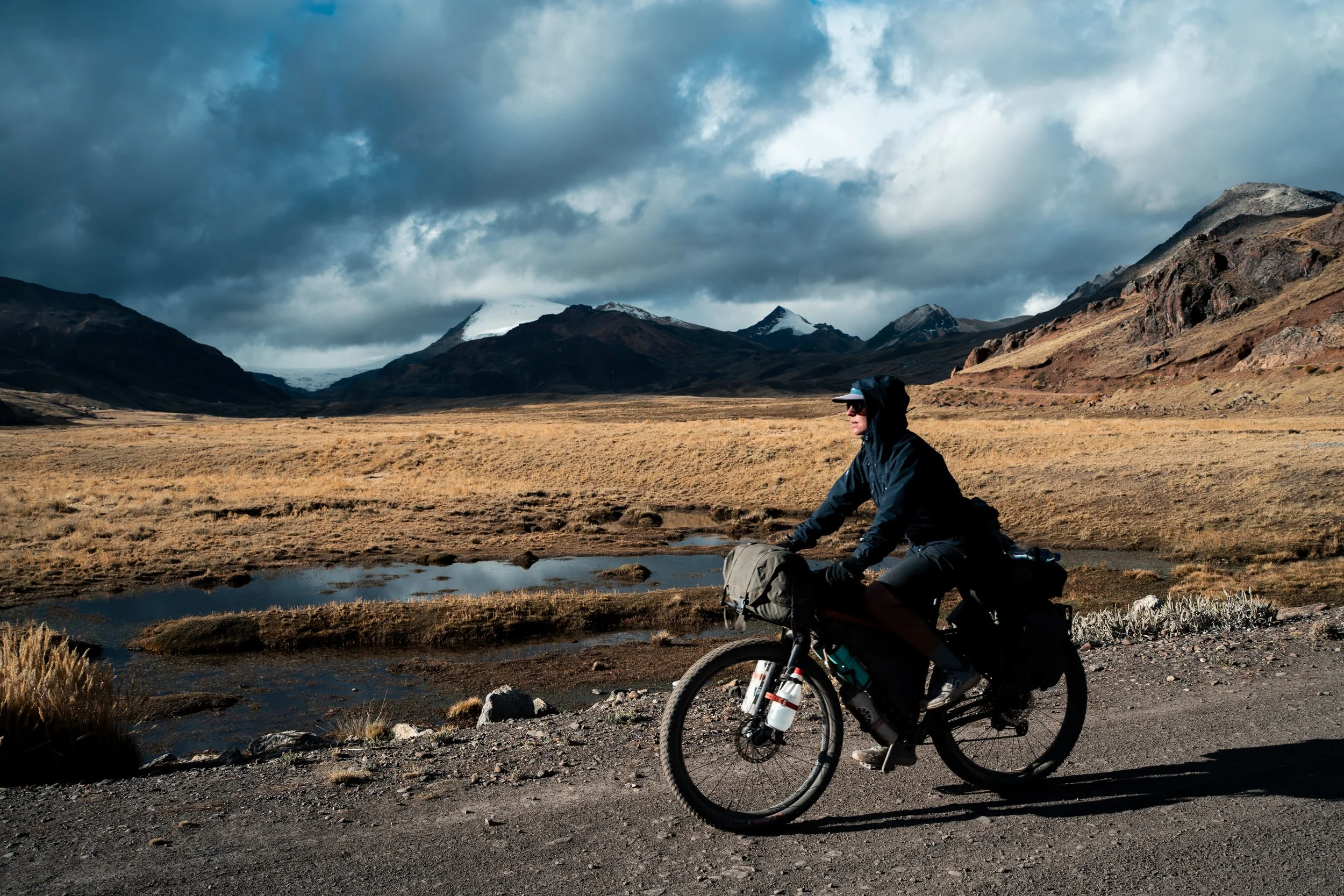
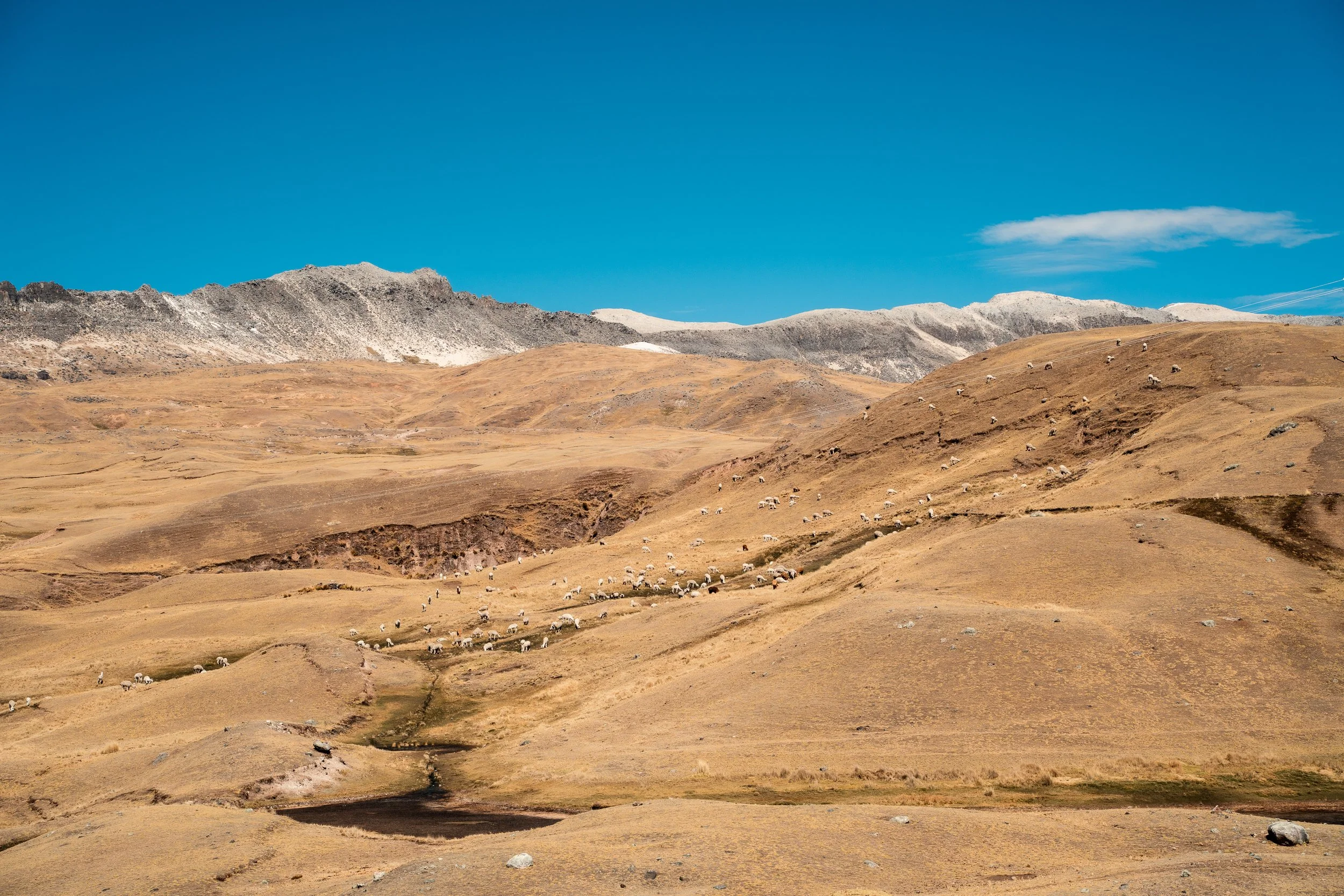
When we left the next day, the weather was sunny, but we could see snow and cloud moving in from the mountains behind us. We took off trying to beat it, and apart from a brief period of sleet and snow, managed this successfully. We passed by a large lake, whipped by a freezing tailwind, and crossed the plateau. Apart from a couple of small farmsteads and a few llama and alpaca, it was barren.
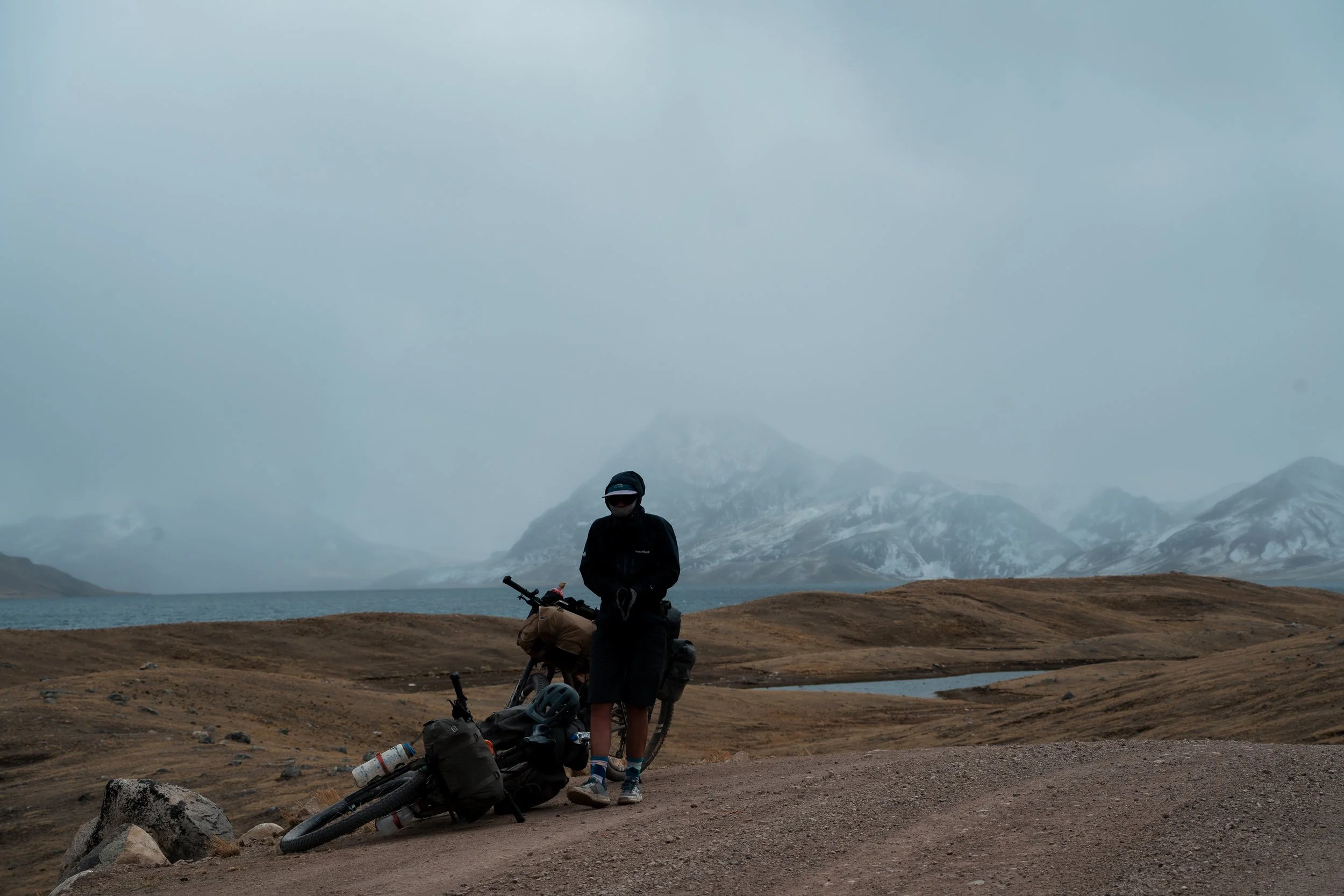
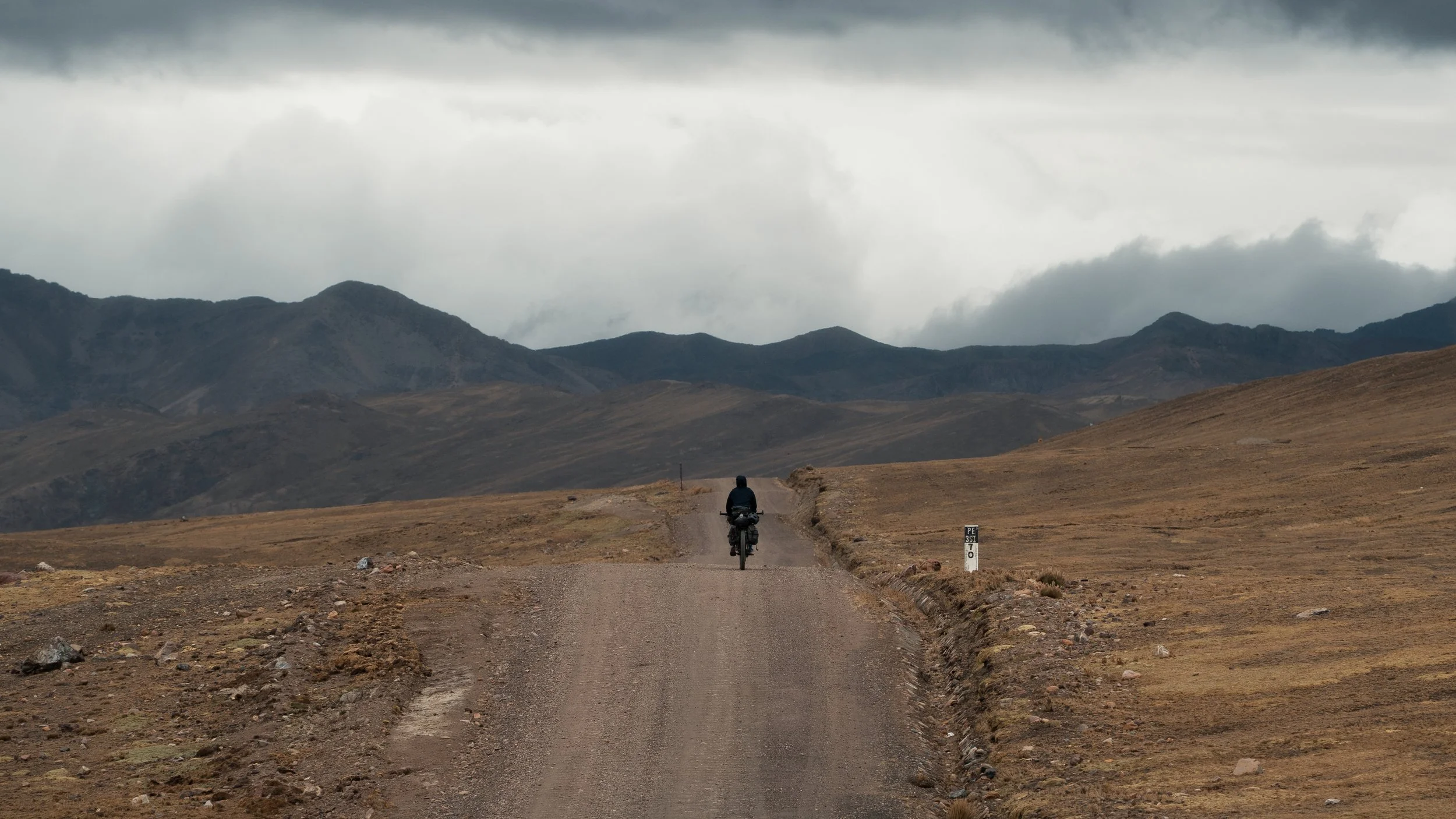
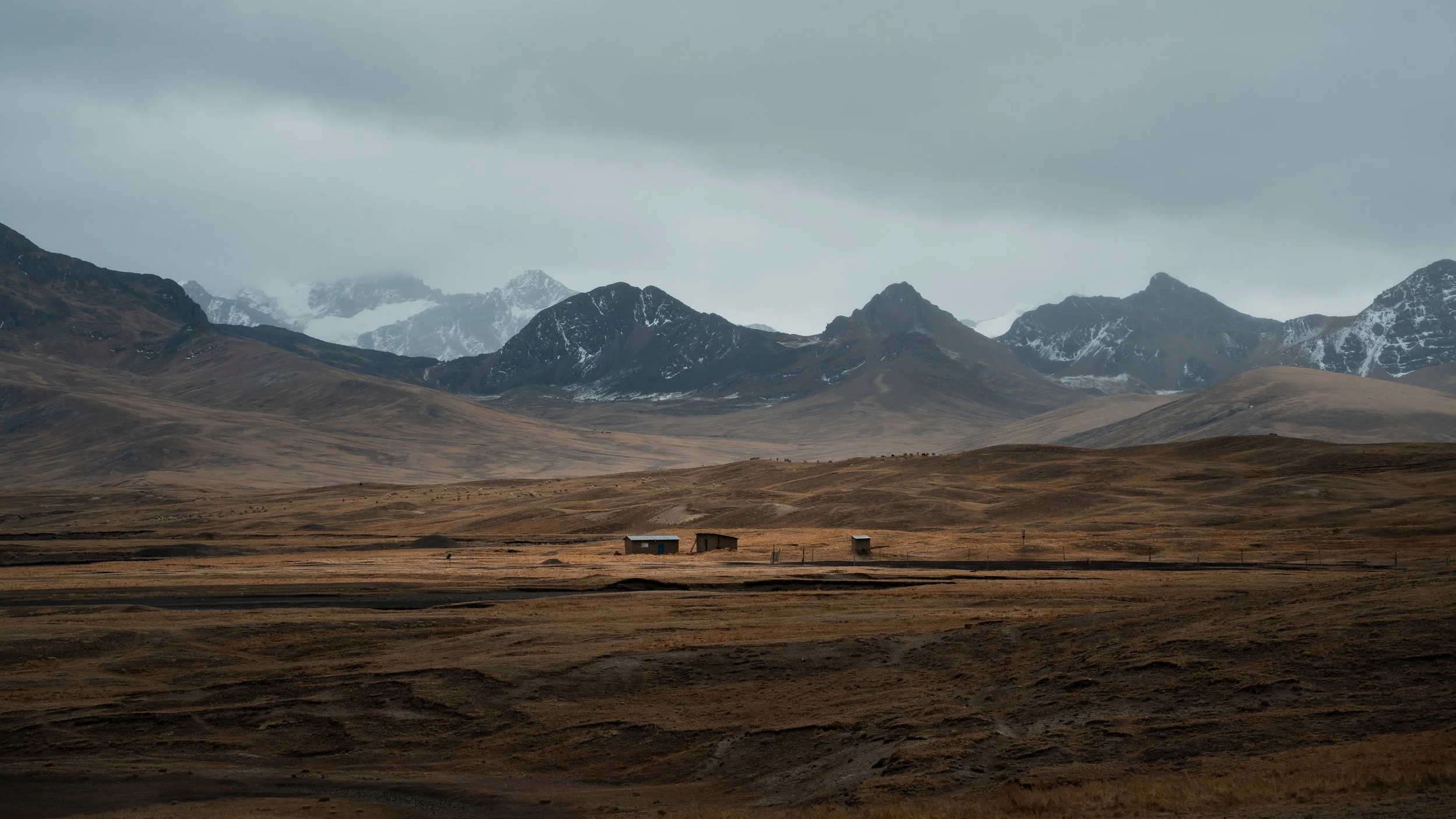
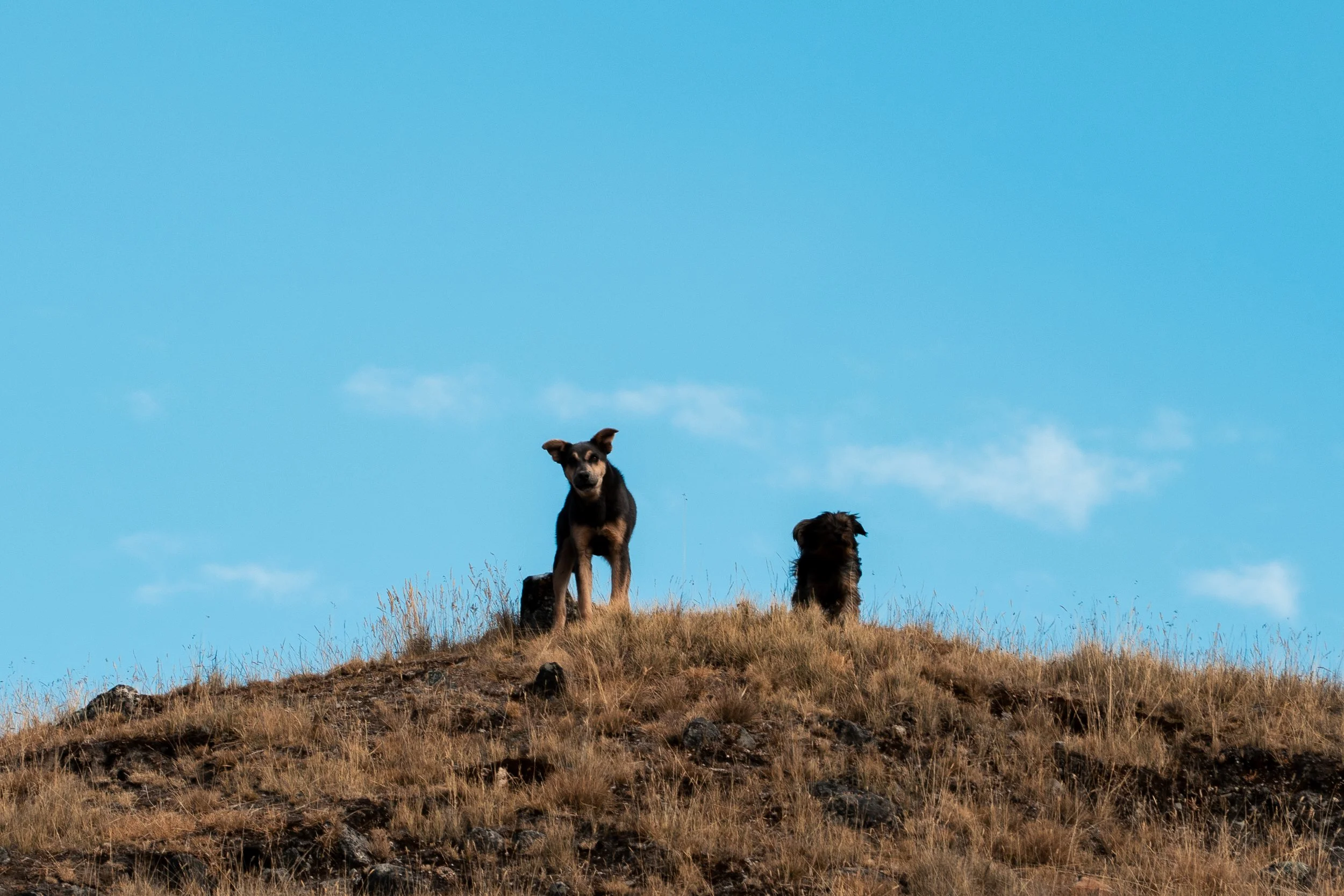
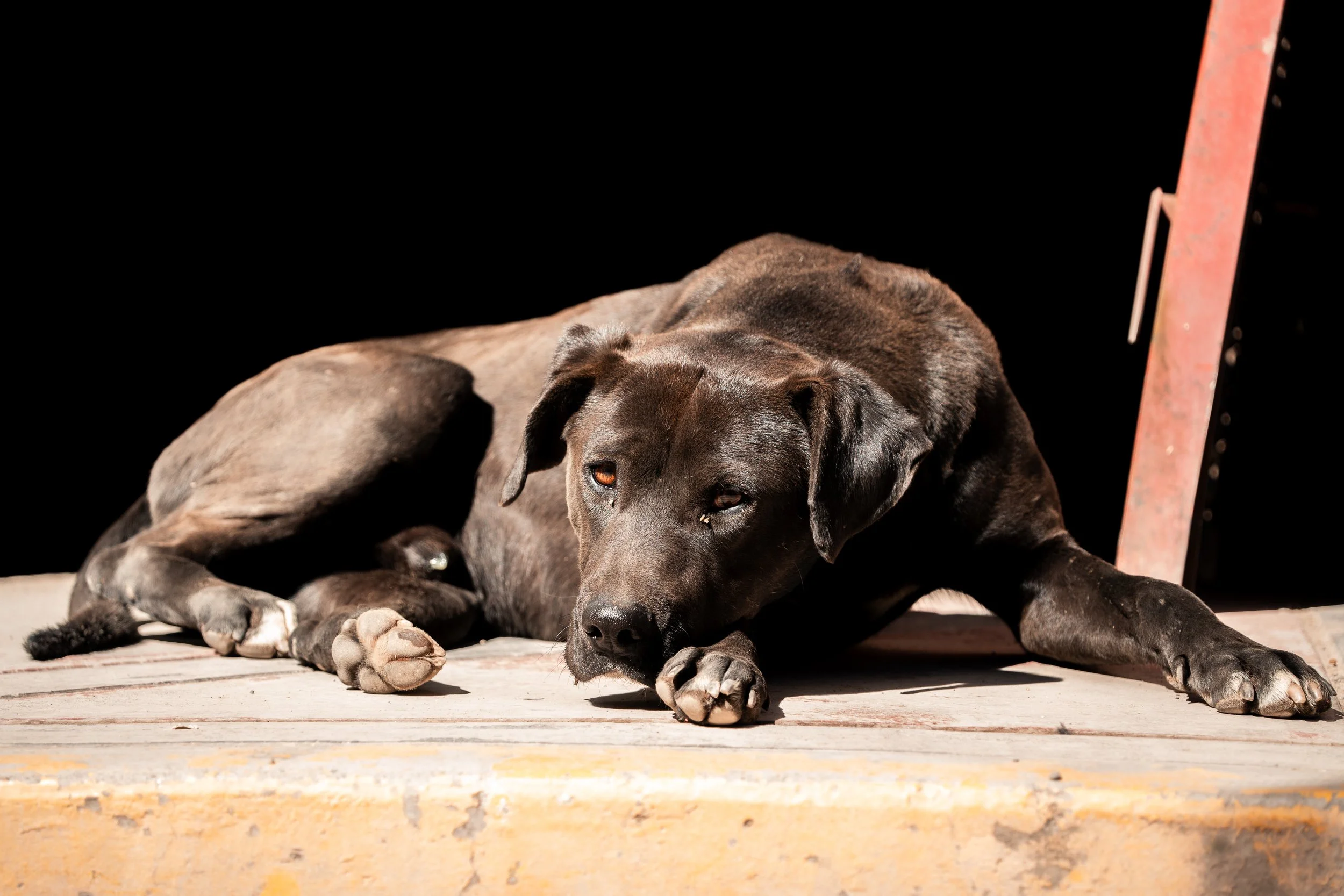
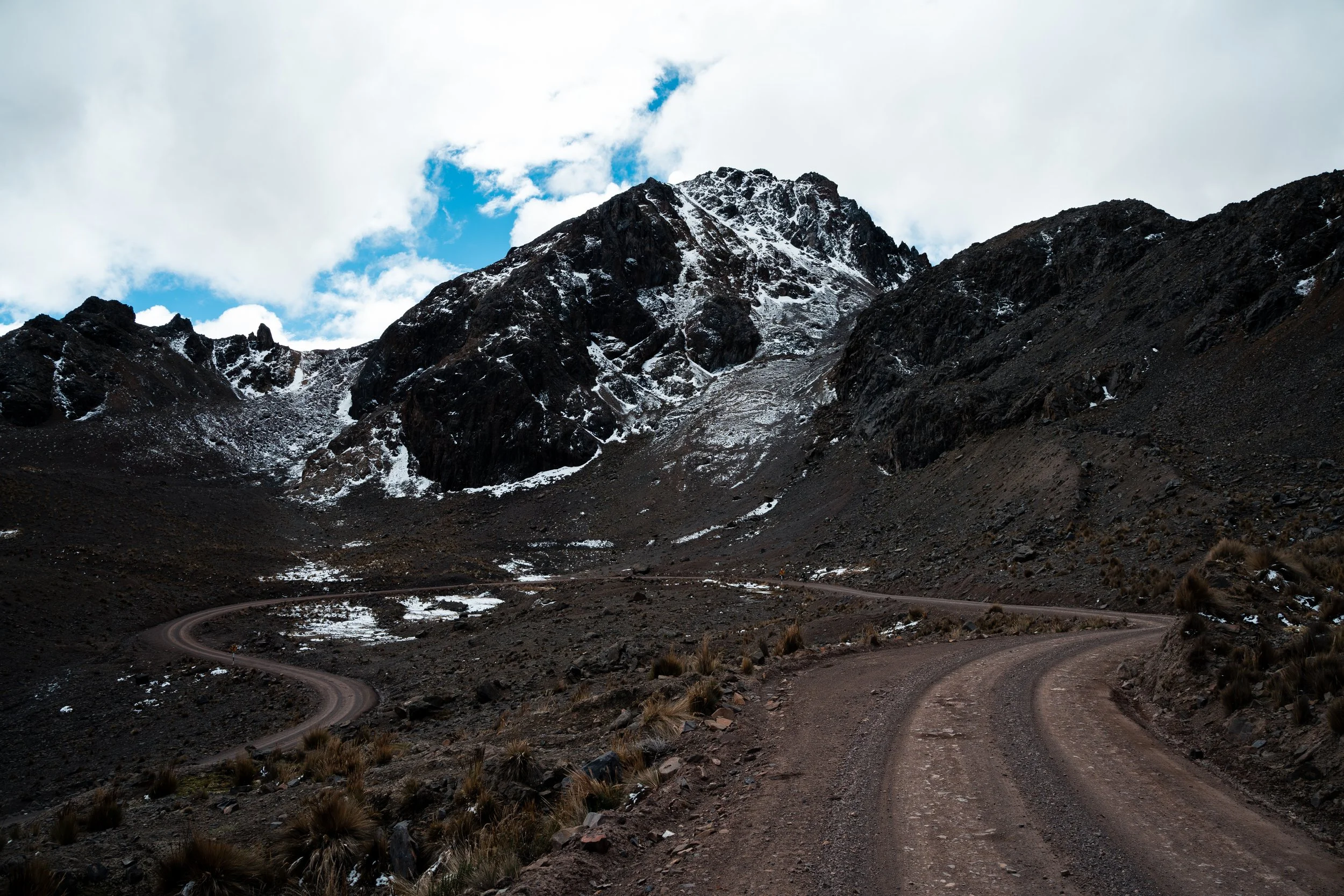
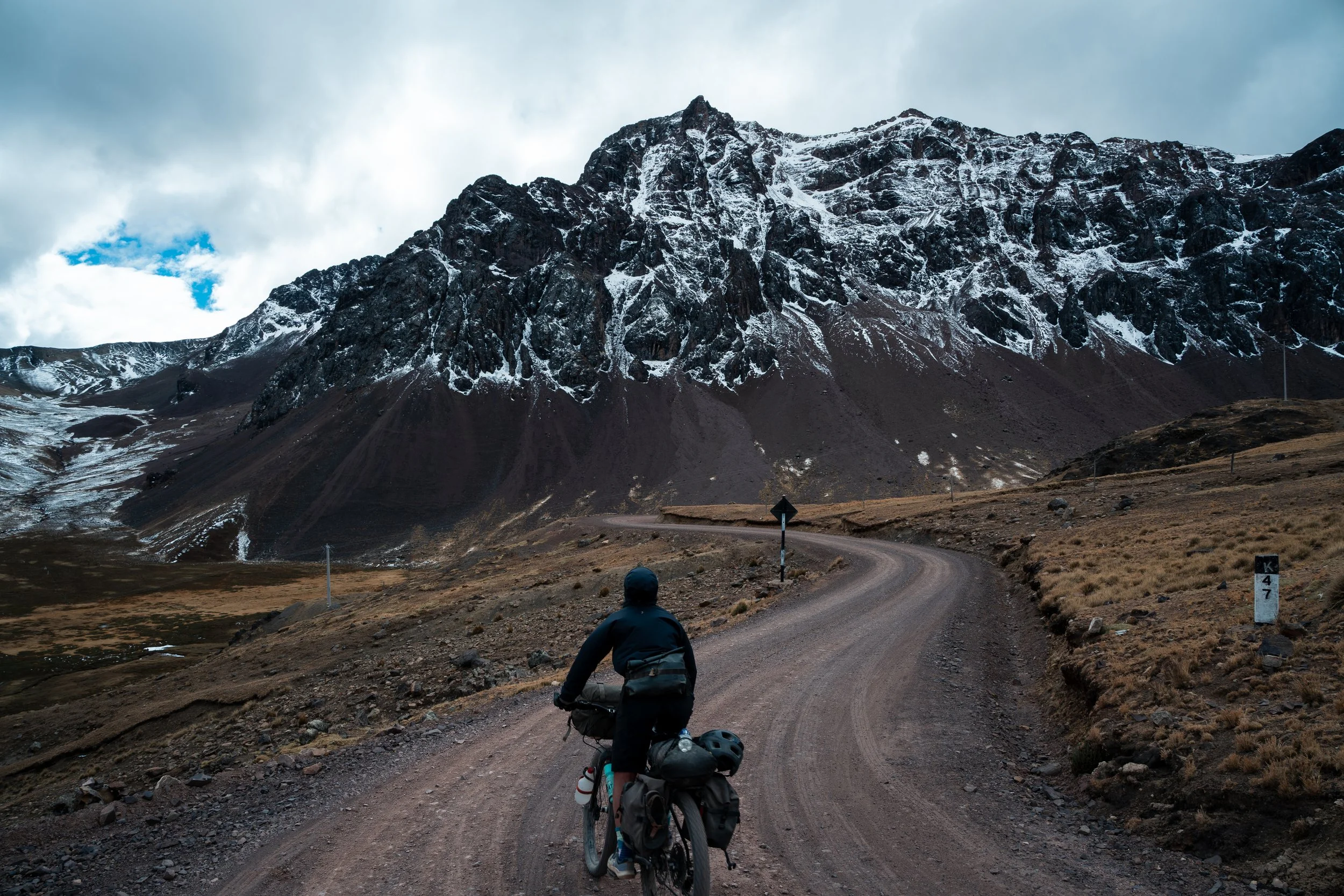
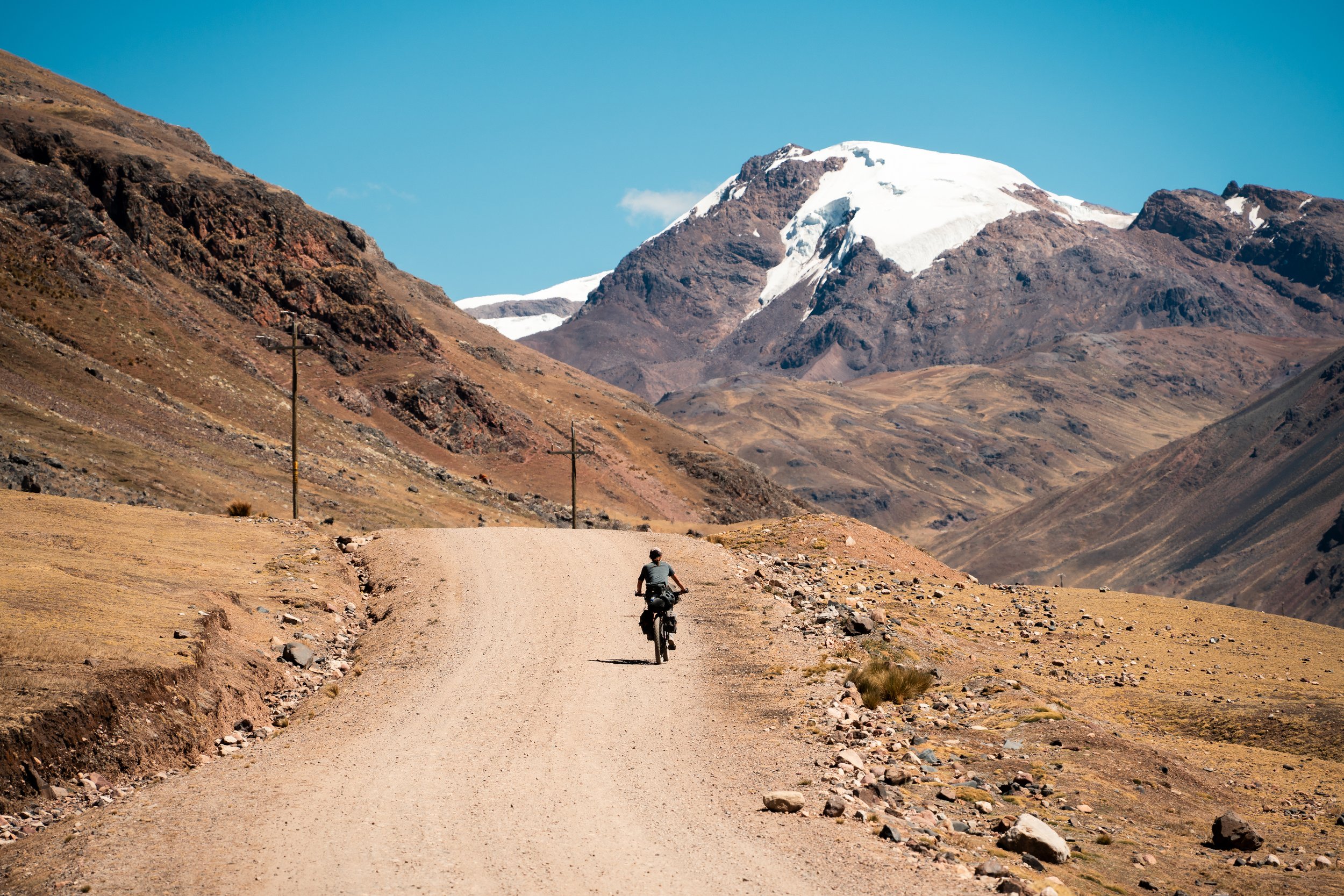
Leaving, we crossed the easiest 5000m pass we had had, as it wasn’t much higher than the plateau. After petting the few dogs hanging around the top, we passed down the valley on the next side. We came across a couple of cyclists heading to the top, very heavily laden down, who said they had been to Rainbow Mountain (a nearby popular attraction), and that it wasn’t worth it; the valley we were in was nicer.
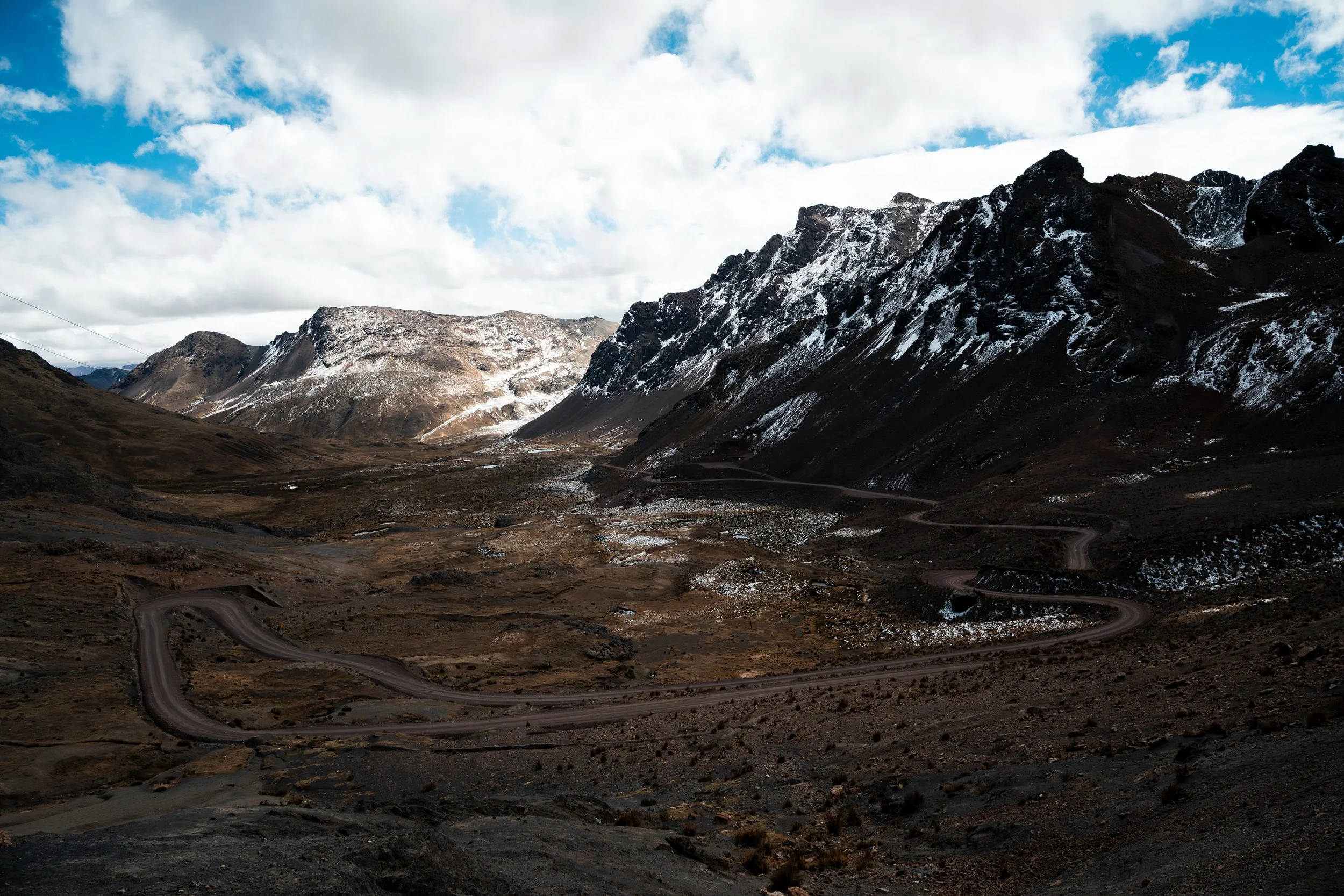
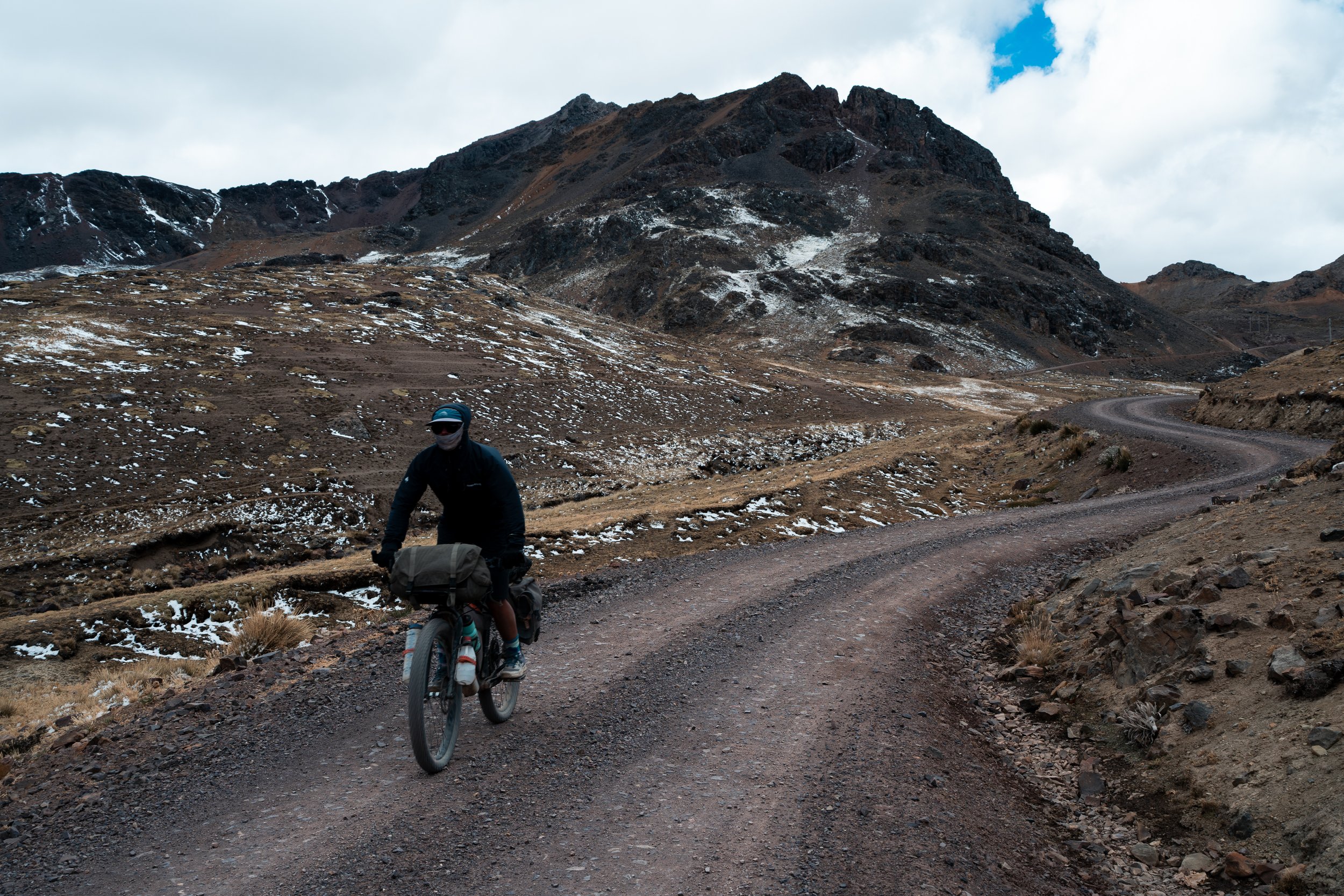
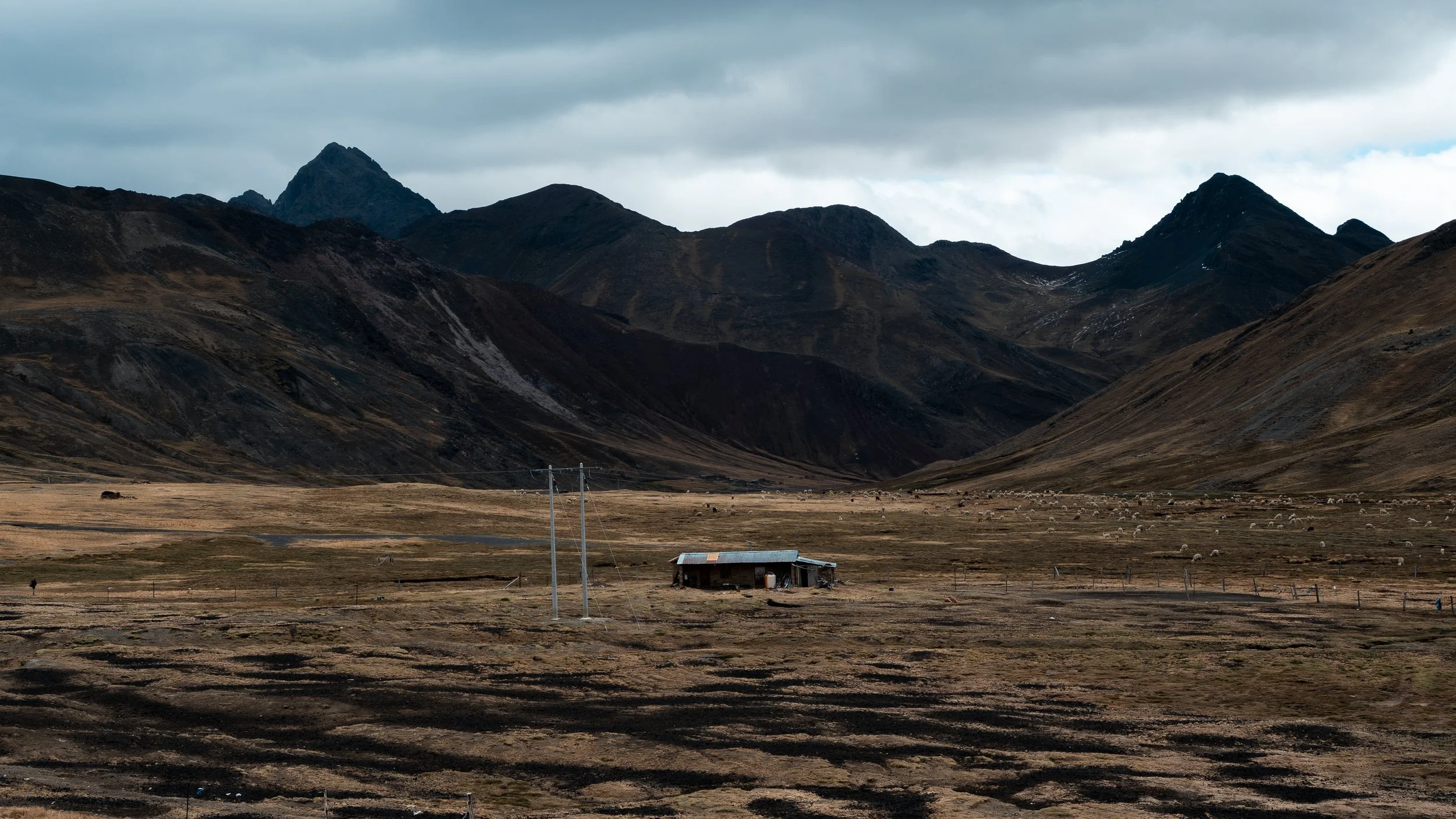
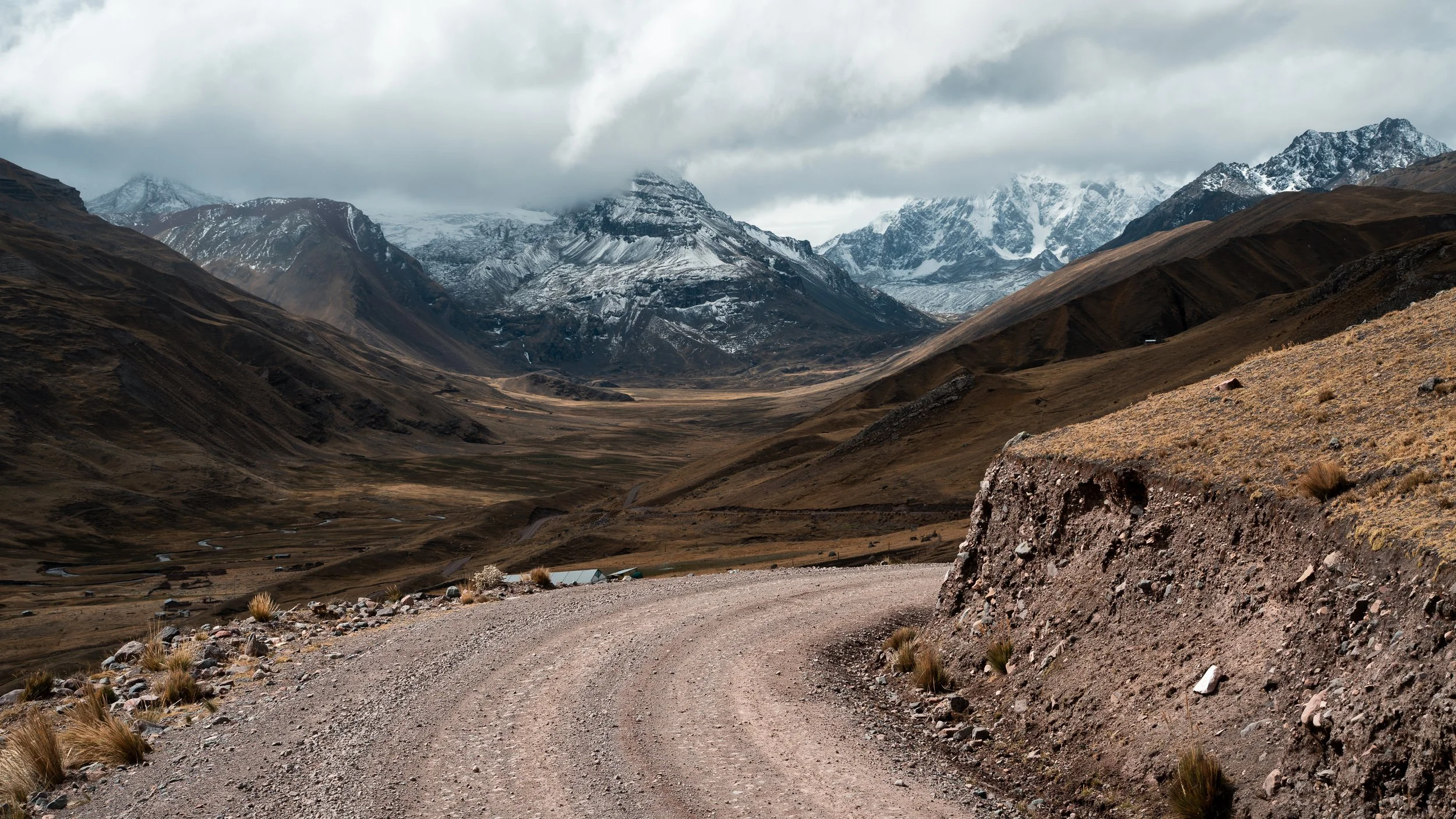
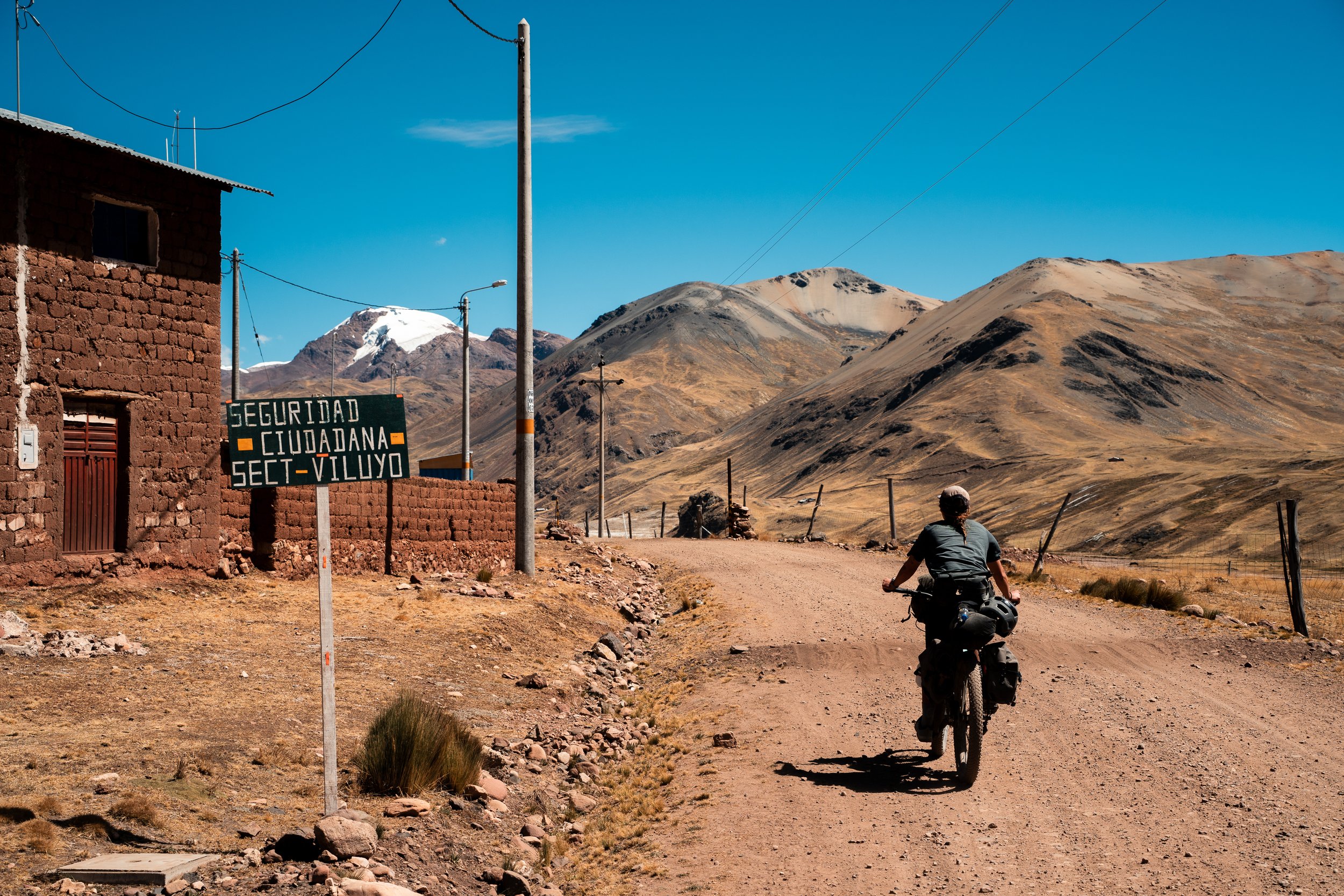
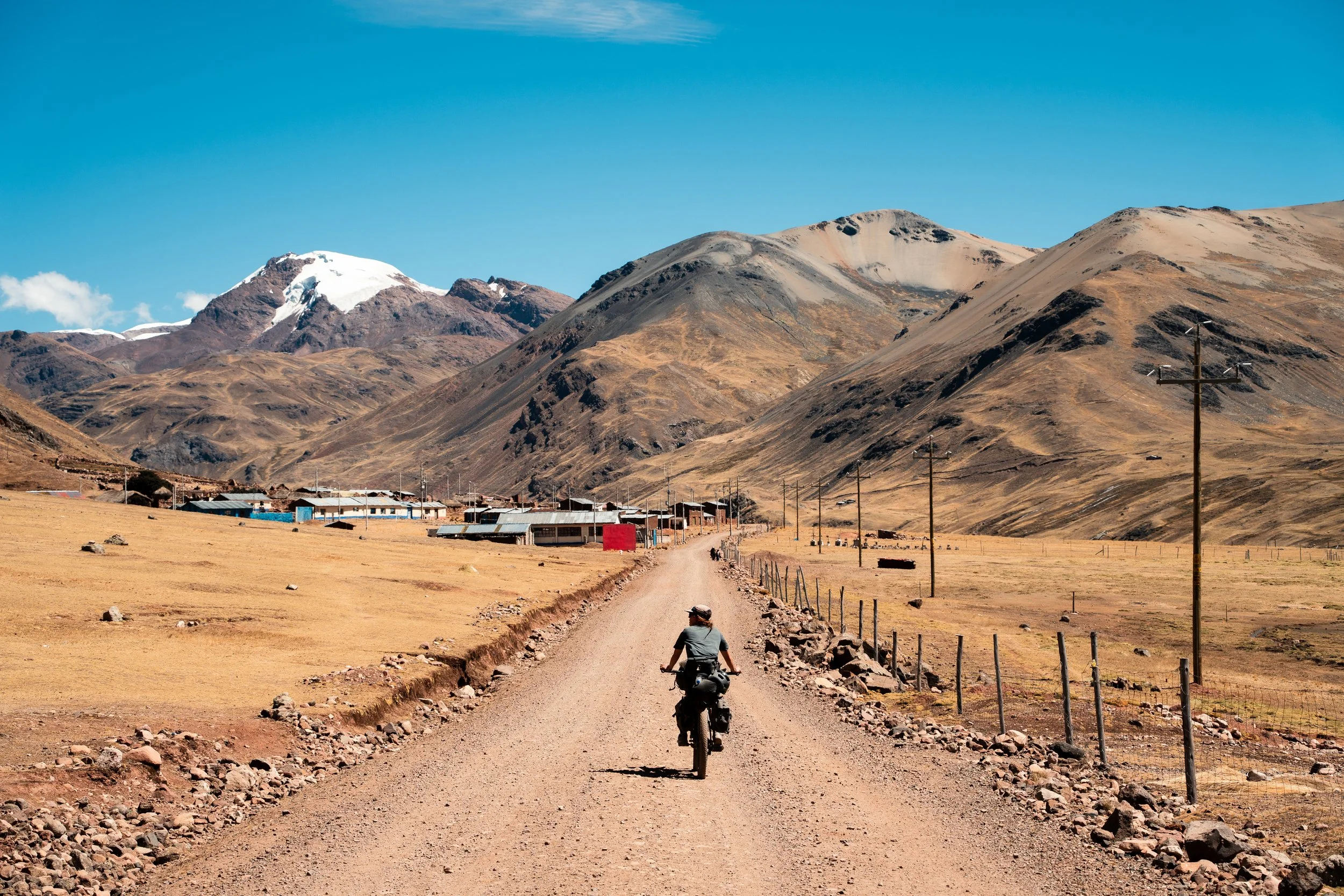
We took the afternoon off in the small village of Chilca, which had only recently been connected to the electricity grid (though not our hostel apparently). Here we would leave our panniers and gear whilst we did the Ausangate circuit, one of Peru’s premier hiking trails, and the topic of the next blog post.